 Eelvaade
 Saada
Saada Jaga
Jaga
 Teave teose kohta
 Juhend

 Laadi alla
 Sarnased teosed
 Röntgenuuring
 Slaidietendus
 KÜSIMUSED JA VASTUSID
 Statistika
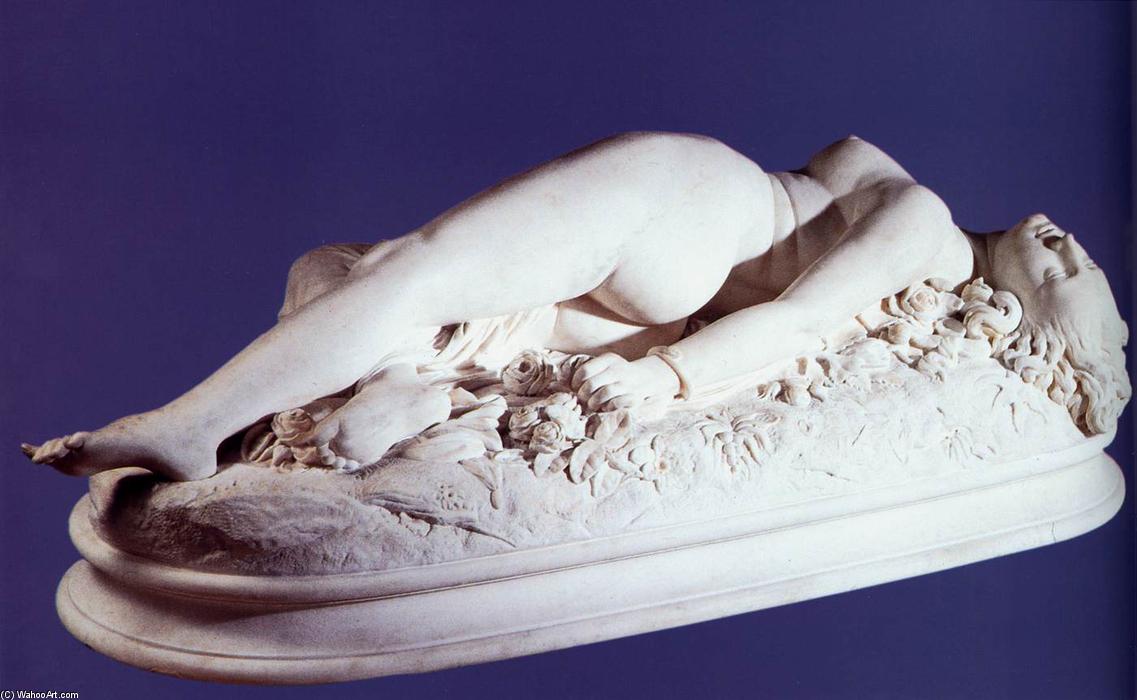
Woman Bitten by a Snake

- 56.0 x 180.0 cm


 Loe lähemalt
Hankige trükiivaldatav fail, mis on kvaliteedilt palju parem kui veebilehel näidatud eelvaade. Kõik meie müüdavad digitaalsed pildid pärinevad meie arhiivist kõrge resolutsiooniga originaalfailidest — tavaliselt 5000 kuni 15 000 pikslit laiust — nii et saate julgelt trükida suurematsat, lüüdist teha või detailset sisu reproduktsiooni teha.
Meie stuudiost ei lahtu ükski fail puutumatuna. Digiekpert võrdleb värve algsest maalistimusega ja vajadusel korrigeerib neid, seejärel parandab selgust ja detaile professionaalsete retušimisvahendite abil — püüdes alati jääda truudeks kunstniku pintoonile ja stiilile. Tulemuseks on pilt, mis näeb välja nagu maali, mitte nagu filtreeritud skann.
Teet kinnituse enne lõplikku valmimist: meie ekspert saadab pildi 72 tunni jooksul e-posti ülevaatamiseks. Ei ole rahul? Paluge parandusi või korrektsioone ning kui kvaliteet ei vasta ootustele, võite paluda tagastamist.
See on kvaliteet, millele tuguvad väljaandjad, disainistuudiod, galeriid ja trükikojad.
Digitaalne kunstiteos
Laadi alla kõrge resolutsiooniga fail isiklikuks vaatamiseks, trükkimiseks ja loomingulisteks projektideks. ( Lülita trükkitoodetele Osta käsitsi maalatud teos)
Sisse kuulub iga digitaalse pildi tellimusega
Eksperdi digitaalne kohaletoimetamine, garanteeritud
Valides OriginalUniqueArt.com, ei saa sa lihtsalt pilti – saad professionaalselt parandatud digitaalse teose, mida on valmistatud täpsusega ja mis on toetatud rahuldamatusgarantiiga. Siin on kõik, mis sinu tellimusega automaatselt kaasneb:

Kiire digitaalne edastus
Teie kõrge resolutsiooniga digitaalne pildifail saadetakse teile e-posti 72 tunni jooksul pärast tellimist – kohe kasutamiseks valmis.

Tehisintellektiga täiustatud digitaalne fail
Teie teos on professionaalselt optimeeritud arenenud tehisintellekti tööriistade ja käsitsi redigeerimise abil, tagades maksimaalse detailitaseme, selguse ja värvitäpsuse.

Tasuta eluaegne uuesti saatmine
Kas kustutasid faili kogukalu unustamisel või kustutamisel? Puudub mure – saad selle uuesti igal ajal ilma lisatasuta.

Puuduvad importimaksud – alati
Nautige oma teoseid koheselt ilma tolli-, maksude või tarnimaskuludeta – digiletchargused on alati maksuvabadud.

Värvitäpsuse garantii
Me tagame, et teie digitaalne pilt kajastaks originaali värve professionaalsete tööriistade ja värvihalduse abil võimalikult täpselt.

100 päeva rahuldamatuse garantii
Kui te ei ole oma digitaalse pildi eest rahul, siis me parandame seda või tagastame 100% summast 100 päeva jooksul – küsimusteta.

100% raha tagastamise garantii
Ei ole rahul? Saate täielise tagastaja 100 päeva jooksul pärast digitaalse faili kättesaamist – ilma küsimusteta.

Suurema tellimuse soodustused
Osta 3 pilti, säästa 10% - Osta 5, säästa 15% - Osta 10+, säästa 20%. Sobib suurepäraselt loomingulisteks projektideks, galeriideks ja agentuurideks.
A Serpent’s Embrace: Auguste Clésinger's *Woman Bitten by a Snake*
Auguste Clésinger’s 1847 marble sculpture, *Woman Bitten by a Snake*, is far more than a depiction of a dramatic, even unsettling, scene. It’s a potent distillation of Neoclassical ideals colliding with the burgeoning currents of Realism and Romanticism, a work that ignited controversy upon its debut at the Paris Salon and continues to hold an undeniable allure. The sculpture captures a moment of exquisite torment – a reclining nude female figure, her left arm entwined around a small serpent poised to deliver its venomous bite. The pose itself is crucial; it’s not one of passive suffering but of intense, almost ecstatic, vulnerability. Her body curves with a languid grace, yet every muscle seems taut with the sudden shock and pain of the attack. The drapery, meticulously carved to mimic the folds of luxurious fabric, cascades around her like a storm cloud, intensifying the drama and obscuring details while simultaneously emphasizing the contours of her form.
Neoclassical Roots, Romantic Intensity
Clésinger’s style firmly anchors *Woman Bitten by a Snake* within the Neoclassical tradition. The idealized beauty of the figure—a deliberate echo of classical sculpture—is evident in her balanced proportions and serene expression (despite the obvious distress). However, beneath this surface lies a distinctly Romantic sensibility. The heightened emotion, the dramatic lighting that casts deep shadows across her face and body, and the unsettling subject matter – a venomous bite – all point to an exploration of intense feeling and psychological depth, qualities often associated with the Romantic movement. The sculpture wasn’t simply about depicting a beautiful woman; it was about conveying a powerful emotional experience.
The Scandal and the Secret: A Life-Cast Revelation
The initial reception of *Woman Bitten by a Snake* at the 1847 Salon was explosive, not for its artistic merit alone, but due to a scandalous revelation. Theophile Gautier, a prominent literary critic and staunch defender of artistic integrity, exposed a secret behind Clésinger’s creation: the sculpture was based on a life-cast taken from Apollonie Sabatier, a celebrated *demi-mondaine* (a fashionable courtesan) who was also the muse of Charles Baudelaire. This practice of using actual models—particularly those with imperfections like cellulite – was considered highly unorthodox and even vulgar at the time. The revelation fueled public outrage, accusing Clésinger of exploiting his model’s physical flaws for artistic gain. The controversy surrounding the life-cast underscored a broader debate about the role of realism in art and the ethical considerations of representing the human body.
Symbolism and Interpretation: Venom, Beauty, and Desire
Beyond the scandal, *Woman Bitten by a Snake* is rich with symbolic meaning. The serpent itself is an ancient symbol of temptation, danger, and transformation – often associated with both death and rebirth. The bite represents not just physical pain but also a profound psychological wound, a loss of innocence or a confrontation with forbidden desires. The reclining pose suggests vulnerability and surrender, while the figure’s expression hints at a complex mixture of fear, pleasure, and resignation. Some scholars interpret the sculpture as an allegory for the perils of beauty and the seductive power of desire, suggesting that even in its idealized form, the female body remains susceptible to harm and corruption. The choice of marble, known for its durability and timelessness, further elevates the image, imbuing it with a sense of permanence and enduring fascination.
This reproduction captures the essence of Clésinger’s masterpiece, offering a stunning addition to any art collection or interior space. Its dramatic composition and evocative symbolism will undoubtedly spark conversation and admiration for years to come.
Korduvad küsimused
Millises muuseumis on säilitatud originaal "Woman Bitten by a Snake"?
Originaalteost „Woman Bitten by a Snake“, autor Auguste Clésinger hoiustatakse Musée d'Orsay, Paris, France muuseumis. Reproduktsioon võimaldab teost koduses keskkonnas esitleda.
Kust teose „Woman Bitten by a Snake“, autor Auguste Clésinger külastajad pärit on?
Teose "Woman Bitten by a Snake" jaoks on olemas Statistika leht. See kajastab teose ja kunstniku teiste teoste kuutlikke külastusi riigi ja keele järgi lahutatud statistikaga.
Milleks on soovitatav kasutada teose "Woman Bitten by a Snake" trükistes?
Teose „Woman Bitten by a Snake“, autor Auguste Clésinger reproduktsiooni kasutamist on soovitatav Statement jaoks. See soovituse on tulenev teose motiivist, meelelojast ja värvigabast.
Kunstniku elulugu
Auguste Clésinger: Life and Legacy
Early Life and Training
- Born: October 22, 1814, in Besançon, France.
- Auguste Clésinger came from an artistic family; his father, Georges-Philippe Clésinger, was a sculptor who provided Auguste with his initial training.
- This early exposure instilled in him a foundational understanding of sculptural techniques and aesthetics.
Artistic Development and Style
- Clésinger’s artistic style evolved through the 19th century, initially embracing Neoclassical principles but gradually incorporating elements of Realism and Romanticism.
- He skillfully blended technical precision with emotional intensity in his works.
- His sculptures often depict dramatic narratives and sensuous figures, showcasing a mastery of anatomy and form.
Major Works and Achievements
- Woman Bitten by a Serpent (1847): This sculpture caused a sensation at the Paris Salon due to its dramatic realism and erotic undertones. It was modeled from life casts of Apollonie Sabatier.
- Madame Sabatier (1847): A marble portrait of his model, Apollonie Sabatier, further establishing Clésinger’s reputation for capturing beauty and sensuality.
- Chopin's Funerary Monument (1850): Commissioned after the composer Frédéric Chopin’s death, this white marble monument at Père Lachaise Cemetery is a poignant tribute to the musician.
- Angel of Grief: A deeply moving sculpture embodying Baroque drama and pathos.
- He also created busts of prominent figures like Rachel Félix and Théophile Gautier, and a statue of Louise of Savoy.
Influences and Relationships
- Influenced by: His father, Georges-Philippe Clésinger, provided his initial artistic foundation.
- Clésinger’s association with Apollonie Sabatier, a salonnière and mistress of several prominent artists including Charles Baudelaire, exposed him to intellectual and artistic circles.
- His marriage in 1847 to Solange Dudevant, daughter of George Sand, further connected him to literary society.
Historical Significance and Legacy
- Clésinger’s work reflects the artistic currents of 19th-century France, bridging Neoclassicism with emerging Realist tendencies.
- Recognition: He received the Knight's Cross of the Légion d'honneur in 1849 and was promoted to Officer in 1864.
- His sculptures continue to be admired for their technical skill, emotional depth, and dramatic impact. His works are displayed at prominent museums such as the Musée d’Orsay.
- Death: He died on January 5, 1883, in Paris, and is buried in Père Lachaise Cemetery.

Auguste Clésinger
1814 - 1883 , France
Lühikesed faktid
- Birth Date: 1814-10-22
- Death Date: 1883-01-05
- Influenced: None, 'influenced by': 'Georges-Philippe Clésinger (father)', 'movement': ['Realism', 'Romanticism'], 'name': 'Auguste Clésinger', 'nationality': 'French', 'notable works': ['Woman Bitten by a Serpent', 'Angel of Grief', 'Madame Sabatier',
- Birth Place: Besançon, France
- Date Of Birth: 1814
- Date Of Death: 1883
- Place Of Birth: Besançon, France