

 Vaata sisu
 Jaga teost
 Jaga
Jaga
 Detailid
 Õppekate juhend

 Laadi alla
 Sarnased teosed
 Röntgenuuring
 Slaidietendus
 Statistika
The Lucky Hand (scene 1)
 Acrylic On Canvas
- WallArt
- Expressionist Modernism
 1910
1910 30.0 x 21.0 cm
 Arnold Schönberg Center
 Loe lähemalt
Giclée / Kunstiprint
Muuseumikvaliteediga giclée- või kangasprint kiire tootmisega ja paindlikud viimistlusvõimalused. ( Telli käsitsi maalitud reproduktsioon Ülemineku digitaalse pildi müügi kanalisse)




P118B $10

P118H $10

P118W $10

P438Z $10

P508JH $12

P508YH $12

P805H $10

P805Z $10

P919BZ $10

P919G $10

P919XJ $10

P959ZH $10

P968JZ $12

W106C $8

W218G $10

W218JH $8

W218Y $10

W307PJ $10

W316G $10

W316PJ $8

W316Y $10

W398PJ $8

W4111J $10

W500HY $15

W500JH $15

W692G $12

W849H $8

W940BG $15

W953PJ $8




Vali meie eelmääratud suurused, mis vastavad teose algupärastele proportsioonidele.

Saate sisestada oma mõõdud, et need sobiks konkreetse raami või ruumi sisse. Kui valitud suurus ei vasta originaalteose proportsioonidele, lõigame teose ära või laiendame pilti peegeldatud või ühtlase servaga. Enne tootmisprotsessi algust saadetakse Teie kinnitamiseks digitaalne näidis.
Palun märka, et ekraanil kuvatav eelvaade ei kajasta tegelikku lõigamist või laiendamist. Ainult näidis kujutab täpselt lõplikku kompositsiooni.
Kuigi erimõõdu on saadaval, soovitame originaaproportsioonide säilitamiseks valida mõõt ette määratud nimekirjast.
Ülemaailmne tarne () 2 nädala jooksul, tavalise 4/5 nädala asemel. (26 september)

Tasuta ekspresssaatmine üle maailma

Kõrgekvaliteediline lina-kangastest muld

Täielik transpordikindlustus

Tollimaksude tagastamise garantii

Värvitoime täpsuse garantii

100 päeva tagastusõigus (ainult defektide korral)

100% raha tagasi garantii

Hulgusoodustus
 Klaasivalik on saadaval ainult kuni 110 cm suuruses teostes

The Lucky Hand (scene 1)
Giclée / Kunstiprint
Reproduktsiooni mõõtmed
-


Lõppsumma
$ 80
A Descent into the Unseen: "The Lucky Hand" (Scene 1) – A Reflection of Schönberg’s Dark Vision
OriginalUniqueArt.com presents a meticulously crafted hand-painted reproduction of Arnold Schönberg's “The Lucky Hand” (Scene 1), a haunting tableau born from the composer’s intensely personal and profoundly unsettling drama, "Die glückliche Hand." Completed in 1910, this monochrome artwork transcends mere illustration; it is a visual embodiment of Schönberg’s exploration of fate, guilt, and the grotesque – themes that would dominate his later, more radical compositions. The scene, meticulously rendered in shades of grey and black, immediately draws the viewer into a space of palpable unease, mirroring the drama's core anxieties.
- Subject Matter: The artwork depicts a nightmarish scenario – a man lying prone on the stage, seemingly violated by a monstrous hybrid creature. This unsettling image is central to the play’s narrative, representing a descent into psychological torment and the consequences of transgression.
- Composition & Technique: Schönberg's meticulous attention to detail is evident in the layering of textures and the subtle manipulation of light and shadow. The use of a shallow curve for the stage emphasizes claustrophobia, while the strategically placed green-lit faces peering from behind the velvet curtain create an atmosphere of voyeurism and judgment. The artist’s skill lies in conveying both physical horror and psychological dread through a restrained palette.
Historical Context & Schönberg's Artistic Journey
Created during a period of immense artistic upheaval, “The Lucky Hand” reflects the broader anxieties of early 20th-century Europe. Schönberg was at the forefront of musical innovation, challenging traditional harmonic structures and paving the way for atonality – a compositional technique that abandoned established tonal centers. This radical shift mirrored a wider cultural questioning of established norms and values. Born in Vienna in 1874, Schönberg’s early works, such as “Verklärte Nacht,” demonstrated a synthesis of Brahmsian and Wagnerian influences before he fully embraced his revolutionary approach. The work's creation aligns with the period when Schönberg was developing his groundbreaking theories about tone color and exploring the expressive potential of dissonance – concepts that would profoundly impact 20th-century music.
Artist Information: Artist: Arnold Schönberg Birth Year: 1874 Death Year: 1951Symbolism & Emotional Resonance
The imagery within “The Lucky Hand” is laden with symbolic weight. The hyena-like creature, with its bat wings, represents a primal, almost demonic force – a manifestation of guilt and the subconscious. The man’s position, face down, suggests vulnerability and helplessness. The green light emanating from the hidden faces symbolizes judgment and the inescapable scrutiny of conscience. The candles, meticulously arranged on the wall, could represent fleeting moments of hope or perhaps the flickering remnants of sanity in the face of overwhelming darkness. The overall effect is profoundly unsettling, evoking a sense of dread and despair.
Dimensions & Acquisition
This hand-painted reproduction measures 30 x 21 cm (11.8 x 8.3 inches), making it ideal for a variety of settings – from intimate study spaces to larger art collections. Its monochrome palette lends itself beautifully to diverse interior design styles, offering a timeless and sophisticated aesthetic. Order your hand-painted reproduction of “The Lucky Hand” (Scene 1) today and bring this powerful work of art into your home or office.
Kunstniku elulugu
varaj puud ja muusikalised algused
Arnold Schönberg, austria-ameerika helilooj, sündis 13. september 1874 Austrias, Viinnis. Tema varajane elu oli tähistatud vahendusega algusega, kuna tema isa oli kingapoodi omanik. Vaatamata sellele juhtumisele suunas Schönbergi loomulik armastus muusika vastu teda suurel määral iseseisvalt selles valdkonnas õppima.muutlik areng ja märkimistekendavad teosed
Schönbergi algased teosed, nagu Verklärte Nacht (1899), näitasid Brahmsi ja Wagneri stiilide sündmist. Edasine areng tegi temast keskne tegelane Teises Viini koolkonnas koos Anton Weberni ja Alban Bergi. Tema kompositsioonid, sealhulgas stringkvartett nr 2 (1907–1908), Erwartung (1909) ja Pierrot Lunaire (1912), näitasid tema innovatiivset lähenemist atonaalsusele.õpetamine, emigratsioon ja hilisem elu
1933. aastal lahkus Schönberg Preussia Kunstiakadeemiast natsistliku võimuküllekkumise tõttu, kuna viimastel oli tema muusik nii nimetatud "lahjustunud". Seejärel õpetas ta USA-s, sealhulgas Californias Los Angelesi ülikoolis (1936–1944), kus on tema nimel nimetatud erinevad asutused. [https://OriginalUniqueArt.com/@/arnold-scherichia](avastage rohkem Schönbergi elu ja loomingust OriginalUniqueArt lehelt).- Schönberg uuris filmimuusikat ja kirjutas enam toonilist muusikat, lõpetades oma kammersümfoonia nr 2 aastal 1939.
- Ta satiiritses fašistlikke türante Byronist inspireeritunud teoses Ood Napoleonile (1942).
- Sõjajärgne Viin pakkus talle auгражданство, kuid ta oli haiguse järele, nagu on kujutatud tema stringtrio (1946) teoses.
pärand ja mõju
Kui maailm sai teada Holokaustist, mälestas Schönberg selle ohvrite vastu teoses A Survivor from Warsaw (1947). Israelie kontserdimuusikakool ja akadeemia valis ta 1951. aastal aupresidentiks. [https://OriginalUniqueArt.com/@@/a@d3bqc7-the-museum-destroyed-by-fire-(united-states)](lugege lähemalt tema loomingu mõju OriginalUniqueArt lehelt). olulised punktid:- Schönbergi innovatiivne muusika oli üks 20. sajandi klassikamuusika mõjuvaimaid ja poleemilisemaid suunad.
- vähemalt kolm heliloojate põlvkonda arendas edasi selle veidi formaalseid põhimõtteid.
- tema esteetiline ja muusikahistoriline vaade mõjutas muusikoloogid Theodor W. Adorno ja Carl Dahlhausit. [https://OriginalUniqueArt.com/@@/a@d3cl2x--a-journey-through-art-history-with-OriginalUniqueArt-s-extensive-collection-](uurige kunsti laia kogumust OriginalUniqueArt lehelt, mis ulatub 12. sajandist kuni 20. sajandini).

Arnold Schönberg
1874 - 1951 , Austria
Lühikest infot
- Artistic Movement Or Style: Dodekafooniline tehnika; Ekspressionism
- Artists Or Movements Influenced By This Artist:
- Anton Webern
- Alban Berg
- Artists Who Influenced This Artist:
- Johannes Brahms
- Richard Wagner
- Date Of Birth: 13. september 1874
- Date Of Death: 1951
- Full Name: Arnold Schoenberg
- Nationality: Austria-USA
- Notable Artworks:
- Süit, op. 29
- Muusikaline masin
- Staffliner
- Place Of Birth: Viin, Austria
Sarnased artiklid

Echoes of Time: Exploring the Enduring Appeal & Historical Context of Vintage Art Prints
Explore the captivating world of vintage art prints! Discover their history, collecting tips & enduring appeal. Expert insights on chromolithography and building a legacy collection with OriginalUniqueArt.

Dark Masterpieces: 10 Iconic Paintings Dominated by Black Tones |
Explore 10 iconic paintings dominated by black tones, from Rembrandt’s chiaroscuro to Goya's dark expressions. Discover the stories behind these masterpieces & find museum-quality art reproductions for your home at .

Giclée Prints: Archival Quality & Aesthetic Nuances for the Discerning Collector
Explore the world of giclée prints with OriginalUniqueArt. Learn about archival quality, aesthetic nuances & investment potential. Expert guidance for discerning art collectors seeking museum-quality reproductions and lasting value.
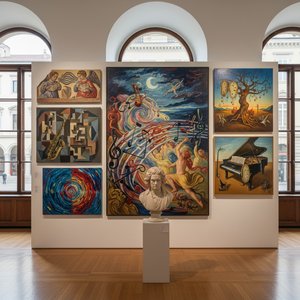
Harmonies on Canvas: Exploring the Visual Representation of Music in Art History
Explore the fascinating history of music's visual representation in art! From ancient symbolism to modern abstraction, discover how artists have captured sound and emotion on canvas. Expert insights & stunning examples.

The Enduring Legacy of Fine Art Prints: Technique, History & Aesthetic Impact
Explore the rich history & techniques of fine art prints. Discover investment potential, assess authenticity, and learn how to preserve your collection with expert guidance. Trusted insights for discerning collectors.


