

 Vaata sisu
 Jaga teost
 Jaga
Jaga
 Detailid
 Õppekate juhend

 Laadi alla
 Sarnased teosed
 Röntgenuuring
 Slaidietendus
 Statistika
Self-Portrait
 Acrylic On Canvas
- WallArt
- Atonal Expressionism
 1922
1922- 19th Century
 9.0 x 10.0 cm
 Arnold Schönberg Center
 Loe lähemalt
Giclée / Kunstiprint
Muuseumikvaliteediga giclée- või kangasprint kiire tootmisega ja paindlikud viimistlusvõimalused. ( Telli käsitsi maalitud reproduktsioon Ülemineku digitaalse pildi müügi kanalisse)




P118B €10

P118H €10

P118W €10

P438Z €10

P508JH €12

P508YH €12

P805H €10

P805Z €10

P919BZ €10

P919G €10

P919XJ €10

P959ZH €10

P968JZ €12

W106C €8

W218G €10

W218JH €8

W218Y €10

W307PJ €10

W316G €10

W316PJ €8

W316Y €10

W398PJ €8

W4111J €10

W500HY €15

W500JH €15

W692G €12

W849H €8

W940BG €15

W953PJ €8




Vali meie eelmääratud suurused, mis vastavad teose algupärastele proportsioonidele.

Sisestage vajalik laius ja kõrgus, et see sobiks teie raamile või seinale. Trükki saab ainult lõigata, seda ei saa kunagi pildist suuremaks teha, seega ka differentse vormiga suurus kaotab osa pildist. Enne trükkimist saadame teile kinnitamiseks digitaalse näidisprojektsiooni. Sellel lehel näidatud pilt ei kujuta reaalset lõiget — seda näitab ainult näidisprojekttsioon.
Ülemaailmne tarne () 2 nädala jooksul, tavalise 4/5 nädala asemel. (21 oktoober)

Tasuta ekspresssaatmine üle maailma

Kõrgekvaliteediline lina-kangastest muld

Täielik transpordikindlustus

Tollimaksude tagastamise garantii

Värvitoime täpsuse garantii

100 päeva tagastusõigus (ainult defektide korral)

100% raha tagasi garantii

Hulgusoodustus
 Klaasivalik on saadaval ainult kuni 110 cm suuruses teostes

Self-Portrait
Giclée / Kunstiprint
Reproduktsiooni mõõtmed
-


Lõppsumma
€ 70
A Study in Yellow and Green: Arnold Schoenberg's Self-Portrait (1922)
This intimate drawing, measuring just 9 x 10 cm, offers an arresting glimpse into the mind of one of the 20th century’s most revolutionary composers – Arnold Schoenberg. Executed in 1922, a pivotal year in his artistic development, the work transcends a simple portrait; it's a concentrated distillation of intellectual intensity and perhaps, a subtle self-examination rendered with remarkable precision. The stark palette of yellow and green immediately draws the viewer in, colors that would become increasingly significant within Schoenberg’s musical explorations of atonality and dissonance.
- Subject & Composition: The central focus is undeniably the artist himself – a man with a neatly trimmed mustache, his gaze direct and unwavering. The simplified rendering emphasizes key features: the piercing green eyes, a hallmark of Schoenberg’s artistic vision, and the strong jawline hinting at an unyielding intellect.
- Technique & Materials: Crafted in black and yellow tones, the drawing utilizes a technique that suggests both meticulous observation and a deliberate departure from representational realism. The use of shading creates depth and volume, while the limited color palette contributes to a sense of austerity and focused contemplation.
The Second Viennese School & Atonality
To fully appreciate this self-portrait, it’s crucial to understand Schoenberg's place within the artistic landscape of early 20th-century Vienna. He was at the heart of the “Second Viennese School,” a group of composers – including Alban Berg and Anton Webern – who radically challenged traditional harmonic structures. Schoenberg pioneered atonality, rejecting the established rules of key signatures and chord progressions, believing that music should be free from conventional constraints. This drawing can be seen as a visual manifestation of this intellectual shift; the deliberate use of color and simplified form reflects a desire to break away from established artistic conventions.
The year 1922 was particularly significant for Schoenberg, marking a period of intense experimentation with serialism – a compositional technique based on mathematical series that further explored the possibilities of atonality. This self-portrait isn’t merely a likeness; it's a visual echo of his groundbreaking musical ideas.
Symbolic Resonance & Emotional Impact
While seemingly straightforward, the drawing possesses a subtle emotional depth. The intense gaze suggests introspection and perhaps a sense of isolation – feelings that likely accompanied Schoenberg as he navigated the turbulent waters of artistic innovation. The yellow and green hues, often associated with envy and growth respectively, could symbolize his ambition and relentless pursuit of new musical frontiers. The starkness of the image evokes a feeling of quiet contemplation, inviting the viewer to engage in their own thoughts about creativity, genius, and the challenges of pushing boundaries.
A Collector’s Piece – Reproduction & Legacy
This hand-painted reproduction captures not only the visual details of Schoenberg's self-portrait but also the spirit of a revolutionary artist. Each reproduction is meticulously crafted by skilled artisans, ensuring an authentic representation of this significant work. Perfect for interior design projects seeking a touch of intellectual sophistication or as a unique addition to any art collection, this piece offers a tangible connection to one of music’s most influential figures. Its small size makes it ideal for display in intimate settings, while its powerful imagery ensures that it will remain a captivating subject of contemplation for years to come.
Küsimused ja vastused
Millast ajastu kuulub teos "Self-Portrait"?
Teose „Self-Portrait“, autor Arnold Schönberg ajalooline periood on 19th Century. See klassifikatsioon aitab teost kunstiloostikuliselt paikata.
Kas teost "Self-Portrait" peetakse kunstniku kodumaal?
Jah – teos asub kunstniku kodumaal. Arnold Schönberg sünnimaakond on Austria ning teose "Self-Portrait" originaali hoiab endas muuseum, mis asub riigis Austria.
Mis on teose „Self-Portrait“, autor Arnold Schönberg luminants?
Teose „Self-Portrait“, autor Arnold Schönberg luminants on Luminous. Luminants kirjeldab, kui palju valgust värvid peegeldavad.
Kunstniku elulugu
varaj puud ja muusikalised algused
Arnold Schönberg, austria-ameerika helilooj, sündis 13. september 1874 Austrias, Viinnis. Tema varajane elu oli tähistatud vahendusega algusega, kuna tema isa oli kingapoodi omanik. Vaatamata sellele juhtumisele suunas Schönbergi loomulik armastus muusika vastu teda suurel määral iseseisvalt selles valdkonnas õppima.muutlik areng ja märkimistekendavad teosed
Schönbergi algased teosed, nagu Verklärte Nacht (1899), näitasid Brahmsi ja Wagneri stiilide sündmist. Edasine areng tegi temast keskne tegelane Teises Viini koolkonnas koos Anton Weberni ja Alban Bergi. Tema kompositsioonid, sealhulgas stringkvartett nr 2 (1907–1908), Erwartung (1909) ja Pierrot Lunaire (1912), näitasid tema innovatiivset lähenemist atonaalsusele.õpetamine, emigratsioon ja hilisem elu
1933. aastal lahkus Schönberg Preussia Kunstiakadeemiast natsistliku võimuküllekkumise tõttu, kuna viimastel oli tema muusik nii nimetatud "lahjustunud". Seejärel õpetas ta USA-s, sealhulgas Californias Los Angelesi ülikoolis (1936–1944), kus on tema nimel nimetatud erinevad asutused. [https://OriginalUniqueArt.com/@/arnold-scherichia](avastage rohkem Schönbergi elu ja loomingust OriginalUniqueArt lehelt).- Schönberg uuris filmimuusikat ja kirjutas enam toonilist muusikat, lõpetades oma kammersümfoonia nr 2 aastal 1939.
- Ta satiiritses fašistlikke türante Byronist inspireeritunud teoses Ood Napoleonile (1942).
- Sõjajärgne Viin pakkus talle auгражданство, kuid ta oli haiguse järele, nagu on kujutatud tema stringtrio (1946) teoses.
pärand ja mõju
Kui maailm sai teada Holokaustist, mälestas Schönberg selle ohvrite vastu teoses A Survivor from Warsaw (1947). Israelie kontserdimuusikakool ja akadeemia valis ta 1951. aastal aupresidentiks. [https://OriginalUniqueArt.com/@@/a@d3bqc7-the-museum-destroyed-by-fire-(united-states)](lugege lähemalt tema loomingu mõju OriginalUniqueArt lehelt). olulised punktid:- Schönbergi innovatiivne muusika oli üks 20. sajandi klassikamuusika mõjuvaimaid ja poleemilisemaid suunad.
- vähemalt kolm heliloojate põlvkonda arendas edasi selle veidi formaalseid põhimõtteid.
- tema esteetiline ja muusikahistoriline vaade mõjutas muusikoloogid Theodor W. Adorno ja Carl Dahlhausit. [https://OriginalUniqueArt.com/@@/a@d3cl2x--a-journey-through-art-history-with-OriginalUniqueArt-s-extensive-collection-](uurige kunsti laia kogumust OriginalUniqueArt lehelt, mis ulatub 12. sajandist kuni 20. sajandini).

Arnold Schönberg
1874 - 1951 , Austria
Lühikest infot
- Artistic Movement Or Style: Dodekafooniline tehnika; Ekspressionism
- Artists Or Movements Influenced By This Artist:
- Anton Webern
- Alban Berg
- Artists Who Influenced This Artist:
- Johannes Brahms
- Richard Wagner
- Date Of Birth: 13. september 1874
- Date Of Death: 1951
- Full Name: Arnold Schoenberg
- Nationality: Austria-USA
- Notable Artworks:
- Süit, op. 29
- Muusikaline masin
- Staffliner
- Place Of Birth: Viin, Austria
Sarnased artiklid

Dark Masterpieces: 10 Iconic Paintings Dominated by Black Tones |
Explore 10 iconic paintings dominated by black tones, from Rembrandt’s chiaroscuro to Goya's dark expressions. Discover the stories behind these masterpieces & find museum-quality art reproductions for your home at .
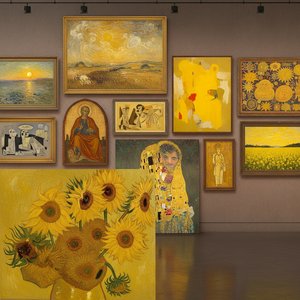
Golden Hues: 10 Masterpieces Dominated by Chrome Yellow | OriginalUniqueArt
Immerse yourself in golden light! Explore 10 famous paintings dominated by 'Chrome Yellow', from Van Gogh’s Sunflowers to Monet's Haystacks. Discover the stories behind these iconic Impressionist & Post-Impressionist masterpieces and find museum-quality art reproductions at OriginalUniqueArt.com.

Echoes of Time: Exploring the Enduring Appeal & Historical Context of Vintage Art Prints
Explore the captivating world of vintage art prints! Discover their history, collecting tips & enduring appeal. Expert insights on chromolithography and building a legacy collection with OriginalUniqueArt.

Giclée Prints: Archival Quality & Aesthetic Nuances for the Discerning Collector
Explore the world of giclée prints with OriginalUniqueArt. Learn about archival quality, aesthetic nuances & investment potential. Expert guidance for discerning art collectors seeking museum-quality reproductions and lasting value.

The Enduring Legacy of Fine Art Prints: Technique, History & Aesthetic Impact
Explore the rich history & techniques of fine art prints. Discover investment potential, assess authenticity, and learn how to preserve your collection with expert guidance. Trusted insights for discerning collectors.


