

 Vaata sisu
 Jaga teost
 Jaga
Jaga
 Detailid
 Õppekate juhend

 Laadi alla
 Sarnased teosed
 Röntgenuuring
 Slaidietendus
 Statistika
Critic I
 Oil On Panel
- Expressionism
 1910
1910- 19th Century
 31.0 x 45.0 cm
 Arnold Schönberg Center
 Loe lähemalt
Käsitsi valmistatud õlimaalireproduktsioon
Meie kunstnike poolt tellimusel valmistatud käsitsi maalitud õli-kainaste teos teie soovitud suuruses ja raamis. ( Lülita trükkitoodetele Ülemineku digitaalse pildi müügi kanalisse)




P118B €10

P118H €10

P118W €10

P438Z €10

P508JH €12

P508YH €12

P805H €10

P805Z €10

P919BZ €10

P919G €10

P919XJ €10

P959ZH €10

P968JZ €12

W106C €8

W218G €10

W218JH €8

W218Y €10

W307PJ €10

W316G €10

W316PJ €8

W316Y €10

W398PJ €8

W4111J €10

W500HY €15

W500JH €15

W692G €12

W849H €8

W940BG €15

W953PJ €8




Vali meie eelmääratud suurused, mis vastavad teose algupärastele proportsioonidele.

Sisestage vajalik laius ja kõrgus, et teos sobiks teie raamile või seinale. Kuna tegu on käsipainatud teosega, siis erineva kujuga suuruse korral võib kunstnik jätta pildi ümber veidi rohkem marginaali või lõigata osa ära — valik on teie. Enne maali alustamist saadame teile kinnitamiseks digitaalse näidisprojektsiooni. Sellel lehel näidatud pilt ei kajasta tegelikku tulemust — seda näitab ainult näidisprojekttsioon.
Pärast tellimust saadab OriginalUniqueArt.com meeskond kliendile e-posti juhised ning esitab eelvaate kavandi
Maailmline tarne 3–4 nädala jooksul tavalise 5 nädala asemel. (21 oktoober). Kvaliteedis kompromisse ei tehta.

Tasuta ekspresssaatmine üle maailma

Kõrgekvaliteediline lina-kangastest muld

Täielik transpordikindlustus

Tollimaksude tagastamise garantii

Värvitoime täpsuse garantii

100 päeva tagastusõigus (ainult defektide korral)

100% raha tagasi garantii

Hulgusoodustus
 Klaasivalik on saadaval ainult kuni 110 cm suuruses teostes

Critic I
Reproduktsiooni materjal
Reproduktsiooni mõõtmed
-


Lõppsumma
€ 262
A Portrait of Disquiet: Examining Schoenberg’s “Critic I”
Arnold Schoenberg's "Critic I," painted in 1910, is not merely a portrait; it’s a visceral embodiment of the anxieties and intellectual rigor that defined one of music’s most revolutionary figures. Measuring a modest 31 x 45 cm on oil panel, this arresting image – often dubbed “Critic I” due to its unsettling depiction – transcends simple representation, offering a glimpse into the mind grappling with the very nature of artistic interpretation and judgment. The painting depicts a strikingly rendered face, dominated by a dense beard and an expression that oscillates between contemplation and something akin to demonic intensity. This deliberate distortion, far from being a stylistic flourish, speaks directly to Schönberg’s own philosophical concerns articulated in his essay, “About Music Criticism,” where he argues that artistic perception is fundamentally subjective, shaped by the listener's unconscious biases and imaginative capacity.
- The Artist’s Intention: Schoenberg, a pivotal figure in the development of atonality and serialism, was deeply invested in questioning established aesthetic norms. “Critic I” can be interpreted as a self-portrait reflecting this intellectual struggle – a confrontation with the limitations of conventional judgment and the inherent subjectivity of artistic experience.
- Technical Mastery: Executed in oil on panel, the painting demonstrates Schoenberg’s meticulous attention to detail and his command of chiaroscuro. The dramatic lighting emphasizes the contours of the face, intensifying the sense of unease and highlighting the subject's perceived scrutiny.
A Window into Viennese Modernism
"Critic I" was created during a period of immense artistic ferment in Vienna – the early 20th century. Schoenberg’s work aligned with the broader currents of Expressionism and Cubism, movements that challenged traditional representational forms and sought to convey inner emotional states through fragmented imagery and distorted perspectives. The painting's unsettling quality reflects the intellectual turbulence of the time, a period marked by rapid scientific advancements, social upheaval, and a growing questioning of established values. The work’s creation coincided with Schoenberg’s pivotal compositional achievements – including “Verklärte Nacht” and “Erwartung” – solidifying his position as a leading voice in the Second Viennese School alongside Alban Berg and Anton Webern.
Symbolism and Emotional Resonance
The painting's symbolism is deliberately ambiguous, contributing to its enduring power. The beard, often associated with wisdom and authority, here seems to mask rather than reveal. The intense gaze suggests a critical eye, perhaps reflecting Schoenberg’s own rigorous self-examination of musical theory and composition. Schönberg himself described the artwork as “dispensing warmth,” suggesting an attempt to imbue his work with emotional resonance despite its challenging nature. The overall effect is one of profound introspection – a portrait not just of a man, but of a mind wrestling with complex ideas about art, perception, and judgment.
Provenance and Significance
"Critic I" currently resides at the Arnold Schönberg Center in Vienna, Austria, a testament to its historical significance. Its creation in 1910, just as Schoenberg was establishing his revolutionary musical theories, underscores its importance within the trajectory of modern music. This hand-painted reproduction offers an unparalleled opportunity to own a piece of art history – a tangible connection to one of the most influential composers of the 20th century and a powerful meditation on the very nature of artistic interpretation.
Küsimused ja vastused
Millist kasutusviisi ja ruumi on „Critic I“, autor Arnold Schönberg jaoks soovitatav?
Kasutus (Statement) ja ruum (Office) on kaks soovitust, mis on kirjas teose „Critic I“, autor Arnold Schönberg kohta.
Millist tehnikat teose "Critic I" valmistamisel kasutati ja millal see loodi?
Teos "Critic I" loodi aastal 1910, kasutades Oil On Panel tehnikat. Materjal ja kuupäev kirjeldavad, kuidas ja millal originaal valminud on.
Millist suurust ja orientatsiooni soovitatakse teosele „Critic I“, autor Arnold Schönberg trükkimisel?
Teose "Critic I" puhul on soovitatav trükiรูปแบบ on Large suurusega ja Portrait suunaga.
Kunstniku elulugu
varaj puud ja muusikalised algused
Arnold Schönberg, austria-ameerika helilooj, sündis 13. september 1874 Austrias, Viinnis. Tema varajane elu oli tähistatud vahendusega algusega, kuna tema isa oli kingapoodi omanik. Vaatamata sellele juhtumisele suunas Schönbergi loomulik armastus muusika vastu teda suurel määral iseseisvalt selles valdkonnas õppima.muutlik areng ja märkimistekendavad teosed
Schönbergi algased teosed, nagu Verklärte Nacht (1899), näitasid Brahmsi ja Wagneri stiilide sündmist. Edasine areng tegi temast keskne tegelane Teises Viini koolkonnas koos Anton Weberni ja Alban Bergi. Tema kompositsioonid, sealhulgas stringkvartett nr 2 (1907–1908), Erwartung (1909) ja Pierrot Lunaire (1912), näitasid tema innovatiivset lähenemist atonaalsusele.õpetamine, emigratsioon ja hilisem elu
1933. aastal lahkus Schönberg Preussia Kunstiakadeemiast natsistliku võimuküllekkumise tõttu, kuna viimastel oli tema muusik nii nimetatud "lahjustunud". Seejärel õpetas ta USA-s, sealhulgas Californias Los Angelesi ülikoolis (1936–1944), kus on tema nimel nimetatud erinevad asutused. [https://OriginalUniqueArt.com/@/arnold-scherichia](avastage rohkem Schönbergi elu ja loomingust OriginalUniqueArt lehelt).- Schönberg uuris filmimuusikat ja kirjutas enam toonilist muusikat, lõpetades oma kammersümfoonia nr 2 aastal 1939.
- Ta satiiritses fašistlikke türante Byronist inspireeritunud teoses Ood Napoleonile (1942).
- Sõjajärgne Viin pakkus talle auгражданство, kuid ta oli haiguse järele, nagu on kujutatud tema stringtrio (1946) teoses.
pärand ja mõju
Kui maailm sai teada Holokaustist, mälestas Schönberg selle ohvrite vastu teoses A Survivor from Warsaw (1947). Israelie kontserdimuusikakool ja akadeemia valis ta 1951. aastal aupresidentiks. [https://OriginalUniqueArt.com/@@/a@d3bqc7-the-museum-destroyed-by-fire-(united-states)](lugege lähemalt tema loomingu mõju OriginalUniqueArt lehelt). olulised punktid:- Schönbergi innovatiivne muusika oli üks 20. sajandi klassikamuusika mõjuvaimaid ja poleemilisemaid suunad.
- vähemalt kolm heliloojate põlvkonda arendas edasi selle veidi formaalseid põhimõtteid.
- tema esteetiline ja muusikahistoriline vaade mõjutas muusikoloogid Theodor W. Adorno ja Carl Dahlhausit. [https://OriginalUniqueArt.com/@@/a@d3cl2x--a-journey-through-art-history-with-OriginalUniqueArt-s-extensive-collection-](uurige kunsti laia kogumust OriginalUniqueArt lehelt, mis ulatub 12. sajandist kuni 20. sajandini).

Arnold Schönberg
1874 - 1951 , Austria
Lühikest infot
- Artistic Movement Or Style: Dodekafooniline tehnika; Ekspressionism
- Artists Or Movements Influenced By This Artist:
- Anton Webern
- Alban Berg
- Artists Who Influenced This Artist:
- Johannes Brahms
- Richard Wagner
- Date Of Birth: 13. september 1874
- Date Of Death: 1951
- Full Name: Arnold Schoenberg
- Nationality: Austria-USA
- Notable Artworks:
- Süit, op. 29
- Muusikaline masin
- Staffliner
- Place Of Birth: Viin, Austria
Sarnased artiklid
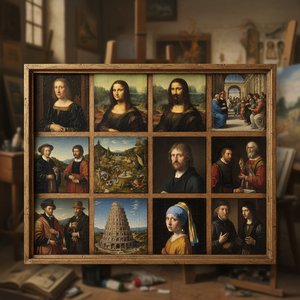
Oil on Panel Masters: 10 Paintings That Revolutionized Art |
Journey through 10 legendary 'Oil on Panel' masterpieces by Van Eyck, Bosch & Bruegel. Explore the stories behind these iconic Renaissance & Baroque paintings and find museum-quality art reproductions to elevate your home decor. Discover all masterpieces on !

Mastering the Surface: The Timeless Elegance and Technical Brilliance of Oil on Panel Painting
Discover the enduring allure of oil on panel painting. Explore the technical mastery, historical significance, and luminous depth that define this prestigious medium, from Renaissance masters to modern fine art reproductions for discerning collectors.
Mastering the Surface: A Historical and Technical Guide to the Art of Oil on Panel Painting
Explore the profound history and technical brilliance of oil on panel painting. From Renaissance masters to modern techniques, discover why this rigid support offers unparalleled precision and permanence for fine art lovers and collectors.
Oil on Panel: A Historical Survey of Technique, Support & Aesthetic Evolution
Explore the rich history of oil on panel painting! Discover Renaissance techniques, support structures & aesthetic evolution. Expert insights for art collectors and enthusiasts.
Oil on Panel: A Historical Survey of Technique, Support, and Aesthetic Impact
Explore the rich history of oil on panel painting! Discover Renaissance techniques, support construction, & the enduring legacy of this masterful art form. Expert insights for collectors and enthusiasts.


