

 Vaata sisu
 Jaga teost
 Jaga
Jaga
 Detailid
 Õppekate juhend

 Laadi alla
 Sarnased teosed
 Röntgenuuring
 Slaidietendus
 Statistika
Shield with Gorgon


 Loe lähemalt
Giclée / Kunstiprint
Muuseumikvaliteediga giclée- või kangasprint kiire tootmisega ja paindlikud viimistlusvõimalused. ( Telli käsitsi maalitud reproduktsioon Ülemineku digitaalse pildi müügi kanalisse)




P118B €10

P118H €10

P118W €10

P438Z €10

P508JH €12

P508YH €12

P805H €10

P805Z €10

P919BZ €10

P919G €10

P919XJ €10

P959ZH €10

P968JZ €12

W106C €8

W218G €10

W218JH €8

W218Y €10

W307PJ €10

W316G €10

W316PJ €8

W316Y €10

W398PJ €8

W4111J €10

W500HY €15

W500JH €15

W692G €12

W849H €8

W940BG €15

W953PJ €8




Vali meie eelmääratud suurused, mis vastavad teose algupärastele proportsioonidele.

Sisestage vajalik laius ja kõrgus, et see sobiks teie raamile või seinale. Trükki saab ainult lõigata, seda ei saa kunagi pildist suuremaks teha, seega ka differentse vormiga suurus kaotab osa pildist. Enne trükkimist saadame teile kinnitamiseks digitaalse näidisprojektsiooni. Sellel lehel näidatud pilt ei kujuta reaalset lõiget — seda näitab ainult näidisprojekttsioon.
Ülemaailmne tarne () 2 nädala jooksul, tavalise 4/5 nädala asemel. (22 oktoober)

Tasuta ekspresssaatmine üle maailma

Kõrgekvaliteediline lina-kangastest muld

Täielik transpordikindlustus

Tollimaksude tagastamise garantii

Värvitoime täpsuse garantii

100 päeva tagastusõigus (ainult defektide korral)

100% raha tagasi garantii

Hulgusoodustus
 Klaasivalik on saadaval ainult kuni 110 cm suuruses teostes

Shield with Gorgon
Giclée / Kunstiprint
Reproduktsiooni mõõtmed
-


Lõppsumma
€ 70
Shield with Gorgon – A Meditation on Mortality and Ancient Myth
The sculpture “Shield with Gorgon’s Head,” created by Arnold Böcklin in 1897, stands as a haunting testament to the artist's fascination with Greco-Roman mythology and his profound contemplation of death. Exhibited prominently at the Musée d’Orsay in Paris, this piece transcends mere representation; it invites viewers into a realm of psychological exploration where beauty intertwines with unsettling truths. Böcklin, deeply influenced by Nietzschean philosophy – specifically the concept of eternal recurrence – sought to capture not just an image but an experience, mirroring the cyclical nature of existence and confronting us with our inevitable demise.Style and Technique: Symbolist Precision
Böcklin’s style aligns perfectly with the tenets of Symbolism, a movement that rejected realism in favor of conveying emotions and ideas through suggestive imagery rather than literal depiction. Unlike Impressionists who aimed to capture fleeting moments of light and color, Böcklin meticulously crafted his sculpture using a technique rooted in meticulous observation and symbolic distillation. The artist employed a combination of modeling clay and bronze casting – a process demanding considerable skill and patience – to achieve an astonishing level of detail. Notice the subtle gradations of tone within the Gorgon’s head; these aren't merely aesthetic choices but deliberate efforts to convey texture and depth, mirroring the complexities of human emotion. The smooth surface contrasts sharply with the rough contours of the snake’s coils, creating a visual dialogue that underscores the sculpture’s thematic concerns.Historical Context: Nietzschean Echoes and Late Romantic Sentiment
Böcklin's artistic output flourished during the waning years of the Romantic era, a period characterized by an obsession with emotion, imagination, and the sublime—experiences perceived as exceeding human comprehension yet simultaneously elevating the soul. However, Böcklin’s vision extended beyond traditional Romantic tropes; he actively engaged with the burgeoning intellectual currents of his time, particularly Nietzsche's proclamation that “God is dead.” This existential crisis fueled Böcklin’s exploration of themes like nihilism and mortality—concepts central to both Nietzschean thought and Symbolist art. The sculpture reflects a broader cultural preoccupation with confronting death not as an end but as a transformative stage in the cosmic cycle, mirroring Nietzsche's assertion that life itself is an affirmation of eternal recurrence.Symbolism Unleashed: Gorgon’s Head – Terror and Transformation
The Gorgon Medusa represents more than just monstrous horror; she embodies the terrifying power of transformation—a concept inextricably linked to Böcklin’s Symbolist worldview. According to Greek mythology, Medusa possessed snakes for hair that turned anyone who gazed upon them into stone. This image served as a potent symbol of inescapable fate and the destructive force of repressed emotions. The sculptor skillfully captures this duality: the Gorgon's gaze exudes palpable terror, yet simultaneously hints at an underlying process of metamorphosis—a suggestion that confronting death can lead to profound spiritual renewal. Böcklin’s deliberate use of serpentine coils reinforces this symbolism, representing both constriction and liberation – mirroring the artist’s own preoccupation with reconciling beauty and darkness.Emotional Impact: A Confrontation With Eternity
Ultimately, “Shield with Gorgon’s Head” compels viewers to confront their own mortality—to grapple with the inescapable reality that life is finite yet perpetually reborn. The sculpture's unsettling stillness invites contemplation, prompting us to consider our place within the grand scheme of cosmic time. Böcklin doesn’t offer comfort or reassurance; instead, he presents a stark portrait of existence stripped bare – confronting us with the beauty and terror inherent in accepting death as an inevitable component of life’s eternal dance. It is precisely this unflinching gaze—this refusal to shy away from uncomfortable truths—that secures “Shield with Gorgon’s Head”'s enduring power as a masterpiece of Symbolist art and a timeless meditation on the human condition.Küsimused ja vastused
Millised värvid domineerivad teoses „Shield with Gorgon“, autor Arnold Böcklin?
Teoses „Shield with Gorgon“, autor Arnold Böcklin on kasutatud Earthy värvipaletti, kus domineerib Black (#000000) värv.
Kas teosel "Shield with Gorgon" on lisatud reaalsete elementidega (AR) eelvaade?
Teosele "Shield with Gorgon" on saadaval täiendatud reaalne eelvaade: teose AR-eelvaade leht näitab seda teie enda ruumis ühilduval seadmel.
Kuidas teose „Shield with Gorgon“, autor Arnold Böcklin meeleolu on kirjeldatud?
Teose "Shield with Gorgon" atmosfäär on Dramatic."
Kunstniku elulugu
varajane elu ja koolitus
Arnold Böcklin, Švitsi symbolistlik maalikunstnik, sündis 16. oktoobril 1827 Baslis, Švizeriidis. Tema isa, Christian Frederick Böcklin, pärines Schaffhauseni vanast sugukonna harudest ja tegeledu manusega siidikaubanduses. Arnoldi ema, Ursula Lippe, oli samast linnast pärit. Ta õppis Düsseldorfi akadeemias Schirmeri juures, becomeides samal ajal sõber Anselm Feuerbachiga. Böcklin on tihedalt seotud Düsseldorfi maalekooliga.kunstiline karjäär ja symbolism
Böcklini kunstiline teekond viis teda läbi mitme erineva linnaga, sealhulgas Pariisi, kus ta töötas Louvre'is, ning Rooma, kus teda mõjutsid selle linna vaatamistundused. Tema teosed kujutasid sageli allegorilisi ja müüdilisi figure klassikalise arhitektuuriga ümbritstud keskkonnas, uurides surmi ja surevuse teemasid.- Great Park, üks tema varasemaid teoseid, näitas antiikseid müüte.
- Nymph and Satyr (1858) ja Sappho (1859) olid sel perioodil silmapaistvad teosed.
- Böcklini Portrait of Myself, with Death Playing a Violin (1872) näitas tema ainulaadset stiili.
pärand ja mõju
Böcklin on kõige tuntum oma viie versiooni teosest The Isle of the Dead (1880-1886) eest, mis tõid meelde Florentsis asuvat inglise kalmistut, kuhu tema tütar on peidetud. Tema töö mõjutas nooremate kunstnikud nagu Hans Thoma ja inspireeris mitmeid hilisromantika helilisiä.- Clement Greenberg kirjeldus Böcklini tööd kui ühte oma ajastu "kõige täiuslikumat väljendust".
- Böcklini stiil lahukus kokku pre-rafaeliitidega, rõhutades unenäemaailma ja mystika rolli.
muuseumid ja kogumikud
Böcklini teoseid saab leida erinevatest muuseumidest, sealhulandes:- Öffentliche Kunstsammlung (Basel, Švizeriid)
- Kunstmuseum Basel (Švizeriid)
- Museum Kunsthaus Zürich (Zürich, Švizeriid)
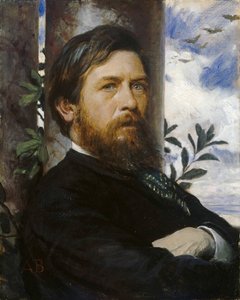
Arnold Böcklin
1827 - 1901 , Šveits
Lühikest infot
- Artistic Movement Or Style: Sümbolism
- Artists Or Movements Influenced By This Artist:
- Hans Thoma
- Pre-rafaeliidid
- Artists Who Influenced This Artist:
- Schirmer
- Feuerbach
- Date Of Birth: 16. oktoober 1827
- Date Of Death: 16. jaanuar 1901
- Full Name: Arnold Böcklin
- Nationality: Švits
- Notable Artworks:
- Surnute saar
- Nümf ja satüür
- Sappho
- Eneseportree
- Place Of Birth: Basel, Švits
Sarnased artiklid

Theatricality & Triumph: Baroque Drama in Painting & Sculpture
Explore the dramatic world of Baroque art! Discover its history, defining characteristics, & lasting influence on painting & sculpture. Expert insights into Caravaggio, Zurbarán, and Bernini – plus high-quality reproductions at OriginalUniqueArt.

The Enduring Form: Exploring Themes & Techniques in Sculpture Across Historical Periods
Explore the rich history of sculpture from ancient masterpieces to contemporary innovations. Discover key techniques, influential artists & investment potential for discerning art collectors.

Bronze Sculptures That Defined Art History | OriginalUniqueArt
Journey through art history with our Top 10 bronze sculptures! Explore masterpieces by Rodin, Michelangelo & more. Discover stories behind iconic statues and find museum-quality reproductions for your home decor at OriginalUniqueArt.com.

The Enduring Form: Sculpture Across History, Technique & Emotional Resonance
Explore the rich history of sculpture with OriginalUniqueArt. Discover key techniques, influential artists & investment potential for discerning collectors. Expert insights into valuing and collecting timeless masterpieces.

Bronze Age to Modern Masters: 10 Sculptures That Redefined Art | OriginalUniqueArt
Journey through art history with 10 legendary bronze sculptures – from Michelangelo's David to Rodin’s Thinker. Explore the stories, techniques & timeless beauty of these masterpieces. Find museum-quality reproductions & elevate your home decor on OriginalUniqueArt.com.
