Symbolism
La peste (Arnold Böcklin)
Arnold Böcklin (1827–1901) on loonud teose La peste. See kuulub Symbolism suuntrime. Teos on valmistatud materjalist Oil On Canvas.
- Oil On Canvas

 Eelvaade

 Käsitsi maalatud õlimaalatsioon
 Saada
 Jaga
 Teave teose kohta


 Laadi alla
 Sarnased teosed
 Röntgenuuring
 Slaidietendus
 KÜSIMUSED JA VASTUSID

 Statistika
La peste lühidalt
- Pealkiri
- La peste
- Kunstnik
- Arnold Böcklin (1827–1901)
- Kunstnik on sündinud
- Basel, Šveits
- Tehnika
- Oil On Canvas
- Suunad
- Symbolism
- Aeglkond
- 19th Century
- Teema
- monster, rider, buildings, dead bodies, sky, red cloth
Mida La peste kujutab?
The Shadow of Mortality
In this unsettling scene, we find ourselves witnessing a moment of profound, inevitable decay. A monstrous, winged creature, reminiscent of a bat, moves through the narrow streets of a medieval European city. Atop this beast sits a skeletal figure, a personification of death that moves with a terrifying, silent purpose. The atmosphere is heavy, thick with a hazy, yellow-grey light that suggests a world choked by sickness. There is a sense of chaos here, yet it is a quiet, suffocating kind of chaos. The buildings, with their rigid, angular lines, seem to press in on the viewer, creating a claustrophobic environment where escape feels impossible.
The color palette is deliberately somber, leaning heavily into the earthy tones of ochre, brown, and grey. However, there is a specific, unsettling use of pale green—a hue often associated with the physical reality of decomposition—that permeates the work. This sickly tint contrasts sharply with the single, startling shock of red found in the foreground. A woman lies there, her clothing a vivid crimson against the muted, dying world around her, a stark reminder of the human cost of the plague passing through the streets.
Symbolic Elements and Composition
The composition is structured with a certain architectural precision that heightens the sense of dread. The rider and the beast form a central, pyramidal apex that draws the eye upward and then forces it back down toward the suffering below. The artist uses several layers of visual language to communicate the theme of pestilence:
- The winged creature, acting as a vessel for the plague, disrupts the orderly geometry of the urban landscape.
- The use of atmospheric perspective, where the background fades into a murky haze, suggests an endless, spreading contagion.
- The fallen figures in the foreground and middle ground represent the victims, their forms partially obscured by shadow and the weight of the scene.
- The contrast between organic, irregular shapes of the monster and the rigid, rectangular shapes of the architecture emphasizes the unnatural intrusion of death into civilization.
The technique involves a careful layering of oil paints, creating a texture that feels both rough and weathered. In certain areas, the impasto is visible, giving the creature a visceral, tactile presence. This physical depth mirrors the psychological depth of the subject matter, where the veil between the physical world and a nightmare state feels dangerously thin.
The Weight of the Unseen
There is a profound stillness in the way the figures are arranged, despite the violence of the subject. It is a stillness born of hopelessness. The lighting is diffused and uneven, casting deep shadows that hide as much as they reveal. This lack of a clear light source contributes to the sense of mystery and the feeling that the plague is an unstoppable, elemental force rather than a mere biological event. The work captures a specific tension between the tangible reality of a city and the intangible, spectral presence of death, leaving the viewer with a lingering sense of unease that remains long after the first glance.
La peste kõrge resolutsiooniga pildid
Avalik omanik: kunstnik suri aastal 1901.
Arnold Böcklin, La peste. Avalik omaniklik õigus
Küsimused teemal La peste – vastused
Millises materjalis on teos „La peste“, autor Arnold Böcklin valmistatud?
Teose „La peste“, autor Arnold Böcklin materjal on Oil On Canvas. Reproduktsioonide eesmärk on jälitada selle tehnika välimust.
Mida „La peste“, autor Arnold Böcklin kujutab?
Teose "La peste" teemad on monster, rider, buildings, dead bodies, sky, red cloth, cityscape.
Kas teos „La peste“, autor Arnold Böcklin kuulub avalikku omandisse?
Tegijateõiguse osas on teos "La peste" kuuluv klassifikatsiooni alla: avalikus õiguses – selle autoriõigud onหมดunud.
Kes on teose "La peste" looja?
Teose "La peste" autoriks on mõeldud Arnold Böcklin.
Millissele stiilile kuulub "La peste"?
Teosest „La peste“, autor Arnold Böcklin tuntud kunstisuuna on Symbolism. See klassifikatsioon aitab teost paigutada sarnaste kunstnike ja teoste hulka.
Kuhu Arnold Böcklin loomingulisse perioodi kuulub teos "La peste"?
Teos "La peste" kuulub Arnold Böcklin loomingulise karjääri perioodi Late Period. See klassifikatsioon seostab teose kunstniku loovliku arenguga.
Kas Arnold Böcklin teos "La peste" kuulub avalikku omandisse ja miks?
„La peste“, autor Arnold Böcklin on avalikus õiguses – selle autoriõigud onหมดunud. Tegijakeskuse kaitse kestus arvatakse kunstniku surmaajaest, mis toimus aastal 1901.
Milliseid ühiseid elemente jagab teos "La peste" Arnold Böcklin muud loominguga?
Arnold Böcklin loomingus on teos "La peste", mis kuulub Symbolism stiili ja kordub teemad nagu symbolist movement, mythology and mortality, themes of death, war and pestilence, exploration of the subconscious.
Kas teos "La peste" on tüüpiline sellele, mida Arnold Böcklin tavaliselt lõi?
Arnold Böcklin korduvad teemad hõlmavad symbolist movement, mythology and mortality, themes of death, war and pestilence, exploration of the subconscious; teos "La peste" keskendub monster, rider, buildings, dead bodies, sky, red cloth, cityscape.
Kunstnikust, Arnold Böcklin
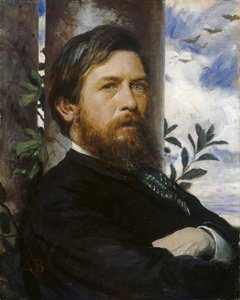
1827–1901, Šveits
Arnold Böcklin
Saare varjud Šveitsi linn Basel on olnud algupunkt elule, mida iseloomustas püsiv pinge aistitava ja vaimse maailma vahel. 16. oktoobril 1827 sündinud Christian Frederick Böcklin ja Ursula Lippe poeg liikus eventually oma isa siidikaubandusega seotud maailmast kaugemale, suvaliselt Düsseldorfi akadeemia rangesse õppekonnas. Schirmeri juhendise all hakkas ta omastama maastiku keelt – oskust, mida ta kasutas hiljem inimpsyhke geograafia kaartamiseks.
Teel Arnold Böcklin kohta Arnold Böcklin silmapaistvad teosed
Ka Arnold Böcklin teosed
 Surnute saar (Esimene versioon)1880
 Eneseportree koos surma viiulimängijaga
 Kondrik sõda1896
 Surnu saar (Versioon 5)1886
Essee teemadel La peste
 Beyond Reality: Unveiling the Enigmatic Depths of Metaphysical Art and its Philosophical EchoesExplore the profound mystery of Metaphysical Art. Delve into the philosophical depths of Giorgio de Chirico’s dreamscapes and discover how …
 25 Essential Works by Arnold Böcklin: A Journey Through Myth and SymbolismExplore 25 iconic Arnold Böcklin paintings and Symbolist works. Discover the full collection online at OriginalUniqueArt.com.
 Swiss artworks of the 1890sSwiss Symbolism in the 1890s features the iconic works of Félix Vallotton and Arnold Hodler. View the full collection online at OriginalUni…