Lülita trükkitoodetele
 Loe lähemalt







































 Kunstiteoste või reproduktsioonide puhul, mille üks külg on üle 105 cm (umbikmolt 41 tolli), saadetakse raam kirjal asendis, la Dismantlitud komplektina. See meetod tagab ohutuse kohaletoimetamisel ja väldib transpordil tekkivaid kahjustusi.


António Xavier Trindade: A Quiet Master of Oriental Impressionism
António Xavier Trindade stands as a singular figure in Indian art history—a testament to the harmonious fusion of European artistic sensibilities and profound engagement with the spirit of Goa. Born into Portuguese colonial India, his formative years instilled within him an appreciation for both tradition and innovation, which would ultimately define his distinctive oeuvre. His journey began at Sir Jamsetjee Jeejeebhoy School of Art in Bombay, where he absorbed the tenets of naturalism alongside a burgeoning fascination for Eastern aesthetics—a confluence that yielded results far surpassing mere stylistic imitation. The Mayo Silver Medal awarded to him in 1892 served as an affirmation of his talent and cemented his position amongst the vanguard of Indian painters.- Subject Matter: Trindade’s canvases frequently depict scenes from rural Goa—simple landscapes imbued with a palpable sense of serenity and dignity. However, he transcended mere topographical representation, delving into explorations of human emotion and spiritual contemplation.
- Style & Technique: Trindade championed an approach that blended Impressionistic brushstrokes with elements of Orientalist painting. He skillfully captured fleeting moments of light and color—a hallmark of Impressionism—yet simultaneously incorporated decorative motifs reminiscent of Persian art, reflecting the influence of European Orientalism.
Still Life: Echoes of Baroque Grandeur and Fleeting Beauty
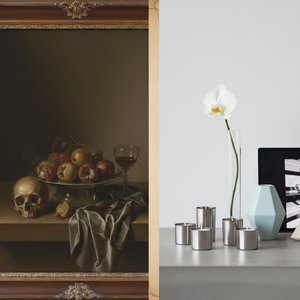
Consider Trindade’s “Still Life,” a captivating composition that exemplifies his artistic prowess. The painting portrays an assortment of objects—a large metal vase adorned with intricate pierced copperwork, alongside smaller vases and a bowl—arranged upon a tabletop. These commonplace items are elevated to symbolic significance through Trindade's meticulous rendering of light and texture. Drawing inspiration from the Dutch Baroque tradition, particularly Dolce Farniente (1920), where his wife posed in an aristocratic manner, Trindade’s work speaks to themes of leisure, contemplation, and the ephemeral nature of existence. The inclusion of a partially open jewelry box subtly underscores this notion—a visual metaphor for unfinished endeavors and perhaps even abandonment.- Symbolism: The vase itself represents stability and permanence against the backdrop of transient beauty. Its pierced copperwork echoes patterns found in Persian decorative arts, symbolizing exotic allure and cultural exchange.
- Historical Context: Trindade’s artistic output coincided with a period of significant intellectual ferment—the burgeoning Orientalist movement captivated European artists and intellectuals alike. This fascination fueled explorations of Eastern cultures and traditions, mirroring Trindade's own commitment to bridging the gap between East and West.
References & Legacy
Schihandi, Marcella, et al, António Xavier Trindade: An Indian Painter from Portuguese Goa (exhibition catalogue), Georgia Museum of Art, University of Georgia, 1996. This seminal publication illuminates Trindade’s artistic trajectory and underscores his enduring contribution to the canon of Indian art.“Still Life” remains a poignant reminder that beauty resides not merely in visual splendor but also in the contemplation of life's fleeting moments—a timeless message conveyed with masterful artistry by António Xavier Trindade.
Korduvad küsimused
Milline rahvuslik päritolu seisab teose "Kohtumine" Orientalist Painting taga?
Orientalist Painting suunaga teos "Kohtumine" on loodud kunstniku poolt, kes on pärit riigist India.
Millist tehnikat teose "Kohtumine" valmistamisel kasutati ja millal see loodi?
Teose „Kohtumine“, autor António Xavier Trindade tehnika on Akrüülkainal ning selle valmimisajaks on märgitud 1920.
Millist kintust ja intensiivsust „Kohtumine“, autor António Xavier Trindade näitab?
Teose „Kohtumine“, autor António Xavier Trindade värvitoit on Tasakaalustatud pehme kütkusega ja Tasakaalustatud intensiivsusega.
 Eelvaade
 Saada
Saada Jaga
Jaga
 Teave teose kohta
 Juhend

 Laadi alla
 Sarnased teosed
 Röntgenuuring
 Slaidietendus
 KÜSIMUSED JA VASTUSID
 Statistika