

 Saada
Saada Jaga
Jaga
 Teave teose kohta

 Laadi alla
 Sarnased teosed
 Slaidietendus
Exterior


 Loe lähemalt
Käsitsi valmistatud õlimaalireproduktsioon
Meie kunstnike poolt tellimusel valmistatud käsitsi maalitud õli-kainaste teos teie soovitud suuruses ja raamis. ( Osta print Osta pilt)




































Vali meie eelmääratud suurused, mis vastavad teose algupärastele proportsioonidele.

Sa võite sisestada oma mõõtmed konkreetse raami või ruumi sobivuse tagamiseks. Kui teie valitud suurus ei vasta originaalpildi proportsioonidele, siis kärvime kunstiteost või laiendame maali täiendavate käsitsi maalitud elementidega. Enne tootmise algust saadetakse teile heakskiitmiseks digitaalne eelvaade.
Palun pidage meeles, et ekraanil kuvatav eelvaade ei kajasta tegelikku kärpimist või laiendamist. Ainult eelvaade näitab täpselt lõplikku kompositsiooni.
Kuigi on saadaval kohandatud suurused, soovitame originaalproportsioonide säilimiseks valida mõõdud eelmääratletud nimekirjast.
Pärast tellimust saadab OriginalUniqueArt.com meeskond kliendile e-posti juhised ning esitab eelvaate kavandi.
Maailmline tarne 3–4 nädala jooksul tavalise 5 nädala asemel. (12 august). Kvaliteedis kompromisse ei tehta.

Tasuta ekspresssaatmine üle maailma

Kõrgekvaliteediline linakangas

Täielik transpordikindlustus

Tollimaksude tagastamise garantii

Värvitoime täpsuse garantii

60-päevane tagastusõig: ainult tootmisdefektide korral

100% raha tagasi garantii

Hulgusoodustus
 Klaasivalik on saadaval ainult suuruses kuni 110 cm

Exterior
Reproduktsiooni tehnika
Reproduktsiooni suurus
-


Kogusumma
$ 300
Teose kirjeldus
Exterior View by Andrea Palladio
The Basilica Palladiana stands as an enduring testament to Andrea Palladio’s genius—a monumental achievement of Renaissance architecture that continues to inspire awe and admiration centuries later. Constructed in 1549, this palazzo isn't merely a building; it’s a carefully orchestrated dialogue between human ambition and classical ideals.
A Synthesis of Roman Inspiration
Palladio’s vision was profoundly shaped by the rediscovery of Vitruvius’s *De Architectura*, the foundational treatise on architecture penned in Rome during the Republic. Recognizing the enduring beauty and structural principles of ancient Greece and Rome, Palladio sought to emulate their grandeur and harmony. He meticulously studied Roman temples and basilicas, absorbing their proportions and decorative schemes—a pursuit that would inform every aspect of his architectural endeavors.
Architectural Innovation: The Loggia System
What distinguishes the Basilica Palladiana from its contemporaries is Palladio’s groundbreaking application of the loggia system. Traditionally employed in Roman basilicas, this innovative technique involved creating a series of arched openings on the exterior walls, supported by columns and crowned with a horizontal frieze. This ingenious design maximized natural light penetration into the interior spaces while simultaneously establishing a visual connection between the building's façade and its courtyard—a deliberate echo of Roman civic architecture.
Symbolism and Spatial Harmony
Beyond mere structural ingenuity, Palladio imbued the Basilica with symbolic meaning. The symmetrical arrangement of columns and arches reflects the humanist belief in order and proportion—values central to Renaissance thought. Furthermore, the expansive loggias invite contemplation and foster a sense of openness, symbolizing the pursuit of knowledge and enlightenment. As visitors gaze upon this magnificent edifice, they are transported back to the glories of antiquity, experiencing firsthand the transformative power of Palladio’s architectural vision.
A Legacy Enduring Through Time
Today, the Basilica Palladiana remains a beacon of Renaissance artistry—a masterpiece that embodies Palladio's unwavering commitment to classical principles and his unparalleled ability to create spaces that inspire both beauty and contemplation. Its enduring influence can be seen in countless buildings across Europe and beyond, cementing Andrea Palladio’s place as one of history’s most influential architects.
Kunstniku elulugu
Early Life and Training
- Born: Andrea di Pietro della Gondola, November 30, 1508, Padua, Italy
- Died: August 19, 1580
- Origin: Venetian Republic
- Early experiences as a stonecutter in the workshop of Bartolomeo Cavazza da Sossano.
- Moved to Vicenza and worked as a stonemason, creating monuments and decorative sculptures influenced by Michele Sanmicheli's mannerist style.
- Apprenticeship provided foundational skills in construction and sculpture.
Influence of Gian Giorgio Trissino and Early Architectural Development
- Significant mentorship under humanist poet and scholar Gian Giorgio Trissino from 1538-1539.
- Trissino introduced Palladio to classical literature, arts, and sciences, fostering an appreciation for Vitruvius's architectural principles.
- First opportunity to study ancient architecture in Rome under Trissino’s guidance.
- Named "Palladio" by Trissino, alluding to the Greek goddess Pallas Athena and a character in Trissino's play.
The Barbaro Brothers and the Development of Palladian Style
- Patronage of Cardinal Daniele Barbaro and Marcantonio Barbaro significantly shaped Palladio’s career.
- Further study of classical architecture in Rome, 1554.
- Became "proto della serenissima" (chief architect of the Republic of Venice).
- Development of his distinctive architectural style based on Roman and Greek principles.
- Emphasis on symmetry, proportion, and harmony inspired by Vitruvius.
Major Works and Architectural Contributions
- Basilica Palladiana (Vicenza): Notable for its integration of Gothic structure with classical elements. Construction spanned decades and continued after his death.
- Villa Rotonda (near Vicenza): A quintessential example of Palladian architecture, featuring a symmetrical plan and four porticos facing the cardinal directions.
- Villa Foscari (near Venice): Celebrated for its elegant simplicity and harmonious proportions.
- Palazzo Chiericati (Vicenza): Demonstrates Palladio’s mastery of classical facades and interior design.
- Teatro Olimpico (Vicenza): An innovative early example of a permanent enclosed theater, featuring illusionistic scenery.
Legacy and Historical Significance
- Authored I quattro libri dell'architettura ("The Four Books of Architecture"), published in 1570, which codified his architectural principles and became highly influential across Europe.
- Palladianism: His style profoundly influenced architecture for centuries, inspiring architects like Inigo Jones in England and Thomas Jefferson in America.
- UNESCO World Heritage Sites: The City of Vicenza and the Palladian Villas of the Veneto are recognized as a UNESCO World Heritage Site, acknowledging the exceptional architectural legacy.
- Considered one of the most influential architects in Western history due to his innovative designs and enduring impact on architectural theory and practice.
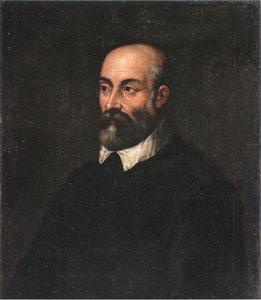
Andrea Palladio
1508 - 1580 , Italy
Lühikesed faktid
- Artistic Movement Or Style: Renaissance architecture
- Artists Or Movements Influenced By This Artist:
- Camillo Mariani
- Giovanni Battista Zelotti
- Jacopo Sansovino
- Artists Who Influenced This Artist:
- Vitruvius
- Michele Sanmicheli
- Date Of Birth: November 30, 1508
- Date Of Death: August 19, 1580
- Full Name: Andrea Palladio
- Nationality: Italian
- Notable Artworks:
- Reconstruction of Baths of Agrippa
- Palazzo Chiericati
- Villa Foscari
- View of the ''scaenae frons''
- Place Of Birth: Padua, Italy
Seotud artiklid
The Enduring Legacy of Classical Style: Form, Narrative & Influence in Art
Explore the enduring legacy of classical art – from ancient Greece & Rome to Neoclassicism. Discover key artists, philosophical roots & build a timeless collection with OriginalUniqueArt's expert guidance.
The Enduring Echo of Antiquity: Classical Ideals in Art from Renaissance to Modernism
Explore the lasting impact of classical ideals on art from the Renaissance to Modernism. Discover key movements, iconic artists & find museum-quality reproductions at OriginalUniqueArt.
Andrea del Sarto: Florentine Grace, Technical Mastery & Artistic Ambition
Explore the life & art of Andrea del Sarto, a Florentine Renaissance master renowned for harmonious compositions & technical brilliance. Discover his frescoes, portraits, and lasting influence on art history.
Simon Vouet: A Baroque Master's Journey from Italian Influence to French Classicism
Explore the life & art of Simon Vouet, a pivotal French Baroque painter who introduced Italian styles to France. Discover his masterpieces and lasting influence on 17th-century art.
Aasre ja valguse poeesia: Vahemere villa interjöörid – ruumi, heleduse ja pärandi harmoonia
Avastage Vahemere stiili võlu! Luksuslikud interjöörid, valguskujunduse nipid ja kvaliteetsed materjalid. Looge ajatu elegants oma kodusse – inspiratsioon ja ekspertide nõuanded OriginalUniqueArt.com-is.

