Lülita trükkitoodetele
 Loe lähemalt







































 Kunstiteoste või reproduktsioonide puhul, mille üks külg on üle 105 cm (umbikmolt 41 tolli), saadetakse raam kirjal asendis, la Dismantlitud komplektina. See meetod tagab ohutuse kohaletoimetamisel ja väldib transpordil tekkivaid kahjustusi.


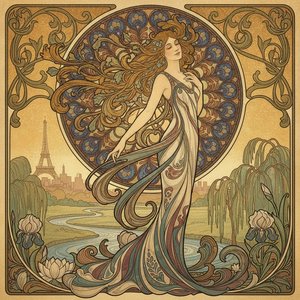
A Vision of Femininity: Alphonse Mucha’s Princess Hyacinth
Alphonse Maria Mucha’s “Princess Hyacinth” stands as an emblem of Art Nouveau, capturing the movement's fascination with idealized beauty and organic forms. Painted circa 1903, this captivating portrait transcends mere representation; it embodies a philosophical exploration of femininity within the framework of Czech national identity.
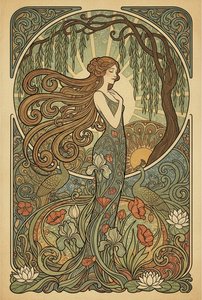
Mucha’s distinctive style is immediately recognizable—flowing lines dominate every surface, creating an illusion of effortless grace and movement. The chair upon which Princess Hyacinth rests isn't merely furniture; it’s a sculptural element meticulously crafted to echo the undulating curves characteristic of Art Nouveau. Decorative motifs inspired by Celtic spirals and floral patterns intertwine seamlessly, reflecting the broader aesthetic sensibilities of the era.
Technically, Mucha employed oil paints on canvas, applying them with delicate brushstrokes that prioritize texture and luminosity. The artist’s meticulous attention to detail is evident in the rendering of Hyacinth's gown—a cascade of shimmering fabric adorned with embroidered flowers—and her ornate crown—a testament to craftsmanship and artistic ambition.
The painting’s historical context illuminates its profound symbolism. Created during a period of burgeoning Czech nationalism, “Princess Hyacinth” serves as a visual declaration of cultural pride. The princess herself represents the virtues deemed essential for upholding Czech heritage: purity, grace, and resilience. Her floral headdress—specifically a lily—is steeped in Christian iconography, symbolizing innocence and divine grace.
Beyond its nationalist aspirations, “Princess Hyacinth” speaks to universal themes of femininity and aspiration. The princess’s serene gaze conveys confidence and inner strength, suggesting that beauty is not merely ornamental but possesses an inherent moral dimension. Mucha's masterful composition invites contemplation on the role of women in shaping cultural identity—a message that resonates powerfully even today.
Considered alongside Mucha’s other celebrated works like “The Slavonic Uprising,” “Princess Hyacinth” exemplifies Art Nouveau’s commitment to blending decorative artistry with narrative storytelling. It's a piece designed not just to please the eye but also to stimulate the intellect, prompting viewers to engage in dialogue about art, culture, and human experience.
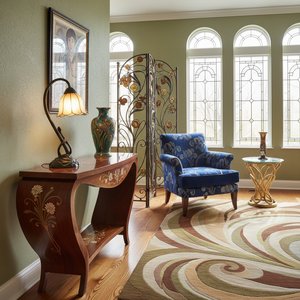
For interior designers seeking inspiration or collectors desiring a stunning reproduction, “Princess Hyacinth” offers an unparalleled opportunity to infuse spaces with elegance and sophistication. Its timeless beauty—rooted in Art Nouveau’s enduring fascination with organic forms and idealized femininity—continues to captivate audiences worldwide.
Korduvad küsimused
Milline suurus on soovituslik teosele "Princess Hyacinth" ruumis Living Room?
Teose „Princess Hyacinth“, autor Alphonse Mucha soovitatav trükimõõt Living Room jaoks on Large.
Millist tunnet edastab „Princess Hyacinth“, autor Alphonse Mucha?
Teoses "Princess Hyacinth" on Romantic meeleolu koos Romantic emotsiooniga.
Kas teose "Princess Hyacinth" allalaadimine on võimalik?
Teose „Princess Hyacinth“, autor Alphonse Mucha digitaalset pilti saab alla laadida selle teose Laadi alla lehelt: kõrge resolutsiooniga digitaalse pildi allalaadimine.
 Eelvaade
 Saada
Saada Jaga
Jaga
 Teave teose kohta
 Juhend

 Laadi alla
 Sarnased teosed
 Röntgenuuring
 Slaidietendus
 KÜSIMUSED JA VASTUSID
 Statistika