
 Eelvaade
 Saada
Saada Jaga
Jaga
 Teave teose kohta
 Juhend

 Laadi alla
 Sarnased teosed
 Röntgenuuring
 Slaidietendus
 KÜSIMUSED JA VASTUSID
 Statistika
Alexander Ziegler

- 46.0 x 36.0 cm

 Loe lähemalt
Giclée / Kunstiprint
Muuseumikvaliteediga giclée- või kangasprint kiire tootmisega ja paindlikud viimistlusvõimalused. ( Osta käsitsi maalatud teos Lülita digitaalse pildi juurde)




































Vali meie eelmääratud suurused, mis vastavad teose algupärastele proportsioonidele.

Sisestage vajalik laius ja kõrgus, et see sobiks teie raamile või seinale. Trükki saab ainult lõigata, seda ei saa kunagi pildist suuremaks teha, seega ka erineva mustega suurus kaotab osa pildist. Enne trükkimist saadame teile kinnitamiseks digitaalse näidisprojektsiooni. Sellel lehel näidatud pilt ei kujuta reaalset lõiget — seda näitab ainult näidisprojektsioon.
Ülemaailmne tarne () 2 nädala jooksul, tavalise 4/5 nädala asemel. (4 november)

Tasuta ekspresssaatmine üle maailma

Kõrgekvaliteediline lina-kangas

Täielik transpordikindlustus

Tollimaksude tagastamise garantii

Värvitoime täpsuse garantii

100 päeva tagastusõigus (ainult valmistusdefektide korral)

100% raha tagasi garantii

Hulgusoodustus
 Klaasivalik on saadaval ainult kuni 110 cm suuruses teostes

Alexander Ziegler
Giclée / Kunstiprint
Reproduktsiooni suurus
-


Koguhind
€ 72
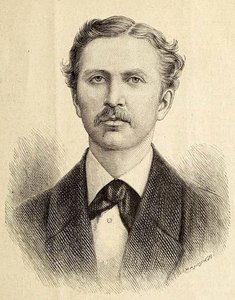
The Artist and His Work
Alexander S Mackay was a talented artist known for his attention to detail and ability to convey the essence of his subjects. In Alexander Ziegler, he masterfully depicts a man wearing glasses and a suit, with a beard, sitting in a chair while holding a book. The setting appears to be an indoor library or study area, adding to the overall atmosphere of the painting. Key Features of the painting include:- The subject's facial features and clothing are intricately detailed
- The use of oil on canvas creates a rich, textured effect
- The indoor setting adds to the sense of intimacy and quiet contemplation
Similar Artworks
Other notable paintings by renowned artists can be found at the Royal College of Physicians of Edinburgh, including works by John Partridge: Andrew Combe (1797–1847) and George Agnew Reid: Sir John Sibbald. These paintings demonstrate the artist's skill in capturing the essence of their subjects, much like Alexander S Mackay's Alexander Ziegler. For more information on the artworks and artists featured at the Royal College of Physicians of Edinburgh, visit Discovering the Artworks of Kendal Museum, United Kingdom. To learn more about the decade in which these artworks were created, see the 1680s on Wikipedia.The Alexander S Mackay painting, Alexander Ziegler, is a testament to the artist's exceptional skill and attention to detail. As a handmade oil painting reproduction, it can be appreciated in a new light, allowing art enthusiasts to enjoy its beauty and intricacy.
Korduvad küsimused
Kas teos „Alexander Ziegler“, autor Alexander S Mackay kuulub avalikku omandisse?
Tegijateõiguse osas on teos "Alexander Ziegler" kuuluv klassifikatsiooni alla: avalikus õiguses – selle autoriõigud onหมดunud.
Kas teose "Alexander Ziegler" looja Alexander S Mackay on tuntud ka muude nimede all?
Teised Alexander S Mackay jaoks kirjutatud nimed, teose "Alexander Ziegler" looja, hõlmavad ka Alexander Ziegler.
Mis on teose "Alexander Ziegler" formaat ja suurus?
„Alexander Ziegler“, autor Alexander S Mackay on Portrait kompositsioon, mille originaalmõõdud on 46 x 36 cm.
Kunstniku elulugu
A Legacy of Light and Line: The Life of Alexander S. Mackay
In the heart of Kilmarnock, Scotland, a town where the echoes of heritage and industry once intertwined, Alexander S. Mackay (1832–1899) began a journey that would eventually etch his name into the fabric of Victorian portraiture. Born into a lineage deeply rooted in the visual arts, Mackay did not merely stumble upon his vocation; he was nurtured by it. His early years were shaped by the watchful eye of his father, Hugh Macdonald, a respected artist and educator whose influence provided Alexander with a foundational discipline. This familial immersion in the nuances of color and form meant that for Mackay, art was less a chosen profession and certainly more an inherited language, one spoken through the meticulous study of classical traditions and the quiet observation of the world around him.
The trajectory of his talent led him to the prestigious Trustees Academy in Edinburgh, a crucible of artistic excellence where he refined his technical prowess. It was here that Mackay began to master the delicate balance between realism and tonal harmony, learning to navigate the complexities of light and shadow that define the human presence on canvas. His training instilled in him a profound respect for accuracy, yet it also allowed him to develop a signature style characterized by an understated elegance. He became a painter who did not need grand gestures to command attention; instead, he relied on the subtle interplay of light and the quiet strength of a well-placed brushstroke to convey the soul of his subjects.
The Art of the Soul: Technique and Portraiture
To gaze upon a work by Alexander S. Mackay is to witness a masterclass in the art of glazing. His technique was one of patience and layering, where thin, translucent washes of oil paint were applied with surgical precision to build up luminous gradations. This method allowed him to capture the soft glow of skin, the heavy texture of velvet, or the reflective glint in an eye, imbuing his portraits with a lifelike vitality that transcends the mere recording of a likeness. Mackay’s true genius lay in his ability to move beyond the surface, using subtle nuances of expression and gesture to reveal the psychological depth of his sitters.
While his repertoire occasionally touched upon the landscape, it was in the realm of portraiture—particularly the intimate depiction of families—that he found his most profound expression. His canvases often serve as windows into the social fabric of 19 and century Scotland, capturing members of prominent families with a sensitivity that honors both their status and their humanity. Notable among his achievements is his ability to handle iconic subjects, such as his depictions of Robert Burns. In these works, Mackay does not simply paint a poet; he captures the very essence of a national icon, imbuing the legendary figure with a sense of dignity, emotion, and enduring spirit that resonates with the humanist ideals of the era.
Historical Significance and Enduring Presence
The historical significance of Alexander S. Mackay lies in his role as a custodian of Scottish artistic identity during a period of immense transition. As the Victorian era progressed, his commitment to the classical virtues of portraiture provided a sense of continuity and stability. He stood as a bridge between the rigorous academic traditions of the past and the burgeoning realism of his time. His work remains a vital record of the people and the aesthetic values of 19th-century Scotland, preserved in esteemed collections such as the Royal College of Physicians of Edinburgh.
Today, the legacy of Mackay is felt through the enduring quality of his compositions, which continue to captivate those drawn to the quiet drama of the human countenance. His life and work remind us that true artistry often resides in the ability to see clearly—to observe the minute details of a face or the subtle shift of light—and to translate that observation into an eternal moment of beauty. Through his disciplined hand and observant eye, Mackay ensured that the characters of his age would not merely be remembered, but truly felt by generations to come.
Alexander S Mackay
1832 - 1899
Lühikest infot
- Artistic Movement Or Style: Portrait painting
- Artists Or Movements Influenced By This Artist: Family of artists
- Artists Who Influenced This Artist: Hugh Macdonald
- Date Of Birth: 1832
- Date Of Death: 1899
- Full Name: Alexander S. Mackay
- Nationality: Scottish
- Notable Artworks: ['The Poet Robert Burns']
- Place Of Birth: Kilmarnock