

 Vaata sisu
 Jaga teost
 Jaga
Jaga
 Detailid
 Õppekate juhend

 Laadi alla
 Sarnased teosed
 Röntgenuuring
 Slaidietendus
 Statistika
Peintures
 Acrylic
- WallArt
- Contemporary Minimalism
 1998
1998 125.0 x 250.0 cm
 Villa Arson
 Loe lähemalt
Sellel lehel kuvatav kunstiteos on kaitstud autoriõigusega, mis tähendab, et meil ei ole seaduslikku õigust luua või müüa identset reproduktsiooni. Seda kaitset rakendatakse rahvusvaheliste kokkulepete alusel, nagu näiteks Berne konventsioon ning riiklike seadustega, sealhulgas nendega, mida on sätestatud USA autoriõiguse seadus – 17. peatükk.
See meetod järgib täielikult autoriõiguse reegleid, kuna see ei põhine kaitstud kunstiteose kopeerimisel või dupliteerimisel. Selle asemel on tegu loova reinterpreetatsiooniga – uue maaldisega, mis on algteosest inspireeritud, kuid ei ole sellest identiline.
Giclée / Kunstiprint
Muuseumikvaliteediga giclée- või kangasprint kiire tootmisega ja paindlikud viimistlusvõimalused. ( Telli käsitsi maalitud reproduktsioon Ülemineku digitaalse pildi müügi kanalisse)




P118B €10

P118H €10

P118W €10

P438Z €10

P508JH €12

P508YH €12

P805H €10

P805Z €10

P919BZ €10

P919G €10

P919XJ €10

P959ZH €10

P968JZ €12

W106C €8

W218G €10

W218JH €8

W218Y €10

W307PJ €10

W316G €10

W316PJ €8

W316Y €10

W398PJ €8

W4111J €10

W500HY €15

W500JH €15

W692G €12

W849H €8

W940BG €15

W953PJ €8




Vali meie eelmääratud suurused, mis vastavad teose algupärastele proportsioonidele.

Sisestage vajalik laius ja kõrgus, et see sobiks teie raamile või seinale. Trükki saab ainult lõigata, seda ei saa kunagi pildist suuremaks teha, seega ka differentse vormiga suurus kaotab osa pildist. Enne trükkimist saadame teile kinnitamiseks digitaalse näidisprojektsiooni. Sellel lehel näidatud pilt ei kujuta reaalset lõiget — seda näitab ainult näidisprojekttsioon.
Ülemaailmne tarne () 2 nädala jooksul, tavalise 4/5 nädala asemel. (21 oktoober)

Tasuta ekspresssaatmine üle maailma

Kõrgekvaliteediline lina-kangastest muld

Täielik transpordikindlustus

Tollimaksude tagastamise garantii

Värvitoime täpsuse garantii

100 päeva tagastusõigus (ainult defektide korral)

100% raha tagasi garantii

Hulgusoodustus
 Klaasivalik on saadaval ainult kuni 110 cm suuruses teostes

Peintures
Giclée / Kunstiprint
Reproduktsiooni mõõtmed
-


Lõppsumma
€ 70
Adrian Schiess’s Minimalist Exploration of Reflection and Space
- Subject Matter The artwork presents a striking visual meditation on architectural space, specifically focusing on the interplay between light, material, and perception. It captures a single rectangular platform—likely constructed from metal or reflective composite—positioned within an expansive room devoid of ornamentation. This deliberate simplicity underscores the artist’s interest in distilling form to its essence, prioritizing geometric shapes and textural surfaces over narrative content.
- Style Schiess's piece firmly establishes itself within the realm of contemporary minimalism. Influenced by industrial design principles, it embodies a rejection of superfluous embellishments, favoring instead an austere aesthetic characterized by clean lines and restrained color palettes. The overall effect is one of quiet contemplation and understated elegance.
- Technique Photographic documentation serves as the primary method of representation. This approach meticulously captures the physical reality of the installation—the platform’s layered surface, the subtle shadows cast upon the walls—preserving a precise record of its materiality and spatial arrangement. The photographer's eye ensures that every detail contributes to conveying the artwork's conceptual core.
- Historical Context While minimalism emerged in the late 1960s and gained prominence throughout the subsequent decades, Schiess’s work resonates with broader artistic trends exploring abstraction and geometric forms. It aligns itself with a movement that sought to liberate art from representational constraints, prioritizing formal qualities over narrative storytelling—a reaction against the excesses of preceding artistic movements.
- Symbolism Beyond its visual simplicity, the artwork carries subtle symbolic weight. The reflective surface of the platform invites viewers to consider questions of perception and illusion, prompting reflection on how our senses interpret reality. Furthermore, the emptiness of the room symbolizes a deliberate stripping away of distractions, fostering an atmosphere conducive to introspection and contemplation.
The artwork’s palette—primarily shades of beige, pink, and grey—further enhances its contemplative mood. Lines delineate the platform's edges and walls, reinforcing a sense of order and precision. Texture plays a crucial role in conveying the materiality of the installation; the platform’s complex layering creates visual interest while emphasizing its physical presence.
For interior designers seeking to evoke serenity and sophistication, Adrian Schiess’s minimalist exploration offers an invaluable reference point. Its understated beauty—captured with meticulous photographic detail—translates seamlessly into high-quality reproductions that celebrate the power of simplicity and geometric form.
Küsimused ja vastused
Kui eraldavad teose "Peintures" värvid?
Teose "Peintures" värvitoon on kroomi方面 Muted ja intensiivsuse方面 Monochromatic.
Kuidas seda teost „Peintures“, autor Adrian Schiess saab kasutada kodukujunduses?
Kasutus (Accent) ja ruum (Living Room) on kaks soovitust, mis on kirjas teose „Peintures“, autor Adrian Schiess kohta.
Millises koduse ruumis sobib reproduktsioon teosest "Peintures" hästi kohale?
Teos „Peintures“, autor Adrian Schiess on soovitatav paikutada ruumi Living Room. See soovituse on tehtud teose sisu, värvide ja meeleolu põhjal.
Kunstniku elulugu
Peter Doig: A Dreamer of Landscapes
Born in Edinburgh, Scotland, in 1959, Peter Doig’s artistic journey began far from the familiar landscapes of his birthplace, ultimately leading him to establish a profound connection with Trinidad and Tobago as both home and creative wellspring. His life story is interwoven with movement – first to Trinidad at the age of three, then Canada in 1966, and finally back to Britain for formal artistic training. This migratory experience profoundly shaped his perspective, imbuing his work with a sense of displacement and longing, yet simultaneously grounding it in vivid memories and carefully observed details.
Doig’s early influences were remarkably diverse. He credits childhood encounters with photographs, films, etchings, and personal recollections as the foundation for his distinctive visual language. This eclectic source material is then meticulously layered within his paintings, creating dreamlike scenes that often defy easy categorization. His work isn't simply a representation of reality; it’s an exploration of memory, suggestion, and the elusive nature of experience. He masterfully blends elements of realism with abstraction, producing images that are both familiar and unsettlingly strange.
The Development of a Singular Style
Doig’s artistic style emerged gradually throughout the 1990s, gaining increasing recognition for its unique qualities. His paintings frequently depict landscapes—lakes, cabins, forests, and open fields—but these aren't straightforward depictions. Instead, they are imbued with an atmospheric quality, a sense of melancholy or quiet contemplation. He employs a distinctive figurative approach, drawing inspiration from personal memories, often filtered through the lens of nostalgia and the passage of time. His use of color is particularly noteworthy; he favors muted tones—blues, greens, browns—that create a subtle yet powerful emotional resonance.
Crucially, Doig’s work isn't about precise detail or photographic accuracy. He deliberately obscures certain elements, leaving gaps and ambiguities that invite the viewer to actively participate in constructing meaning. This deliberate vagueness is not a flaw but rather a key component of his artistic strategy, encouraging viewers to project their own experiences and emotions onto the canvas. His paintings are less like windows into a specific scene than portals into a realm of feeling.
Major Achievements and Recognition
Doig’s career has been marked by consistent critical acclaim and significant institutional recognition. He began exhibiting his work in the early 1990s, quickly gaining attention from prominent galleries and museums around the world. His paintings have been featured in major exhibitions at institutions such as Tate Britain, the Musée d’Art Moderne de la Ville de Paris, Schirn Kunsthalle Frankfurt, and the Whitechapel Art Gallery.
His work has achieved considerable commercial success on the secondary art market, with several of his paintings selling for seven or eight figures at auction – a testament to both its artistic merit and the growing interest in his unique vision. Doig’s paintings are now held in prestigious public and private collections globally, including those of the Tel Aviv Museum of Art, the San Francisco Museum of Modern Art (SFMOMA), Tate Modern in London, the British Museum, and the Museum of Modern Art in New York (MoMA).
A Contemporary Master
Peter Doig is widely considered one of Britain’s most important contemporary painters. His work has been described as “New European Painting,” reflecting a shift away from traditional representational styles towards a more subjective and emotionally driven approach to landscape painting. He continues to live and work in Trinidad, drawing inspiration from his surroundings while maintaining strong ties to the British art world. Doig’s paintings are not merely images; they are invitations—invitations to contemplate memory, loss, and the enduring power of place.

Adrian Schiess
1959 - , Switzerland
Lühikest infot
- Full Name: Joan Mitchell
- Nationality: American
- Date Of Birth: 1959
- Date Of Death: 1992
- Place Of Birth: Zurich, Switzerland
- Notable Artworks:
- Orange and Black Wall
- Cool White
- Lost Mine
- Artistic Movement Or Style: Abstract Expressionism
- Artists Who Influenced This Artist:
- Picasso
- Matisse
- Artists Or Movements Influenced By This Artist:
- Pollock
- Abstract Expressionism
Sarnased artiklid
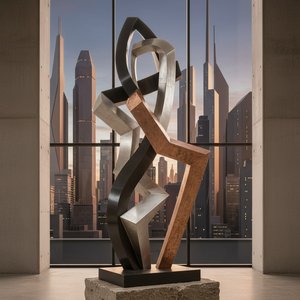
Forged in Fire: The Timeless Strength and Ethereal Beauty of Metal Art
Discover the enduring allure of metal art. Explore how masterfully forged sculptures blend industrial strength with organic elegance to create timeless investment pieces for sophisticated collectors and luxury interiors.

The Power of Less: A Definitive Guide to the Minimalism Movement and Geometric Abstraction
Explore the profound impact of Minimalism and Geometric Abstraction. From Mondrian to Malevich, discover how stripping art to its essential forms revolutionized modern aesthetics through our expert-led historical guide.
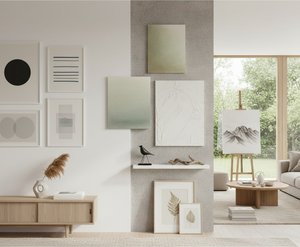
Minimalist Masterpieces: 10 Artworks for Serene Home Decor | OriginalUniqueArt
Find serenity with 10 minimalist masterpieces! Explore Agnes Martin, Rothko & more. Discover the stories behind iconic abstract art, neutral palettes & calming designs. Museum-quality reproductions at OriginalUniqueArt.com – elevate your home decor today!

Geomeetrilise Abstraktsiooni 10 Meisterteost: Kunst ja Kodukaunistus OriginalUniqueArt.com-is
Avastage geomeetrilise abstraktsiooni 10 suurteost – Kandinsky, Mondrian ja teised. Lugege kunstiteoste lugusid ning leidke inspiratsiooni kodukaunistuseks OriginalUniqueArt.com-is! Kunstikollektsioon ja reprodutsioonid.

Metal Art for Commercial Spaces: A Procurement Guide to Durable & Modern Large-Scale Decor Solutions
Expert procurement guide for hotel designers and managers. Discover durable, large-scale metal art solutions for commercial spaces. Learn about material selection, maintenance, and efficient bulk ordering for high-traffic hospitality and corporate interiors.