
 Eelvaade
 Saada
Saada Jaga
Jaga
 Teave teose kohta
 Juhend

 Laadi alla
 Sarnased teosed
 Röntgenuuring
 Slaidietendus
 Q&A
Q&A Statistika
Dune Landscape by Moonlight

- 25.0 x 34.0 cm


 Loe lähemalt
Giclée / Kunstiprint
Muuseumikvaliteediga giclée- või kangasprint kiire tootmisega ja paindlikud viimistlusvõimalused. ( Osta käsitsi maalatud teos Lülita digitaalse pildi juurde)




P118B €10

P118H €10

P118W €10

P438Z €10

P508JH €12

P508YH €12

P805H €10

P805Z €10

P919BZ €10

P919G €10

P919XJ €10

P959ZH €10

P968JZ €12

W106C €8

W218G €10

W218JH €8

W218Y €10

W307PJ €10

W316G €10

W316PJ €8

W316Y €10

W398PJ €8

W4111J €10

W500HY €15

W500JH €15

W692G €12

W849H €8

W940BG €15

W953PJ €8




Vali meie eelmääratud suurused, mis vastavad teose algupärastele proportsioonidele.

Sisestage vajalik laius ja kõrgus, et see sobiks teie raamile või seinale. Trükki saab ainult lõigata, seda ei saa kunagi pildist suuremaks teha, seega ka erineva mustega suurus kaotab osa pildist. Enne trükkimist saadame teile kinnitamiseks digitaalse näidisprojektsiooni. Sellel lehel näidatud pilt ei kujuta reaalset lõiget — seda näitab ainult näidisprojektsioon.
Ülemaailmne tarne () 2 nädala jooksul, tavalise 4/5 nädala asemel. (31 oktoober)

Tasuta ekspresssaatmine üle maailma

Kõrgekvaliteediline lina-kangas

Täielik transpordikindlustus

Tollimaksude tagastamise garantii

Värvitoime täpsuse garantii

100 päeva tagastusõigus (ainult valmistusdefektide korral)

100% raha tagasi garantii

Hulgusoodustus
 Klaasivalik on saadaval ainult kuni 110 cm suuruses teostes

Dune Landscape by Moonlight
Giclée / Kunstiprint
Reproduktsiooni suurus
-


Koguhind
€ 71
A Moonlit Dance in the Dunes: Adriaen Brouwer’s ‘Dune Landscape by Moonlight’
Adriaen Brouwer's “Dune Landscape by Moonlight,” painted circa 1635-1637, isn’t merely a depiction of a coastal scene; it’s a profound exploration of human existence bathed in the ethereal glow of the night. This remarkable work, now meticulously reproduced as a hand-painted artwork, transports us to a windswept expanse where the boundaries between reality and dream blur, inviting contemplation on themes of solitude, companionship, and the quiet drama of everyday life. Brouwer, a pivotal figure in 17th-century Flemish painting, masterfully captured the essence of his time – a period marked by both burgeoning prosperity and underlying social tensions – through his unflinching portrayal of peasant life, often imbued with a subtle yet potent commentary on human nature.
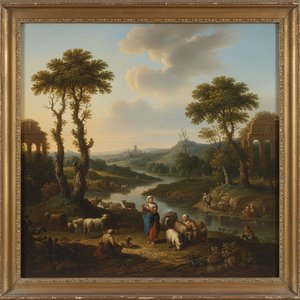
The scene unfolds within a vast, undulating dune landscape, dominated by a towering, ancient tree that serves as a silent sentinel. Two figures, rendered in a remarkably realistic style for the period, stand before it, their postures suggesting both intimacy and a shared awareness of the surrounding wilderness. Their presence isn’t overtly dramatic; instead, they embody a quiet dignity, a sense of belonging within this rugged environment. A third individual, positioned slightly further back on the right, adds another layer to the composition, hinting at an unseen narrative or perhaps simply the observation of this intimate tableau. The artist's use of light is particularly striking – a cool, silvery moonlight casts long shadows across the dunes, creating a sense of depth and mystery while simultaneously highlighting the textures of the sand and vegetation.
The Painter’s Palette: Technique and Style
Brouwer’s style defies easy categorization. He wasn't confined to the idealized beauty favored by many of his contemporaries; instead, he embraced a gritty realism that often depicted subjects in their most unvarnished state. “Dune Landscape by Moonlight” exemplifies this approach. The brushstrokes are loose and expressive, conveying movement and atmosphere with remarkable immediacy. Brouwer’s masterful use of chiaroscuro – the dramatic contrast between light and shadow – adds to the painting's emotional impact, drawing our attention to key details while simultaneously enveloping the scene in a sense of nocturnal mystery. The palette is restrained, dominated by earthy tones—ochres, browns, and grays—that perfectly complement the muted moonlight. The artist’s skill lies not just in his technical proficiency but also in his ability to imbue his subjects with a palpable sense of life.
A Window into 17th-Century Life
To understand “Dune Landscape by Moonlight,” it's crucial to consider the historical context in which it was created. The Netherlands, and Flanders specifically, were undergoing significant social and economic changes during the 17th century – a period of unprecedented wealth accumulation alongside persistent poverty and social inequality. Brouwer’s paintings often served as a mirror reflecting this duality. The figures in his works are typically peasants, fishermen, or laborers—members of the lower classes whose lives were shaped by hardship and uncertainty. Yet, within their struggles, Brouwer reveals a remarkable resilience and an enduring capacity for connection. The scene evokes the spirit of the Dutch Golden Age, but with a darker, more introspective edge.
Symbolism and Emotional Resonance
Beyond its realistic depiction of a coastal landscape, “Dune Landscape by Moonlight” is rich in symbolic meaning. The ancient tree, a recurring motif in Brouwer’s work, can be interpreted as a symbol of longevity, wisdom, or perhaps even the enduring power of nature. The two figures standing before it represent companionship and shared experience—a quiet affirmation of human connection amidst the vastness of the world. The painting's overall mood is one of melancholy and contemplation, inviting viewers to reflect on their own place within the larger scheme of things. It’s a scene that speaks to the universal themes of solitude, belonging, and the beauty found in the simplest moments of life. The reproduction captures this essence perfectly, allowing you to experience the painting's profound emotional impact firsthand.
Korduvad küsimused
Millises suunand ja millises ajastu kontekstis on „Dune Landscape by Moonlight“, autor Adriaen Brouwer paikati?
Teos "Dune Landscape by Moonlight" kuulub Baroque suunale ning selle looja tegutses Varajärgne modernne ajastu ajastul.
Millist meeleolu loovaks teos "Dune Landscape by Moonlight" ruumile?
Olles meeleoluult Calm, sobib teos "Dune Landscape by Moonlight" suurepäraselt ruumiks Living Room.
Kui palju inimesi vaatab teost "Dune Landscape by Moonlight"?
Teose "Dune Landscape by Moonlight" jaoks on olemas Statistika leht. See kajastab teose ja kunstniku teiste teoste kuutlikke külastusi riigi ja keele järgi lahutatud statistikaga.
Kunstniku elulugu
Lühike elu: Adriaen Brouweri turbulentne maailm
Adriaen Brouwer, nimi, mis kõlab 17. sajandi flaamlase ja hollandi maalienergia karge kaja, on jäänud salapäraseks kujundiks, vaatamata tema sügavale mõjule žanrimaaliduses. Sündinud Belgia Oudenaardes umbes 1605 või 1606. aastal – täpne aasta on veelgi arutelu predmet – oli Brouweri elu traagiliselt lühike, lõppes enne kui ta jõudis nelikümmendlikaks, 1638. aasta jaanuaris. Tema isa, samuti nimega Adriaen, töötas tapestrite disainerina, avades noore kunstniku silmad visuaalsele kompositsioonile ja disainile juba varajases eas. Kuid raskused ründasid Brouwerit juba viimastel aastatel; isa surm sundis teda kodust lahkuma, alates teekonnale, mida isutasid nii kunstiline briljantsus kui ka isiklik segadus. See varajane iseseisvus kujundas ilmselt tema rebellistlikku vaimu ja kütus tema teravat tähelepanu elu peidetud ohtudele – teemadele, mis said hiljem tema loomingulise vaimu keskpunktiks.Žanri uuendaja: igapäevase elu olemuse tabamine
Brouwer kujunes kiiresti välja žanrimaaliduse üks peamisi uuendajaid – kunstiliigi, mis on pühendunud tavaelu stseenide kujutamisele. Ta ei idealiseerinud ega romantiseerinud; selle asemel esitas ta tooresid ja puhtaid pilgusid vaelaste, sõdurite ja rahvaesta inimeste maailma. Tavernad said tema lemmiklavannaks, mis täideti inimestega, kes olid hõivatud joomise, suitsetamise, kaardimängude, türiolu ja lihtsalt oma igapäevase rutiini tarbekusega. Teosed nagu Vaegad inimesed tavernas joomas, Väikemaapid kaardimängimas ja Türi ei ole pelgalt tegevuse kujutused; need on psühholoogilised uuringud, mis paljastavad isikupära läbi žestide, ilmete ja valgus-varjundite peene mängu. Tal oli erakordne võime tabada inimsuhtluseไหม lennukaid hetki, andes oma stseenidele kohesuse ja autentिकता tunnet, mis kõlastas sügavalt kaasaegseid vaatajaid. Näiteks uskutakse, et teoses Suitsetajad on virlu rühmas sisaldunud ka autoportree, näidates Brouweri enda osalust sellest karge sotsiaalelu osana, mida ta nii tihti portreteeris. Tema maalid ei olnud lihtsalt sellest, *mida* inimesed tegid, vaid sellest, *kuidas* nad seda tehes tundsid.Pärand ja ajalooline tähtsus: püsiv mõju
Hoolimata oma lühikesest karjäärist oli Adriaen Brouweri mõjul järglaste kunstnikele hiiglaslik roll. Ta aitas tõsta žanrimaalid kunstimaailmas prominentsesse as posisi, demonstreerides selle potentsiaali nii kunstiliseks väljenduseks kui ka sotsiaaliseks kommentaariks. David Teniers noorem koos teiste flaamlaste ja hollandilaste maalidega sai Brouweri innovatiivsest lähenemisest igapäevase elu kujutamisest olulist inspiratsiooni. Tema fookus tavalistele inimestele pakkus väärtuslikku vaadet 17. sajandi Flandria ja Hollandi vabariigi sotsiaalsetele tavadest ja igapäevastele rutiinidele, pakkudes akeni maailma, mida traditsioonilisemad kunstivormid sageli üle nägi. Täna on tema teosed säilitatud nii auastatud muuseumides nagu Antwerpis asuv Koninklijk Museum voor Schone Kunsten Belgias, tagades, et tema pärand jätkab inspireerimist ja võluma korduvalt põlvkondadeks. Ta jääb üles tõestuseks tähelepanu jõust, ebatäiuslikkuse ilu ja liaisest, filtreerimata hetkede tabamise igaveneust.
Adriaen Brouwer
1635 - 1638 , Belgia
Lühikest infot
- Artistic Movement Or Style: Barokk, žanripaitel
- Artists Or Movements Influenced By This Artist: ['David Teniers noorem']
- Artists Who Influenced This Artist: ['Flemish Primitives']
- Date Of Birth: 1605/1606
- Date Of Death: 1638
- Full Name: Adriaen Brouwer
- Nationality: Flandria
- Notable Artworks:
- Vaegad inimesed tavernas jupimas
- Väikemaapidjad kaardimängus
- Tüürnik
- Kättesauna
- Kuula loodud maastik
- Place Of Birth: Oudenarde, Belgia
Sarnased artiklid

Golden Age Reflections: Dutch Baroque Painting & Cultural Innovation
Explore the Dutch Golden Age of painting! Discover key artists like Vermeer & ter Borch, their innovative techniques, and the rich cultural context behind these Baroque masterpieces. Learn about collecting & appreciating this iconic art period.

Dutch Baroque Masters: 10 Paintings That Shaped an Era | OriginalUniqueArt
Journey through the Golden Age with our guide to the Top 10 Dutch Baroque masterpieces! Explore iconic paintings by Rembrandt, Vermeer & Frans Hals. Find museum-quality art reproductions and elevate your home decor at OriginalUniqueArt.com.

Adriaen Brouwer: Capturing Dutch Life & Social Commentary Through Genre Painting
Explore the captivating world of Adriaen Brouwer, a master of Dutch Golden Age genre painting. Discover his vivid depictions of peasant life, social commentary, and lasting influence on art history. Learn more at OriginalUniqueArt.

Golden Light & Dutch Skies: The Timeless Magic of Dutch Golden Age Landscapes
Discover the breathtaking beauty of Dutch Golden Age landscapes. Explore the mastery of light, chiaroscuro, and 17th-century realism through an expert art history lens, celebrating the enduring legacy of the Dutch Masters for discerning collectors and art lovers.
Nicolaes Berchem: Dutch Golden Age Pastoralism & the Evolution of Landscape Painting
Explore the captivating world of Nicolaes Berchem, a leading Dutch Golden Age painter. Discover his idyllic landscapes, masterful technique & lasting influence on art history. Learn more at OriginalUniqueArt.