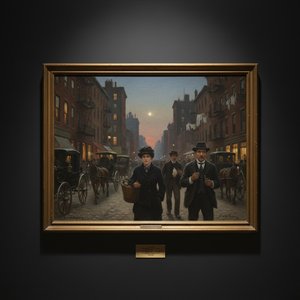
Õlimaali versioon
 Kõik tegelda Second Class - the parting: kohta







































 Kunstiteoste või reproduktsioonide puhul, mille üks külg on üle 105 cm (umbikmolt 41 tolli), saadetakse raam kirjal asendis, la Dismantlitud komplektina. See meetod tagab ohutuse kohaletoimetamisel ja väldib transpordil tekkivaid kahjustusi.


From the early 1800s, the British were encouraged to emigrate to Australia and become wealthy by working the land or, from the 1850s, by trying their luck on the goldfields. This work represents the changing popular response to emigration to Australia.When Abraham Solomon painted Second Class in 1854, circumstances in England and Australia had changed dramatically. Gold had been discovered in Australia, transportation had virtually ceased and the political print had lost its popularity in England. Solomon’s painting shows a young man leaving for the goldfields, his family accompanying him on the train journey. The work is aimed at a sentimental middle-class market – when will the mother see her son again?This painting forms part of a wider genre presenting free settlers (and gold rush emigrants) to Australia and other British empire colonies. After receiving accolades at the Royal Academy, Second Class, together with its counterpart First Class 1954, became popular through printed reproductions,being produced as a lithographic print both in England and Germany.Roger ButlerText © National Gallery of Australia, Canberra 2010From: Anne Gray (ed), Australian art in the National Gallery of Australia, National Gallery of Australia, Canberra, 2002
Korduvad küsimused
Kas teos Second Class - the parting: on käsitsi maalitud või trükis?
Käsin maalitud: professionaalne kunstnik koopia teosest Second Class - the parting: õli-linast veebilehel.
Millise suuruse teose Second Class - the parting: jaoks valida?
Originaali mõõtmed on 966 x 694 cm. Suurused on vahemikus 25.8 x 38.7 cm (€179) kuni 164.8 x 246.8 cm (€1363); sellel lehel olev tabel on toodud peamised sammud ja nende hinnad.
Kui kaua kohalelymine aega võtab?
Tarne kestab 4–5 nädalat ning pakkume tasuta ekspresslaenitust üle maailma; kiiremat valmistamist võimaldab seda lehte valitud valik. Kui te ei ole toote keskmisest rahul, on teil võimalik seda 100 päeva jooksul ilma tingimusteta täiesumma tagastamisega naasta.
Kus asub originaalteos Second Class - the parting: ?
Originaalon National Gallery of Australia kollektsioonis, Canberra.
 Eelvaade

 Saada
 Jaga
 Teave teose kohta
 Teosest infokaart


 Laadi alla
 Sarnased teosed
 Röntgenuuring
 Slaidietendus
 KÜSIMUSED JA VASTUSID

 Statistika