Johann Carl Loth portree

46 kulubumatamatumat Johann Carl Loth maalist, millist on vaid üks

Uuendatud november 2026 · järjestatud meie populaarsusindeksi järgi (otsingud, külastused ja tellimused igale teosele) · 47 teost Johann Carl Loth meie kataloogis

Lühidalt

Selene and Endymion (1670) on Johann Carl Loth maalide kõige silmapaistvam teos; originaal kuulub museumi Rijksmuseum, Amsterdam. Pärast seda suunatakse pilk Jacob Blesses Ephraim and Manasseh (1692) ja Old Peasant Lighting a Pipe (1660) suunas. Meie kataloogis olevatest Johann Carl Loth 47 teosest on need 46 kõige kuulsumat, millist igaüks on esitatud koos aasta, muuseumi ja põhjusega, miks teos on püsiv.

1632 – 1698, München Baroque Enamama teoseid: Bavaria riiklikud maalidema kogumikud

Johann Carl Loth top 10 maalist galeriist vaatenurgast

1
Selene and Endymion (1670) autor Johann Carl Loth

Selene and Endymion

1670 · Oil On Canvas · Rijksmuseum, Amsterdam

In this dramatic oil painting, we find ourselves witnessing a moment of profound stillness and longing. The scene captures the mythological meeting between Selene, the personification of the Moon, and the sleeping Endymion. The composition moves with a heavy, diagonal energy, pulling the eye from the upper left down toward the lower right, following the curve of the figures. Endymion lies in a deep, earthly slumber, his muscular form rendered…

2
Jacob Blesses Ephraim and Manasseh (1692) autor Johann Carl Loth

Jacob Blesses Ephraim and Manasseh

1692 · Oil On Canvas · Kunsthistorisches Museum, Viin

In this 1692 oil on canvas, an aged, semi-nude patriarch leans forward to bestow a blessing upon two young boys, Ephraim and Manasseh. The composition is tightly packed, utilizing a dynamic, triangular formation that directs the viewer's eye toward the central elderly figure. The scene captures a moment of profound interpersonal drama, where the physical presence of the figures is emphasized through heavy drapery and muscular contours. Light falls theatrically…

3
Old Peasant Lighting a Pipe (1660) autor Johann Carl Loth

Old Peasant Lighting a Pipe

1660 · Oil On Canvas · Art Institute of Chicago, Chicago

A single, focused light source pierces a heavy darkness, illuminating a weathered face in a moment of profound concentration. This profile view captures an elderly man as he attends to a clay pipe, the thin stem acting as a visual guide through the composition. The scene is defined by a stark chiaroscuro, where deep shadows recede into an indeterminate background, pushing the subject into the immediate foreground. Every wrinkle in…

4
Music Lesson (1650) autor Johann Carl Loth

Music Lesson

1650 · Oil On Canvas · Muzeum Palacu Króla Jana Iii w Wilanowie, Varssava

In the oil painting Music Lesson by Johann Carl Loth, the artist employs an oval composition to frame a tightly cropped scene. The figures are arranged in a triangular formation, a structural choice that directs the viewer's eye toward the central action. A muscular male figure plays a pan flute, or syrinx, while an older man wearing a laurel wreath observes or instructs a younger woman. This arrangement creates a…

5
Diogenes (1650) autor Johann Carl Loth

Diogenes

1650 · Oil On Canvas · Minneapolis Institute of Art, Minneapolis

A muscular, bearded man emerges from a dark, near-black background in this 1650 oil painting. He is positioned in a tight, close-up composition that focuses on his upper torso and head. His skin is rendered with detailed musculature, particularly across the shoulder, chest, and arm. A single light source, a lit candle contained within a handheld lantern, casts sharp highlights onto his anatomy. This light creates a strong chiaroscuro effect,…

6
Susannah and the Elders (1650) autor Johann Carl Loth

Susannah and the Elders

1650 · Oil On Canvas · J. Paul Getty muuseum, Los Angeles

In Susannah and the Elders, Johann Carl Loth brings a heavy, dramatic tension to the canvas. The scene unfolds from a narrative found within the Old Testament, capturing a moment of profound intrusion. Susannah finds herself cornered by two men, their presence a sudden and unsettling weight in her private space. The air feels thick with the gravity of this confrontation, as the figures press into a tight, triangular arrangement…

7
The Exposure of the Infant Moses (1665) autor Johann Carl Loth

The Exposure of the Infant Moses

1665 · Oil · Bavaria riiklikud maalidema kogumikud, München

In The Exposure of the Infant Moses, Johann Carl Loth captures a heavy moment from the Book of Exodus. The scene centers on a small infant resting in a vessel upon the ground. A muscular man reaches toward the child, his body taut with effort. To the side, a woman collapses in grief, her hand pressed against her forehead as she faces a moment of profound despair. The weight of…

8
Christ Appears to Saint Anthony (1665) autor Johann Carl Loth

Christ Appears to Saint Anthony

1665 · Oil · Bavaria riiklikud maalidema kogumikud, München

In this dramatic Baroque oil painting, titled Christ Appears to Saint Anthony, Johann Carl Loth captures a profound mystical encounter. Created about 1665, the work focuses on the intimate connection between the Christ Child and the saint. The composition centers on the upper bodies of these two figures, drawing the viewer into a private moment of spiritual presence. The Christ Child is depicted as a plump, nude infant leaning forward…

9
The Penitent Mary Magdalene (1665) autor Johann Carl Loth

The Penitent Mary Magdalene

1665 · Oil · Bavaria riiklikud maalidema kogumikud, München

The Penitent Mary Magdalene emerges from the shadows as a profound oil painting by Johann Carl Loth. Created about 1665, the work captures a singular moment of spiritual intensity. The subject gazes upward, caught in a state of deep devotion that feels immediate and alive. Every brushstroke contributes to the weight of her presence within the frame.

10
John the Baptist (1665) autor Johann Carl Loth

John the Baptist

1665 · Oil · Bavaria riiklikud maalidema kogumikud, München

This oil painting, titled John the Baptist, was executed by the German Baroque painter Johann Carl Loth. The work dates to about 1665. It presents a vertical portrait that focuses on the head and the upper torso of the subject. The figure is a muscular man characterized by a beard and a gaze directed upward and to his right. He is depicted in a state of intense spiritual or emotional…

Johann Carl Loth kuulsad maalid, numbrid 11 kuni 46

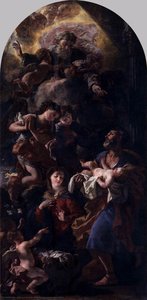
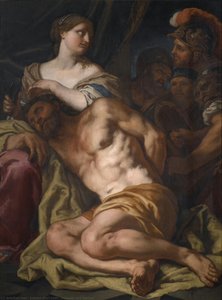
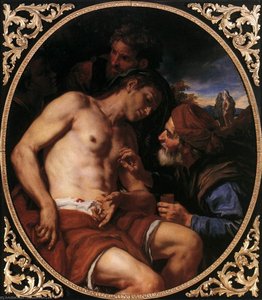
11Christ on the Cross (1665) autor Johann Carl LothChrist on the Cross1665 · Bavaria riiklikud maalidema kogumikud 12Adoration of the Shepherds (1665) autor Johann Carl LothAdoration of the Shepherds1665 · Bavaria riiklikud maalidema kogumikud 13David with the Head of Goliath (1665) autor Johann Carl LothDavid with the Head of Goliath1665 · Bavaria riiklikud maalidema kogumikud 14Mockery of Christ (1665) autor Johann Carl LothMockery of Christ1665 · Bavaria riiklikud maalidema kogumikud 15Isaac Blesses Jacob (1665) autor Johann Carl LothIsaac Blesses Jacob1665 · Bavaria riiklikud maalidema kogumikud 16The Shame of Noah (1674) autor Johann Carl LothThe Shame of Noah1674 · Bavaria riiklikud maalidema kogumikud 17The Dying Seneca (1665) autor Johann Carl LothThe Dying Seneca1665 · Bavaria riiklikud maalidema kogumikud 18The Rescue of Agrippina, Mother of Nero (1665) autor Johann Carl LothThe Rescue of Agrippina, Mother of Nero1665 · Bavaria riiklikud maalidema kogumikud 19Boy in Armor (1665) autor Johann Carl LothBoy in Armor1665 20Cato the Younger's Death (1672) autor Johann Carl LothCato the Younger's Death1672 · Statens Museum For Kunst 21Saint Joseph with the Christ Child (1680) autor Johann Carl LothSaint Joseph with the Christ Child1680 · Bavaria riiklikud maalidema kogumikud 22Holy Family with the Christ Child John (1680) autor Johann Carl LothHoly Family with the Christ Child John1680 · Bavaria riiklikud maalidema kogumikud 23Saint John the Baptist (1680) autor Johann Carl LothSaint John the Baptist1680 · Slovaki Riiklik Kunstigaleri 24Saint Paul (1675) autor Johann Carl LothSaint Paul1675 · Varssavi Rahvusmuuseum 25Faun playing the flute. (1675) autor Johann Carl LothFaun playing the flute.1675 · Varssavi Rahvusmuuseum 26Martyrdom of Gerard of Csanád (1677) autor Johann Carl LothMartyrdom of Gerard of Csanád1677 · Musée des Beaux-Arts de Strasbourg 27Holy Family and God the Father (1681) autor Johann Carl LothHoly Family and God the Father1681 · San Silvestro 28The Guardian Angel and Archangel Michael (1691) autor Johann Carl LothThe Guardian Angel and Archangel Michael1691 · Bavaria riiklikud maalidema kogumikud 29Saint Dominic Receives the Rosary (1691) autor Johann Carl LothSaint Dominic Receives the Rosary1691 · Bavaria riiklikud maalidema kogumikud 30The Death of Cato. (1700) autor Johann Carl LothThe Death of Cato.1700 · Varssavi Rahvusmuuseum 31Abraham Visited by the Angels autor Johann Carl LothAbraham Visited by the Angels 32Death of St Peter Martyr (1691) autor Johann Carl LothDeath of St Peter Martyr1691 · Basilica dei Santi Giovanni e Paolo 33Lowering of Moses into the Nile (Amram and Jochebed lowering their son Moses in a basket into the Nile) (1700) autor Johann Carl LothLowering of Moses into the Nile (Amram and Jochebed lowering their son Moses in a basket into the Nile)1700 · Ernest Zmetáki kunstigaleri 34Apollo, Pan, and Marsyas autor Johann Carl LothApollo, Pan, and MarsyasBerliini Riigimuseumid 35Eliezer ja Rebekka õuel (1670) autor Johann Carl LothEliezer ja Rebekka õuel1670 · Hermitage muuseum 36Self-Portrait autor Johann Carl LothSelf-PortraitBavaria riiklikud maalidema kogumikud 37The Crowning with thorns autor Johann Carl LothThe Crowning with thornsFinnish National Gallery 38Saint Sebastian autor Johann Carl LothSaint SebastianRahvuslik Galerii Praha 39Kampf des Jakob mit d. Engel ? autor Johann Carl LothKampf des Jakob mit d. Engel ? 40Adam and Eve autor Johann Carl LothAdam and EveKedleston Hall 41Lot and His Daughters autor Johann Carl LothLot and His Daughters 42Samson and Delilah autor Johann Carl LothSamson and DelilahFondazione Brescia Musei 43Mercury Piping to Argus autor Johann Carl LothMercury Piping to ArgusNational Gallery 44Jupiter and Mercury at Philemon and Baucis autor Johann Carl LothJupiter and Mercury at Philemon and BaucisKunsthistorisches Museum 45The Good Samaritan autor Johann Carl LothThe Good SamaritanKunsthistorisches Museum 46The Good Samaritane (1676) autor Johann Carl LothThe Good Samaritane1676 · Kunstsammlungen Graf von Schönborn

Teemad, mis püüdisid Johann Carl Loth pilma

Neli teemat, mis esinevad neis originaalkindel kõige sagedamini, ning iga teema parim näide.

Muuseumid, kus on säilitatud Johann Carl Loth originaalteosed

Kümne 8 muuseumi kollektsioonid, mis sisaldavad kõige rohkem sellel lehel esitatud teoseid.

Muuseumid Linn Johann Carl Loth teosid Selle nimekirja maalid
Bavaria riiklikud maalidema kogumikud, MünchenBavaria riiklikud maalidema kogumikud München 17 The Exposure of the Infant Moses, Christ Appears to Saint Anthony, The Penitent Mary Magdalene
Kunsthistorisches Museum, ViinKunsthistorisches Museum Viin 3 Jacob Blesses Ephraim and Manasseh, Jupiter and Mercury at Philemon and Baucis, The Good Samaritan
Varssavi Rahvusmuuseum, VarssaviVarssavi Rahvusmuuseum Varssavi 3 Saint Paul, Faun playing the flute., The Death of Cato.
Rijksmuseum, AmsterdamRijksmuseum Amsterdam 1 Selene and Endymion
Art Institute of Chicago, ChicagoArt Institute of Chicago Chicago 1 Old Peasant Lighting a Pipe
Muzeum Palacu Króla Jana Iii w Wilanowie, VarssavaMuzeum Palacu Króla Jana Iii w Wilanowie Varssava 1 Music Lesson
Minneapolis Institute of Art, MinneapolisMinneapolis Institute of Art Minneapolis 1 Diogenes
J. Paul Getty muuseum, Los AngelesJ. Paul Getty muuseum Los Angeles 1 Susannah and the Elders

Johann Carl Loth aastakatega: iga aastakannaga üks unikaalne originaal

Teosed aastakate kaupa

Vali vuosakülg, et näha selle ajastu definieerivat originaalteost.

Johann Carl Loth maalid: küsimused galeriile

Mis on Johann Carl Loth kõige kuulsam teos?Paljasta vastus

Selene and Endymion (1670), Rijksmuseum, Amsterdam. Järgnevad Jacob Blesses Ephraim and Manasseh (1692) ja Old Peasant Lighting a Pipe (1660).

Mis vanuses luunud Johann Carl Loth teos Selene and Endymion?Paljasta vastus

38 aastat vanus: teos Selene and Endymion on pärinev aastast 1670 ning Johann Carl Loth sündis aastal 1632.

Millised on Johann Carl Loth kümneks kuulsumat maalatist?Paljasta vastus

Selene and Endymion, Jacob Blesses Ephraim and Manasseh, Old Peasant Lighting a Pipe, Music Lesson, Diogenes, Susannah and the Elders, The Exposure of the Infant Moses, Christ Appears to Saint Anthony, The Penitent Mary Magdalene ja John the Baptist. Ülemine reiting näitab iga teose puhul aastat ja muuseumi.

Kui palju teoseid kunstniku Johann Carl Loth kohta on teada?Paljasta vastus

Meie kataloogist leiate 47 teost kunstnikult Johann Carl Loth, mis on pärinevad ajastust 1650 kuni 1692.

Kust saab näha kõige kuulsamaid Johann Carl Loth originaalteoseid?Paljasta vastus

Peamiselt Bavaria riiklikud maalidema kogumikud (München), Kunsthistorisches Museum (Viin) ja Varssavi Rahvusmuuseum (Varssavi) muuseumites. Ülalpool olevate muuseumite tabelis on nendest kõik loetletud.

Mille perioodi jooksul lõi Johann Carl Loth oma tuntumad maalid?Paljasta vastus

Ajal 1660s: 13 46 sellel lehel olevat teost on sellel perioodil loodud, მათart közül Old Peasant Lighting a Pipe.

Milline kuuls Johann Carl Loth maal on kõige varasem ja milline kõige hiljema?Paljasta vastus

Sellel lehel on kõige vanem teos Music Lesson (1650) ja kõige värskeim Jacob Blesses Ephraim and Manasseh (1692).

Millist teemasid Johann Carl Loth eelistas?Paljasta vastus

Man (28), Drapery (15) ja Skin (11), kogu selle lehekülje 46 teose kohta.

Mida Johann Carl Loth kõige rohkem kasutas oma maalide nimiseks?Paljasta vastus

Oil On Canvas, 22 teoseks 46 töödelt sellel lehel.

Millisse toomangu kuulub Johann Carl Loth teos?Paljasta vastus

Baroque, seda lähtudes selle lehe originaalteostest.

Mida Johann Carl Loth originaalte ma näen Bavaria riiklikud maalidema kogumikud muuseumis?Paljasta vastus

The Exposure of the Infant Moses, Christ Appears to Saint Anthony ja The Penitent Mary Magdalene: Bavaria riiklikud maalidema kogumikud, München säilitab 17 selle lehel olevat teost.

Johann Carl Loth: kunstniku portree

Veneetsia draama meistri elu ja pärand: Johann Carl Loth

Seitsmenda sajand, päikeselooretab ja teatraalne Veneetsia atmosfääris on väheseid kunstnere, kes suutsid tabama sügavaid pingeid jumaliku ja mulja vahel nii meistralikult kui Johann Carl Loth. Umbes 1632. aastal Münaheis, Baariini elektoraadis sündinud Loth oli maalari, kelle identiteet ühendas saksa kunstiteaduse tugevad traditsioonid Itaalia baroki säavastava ja emotiivse ihtundiga. Kuigi tema nimi ei pruugi kõlada samaanastavalt tuttavalt nagu Tiziani nimi, oli tema kohalolu Veneetsia kunstimaastrikul monumentaalne. Biograaf Arnold Houbraken pities teda kuulsalt üheks kolmest suurest kunstnikust, kes kandis nime "Karel" — prestiižne eristus, mis pani ta samasteks sellisteks hiigludeks nagu Karel Duijardin ja Carlo Maratta, tähistades tema tulist Euroopa maalide eliiti.

Lothi kunstiline teekond algas tema isa, Johann Ulrich Loth, voolava silma all — maalari, kes pakkus alustavale tehnilisele rangusele, mis võimaldas hiljem pojal eksperimenteerida nii suurepärase mõidusega. See varajane harjutus Münaheis installeeris kompositsioonide suhtes disiplineeritud lähenemise, kuid just Veneetsias liikumine süütele tema loovuse. Veneetsia vibratises keskkonnas imetas Loth Giovan Battista Langetti mõjutust, omades stiili, mida määrkas chiaroscuro — valgus ja varjund —, ning kalduvus tenebrismile. See tehnika võimaldas tal figureid pimedusest välja skulptureerida, andes tema lerratastele kaaluka, salapõhjalise ja vaimse kiirgluse, mis sai tema täunneks sünnonumbriks.

Müti ja kirja tepp

Lothi loomingulise väärtuse tõeline briljantsus peitub tema võimes muuta lerratass kunstlik lavaks inimlooia epicaks. Ta spetsialiseeris suurepõlised ajaloolised maalid, mida iseloomustasid tihedalt täidetud, rahvikas rühmakoonid, mis nõudsid hiirlikku kompositsioonilist oskust. Tema teemad pärinesid klassikalisest müütoloogiast ja Vana Testamenti sügavustest, mida ei koheldud ta pelgalt illustratsioonideks, vaid elavate ja hingavate draamadena. Olgu see siis jumalate taevuline sekkumine või piatlikkuste rängad katsimused, Loth kasutas kõrgelt värvilist paletit ja vaba, ekspressiivset pintslitööd, et tekitada intenseem emotsioone.

Seda meistriandmust on nähtav teostes nagu Jupiter ja Merkurius Philemoni ja Bauci juures, kus jumalalik kohalolu on tunda läbi ägelise, valgustava kiirgluse, mis läbrib tavalise mortalise maja vaikus. Sarnaselt tema religioossetele kompositsioonidele, nagu Püha perekond ja Jumal Isa, mis näitavad sügavat kontrolli atmosfäärilise sügavuse ja pühima läheduse üle. Tema võime koota keerulisi inimlikke emotsioone — püüdmatusetust, hirmu, vénitust ja peretunnet — nendesse suursug ownesse narratiividesse tagasistas, et tema tööd resoneeriksid kaugel Veneetsiast kuni Viini hovini, pälledades tähelepanu nii Keiser Leopold I-lt kui teistelt prestiižsetelt patroonidelt.

Mõju, koostöö ja püsiv tähtsus

Lothi karjäär ei olnud üksindussõit, vaid märkimisväärt kunstiline sünergia. Veneetsias teostas ta viljakat koostööd teiste meistritega, nagu Pietro Liberi, tehes koos ambitsioosseid tellimusi, mis tõstisid ajaloolise lugulaadenduse standarde. Tema stuudio sai uue põlvkonna kunstnike beacon'iks; ta õpetas välja kunstnike, sealhulgas Michael Wenzel Halbax ja Johann Michael Rottmayr, tagades, et tema stiililine märgid — dramatiline valgus ja teatraalsed kompositsioonid — leviksid läbi järgmiste kümnete baroki kunsti.

Kui ta lähenes oma elu lõpule, elades Veneetsias kuni oma surma kuni 1698. aastal, oli Loth kinnitanud pärandi, mis ületas tema saksa päritolu. Ta oli maalari, kes suutis kontrollida nii üksiku figüüri intiimseid varjusid kui ka massi kaotikat energiat. Täna asuvad tema teosed mõnes maailma prestiižseimas kunstikogumuses, alates Viini Kunsthistorisches Museumist kuni St. Peterburgi Eremite muuseumist. Tänu oma võimekusele ühendada nooreuse struktuurset rangust Veneetsia kooli emotiivse voolavusega, Johann Carl Loth on jäänud baroki ajastu definieerivaks häälest, meelestades meid ajast, mil kunst oli suurepärane, teatraalne püüdeline sublimeeritud ilu poole.