Antonio da Correggio portree

100 kulubumatamatumat Antonio da Correggio maalist, millist on vaid üks

Uuendatud november 2026 · järjestatud meie populaarsusindeksi järgi (otsingud, külastused ja tellimused igale teosele) · 206 teost Antonio da Correggio meie kataloogis

Lühidalt

Jupiter ja Io (1531) on Antonio da Correggio maalide kõige silmapaistvam teos; originaal kuulub museumi Kunsthistorisches Museum, Viin. Pärast seda suunatakse pilk Pühisünd (Püha öö) (1528) ja Leda ja müns (1531) suunas. Meie kataloogis olevatest Antonio da Correggio 206 teosest on need 100 kõige kuulsumat, millist igaüks on esitatud koos aasta, muuseumi ja põhjusega, miks teos on püsiv.

1489 – 1534, Correggio Kõrgrenessanss Enamama teoseid: Bavaria riiklikud maalidema kogumikud

Antonio da Correggio top 10 maalist galeriist vaatenurgast

1
Jupiter ja Io (1531) autor Antonio da Correggio

Jupiter ja Io

1531 · Õlimaal kangaruumil · Kunsthistorisches Museum, Viin

Jupiter ja Io – Kujutav Kunstilise Revalvandi Tip Antonio Allegri da Correggio loodud “Jupiter ja Io” (1531) on silmapilgust vaimukas ja emotsionaalselt rikkalik maal, mis tähistab High Renaissance perioodi tipphetke. See teos ei ole mitte ainult ilus kunstikunst, vaid ka sügavalt mõnitav narratiiv klassikalise müstika maailmast, millel on suur mõju kujundatud ja täidetud dramaatilisusega. Maal keskendub jumala Jupiterile ja Io-le, jumetütt, kes oli armastuselaniku Jupiteri armu saanud, kuid keda tahtis…

2
Pühisünd (Püha öö) (1528) autor Antonio da Correggio

Pühisünd (Püha öö)

1528 · Akrüül võimlusel · Gemäldegalerie, Dresden

Antonio Allegri da Correggio’i 1528. aastal maalis "Pühisünd (Püha öö)" ei ole pelgalt Kristuse sünni kujutis; see on imortatiivne kogemus, hoolikalt loodud lavastus sügavale teoloogilisele draamale. Regemades Renessanssi Parma vibratilist kunstilist keskkonda, ühendab Correggio meisterlikult klassikalised mõjudid ujuva dünaamikaid, mis ennustas Baroki ajastut. See maali ületab lihtsa jutustuse, pakkudes vaate kunstniku innovaatilisele perspektiivilisele lähenemisele ja tema võimekusele tekitada vaatajas sügav emotsionaalne vastus.

3
Leda ja müns (1531) autor Antonio da Correggio

Leda ja müns

1531 · Õlimaal kangaruumil · Berliini Riigimuseumid, Berliin

Leda ja Rannamees – Antonio Allegri da Correggiooni Muinasõnade Armastus Imemduge selles hämmastavates kunstiteoses Antonio Allegri da Correggiooni loomingule, mis viib meid sügavale klassikalise müstika maailma. See maal, ‘Leda ja Rannamees’, on rohkem kui lihtsalt kujutlus; see on tunnistus renessansiaegse Itaalia kultuuri armastusest muinaslugudele ning inimloomuse kauneusele. Maalitud 1531. aastal, see töö tähistab Leda legendi – Sparta kuninganna, kes sai jumalakujud ja rannamees, tavaliselt kujutatud kui lindvõtja, vahel ka vutt…

4
Danaë (1530) autor Antonio da Correggio

Danaë

1530 · Akrüül võimlusel · Galleria Borghese, Rooma

See teos kirjeldab ikonilist mütoloogilist lugu Danaëst – Zeus, mis on varjunud kuldse vihma taha, ahmatab Argosi kuningas Akrisiosuse tütret Danaë, vaatamata tema isa keeldusetele abielu suhtes. See narratiiv kehastab teemasid, mis puudutavad jumalikku sekkumist, keelatud igatsemust ja pererikkaotust.

5
Noli Me Tangere (1525) autor Antonio da Correggio

Noli Me Tangere

1525 · Fresco · Museo del Prado, Madrid

In the quietude of a sun-drenched landscape, a profound moment of spiritual revelation unfolds within Antonio Allegri da Correggio’s Noli Me Tangere. This masterpiece, painted around 1525, captures the delicate, breathless instant when the resurrected Jesus Christ encounters Mary Magdalene. It is not merely a depiction of a biblical event, but an intimate study of transition—the movement from grief to recognition, and from the earthly to the divine. As the…

6
Madonna and Child with infant St John the Baptist (1514) autor Antonio da Correggio

Madonna and Child with infant St John the Baptist

1514 · Oil On Panel · National Gallery of Victoria, Melbourne

The painting Madonna and Child with infant St John the Baptist is a small-scale religious work by Antonio Allegri, known as Correggio. Created about 1514-1515, the piece captures a quiet, intimate moment of divinity. It remains an important work by Correggio, reflecting the artist's early development and his capacity for profound emotional depth.

7
Madonna with St. Francis (1514) autor Antonio da Correggio

Madonna with St. Francis

1514 · Oil · Gemäldegalerie, Dresden

In the hallowed halls of Dresden’s Gemäldegalerie Alte Meister, there exists a window into the divine, a luminous masterpiece that transcends the boundaries of mere oil and pigment. Antonio Allegri da Correggio’s Madonna with St. Francis, completed around 1514–1515, is not simply a painting; it is a profound spiritual encounter. At first glance, the viewer is struck by a monumental sense of grandeur, as the massive scale of the work—measuring…

8
Pietà (1525) autor Antonio da Correggio

Pietà

1525 · Oil On Panel · Courtauld Gallery, London

The composition centers on the intimate, pyramidal arrangement of the Virgin Mary cradling the lifeless body of Jesus Christ. A diagonal line, formed by the weight of Christ's form, directs the viewer's gaze across the canvas. The scene is set against a dark, shadowy background suggesting a nocturnal or wooded environment, which provides a sense of atmospheric depth. Through the use of chiaroscuro, a gentle light source illuminates the faces…

9
Madonna and Child in Glory (1510) autor Antonio da Correggio

Madonna and Child in Glory

1510 · Oil On Canvas · Galleria degli Uffizi, Firenze

In the quiet intimacy of Madonna and Child in Glory, Antonio Allegri da Correggio invites the viewer into a realm where the boundaries between the earthly and the divine dissolve. This exquisite masterpiece, dating from approximately 1510, captures a moment of profound tenderness and celestial splendor. At its heart, the Virgin Mary cradles the infant Jesus, her form embodying the High Renaissance ideal of grace and maternal devotion. Surrounding them…

10
Madonna della Scala (1523) autor Antonio da Correggio

Madonna della Scala

1523 · Fresco · Galleria Nazionale, Parma

In the heart of Parma, within the hallowed halls of the Museo Costantiniano, resides a masterpiece that captures the very zenith of High Renaissance achievement. Antonio Allegri da Correggio’s Madonna della Scala is far more than a mere religious depiction; it is a profound exploration of light, shadow, and the eternal. Completed in 1523, this monumental fresco invites the viewer into a sacred space where the boundaries between the earthly…

Antonio da Correggio kuulsad maalid, numbrid 11 kuni 100

11Leda and the Swan (1532) autor Antonio da CorreggioLeda and the Swan1532 · Gemäldegalerie 12Deposition (1525) autor Antonio da CorreggioDeposition1525 13Ganymede (1531) autor Antonio da CorreggioGanymede1531 · Kunsthistorisches Museum 14Danaë (detail) (1530) autor Antonio da CorreggioDanaë (detail)1530 · Galleria Borghese 15Venus with Mercury and Cupid (The School of Love) (1525) autor Antonio da CorreggioVenus with Mercury and Cupid (The School of Love)1525 · National Gallery 16Venus and Cupid with a Satyr (1528) autor Antonio da CorreggioVenus and Cupid with a Satyr1528 · Louvre'i muuseum 17Virgin and Child with an Angel (detail) autor Antonio da CorreggioVirgin and Child with an Angel (detail)Szépművészeti Múzeum 18Head of an Angel (1522) autor Antonio da CorreggioHead of an Angel1522 · National Gallery 19Four Saints (from left St. Peter, St. Martha, St. Mary Magdalene, St. Leonard) (1517) autor Antonio da CorreggioFour Saints (from left St. Peter, St. Martha, St. Mary Magdalene, St. Leonard)1517 · Metropolitan Museum of Art 20Die Mystische Hochzeit der Hl. Katharina von Alexandrien autor Antonio da CorreggioDie Mystische Hochzeit der Hl. Katharina von Alexandrien 21Reading Cupid (1520) autor Antonio da CorreggioReading Cupid1520 · Bavaria riiklikud maalidema kogumikud 22Mary with Child and Saints (1511) autor Antonio da CorreggioMary with Child and Saints1511 · Bavaria riiklikud maalidema kogumikud 23Madonna and Child (1515) autor Antonio da CorreggioMadonna and Child1515 · Detroit Institute of Arts 24Abduction of Ganymede (1511) autor Antonio da CorreggioAbduction of Ganymede1511 · Bavaria riiklikud maalidema kogumikud 25English Head (1511) autor Antonio da CorreggioEnglish Head1511 · Bavaria riiklikud maalidema kogumikud 26Head of Christ (1520) autor Antonio da CorreggioHead of Christ1520 · Varssavi Rahvusmuuseum 27The Mystic Marriage of Saint Catherine with Saint Sebastian (1522) autor Antonio da CorreggioThe Mystic Marriage of Saint Catherine with Saint Sebastian1522 · The Hepworth Wakefield 28Passing away of St John (1520) autor Antonio da CorreggioPassing away of St John1520 29The Assumption of the Virgin (1530) autor Antonio da CorreggioThe Assumption of the Virgin1530 30Assumption of the Virgin (1526) autor Antonio da CorreggioAssumption of the Virgin1526 · Duomo 31The Betrothal of Saint Catharine (1519) autor Antonio da CorreggioThe Betrothal of Saint Catharine1519 · Statens Museum For Kunst 32Madonna and Child with the Infant Saint John (1522) autor Antonio da CorreggioMadonna and Child with the Infant Saint John1522 · Städel Museum 33The Education of Love by Mercury (1750) autor Antonio da CorreggioThe Education of Love by Mercury1750 34Adoration of the Shepherds (The Holy Night) (1530) autor Antonio da CorreggioAdoration of the Shepherds (The Holy Night)1530 · Gemäldegalerie 35An Allegory of Virtue (unfinished) autor Antonio da CorreggioAn Allegory of Virtue (unfinished)Scottish National Gallery 36Camera di San Paolo (1518) autor Antonio da CorreggioCamera di San Paolo1518 · Camera di San Paolo 37Adoration of the Magi (1517) autor Antonio da CorreggioAdoration of the Magi1517 38Ceiling decoration (partial view) (1518) autor Antonio da CorreggioCeiling decoration (partial view)1518 · Camera di San Paolo 39Ceiling decoration (1518) autor Antonio da CorreggioCeiling decoration1518 · Camera di San Paolo 40Madonna with Child (called the “Gypsy”) (1515) autor Antonio da CorreggioMadonna with Child (called the “Gypsy”)1515 · Museo di Capodimonte 41St. John the Evangelist (1524) autor Antonio da CorreggioSt. John the Evangelist1524 42John the Evangelist (1520) autor Antonio da CorreggioJohn the Evangelist1520 43The Assumption of the Virgin (detail) (1525) autor Antonio da CorreggioThe Assumption of the Virgin (detail)1525 44Vision of St. John the Evangelist (1520) autor Antonio da CorreggioVision of St. John the Evangelist1520 45Saint Marc (1520) autor Antonio da CorreggioSaint Marc1520 46The Apostles Peter and Paul (1524) autor Antonio da CorreggioThe Apostles Peter and Paul1524 47Assumption of the Virgin (detail) (1526) autor Antonio da CorreggioAssumption of the Virgin (detail)1526 · Duomo 48The Assumption of the Virgin (detail) (1530) autor Antonio da CorreggioThe Assumption of the Virgin (detail)1530 49Madonna Of St. Jerome autor Antonio da CorreggioMadonna Of St. Jerome 50Christ on the Mount of Olives autor Antonio da CorreggioChrist on the Mount of OlivesBavaria riiklikud maalidema kogumikud 51Madonna with St. Jerome (The Day) (1522) autor Antonio da CorreggioMadonna with St. Jerome (The Day)1522 · Staatliche Kunstsammlungen Dresden 52Virgen de San Giorgio autor Antonio da CorreggioVirgen de San Giorgio 53Madonna of the Basket (1524) autor Antonio da CorreggioMadonna of the Basket1524 · National Gallery 54An episode of Christ autor Antonio da CorreggioAn episode of ChristPinacoteca Stuard 55The Head of Saint Catherine the Martyr autor Antonio da CorreggioThe Head of Saint Catherine the MartyrNational Gallery of Ireland 56Head of a Cherub autor Antonio da CorreggioHead of a CherubMuseum of Fine Arts 57The Mystic Marriage of Saint Catherine autor Antonio da CorreggioThe Mystic Marriage of Saint CatherineMuseum of Fine Arts 58Penitent Magdalene autor Antonio da CorreggioPenitent Magdalene 59Study for a prophet autor Antonio da CorreggioStudy for a prophet 60Adam plucking the forbidden fruit autor Antonio da CorreggioAdam plucking the forbidden fruit 61The Virgin and Child with the Infant Baptist autor Antonio da CorreggioThe Virgin and Child with the Infant Baptist 62A prophetess holding a tabla, an angel beside her autor Antonio da CorreggioA prophetess holding a tabla, an angel beside her 63Saint Joseph autor Antonio da CorreggioSaint Joseph 64The Madonna and Child with Saint John the Baptist autor Antonio da CorreggioThe Madonna and Child with Saint John the Baptist 65Virgin and Child autor Antonio da CorreggioVirgin and Child 66Antonio Allegri da Correggio autor Antonio da CorreggioAntonio Allegri da Correggio 67The Magdalen in the act of embracing the feet of Crist autor Antonio da CorreggioThe Magdalen in the act of embracing the feet of Crist 68Four ephebes autor Antonio da CorreggioFour ephebes 69Io autor Antonio da CorreggioIo 70Saint Matthew and Saint Jerome autor Antonio da CorreggioSaint Matthew and Saint Jerome 71Three Graces autor Antonio da CorreggioThree Graces 72Camera di San Paolo autor Antonio da CorreggioCamera di San Paolo 73Lunette with St. John the Evangelist autor Antonio da CorreggioLunette with St. John the Evangelist 74jupiter and io autor Antonio da Correggiojupiter and io 75Mythological subject autor Antonio da CorreggioMythological subject 76Idem autor Antonio da CorreggioIdem 77Diana autor Antonio da CorreggioDiana 78Woman kneeling before another standing autor Antonio da CorreggioWoman kneeling before another standing 79Los santos Pedro, Marta, Maria Magdalena y Leonardo autor Antonio da CorreggioLos santos Pedro, Marta, Maria Magdalena y Leonardo 80Group of angels from Corrège autor Antonio da CorreggioGroup of angels from CorrègeMusée des beaux-arts de Chambéry 81Danaë autor Antonio da CorreggioDanaë 82The Vision of St. John in Patmos autor Antonio da CorreggioThe Vision of St. John in Patmos 83The Mystic Marriage of St. Catherine (1520) autor Antonio da CorreggioThe Mystic Marriage of St. Catherine1520 · Louvre'i muuseum 84Madonna (1512) autor Antonio da CorreggioMadonna1512 · Castello Sforzesco 85Penitent Magdalene, Reading a Book autor Antonio da CorreggioPenitent Magdalene, Reading a BookBavaria riiklikud maalidema kogumikud 86The Mystic Marriage of Saint Catherine (1515) autor Antonio da CorreggioThe Mystic Marriage of Saint Catherine1515 87Saints Peter, Martha, Mary Magdalen, and Leonard (1515) autor Antonio da CorreggioSaints Peter, Martha, Mary Magdalen, and Leonard1515 · Metropolitan Museum of Art 88Portrait of a Gentlewoman (1519) autor Antonio da CorreggioPortrait of a Gentlewoman1519 89Martyrdom of Four Saints (1520) autor Antonio da CorreggioMartyrdom of Four Saints1520 90Christ on the Mount of Olives autor Antonio da CorreggioChrist on the Mount of OlivesGemäldegalerie 91Rapto de Ganímedes autor Antonio da CorreggioRapto de Ganímedes 92Study for a decoration of grotesques autor Antonio da CorreggioStudy for a decoration of grotesques 93Study for an apostle 1 autor Antonio da CorreggioStudy for an apostle 1 94Assumption Of The Virgin, detail of Angelic Musicians autor Antonio da CorreggioAssumption Of The Virgin, detail of Angelic Musicians 95Study for the parapet of the dome of Parma Cathedral autor Antonio da CorreggioStudy for the parapet of the dome of Parma Cathedral 96Christ arrested autor Antonio da CorreggioChrist arrested 97The holy family with saints autor Antonio da CorreggioThe holy family with saints 98Architectural study autor Antonio da CorreggioArchitectural study 99Plan of a building autor Antonio da CorreggioPlan of a building 100Putto with garland and love trumphant autor Antonio da CorreggioPutto with garland and love trumphant

Antonio da Correggio kuulsaimad maalid ajastult ajastule

Teemad, mis püüdisid Antonio da Correggio pilma

Neli teemat, mis esinevad neis originaalkindel kõige sagedamini, ning iga teema parim näide.

Muuseumid, kus on säilitatud Antonio da Correggio originaalteosed

Kümne 8 muuseumi kollektsioonid, mis sisaldavad kõige rohkem sellel lehel esitatud teoseid.

Muuseumid Linn Antonio da Correggio teosid Selle nimekirja maalid
Bavaria riiklikud maalidema kogumikud, MünchenBavaria riiklikud maalidema kogumikud München 6 Reading Cupid, Mary with Child and Saints, Abduction of Ganymede
National Gallery, LondonNational Gallery London 6 Venus with Mercury and Cupid (The School of Love), Head of an Angel, Madonna of the Basket
Gemäldegalerie, BerliinGemäldegalerie Berliin 3 Leda and the Swan, Adoration of the Shepherds (The Holy Night), Christ on the Mount of Olives
Camera di San Paolo, ParmaCamera di San Paolo Parma 3 Camera di San Paolo, Ceiling decoration (partial view), Ceiling decoration
Kunsthistorisches Museum, ViinKunsthistorisches Museum Viin 3 Jupiter ja Io, Ganymede
Louvre'i muuseum, PariisLouvre'i muuseum Pariis 3 Venus and Cupid with a Satyr, The Mystic Marriage of St. Catherine
Gemäldegalerie, DresdenGemäldegalerie Dresden 2 Pühisünd (Püha öö), Madonna with St. Francis
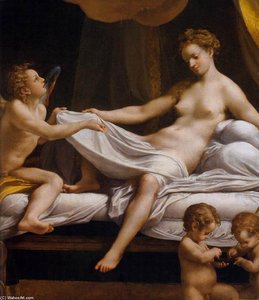
Galleria Borghese, RoomaGalleria Borghese Rooma 2 Danaë, Danaë (detail)

Antonio da Correggio aastakatega: iga aastakannaga üks unikaalne originaal

Teosed aastakate kaupa

Vali vuosakülg, et näha selle ajastu definieerivat originaalteost.

Antonio da Correggio maalid: küsimused galeriile

Mis on Antonio da Correggio kõige kuulsam teos?Paljasta vastus

Jupiter ja Io (1531), Kunsthistorisches Museum, Viin. Järgnevad Pühisünd (Püha öö) (1528) ja Leda ja müns (1531).

Mis vanuses luunud Antonio da Correggio teos Jupiter ja Io?Paljasta vastus

42 aastat vanus: teos Jupiter ja Io on pärinev aastast 1531 ning Antonio da Correggio sündis aastal 1489.

Millised on Antonio da Correggio kümneks kuulsumat maalatist?Paljasta vastus

Jupiter ja Io, Pühisünd (Püha öö), Leda ja müns, Danaë, Noli Me Tangere, Madonna and Child with infant St John the Baptist, Madonna with St. Francis, Pietà, Madonna and Child in Glory ja Madonna della Scala. Ülemine reiting näitab iga teose puhul aastat ja muuseumi.

Kui palju teoseid kunstniku Antonio da Correggio kohta on teada?Paljasta vastus

Meie kataloogist leiate 206 teost kunstnikult Antonio da Correggio, mis on pärinevad ajastust 1510 kuni 1532.

Kust saab näha kõige kuulsamaid Antonio da Correggio originaalteoseid?Paljasta vastus

Peamiselt Bavaria riiklikud maalidema kogumikud (München), National Gallery (London) ja Gemäldegalerie (Berliin) muuseumites. Ülalpool olevate muuseumite tabelis on nendest kõik loetletud.

Mille perioodi jooksul lõi Antonio da Correggio oma tuntumad maalid?Paljasta vastus

Ajal 1520s: 25 100 sellel lehel olevat teost on sellel perioodil loodud, მათart közül Pühisünd (Püha öö).

Milline kuuls Antonio da Correggio maal on kõige varasem ja milline kõige hiljema?Paljasta vastus

Sellel lehel on kõige vanem teos Madonna and Child in Glory (1510) ja kõige värskeim Leda and the Swan (1532).

Millist teemasid Antonio da Correggio eelistas?Paljasta vastus

Renaissance (17), Woman (17) ja Child (14), kogu selle lehekülje 100 teose kohta.

Mida Antonio da Correggio kõige rohkem kasutas oma maalide nimiseks?Paljasta vastus

Fresco, 17 teoseks 100 töödelt sellel lehel.

Millisse toomangu kuulub Antonio da Correggio teos?Paljasta vastus

Kõrgrenessanss, seda lähtudes selle lehe originaalteostest.

Mida Antonio da Correggio originaalte ma näen Bavaria riiklikud maalidema kogumikud muuseumis?Paljasta vastus

Reading Cupid, Mary with Child and Saints ja Abduction of Ganymede: Bavaria riiklikud maalidema kogumikud, München säilitab 6 selle lehel olevat teost.

Antonio da Correggio: kunstniku portree

Varase elu ja vormimise aastad Parmas

Antonio Allegri da Correggio, kelle nimi on sünonüüm kõrrenaissance’i kunstilisele tippmomendile, ilmus 1489. aastal väikesest Itaalia linnast, mis kandis tema hilisem nime. Tema elu, kuigi traagiliselt lühike – vaid neljakümmend aastat – jättis kustumatu jälje kunstimaailma ajalukku, ühendades Raffaeli ja Michelangelo klassikalised ideaalid dramaatilise dünaamikaga, mis eelkäärutas baroki ajastut. Detailid Correggio varasest elust on veidi ebaselged; arvatakse aga, et ta sai esialgse koolituse oma onu Lorenzo Allegri käest, kohalikult maalikunstnikult, enne kui suundus Modenas ja seejärel Mantua poole kunstilise täiustumise otsingul. Need kujunevad kogemused avasid talle mõjuvate kunstnike nagu Andrea Mantegna loomingu, mille meisterlik perspektiiv ja klassikalised teemad resonantsisid sügavalt Correggio arenevas stiilis. Ta omandas need õppetunnid, kuid hakkas kiiresti looma omaenda rada – iseloomulikku graatsilist lüürilisust ja uuenduslikku lähenemisviisi illusioonilise ruumi loomisele. Correggio ei kopeerinud pelgalt ilu; ta muutis seda sügava emotsionaalse sügavuse ja tehnilise briljantsi prisma kaudu.

Uudsus värvis: stiil ja tehnika

Correggio kunstiline geenius peitus mitte lihtsalt replikatsioonis, vaid transformatsioonis. Tema maalid on koheselt äratuntavad oma elavate värvipalettide poolest, kasutades sageli rikkaid punaseid, siniseid ja kuldseid toone, et luua atmosfääri nii maa- kui ka jumalikust ekstasisist. Ta oli chiaroscuro meister, dramaatiline valguse ja varju mäng, kasutades seda mitte ainult vormi modelleerimiseks, vaid ka meeleolu äratamiseks ja emotsionaalse mõju suurendamiseks. See tehnika on eriti ilmne tema mütoloogilistes stseenides, kus figuurid tõusevad pimedusest nagu sisemiselt valgustatud. Lisaks värvile ja valgusele oli Correggio perspektiivi meisterlikkus revolutsiooniline. Ta ei loonud mitte ainult sügavuse illusiooni; ta manipuleeris sellega, et tõmmata vaataja stseenisse, hägustades piire reaalsuse ja esituse vahel. Seda demonstreeritakse suurepäraselt tema freskode kaudu Parma katedraali kuplil, kus keerlevad figuurid näivad tõusvat taevasse, luues hingekineva ruumilise laienemise tunde. Tema di sotto in su kasutamine ehk „alt vaates“ perspektiiv – tehnika, mis esitab objekte otse altvaates – täiustas seda illusioonilist efekti veelgi, ennustades baroki lakke maalide teatrikunstlikkust. Tal oli erakordne võime imbuda oma figuuridesse liikumise ja elu tunnet, muutes need peaaegu käegakatsutavateks, kuigi on joonistatud tasasele pinnale.

Müüt ja jumalakummardus: põhitööd ja teemad

Correggio laia looming hõlmab nii religioosseid kui ka mütoloogilisi teemasid, mida kõiki koheldakse võrdse tundlikkuse ja uuendusmeelsusega. Tema altarimaalid, näiteks Lammaste kummardamine (tuntud kui „Öö“), on täis hellat pihtivust ja märkimisväärset naturalismi, mis kutsub mõtisklusele. Figuurid ei ole idealiseeritud pühakud, vaid pigem seostatavad inimesed, kes kogevad sügava vaimse ühenduse hetki. Kuid võib-olla just tema mütoloogilistes maalidest õitseb Correggio sensuaalsus täielikult. Berliinis asuv Leda ja luik on sellele suurepärane näide – klassikalise müüdi kujutamine, mis on renderdatud peenete detailidega ja peene erootikaga, mis oli oma aja jaoks nii julge kui ka lummav. Samuti demonstreerib Jupiter ja Io tema võimet kujutada keerulisi narratiive graatsia ja voolavusega, samal ajal kui Rooma Borghese galeriis asuv Danaë on tunnistus tema meisterlikkusest inimvormi ettekujutamisel eeterlises valguses. Need teosed ei olnud lihtsalt iidsete lugude illustratsioonid; need olid armastuse, iha ja müüdi jõu uuringud. Ta sulatas sujuvalt paganlikku mütoloogiat kristliku ikonograafiaga, luues ainulaadse kunstikeele, mis kajastas renessansi intellektuaalset kihutust.

Püsiv mõju: Correggio pärand

Vaatamata oma suhteliselt lühikesele karjäärile avaldas Antonio da Correggio sügavat mõju järgnevatele kunstnike põlvedele. Tema uuenduslik perspektiivikasutus, dramaatiline valgustus ja sensuaalsed vormid rajasid tee baroki meistritele – kunstnikele nagu Peter Paul Rubens ja Giovanni Battista Tiepolo –, kes omaksid tema teatrikunstlikkust ja emotsionaalset intensiivsust. Ta ennustas ka rokokoo kunsti elemente, rõhuasetades graatsiale, elegantsile ja mängulisele erootikale. Correggio mõju piirdus mitte ainult maalikunstiga; tema freskod inspireerisid arhitekte ja sisustajaid looma üha keerukamaid ja illusioonilisi interjööre. Tema asutatud Parma kool jätkas õitsemist aastakümneid pärast tema surma, säilitades tema kunstiprintsiipe ja -tehnikaid. Isegi tänapäeval on Correggio tähistatud figuur kunstiajaloo valdkonnas – tunnistus tema visiooni püsivale jõule ja tema loomingu ajatutele ilule. Tema töö tuletab meelde, et tõeline kunstiline oskus peitub mitte ainult tehnilises viljakuses, vaid ka võimes äratada emotsioone, inspireerida imetlust ja ühenduda inimese kogemuse sügavaimates aspektides. Tema mõju on näha arvututes töödes kogu Euroopa kunstiajaloo vältel, kinnistades tema koha renessansi ja baroki esteetika üleminekufiguurina.

Väärtuslikud tööd

  • Leda ja luik – Staatliche Museen of Berlin
  • Jupiter ja Io – Kunsthistorisches Museum, Vienna
  • Danaë – Borghese Gallery, Rome
  • Neitsi Maarja taevasse tõusmine - Parma katedraal
  • Lammaste kummardamine (Öö) – Gemäldegalerie Dresden