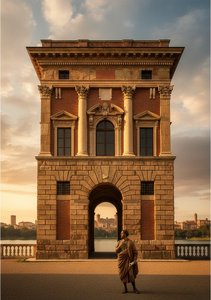
Una Sinfonía del Manierismo: Revelando el Palazzo del Te en Mantua
Situado justo a las afueras de las murallas de Mantua, Italia, el Palazzo del Te se erige como un testimonio impresionante del arte renacentista y la innovación arquitectónica. Más que un simple palacio, es una experiencia inmersiva: un viaje al interior de la mente de Giulio Romano, el brillante discípulo de Rafael, y una profunda reflexión sobre el poder, el ocimo y la naturaleza misma de la ilusión. Construida entre 1524 y 1534 para Federico II Gonzaga, el astuto y ambicioso marqués de Mantua, esta obra maestra suburbana sirvió inicialmente como un refugio privado, un espacio diseñado para encarnar el estilo de vida opulento de su patrón y exhibir su creciente autoridad. Hoy en día, recibe a visitantes de todo el mundo, ofreciendo una mirada inigualable a un momento crucial en la historia del arte.
La génesis del palacio está arraigada en la ambición de la familia Gonzaga y su uso estratégico del paisaje. El sitio mismo —una isla conectada a la ciudad por un puente— fue elegido por su relativo aislamiento y proximidad a las marismas, proporcionando tanto privacidad como acceso a recursos. A Romano se le encomendó la tarea de transformar este humilde lugar en un espectáculo deslumbrante, fusionando elementos de la arquitectura palaciega con la estética más relajada de una villa; una elección deliberada que señalaba un alejamiento de la rigidez formal hacia un enfoque del diseño más dinámico y lúdico. La estructura resultante se caracteriza por sus fachadas asimétricas, luces y sombras irregulares y un magistral juego de contrastes, creando una atmósfera que es, a la vez, grandiosa e íntima.
La Sala de los Gigantes: Los Frescos como Narrativa
El verdadero corazón del Palazzo del Te reside en sus extraordinarios frescos, una serie de narrativas interconectadas que se despliegan a través de las numerosas estancias del palacio. Giulio Romano, junto con su equipo de hábiles artesanos, incluidos Benedetto Pagni y Rinaldo Mantovano, emprendió un proyecto ambicioso para transformar cada superficie en un lienzo para el mito, la alegoría y el puro deleite visual. La Sala de los Gigantes es, posiblemente, la más famosa: un espectáculo caótico donde figuras colosales luchan contra dioses y demonios, creando una sensación vertiginosa de movimiento y drama. Aquí, el estilo distintivo de Romano —conocido como Manierismo— se manifiesta plenamente: formas alargadas, perspectivas distorsionadas y un énfasis en la intensidad emocional por encima de la representación realista.
Otros ciclos de frescos notables incluyen la Sala de Psique, que representa el apasionado romance de la diosa con Cupido, y la Sala de los Caballos, una vibrante celebración de la destreza ecuestre. Cada habitación cuenta una historia, a menudo entrelazada con temas mitológicos y sutiles comentarios políticos que reflejan las ambiciones de Federico II Gonzaga. La escala y la complejidad de estos frescos son asombrosas, exigiendo una observación cuidadosa para apreciar plenamente sus intrincados detalles y significados estratificados. El uso del spezzato —una técnica que implica un yeso deliberadamente imperfecto— añade profundidad y textura a las superficies, realzando aún más el efecto ilusionista.
Más allá de los muros: Tesoros mesopotámicos
Si bien los frescos del palacio son sin duda su principal atractivo, el Palazzo del Te también alberga una fascinante colección de artefactos mesopotámicos dentro del Museo Civico. Esta adición inesperada proporciona un contraste cautivador con el entorno renacentista, mostrando el interés de la familia Gonzaga por las civilizaciones antiguas y sus conexiones con narrativas históricas más amplias. El acervo del museo incluye tablillas cuneiformes, sellos cilíndricos, fragmentos de cerámica y otros objetos que ofrecen una visión de la vida cotidiana, las creencias religiosas y las tradiciones artísticas de Mesopotamia, una civilización separada por miles de años de la Italia renacentista.
Un legado preservado: Historia y restauración
La historia del Palazzo del Te está marcada tanto por el triunfo como por la tragedia. Construido durante un período de intensa inestabilidad política, fue testigo de los tumultuosos eventos de la Guerra de la Sucesión de Mantua en 1630, cuando el palacio fue devastado por las tropas imperiales. A pesar de este daño devastador, el palacio fue meticulosamente restaurado a lo largo de los siglos, preservando sus tesoros artísticos para las generaciones futuras. Hoy, el Palazzo del Te se erige como Patrimonio de la Humanidad por la UNESCO, un testimonio del poder perdurable del arte y la arquitectura. Continúa evolucionando como centro cultural, acogiendo exposiciones, programas educativos y eventos que celebran su rica historia y legado artístico.
Una visita al Palazzo del Te es más que un simple recorrido turístico; es una inmersión en un mundo de ilusión, ambición y genio artístico. Desde los dramáticos frescos hasta la inesperada colección de artefactos mesopotámicos, este notable palacio ofrece una mirada única al corazón de la Italia renacentista: un lugar donde el arte, la historia y la arquitectura convergen en una experiencia verdaderamente inolvidable.