

Una Sinfonía de Fe e Innovación Arquitectónica
La Basílica di Sant’Antonio en Padua se erige como un profundo testimonio de siglos de devoción y una extraordinaria convergencia de estilos arquitectónicos, un verdadero palimpsesto grabado en el paisaje de la región del Véneto. Fundada poco después del fallecimiento de San Antonio en 1231, su concepción inicial reflejaba los ideales austeros de la orden franciscana, manifestándose como Santa Maria Mater Domini antes de transformarse rápidamente en el sitio de peregrinación más venerado de Italia. Hoy en día, la Basílica presenta un edificio que desafía cualquier categorización sencilla, reflejando una historia estratificada, puntuada por la solidez románica, la aspiración gótica y el misticismo bizantino. Esta fusión única crea un lenguaje visual sin igual en Europa, donde la naturaleza pesada y terrenal de sus primeros cimientos se encuentra con las cualidades etéreas y elevadas de sus adiciones posteriores.
El viaje arquitectónico a través de la Basílica es uno de evolución continua. Las naves están puntuadas por arcos elevados y bóvedas de crucería que rinden un homenaje deliberado a las grandes catedrales de Francia, creando una atmósfera de solemne contemplación y altura espiritual. Sin embargo, al alzar la vista, uno se encuentra con las magníficas cúpulas de influencia bizantina que evocan el esplendor de la Basílica de San Marcos en Venecia. Estas cúpulas otorgan una cualidad de otro mundo al espacio interior, simbolizando un puente entre lo terrenal y lo divino. Dominando el paisaje exterior se encuentra la monumental Estatua Ecuestre de Gattamelata de Donatello, una obra maestra que captura no solo el orgullo cívico de Padua, sino que también encarna los ideales humanistas que florecían durante el Renacimiento, anclando el sitio sagrado dentro del renacimiento cultural más amplio de la época.
Obras Maestras en Bronce y Fresco
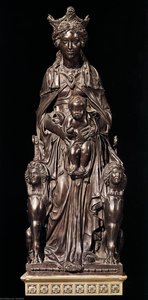
El verdadero alma de la Basílica reside en sus íntimas capillas, donde los tesoros artísticos del Renacimiento iluminan el rico patrimonio cultural de Padua. Las obras de Donatello, uno de los escultores más influyentes del siglo XV, son particularmente asombrosas. Su bronce, Madonna con el Niño , creado para el Altar Mayor en 1448, ejemplifica el estilo del Renacencia Temprana al alejarse del tradicionalismo rígido para presentar una conexión más humana y tierna entre la madre y el infante. Del mismo modo, su relieve en bronce, el Milagro del Corazón del Hombre Avaro , sirve como una magistral representación de la fe y la gracia divina, utilizando la precisión anatómica y la emoción expresiva para dar vida a la narrativa de la ascensión milagrosa de Zaqueo.
Más allá de la brillantez escultórica, la Basílica ofrece un encuentro profundo con el uso revolucionario de la perspectiva a través de los frescos de Andrea Mantegna. Dentro de la Lunetta —una pequeña capilla que domina la Piazza del Santo— la obra de Mantegna representa un momento crucial en la historia del arte, capturando la esencia del pensamiento humanista mediante un detalle meticuloso y profundidad espacial. La propia Capilla de San Antonio sirve como el corazón espiritual del complejo, albergando la tumba del santo adornada con exquisitos trabajos en mármol y bronce. Para el coleccionista o el amante del arte, estas obras representan más que una mera decoración; son intersecciones profundas donde la maestría técnica se encuentra con la trascendencia espiritual, convirtiendo a la Basílica en un destino que continúa inspirando asombro y sirviendo como piedra angular de la identidad artística europea.