El pionero veneciano de la síntesis bizantina y gótica
Paolo Veneziano (c. 1333 – 1358) se erige como una figura monumental en la historia del arte veneciano, reconocido universalmente como el pintor veneciano más importante del siglo XIV. Nacido en un linaje artístico en el corazón mismo de Venecia —siendo su padre también un artista de renombre—, la breve pero brillante carrera de Veneziano coincidió con un periodo transformador en la pintura europea. Actuó como un puente vital, cerrando la brecha estilística entre la rígida y dorada grandeza de la tradición bizantina y la floreciente y más fluida elegencia del estilo gótico. Su legado se extiende mucho más allá de su corta vida, estableciéndolo como el verdadero fundador de la escuela veneciana, un movimiento artístico que dominaría la producción durante todo el siglo e influiría profundamente en maestros posteriores como Lorenzo Veneziano.
La esencia del genio de Veneziano reside en su capacidad para armonizar mundos dispares. Si bien su formación estaba profundamente arraigada en las influencias bizantinas que impregnaban la República de Venecia —un estilo caracterizado por la estabilidad iconográfica, la preciosidad y un sentido de lo divino—, poseía una aguda conciencia de los avances contemporáneos que fluían desde Rímini y otros centros artísticos italianos. Al incorporar elementos góticos en sus composiciones, introdujo un nuevo nivel de sofisticación y movimiento. Este compromiso dual aseguró que su obra no se limitara a hacer eco de las glorias del pasado, sino que participara activamente en el paisaje dinámico y en constante evolución de mediados del siglo XIV.
Una obra maestra de devoción y mecenazgo
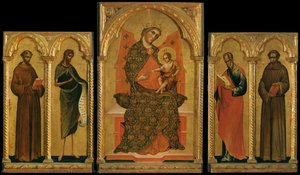
El cenit del logro artístico de Veneziano se captura quizás con mayor viveza en su participación en la Pala Feriale, o retablo de días laborables, encargado para la prestigiosa Basílica de San Marcos en Venecia. Este proyecto monumental fue un triunfo colaborativo, emprendido junto a sus hijos, Marco y Luca. El políptico resultante sirve como un testimonio impresionante del mecenazgo veneciano y de su destreza técnica. En esta obra, se puede observar la meticulosa aplicación del pan de oro y la cuidadosa disposición de las figuras sagradas, creando una visión celestial que refleja tanto la riqueza de la República como la profunda piedad de sus ciudadanos.
A través de encargos de tal magnitud, Veneziano demostró su capacidad para gestionar complejos programas iconográficos que satisfacían tanto los requisitos religiosos como los deseos estéticos del estado veneciano. Su técnica comprendía:
- El uso de fondos dorados luminosos para evocar una sensación de luz divina y eterna.
- Una ornamentación intrincada que reflejaba los lujosos textiles y mosaicos que se encontraban en la propia Venecia.
- Un delicado equilibrio entre línea y color que permitió la aparición de drapeados góticos más naturalistas sobre las formas bizantinas tradicionales.
Significado histórico y legado perdurable
Aunque su vida fue trágicamente corta, terminando en 1358, el impacto de Paolo Veneziano en la trayectoria del arte occidental es inconmensurable. Él no se limitó a pintar; definió un lenguaje visual para un imperio marítimo. Al sintetizar la influencia oriental de Bizancio con las innovaciones occidentales del periodo gótico, creó un estilo "veneciano" único: uno opulento, internacional y profundamente evocador. Esta síntesis estilística proporcionó los cimientos sobre los cuales construirían los maestros más célebres del Renacimiento posterior.
Su importancia para la historia del arte es incalculable, ya que transformó a Venecia de ser una mera receptora de estilos artísticos extranjeros en una creadora primaria de su propia y distinta identidad estética. El linaje que estableció a través de su taller y sus hijos aseguró que la escuela veneciana permaneciera como una fuerza dominante en el arte europeo durante generaciones, dejando una huella indeleble en la historia del Renacimiento italiano.
Preguntas y respuestas
¿En qué periodo histórico trabajó Paolo Veneziano?
Paolo Veneziano trabajó durante el periodo Baja Edad Media. Este periodo sitúa la actividad del artista en la historia.
¿Existe un relato cronológico de Paolo Veneziano?
Un relato cronológico de la obra de Paolo Veneziano está disponible en la página Crónica del artista, donde las obras se presentan en orden de creación, capítulo a capítulo.
¿Puedo explorar las obras de Paolo Veneziano por palabra clave?
La página Por palabras clave de Paolo Veneziano agrupa las obras del artista por sus palabras clave.