Early Life and Career
Miquel Utrillo i Morlius (Barcelona, February 16, 1862 – Sitges, Garraf, January 20, 1934), a renowned Spanish art critic, scenographer, painter, and engineer, was born in Barcelona on February 16, 1862. His multifaceted career spanned various disciplines, reflecting his versatile nature. He was the son of Miquel Utrillo i Riu, originally from Tremp, a liberal republican who lived in exile in France from 1867 to 1882, and Ramona Morlius i Borràs, from Lleida. His family followed his father into exile, and Miquel was given a bilingual education, initially in Avignon. Later, from 1880 to 1882, he studied engineering at the Institut National Agronomique. When his parents returned to Spain, he remained in Paris and was attracted to the artistic milieu in Montmartre. He was a frequent visitor to the cabaret, Le Chat Noir, where he met the artist Suzanne Valadon, and became her lover. In 1883, she gave birth to a son; Maurice Utrillo. He was a restless and versatile person and he worked as a decorator, journalist, art critic, cultural activity promoter, illustrator, poster designer and painter.Artistic Contributions
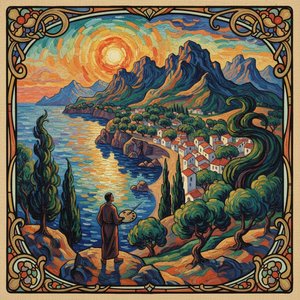
As a painter, Utrillo i Morlius is notable for his contributions to the Catalan Modernisme movement, influencing the development of Spanish art in the early 20th century. His works, though not as widely documented as some of his contemporaries, are significant for their unique blend of traditional and modern elements. He primarily employed oil on board and oil on canvas mediums. His artistic style, characterized by a mix of realism and impressionism, reflects his eclectic approach to art. Notable among his paintings include “Clotilde Sitting on the Sofa,” “Design for the decoration of the Casa Sorolla” and “Sts Abdon and Sennen.”Critic and Scenographer
In addition to his work as a painter, Utrillo i Morlius was an accomplished art critic and scenographer. His critiques provided insightful commentary on the evolving Spanish art scene during his time. He played a crucial role in shaping the artistic landscape of Spain. As a scenographer, he brought a unique visual perspective to theatrical productions, enriching the cultural fabric of Spain. He collaborated closely with artists like Joan Maragall and Santiago Rusiñol, fostering a vibrant artistic community in Sitges.Museological Presence
While his works are not as extensively exhibited in major museums compared to some other prominent artists of his era, they can be found in collections such as those at el museo middlesbrough institute of modern art (middlesbrough, reino unido), which occasionally features Spanish Modern Art. His legacy continues to inspire and fascinate scholars and enthusiasts alike.Later Life
Miquel Utrillo i Morlius passed away in Sitges on January 20, 1934, leaving behind a lasting impact on the history of Catalan art. He was honored as a member of Junta de Museus de Catalunya and oversaw the transformation of Cau Ferrat into a public museum, ensuring that his artistic vision would endure for generations to come. His contribution to the cultural heritage of Spain remains invaluable.Preguntas y respuestas
¿Cómo se divide la trayectoria de Miquel Utrillo en periodos?
La trayectoria de Miquel Utrillo se despliega etapa por etapa en la página Trayectoria: una línea de tiempo horizontal de sus obras, agrupadas en capítulos según sus periodos creativos.
¿Con qué otros nombres o alias se conoce a Miquel Utrillo?
Miquel Utrillo también es conocido por los nombres Miguel Utrillo, Miquel Utrillo i Morlius.
¿Dónde puedo encontrar estadísticas sobre las obras de Miquel Utrillo?
Las estadísticas sobre las obras de Miquel Utrillo están disponibles en la página de Estadísticas del artista.
¿Puedo explorar las obras de Miquel Utrillo por estado de ánimo?
La Rincón de emociones de Miquel Utrillo organiza las obras del artista según el estado de ánimo.