Retrato de John Ferneley

Pinturas de John Ferneley: Las 86 más famosas, bajo la mirada de una galería

Actualizado octubre 2026 · clasificado según nuestro índice de popularidad (búsquedas, visitas y pedidos de cada obra) · 106 obras de John Ferneley en nuestro catálogo

En resumen

Para la galería, la pintura más famosa de John Ferneley es El Sr. Powell y su hijo, con Norton, un caballo gris de caza (1816). El consejo de los caballos (de las 'Fábulas' de John Gay) (1850) y William Rutson (1791–1867), on a Grey Hunter (1820) completan el trío que toda mirada reconoce. De las 106 obras de John Ferneley en nuestro catálogo, la galería presenta a continuación las 86 más famosas; cada una original, con su año, su museo y aquello que la hace única.

1782 – 1860, Thrussington Neoclassicism Más obras: Yale Center for British Art

Las 10 mejores pinturas de John Ferneley en la galería

1
El Sr. Powell y su hijo, con Norton, un caballo gris de caza (1816) de John Ferneley

El Sr. Powell y su hijo, con Norton, un caballo gris de caza

1816 · Óleo sobre lienzo

Un hombre con traje formal y chistera se encuentra junto a su hijo, una composición que sitúa al espectador en las jerarquías sociales de 1816. A su lado, un caballo blanco, identificado como el caballo de caza gris Norton, ofrece un contrapunto brillante y vertical a las figuras humanas. La escena se completa con la presencia de otros personajes, incluyendo a una persona en el extremo izquierdo y otra cerca…

2
El consejo de los caballos (de las 'Fábulas' de John Gay) (1850) de John Ferneley

El consejo de los caballos (de las 'Fábulas' de John Gay)

1850 · Óleo sobre lienzo · National Trust, Derby

Los bosques albergan una asamblea silenciosa. Bajo un dosel de hojas, caballos de diversos matices —marrón, blanco, negro y castaño— se congregan en un claro. No galopan; en su lugar, permanecen en una quietud que se siente cargada de intención. Algunos pastan sobre el suelo forestal, con las cabezas inclinadas hacia la tierra, mientras otros permanecen erguidos, observando. Dos aves ocupan la periferia, una cerca de la esquina superior izquierda…

3
William Rutson (1791–1867), on a Grey Hunter (1820) de John Ferneley

William Rutson (1791–1867), on a Grey Hunter

1820 · Oil On Canvas · Nunnington Hall

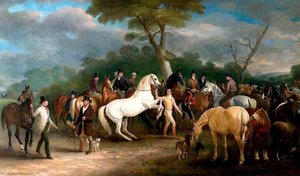
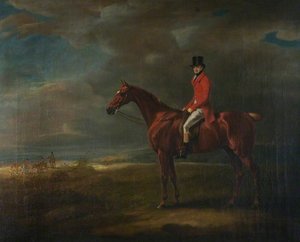
In this 1820 oil on canvas, we find William Rutson seated upon a grey hunter, a composition that captures a quiet moment of equestrian poise. The subject is positioned centrally, his posture reflecting the composed manner of a gentleman of his era. There is a certain stillness here, despite the inherent power of the animal beneath him. The horse, a grey hunter, is rendered with a keen understanding of equine…

4
Mr Powell and his Son, with Norton, a Grey Hunter (1816) de John Ferneley

Mr Powell and his Son, with Norton, a Grey Hunter

1816 · Oil On Canvas

In this 1816 oil on canvas, we find ourselves in the presence of Mr. Powell and his son, positioned alongside their grey hunter, Norton. There is a certain stillness here, a pause in the activity of the English countryside that allows us to observe the subtle connections between the figures. The composition is anchored by a triangular arrangement, drawing the eye from the father in his dark coat and top…

10
The Quorn at Quenby (sketch) (1823) de John Ferneley

The Quorn at Quenby (sketch)

1823 · Watercolor

The air feels heavy with the scent of damp earth and the frantic energy of the chase. In this wide, horizontal expanse, a hunting party surges through an open landscape, their forms caught in a moment of breathless pursuit. The scene is a flurry of movement where horses strain against their reins and hounds press forward, driven by the invisible scent of the game. Everything about the composition suggests a…

Pinturas de John Ferneley, clasificadas de la 11 a la 86

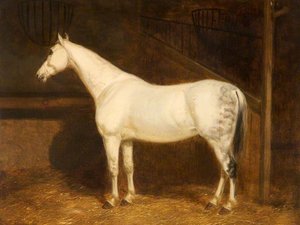
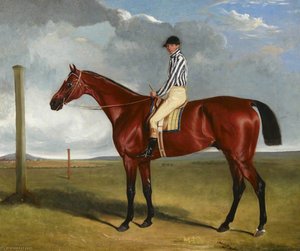
11The Burton Hunt (1830) de John FerneleyThe Burton Hunt1830 · Galería Usher 12The Rev. and Mrs. Henry Palmer with their six younger children at Withcote Hall, Near Oakham, Leicestershire (1838) de John FerneleyThe Rev. and Mrs. Henry Palmer with their six younger children at Withcote Hall, Near Oakham, Leicestershire1838 · Yale Center for British Art 13William Massey-Stanley driving his Cabriolet in Hyde Park (1833) de John FerneleyWilliam Massey-Stanley driving his Cabriolet in Hyde Park1833 · Yale Center for British Art 14Edward Horner Reynard and his Brother George Grouse-Shooting At Middlesmoor, Yorkshire, with Their Gamekeeper Tully Lamb (1836) de John FerneleyEdward Horner Reynard and his Brother George Grouse-Shooting At Middlesmoor, Yorkshire, with Their Gamekeeper Tully Lamb1836 · Yale Center for British Art 15A Groom (Frank Spence) with Two Ponies and Two Greyhounds in a Landscape (1837) de John FerneleyA Groom (Frank Spence) with Two Ponies and Two Greyhounds in a Landscape1837 · National Trust 16The Drag of Sir Watkin Williams Wynn (1843) de John FerneleyThe Drag of Sir Watkin Williams Wynn1843 · Yale Center for British Art 17Thomas Wilkinson, M.F.H., with the Hurworth Foxhound (1846) de John FerneleyThomas Wilkinson, M.F.H., with the Hurworth Foxhound1846 · Yale Center for British Art 18Two Children with a Hurdy Gurdy (1847) de John FerneleyTwo Children with a Hurdy Gurdy1847 · Museo y Galería de Arte de Leicester 19Carthorses with Grooms at a Fair (1856) de John FerneleyCarthorses with Grooms at a Fair1856 20Un cazador gris ensillado en un box (1854) de John FerneleyUn cazador gris ensillado en un box1854 · National Trust 21Melton Mowbray Horse Fair de John FerneleyMelton Mowbray Horse FairMuseo y Galería de Arte de Leicester 22Fox and Duck (1813) de John FerneleyFox and Duck1813 · Castillo de Sizergh 23A Groom and Two Hunters (1820) de John FerneleyA Groom and Two Hunters1820 · Nunnington Hall 24Sir Robert Leighton after Coursing, with a Groom and a Couple of Greyhounds (1816) de John FerneleySir Robert Leighton after Coursing, with a Groom and a Couple of Greyhounds1816 25Thomas Strickland (1792–1835), and Horse in the Hunting Field (1819) de John FerneleyThomas Strickland (1792–1835), and Horse in the Hunting Field1819 · Castillo de Sizergh 26The Quorn Hunt (1819) de John FerneleyThe Quorn Hunt1819 · Walker Art Gallery 27Dr Thomas Ford (1820) de John FerneleyDr Thomas Ford1820 · Museo y Galería de Arte de Leicester 28Archibald (1794–1832), Lord Kennedy, Later Earl of Cassillis, on a Hunter (1819) de John FerneleyArchibald (1794–1832), Lord Kennedy, Later Earl of Cassillis, on a Hunter1819 · The National Trust For Scotland 29Portrait of an Unknown Man (said to be Joseph Fry) (1816) de John FerneleyPortrait of an Unknown Man (said to be Joseph Fry)1816 · Museo de Bristol - Galería de Arte 30A Chestnut Horse in a Stable (1829) de John FerneleyA Chestnut Horse in a Stable1829 31Study of a Saddled Bay Hunter (1828) de John FerneleyStudy of a Saddled Bay Hunter1828 · Yale Center for British Art 32John, Henry and Francis Grant at Melton (1823) de John FerneleyJohn, Henry and Francis Grant at Melton1823 · Museo y Galería de Arte de Leicester 33Mr Green's Bay Mare (1825) de John FerneleyMr Green's Bay Mare1825 · Museo y Galería de Arte de Leicester 34Lieutenant Henry Fortescue (1824) de John FerneleyLieutenant Henry Fortescue1824 35Heaton Park Races (also known as In the Paddock) (1829) de John FerneleyHeaton Park Races (also known as In the Paddock)1829 36A Bay Hunter in a Stable (1829) de John FerneleyA Bay Hunter in a Stable1829 · Museo Nacional de Milford 37Mr Pare's Coachman with a Newfoundland Dog (1823) de John FerneleyMr Pare's Coachman with a Newfoundland Dog1823 · Museo y Galería de Arte de Leicester 38A Prize Ox in a Landscape (1831) de John FerneleyA Prize Ox in a Landscape1831 · National Trust 39'Orion', a Chestnut Hunter Outside a Stable (1831) de John Ferneley'Orion', a Chestnut Hunter Outside a Stable1831 · Museo Brooke Robinson 40Two Greyhounds and a Dead Hare (1824) de John FerneleyTwo Greyhounds and a Dead Hare1824 · National Trust 41Chestnut Hunter before a Stable (1825) de John FerneleyChestnut Hunter before a Stable1825 · National Trust 42A Pair of Greyhounds (1824) de John FerneleyA Pair of Greyhounds1824 · Walker Art Gallery 43Portrait of the Artist and His Family in His Studio (1823) de John FerneleyPortrait of the Artist and His Family in His Studio1823 44Lieutenant Henry Fortescue (1798–1876) (1824) de John FerneleyLieutenant Henry Fortescue (1798–1876)1824 · Museo Nacional Marítimo 45Sir John Palmer on His Favourite Mare with His Shepherd, John Green, and His Prize Leicester Longwool Sheep (1823) de John FerneleySir John Palmer on His Favourite Mare with His Shepherd, John Green, and His Prize Leicester Longwool Sheep1823 46The Ferneley Family Pew in Melton Mowbray Parish Church, Leicestershire (1828) de John FerneleyThe Ferneley Family Pew in Melton Mowbray Parish Church, Leicestershire1828 · Museo y Galería de Arte de Leicester 47Hunt Scurry (1832) de John FerneleyHunt Scurry1832 48John Burgess of Clipstone, Nottinghamshire, on a Favourite Horse, with his Harriers (1838) de John FerneleyJohn Burgess of Clipstone, Nottinghamshire, on a Favourite Horse, with his Harriers1838 49Hunter in a Landscape (1839) de John FerneleyHunter in a Landscape1839 · Museo y Galería de Arte de Leicester 50John Burgess of Clipstone, Nottinghamshire, on a Favourite Horse, with his Harriers (1838) de John FerneleyJohn Burgess of Clipstone, Nottinghamshire, on a Favourite Horse, with his Harriers1838 51Defiance, a Brood Mare, with Reveller, a Foal (1833) de John FerneleyDefiance, a Brood Mare, with Reveller, a Foal1833 52Major Healey, Wearing Raby Hunt Uniform, Riding with the Sedgefield Hunt (1833) de John FerneleyMajor Healey, Wearing Raby Hunt Uniform, Riding with the Sedgefield Hunt1833 53Major Healey, Wearing Raby Hunt Uniform, Riding with the Sedgefield Hunt (1833) de John FerneleyMajor Healey, Wearing Raby Hunt Uniform, Riding with the Sedgefield Hunt1833 54'General Chasse' on the Course at Aintree (1835) de John Ferneley'General Chasse' on the Course at Aintree1835 · Walker Art Gallery 55'Lofty', a Skewbald Carriage Horse, with a Greyhound (1837) de John Ferneley'Lofty', a Skewbald Carriage Horse, with a Greyhound1837 · National Trust 56The Opening of the Leicester and Swannington Railway (The Arrival of the First Train at Bagworth, 17 July 1832) (1832) de John FerneleyThe Opening of the Leicester and Swannington Railway (The Arrival of the First Train at Bagworth, 17 July 1832)1832 57A Bay Hunter Called 'Queen Mab' outside Calke Abbey (1842) de John FerneleyA Bay Hunter Called 'Queen Mab' outside Calke Abbey1842 · National Trust 58Gentleman in a Red Coat on a Bay Hunter (1840) de John FerneleyGentleman in a Red Coat on a Bay Hunter1840 · Walker Art Gallery 59A Dappled Grey Hunter Called 'Spangle' and a Terrier Called 'Reveller' (1843) de John FerneleyA Dappled Grey Hunter Called 'Spangle' and a Terrier Called 'Reveller'1843 · National Trust 60Two Horses and a Dog (1845) de John FerneleyTwo Horses and a Dog1845 61Archery Meeting in Bradgate Park, Leicestershire (1850) de John FerneleyArchery Meeting in Bradgate Park, Leicestershire1850 · Yale Center for British Art 62Lieutenant Colonel Sir Robert Tolver Gerard, Bt, and His Regiment, the Lancashire Hussars, on Parade (1851) de John FerneleyLieutenant Colonel Sir Robert Tolver Gerard, Bt, and His Regiment, the Lancashire Hussars, on Parade1851 · Museo Propio del Yeomanía del Duque de Lancaster 63Grooms and Horses in front of Calke Abbey (1850) de John FerneleyGrooms and Horses in front of Calke Abbey1850 · National Trust 64Longford Lass and the Jew (1853) de John FerneleyLongford Lass and the Jew1853 65Lieutenant Colonel Sir Robert Tolver Gerard, Bt, and His Regiment, the Lancashire Hussars, on Parade (1851) de John FerneleyLieutenant Colonel Sir Robert Tolver Gerard, Bt, and His Regiment, the Lancashire Hussars, on Parade1851 · Museo Propio del Yeomanía del Duque de Lancaster 66A Group of Ponies in the Park (1850) de John FerneleyA Group of Ponies in the Park1850 67Longford Lass and the Jew (1853) de John FerneleyLongford Lass and the Jew1853 · Fitzwilliam College 68A Group of Ponies in the Park (1850) de John FerneleyA Group of Ponies in the Park1850 · National Trust 69A Strawberry Roan Mule and Two Lurchers in a Stable, and a Stable Lad (1850) de John FerneleyA Strawberry Roan Mule and Two Lurchers in a Stable, and a Stable Lad1850 · National Trust 70Lord Howe's Groom with Gray Hunter de John FerneleyLord Howe's Groom with Gray Hunter 71Master John Marriott on a grey horse, with his sister Annis and their dogs de John FerneleyMaster John Marriott on a grey horse, with his sister Annis and their dogs 72firebird and policy de John Ferneleyfirebird and policy 73A Bay Hunter In A Loose Box de John FerneleyA Bay Hunter In A Loose Box 74A Gentleman Holding Dangerous, the Winner of the 1833 Derby de John FerneleyA Gentleman Holding Dangerous, the Winner of the 1833 Derby 75Mountsorrel, Leicestershire, the Market Place (1842) de John FerneleyMountsorrel, Leicestershire, the Market Place1842 · Museo y Galería de Arte de Leicester 76The Game Keeper's Larder (1836) de John FerneleyThe Game Keeper's Larder1836 77'Rodolph', a bay hunter, in an extensive landscape de John Ferneley'Rodolph', a bay hunter, in an extensive landscape 78A Jockey On A Chestnut Hunter de John FerneleyA Jockey On A Chestnut Hunter 79A Chestnut Hunter in a Landscape de John FerneleyA Chestnut Hunter in a Landscape 80A Man in Hunt Uniform de John FerneleyA Man in Hunt UniformUpton House 81Solomon, Out of King David de John FerneleySolomon, Out of King David 82A Grey Hunter in a Stable de John FerneleyA Grey Hunter in a StableNational Trust 83A Chestnut Hunter in a Field de John FerneleyA Chestnut Hunter in a FieldNational Trust 84Lincoln High Street, Two Years after the Coming of the Railways de John FerneleyLincoln High Street, Two Years after the Coming of the RailwaysGalería Usher 85Bay Racehorse and Rider de John FerneleyBay Racehorse and Rider 86A Chestnut Hunter in a Stable de John FerneleyA Chestnut Hunter in a StableNational Trust

Pinturas famosas de John Ferneley, época por época

Los temas que cautivaron la mirada de John Ferneley

Los cuatro temas que se repiten con más frecuencia en estas obras originales, cada uno con su mejor ejemplo.

Los museos que conservan los originales de John Ferneley

Los 8 museos que albergan la mayoría de las pinturas de esta página.

Museos Ciudad Obras de John Ferneley Pinturas de esta lista
Yale Center for British Art, Nueva HavenYale Center for British Art Nueva Haven 10 Miss Catherine Herrick with her Nieces and Nephews, the Five Elder Children of the Rev. and Mrs. Henry Palmer, signed and dated 1827, The Quorn Hunt: a Sketch of the Artist and his Friends Moving Off, Euxton, with John White Up, at Heaton Park
National Trust, DerbyNational Trust Derby 9 El consejo de los caballos (de las 'Fábulas' de John Gay), A Groom (Frank Spence) with Two Ponies and Two Greyhounds in a Landscape, Un cazador gris ensillado en un box
Museo y Galería de Arte de Leicester, LeicesterMuseo y Galería de Arte de Leicester Leicester 9 Two Children with a Hurdy Gurdy, Melton Mowbray Horse Fair, Dr Thomas Ford
Walker Art Gallery, LiverpoolWalker Art Gallery Liverpool 4 The Quorn Hunt, A Pair of Greyhounds, 'General Chasse' on the Course at Aintree
National Trust, StockportNational Trust Stockport 3 A Grey Hunter in a Stable, A Chestnut Hunter in a Field, A Chestnut Hunter in a Stable
Nunnington HallNunnington Hall 2 William Rutson (1791–1867), on a Grey Hunter, A Groom and Two Hunters
Galería Usher, LincolnGalería Usher Lincoln 2 The Burton Hunt, Lincoln High Street, Two Years after the Coming of the Railways
Castillo de Sizergh, KendalCastillo de Sizergh Kendal 2 Fox and Duck, Thomas Strickland (1792–1835), and Horse in the Hunting Field

John Ferneley, una pintura emblemática por década

Obras por década

Elige una década para ver la obra original que la define.

Pinturas de John Ferneley: la galería responde

¿Cuál es la pintura más famosa de John Ferneley?Descubre la respuesta

El Sr. Powell y su hijo, con Norton, un caballo gris de caza (1816). A continuación, El consejo de los caballos (de las 'Fábulas' de John Gay) (1850) y William Rutson (1791–1867), on a Grey Hunter (1820).

¿Qué edad tenía John Ferneley al completar El Sr. Powell y su hijo, con Norton, un caballo gris de caza?Descubre la respuesta

34 años: El Sr. Powell y su hijo, con Norton, un caballo gris de caza data de 1816, y John Ferneley nació en 1782.

¿Cuáles son las 10 pinturas principales de John Ferneley?Descubre la respuesta

El Sr. Powell y su hijo, con Norton, un caballo gris de caza, El consejo de los caballos (de las 'Fábulas' de John Gay), William Rutson (1791–1867), on a Grey Hunter, Mr Powell and his Son, with Norton, a Grey Hunter, The Meet of the Keith Hall Foxhounds, Miss Catherine Herrick with her Nieces and Nephews, the Five Elder Children of the Rev. and Mrs. Henry Palmer, signed and dated 1827, The Quorn Hunt: a Sketch of the Artist and his Friends Moving Off, Euxton, with John White Up, at Heaton Park, Duchess y The Quorn at Quenby (sketch). La clasificación anterior indica el año y el museo de cada una.

¿Cuántas obras creó John Ferneley?Descubre la respuesta

Nuestro catálogo cuenta con 106 obras de John Ferneley, datadas desde 1813 hasta 1856.

¿Dónde se exhiben los originales más famosos de John Ferneley?Descubre la respuesta

Principalmente en Yale Center for British Art (Nueva Haven), National Trust (Derby) y Museo y Galería de Arte de Leicester (Leicester). La tabla de museos arriba los enumera todos.

¿Cuándo creó John Ferneley sus pinturas más famosas?Descubre la respuesta

En 1820s: 23 de las 86 obras de esta página se realizaron entonces, William Rutson (1791–1867), on a Grey Hunter de ellas.

¿Cuáles son las primeras y últimas obras famosas de John Ferneley?Descubre la respuesta

En esta página, la más antigua es Fox and Duck (1813) y la más reciente Carthorses with Grooms at a Fair (1856).

¿A qué temas volvió John Ferneley con más frecuencia?Descubre la respuesta

Hunting (19), Landscape (6) y Beach (6), en las 86 obras de esta página.

¿En qué técnica trabajó más John Ferneley?Descubre la respuesta

Óleo sobre lienzo, para 3 de las 86 obras de esta página.

¿A qué movimiento se asocia John Ferneley?Descubre la respuesta

Neoclassicism y Realismo contemporáneo, a juzgar por los originales de esta página.

¿Qué obras originales de John Ferneley posee el Yale Center for British Art?Descubre la respuesta

Miss Catherine Herrick with her Nieces and Nephews, the Five Elder Children of the Rev. and Mrs. Henry Palmer, signed and dated 1827, The Quorn Hunt: a Sketch of the Artist and his Friends Moving Off y Euxton, with John White Up, at Heaton Park: el Yale Center for British Art, Nueva Haven posee 10 de las obras de esta página.

John Ferneley: el artista

El Maestro de la Caza Inglesa

En la edad de oro del arte ecuestre británico, pocos nombres evocan el estruendo de los cascos y las enérgicas persecuciones de la era de la Regencia como John Ferneley I. Nacido en 1782 en la tranquila aldea de Thrussington, Leicestershire, Ferneley se convertiría en un cronista definitivo de la campiña inglesa. La obra de su vida sirve como una ventana vibrante a un mundo desaparecido de ocio aristocrático, donde el ritmo de la vida rural estaba dictado por las estaciones y la emocionante persecución de la caza del zorro. Estudiar un lienzo de Ferneley es adentrarse en la bruma de una mañana inglesa, sintiendo la humedad del rocío y la tensión palpable de los sabuesos en plena persecución.

La identidad artística de Ferneley se forjó a través de una profunda conexión con el paisaje y los animales que lo habitaban. Su formación temprana bajo el estimado Benjamin Marshall le proporcionó algo más que mera destreza técnica; le otorgó un vocabulario especializado del movimiento. Bajo la tutela de Marshall, Ferneley aprendió a traducir al lienzo la energía pura de un caballo al galope y los sutiles cambios en la postura de un jinete. Esta base le permitió transicionar de estudiante de arte deportivo a maestro de sus matices más complejos, lo que finalmente lo llevó a la prestigiosa Royal Academy School, donde su talento fue refinado para los escenarios más grandiosos de la sociedad británica.

Un Legado de Movimiento y Detalle

La verdadera brillantez de la obra de Fernelenia reside en su capacidad para equilibrar un realismo meticuloso con una sensación de movimiento casi vertiginosa. Sus composiciones rara vez son estáticas; por el contrario, pulsan con la vitalidad de la caza. Poseía un raro conocimiento anatómico de la musculatura equina, lo que le permitía representar el esfuerzo de un caballo en pleno paso o la parada repentina de una bestia sobresaltada con una precisión asombrosa. Esta dedicación al detalle se extendió también al elemento humano, capturando las variadas expresiones de los cazadores: desde la intensidad concentrada del jinete experimentado hasta la emoción contenida del espectador.

A lo largo de su prolífica carrera, Ferneley aseguró el patrocinio de los más altos escalafones de la nobleza británica. Su estudio en Melton Mowbray se convirtió en un santuario para aquellos que buscaban inmortalizar sus triunfos deportivos. Su catálogo de obras es vasto y, sin embargo, mantiene una resonancia emocional constante. Algunas de sus contribuciones más perdurables al mundo del arte incluyen:

  • The Melton Mowbray Hunt: Un tributo grandioso al corazón mismo de las tradiciones de caza de Leicestershire.
  • <Lord Henry Bentinck’s Chestnut Hunter ‘Firebird’: Un estudio magistral de retrato equino y carácter individual.
  • <St John’s Co-Cathedral: Una muestra de su capacidad para pivotar desde la energía cinética de la caza hacia temas arquitectónicos más serenos.

Significado Histórico e Influencia Duradera

Más allá de la mera documentación de las costumbres sociales, la obra de Ferneley ocupa un lugar significativo en la evolución de la pintura británica. Aunque a menudo se le categoriza estrictamente dentro del género del arte deportivo, su enfoque de la luz y la atmósfera sugería los cambios incipientes en el pensamiento artístico que más tarde definirían el movimiento impresionista. Él no solo pintaba caballos; pintaba la atmósfera en la que estos se movían, capturando las cualidades fugaces de la luz filtrándose a través de las hojas otoñales o la pesada penumbra de una tarde de invierno.

Al contemplar su vida, que concluyó en 1860, vemos a un artista que logró cerrar la brecha entre el retrato deportivo tradicional y un estilo más expresivo y atmosférico. Su legado permanece grabado en los anales de la historia del arte, sirviendo como un vínculo vital con las tradiciones de la aristocracia terrateniente inglesa y proporcionando una celebración atemporal del vínculo entre el hombre, el caballo y el mundo natural. Hoy en día, sus obras continúan cautivando tanto a coleccionistas como a historiadores, erigiéndose como monumentos perdurables de la elegancia y el vigor de una era pasada.