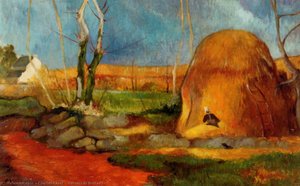
Retrato de Charles Laval

Las 10 pinturas más famosas de Charles Laval, una selección de la galería

Actualizado noviembre 2026 · clasificado según nuestro índice de popularidad (búsquedas, visitas y pedidos de cada obra) · 10 obras de Charles Laval en nuestro catálogo

En resumen

De todos los originales que dejó Charles Laval, la más famosa es Retrato del artista (1889), que forma parte de la colección del Musée d'Orsay, París. Le siguen muy de cerca Women by the Shore, sketch (1887) y Going to Market, Brittany (1888). Nuestro catálogo cuenta con 10 obras de Charles Laval; la galería ha conservado las 10 que el mundo más admira, cada una presentada con su fecha, su museo y su historia.

1862 – 1894, IX Distrito de París Synthetism Más obras: Musée d'Orsay

Las 10 mejores pinturas de Charles Laval: la elección de la galería

1
Retrato del artista (1889) de Charles Laval

Retrato del artista

1889 · Óleo sobre lienzo · Musée d'Orsay, París

En este íntimo óleo sobre lienzo, el artista Charles Laval dirige su mirada hacia el espectador a través de un lente silencioso e introspectivo. Pintada en 1889, la obra presenta una vista de busto de una única figura masculina. El sujeto es el propio Charles Laval, capturando un momento de profunda quietud. Parece atrapado en un pensamiento privado, con su presencia llenando el encuadre con un peso pesado y melancólico.

2
Women by the Shore, sketch (1887) de Charles Laval

Women by the Shore, sketch

1887 · Musée d'Orsay, París

The composition captures three women navigating a rocky shoreline, their forms defined by loose, expressive brushstrokes. They move through a landscape where the deep blues of the ocean meet the warm, sun-drenched tones of orange and red in their garments. This sketch-style approach prioritizes the energy of the moment over precise anatomical detail, using visible marks to suggest the texture of fabric and the spray of the sea. The figures,…

4
Self-Portrait (1888) de Charles Laval

Self-Portrait

1888 · Oil On Canvas · Museo Van Gogh, Ámsterdam

The man sits in a quiet, heavy stillness, his presence anchoring the right side of the frame. He looks directly at us, his eyes carrying a weary intensity that seems to pierce through the very air of the room. Dark hair and a beard frame a face marked by deep thought, while glasses catch a soft, diffused light. To his left, a window frame slices through the composition, creating a…

5
Bathers (1888) de Charles Laval

Bathers

1888 · Oil On Canvas · Kunsthalle Bremen, Bremen

In the painting titled Bathers, created by Charles Laval about 1888, the subject matter centers around a group of nude figures engaged in various poses within a natural setting. These figures are partially submerged in water, creating a dynamic and somewhat turbulent scene. The environment likely represents a coastal bathing area where the movement of the water interacts with the bodies of the subjects.

Los temas que cautivaron la mirada de Charles Laval

Los cuatro temas que se repiten con más frecuencia en estas obras originales, cada uno con su mejor ejemplo.

Los museos que conservan los originales de Charles Laval

Los 5 museos que albergan la mayoría de las pinturas de esta página.

Museos Ciudad Obras de Charles Laval Pinturas de esta lista
Musée d'Orsay, ParísMusée d'Orsay París 2 Retrato del artista, Women by the Shore, sketch
Museo Van Gogh, ÁmsterdamMuseo Van Gogh Ámsterdam 2 Self-Portrait, Landscape n Martinique
Museo de Arte de Indianápolis, IndianápolisMuseo de Arte de Indianápolis Indianápolis 1 Going to Market, Brittany
Kunsthalle Bremen, BremenKunsthalle Bremen Bremen 1 Bathers
Musée d'Art Moderne et Contemporain de Strasbourg, EstrasburgoMusée d'Art Moderne et Contemporain de Strasbourg Estrasburgo 1 The Aven Stream

Charles Laval año tras año: las obras originales que definen cada etapa

Las obras fechadas de Charles Laval en esta selección abarcan solo 4 años, desde 1887 hasta 1890: una trayectoria breve, presentada aquí año tras año.

Obras por año

Selecciona un año para ver sus originales.

Preguntas de coleccionistas sobre las pinturas de Charles Laval

¿Por qué obra es más famoso/a Charles Laval?Descubre la respuesta

Retrato del artista (1889), Musée d'Orsay, París. A Women by the Shore, sketch (1887) y Going to Market, Brittany (1888) le siguen.

¿Qué edad tenía Charles Laval cuando se creó Retrato del artista?Descubre la respuesta

27 años: Retrato del artista data de 1889, y Charles Laval nació en 1862.

¿Cuáles son las diez pinturas más famosas de Charles Laval?Descubre la respuesta

Retrato del artista, Women by the Shore, sketch, Going to Market, Brittany, Self-Portrait, Bathers, The Aven Stream, Harvest in Brittany, Landscape with Strolling Breton Women, The Fence y Landscape n Martinique. La clasificación anterior indica el año y el museo de cada una.

¿Cuántas pinturas dejó Charles Laval?Descubre la respuesta

Nuestro catálogo cuenta con 10 obras de Charles Laval, datadas desde 1887 hasta 1890.

¿En qué museos se exhiben las obras maestras de Charles Laval?Descubre la respuesta

Principalmente en Musée d'Orsay (París), Museo Van Gogh (Ámsterdam) y Museo de Arte de Indianápolis (Indianápolis). La tabla de museos arriba los enumera todos.

¿En qué años pintó Charles Laval sus obras más famosas?Descubre la respuesta

En 1889: 4 de las 10 obras de esta página se realizaron entonces, Retrato del artista de ellas.

¿Cuáles son las primeras y las últimas obras originales de Charles Laval?Descubre la respuesta

En esta página, la más antigua es Women by the Shore, sketch (1887) y la más reciente Landscape with Strolling Breton Women (1890).

¿Qué temas eligió Charles Laval con mayor frecuencia?Descubre la respuesta

Rocks (2) y People (2), en las 10 obras de esta página.

¿Qué técnica utilizó más Charles Laval?Descubre la respuesta

Oil On Canvas, para 2 de las 10 obras de esta página.

¿A qué movimiento artístico pertenece Charles Laval?Descubre la respuesta

Synthetism, a juzgar por los originales de esta página.

¿Qué obras de Charles Laval se exhiben en el Musée d'Orsay?Descubre la respuesta

Retrato del artista y Women by the Shore, sketch: el Musée d'Orsay, París posee 2 de las obras de esta página.

Charles Laval: vida y obra

early life and artistic beginnings

charles laval, a french painter, was born in paris on march 17, 1861. his life was marked by an early association with prominent artists of his time, including paul gauguin and vincent van gogh. laval's artistic journey began in the synthetic movement and the pont-aven school, a group known for its primitivist themes and synthetist style. he studied at the école supérieure des beaux-arts de paris, where he was exposed to avant-garde ideas that would shape his distinctive vision.

artistic collaborations and influences

laval’s artistic path intersected profoundly with paul gauguin's, initiating a collaborative endeavor at pension gloanec in pont-aven during 1886. this partnership propelled them on an expedition to panama, driven by a fervent desire to discover exoticism—a source of inspiration for their art. the resulting landscapes painted by laval bear testament to this influential connection, though they have often been mistakenly attributed to gauguin’s hand. laval's artistic sensibilities were undeniably molded by van gogh’s expressive style and techniques, particularly his bold use of color and impasto—a textural approach that would become a hallmark of laval’s own oeuvre. bernard’s work also served as an important reference point for laval, fostering discussions about the role of emotion in artistic representation.

martinique and synthetist style

laval relocated to martinique in 1887, immersing himself in the vibrant hues and textures of this tropical landscape. here, he honed his synthetist technique—characterized by simplified forms and flattened planes—creating canvases that prioritized color and expressive gesture over meticulous detail. his paintings capture a palpable sense of immediacy and emotion, reflecting the influence of gauguin’s primitivist aesthetic and van gogh's groundbreaking experimentation with pigment and brushwork.

major achievements and legacy

laval achieved considerable recognition during his lifetime for his contribution to synthetism and pont-aven school. his self-portrait (1888), now housed at the van gogh museum in amsterdam, stands as a testament to his artistic prowess—a masterful depiction of introspection and psychological depth. it exemplifies the stylistic innovations that distinguished laval’s work from more conventional approaches to portraiture. despite his tragically premature death in 1894 due to tuberculosis, laval's legacy persists within the pont-aven school and synthetism, securing his place as a pivotal figure in late nineteenth-century art history.

influence on subsequent artists

charles laval’s distinctive style—marked by bold color palettes and expressive brushstrokes—continues to inspire contemporary painters who seek to convey emotion and immediacy through their canvases. his pioneering use of synthetist technique paved the way for developments in abstract expressionism and other artistic movements, demonstrating the enduring impact of his artistic vision.