

 Enviar
 Compartir
 Detalles

 Descargar
 Similares
 Presentación de diapositivas
 Estadísticas
Milk Stone


 Ver más
Giclée / Impresión de arte
Impresiones giclée o en lienzo de calidad de museo con producción rápida y opciones de acabado flexibles. ( Comprar pintura hecha a mano Cambiar a imagen digital)




































Elija entre nuestros tamaños predefinidos que respetan las proporciones originales de la obra.

Puede introducir sus propias dimensiones para adaptarse a un marco o espacio específico. Si el tamaño seleccionado no coincide con las proporciones de la imagen original, recortaremos la obra de arte o extenderemos la imagen con un borde con efecto espejo o de color sólido. Se enviará una maqueta digital para su aprobación antes de que comience la producción.
Tenga en cuenta que la vista previa en pantalla no refleja el recorte o la extensión real. Solo la maqueta mostrará con precisión la composición final.
Aunque existen tamaños personalizados, recomendamos seleccionar una dimensión de la lista predefinida para preservar las proporciones originales.
Envío a todo el mundo () en 2 semanas en lugar de las 4/5 semanas estándar. (10 septiembre)

Envío exprés gratuito a todo el mundo

Lienzo de lino de alta calidad

Seguro de envío total

Garantía de reembolso de impuestos aduaneros

Garantía de fidelidad cromática exacta

Política de devolución de 100 días (solo por defectos)

Garantía de devolución del 100% del dinero

Descuento por cantidad
 La opción de vidrio solo está disponible en tamaños inferiores a 110 cm.

Milk Stone
Giclée / Impresión de arte
Dimensiones de la reproducción
-


Precio total final
$ 80
The Poetics of Presence: Contemplating Milk Stone
To stand before Wolfgang Laib’s Milk Stone is not merely to observe an object; it is to enter a state of quiet contemplation. This piece, dating from 1978, strips away the superfluous until only the essential remains: a perfect square of luminous white resting upon the warm, grounding expanse of aged wood. The composition itself is deceptively simple, yet its power lies in the profound dialogue between its constituent parts. Laib, whose artistic spirit has always been drawn to the quietude found at the intersection of geometry and nature’s breath, presents us here with a meditation on contrast—a visual poem written in white pigment against the rich tapestry of wood grain.
Geometry Meets Zen: Style and Technique
The style is quintessentially minimalist, echoing the profound influences of Taoism and Zen Buddhism that have guided Laib’s career. There is an almost ritualistic precision to the placement of the block; it sits slightly off-center, creating a subtle yet irresistible visual tension that keeps the eye engaged without ever allowing it to rest in discomfort. Technically, the work relies on the stark juxtaposition of textures and lines. The wood floorboards provide strong, unwavering horizontal rhythms, suggesting depth and passage through their receding perspective. Against this ordered backdrop, the white block—whether marble or another smooth, uniform material—offers an absolute plane of purity. The lighting, diffused and even, bathes both surfaces in a gentle glow, ensuring that every subtle variation in the wood’s grain and the block’s immaculate whiteness is visible, yet never harshly illuminated.
Symbolism: Purity Versus Earth
What elevates Milk Stone beyond mere decorative arrangement is its potent symbolism. The stark white square has long been an artistic shorthand for purity, the void, or absolute potential. Set against the deep, warm browns of the wood—the color of earth, time, and lived experience—the piece invites a dialogue between these opposing forces. It speaks to the human condition itself: the desire for pristine simplicity set within the complex reality of our material world. One might interpret it as stillness confronting movement, or the ephemeral nature of thought against the permanence of matter. This tension is what gives the artwork its enduring emotional resonance.
Bringing Contemplation Home
For the collector or designer seeking to infuse a space with intellectual depth rather than mere ornamentation, this reproduction offers an unparalleled opportunity. Imagine this quiet dialogue anchoring a grand foyer or serving as a focal point in a serene living area. It does not shout for attention; it invites the viewer to slow down, to breathe, and to consider the beauty inherent in reduction. Owning Milk Stone is acquiring more than an artwork; it is adopting a philosophy—a commitment to finding profound meaning within the most elemental forms.
Biografía del artista
El escultor del silencio y la esencia elemental
Nacido en Metzingen, Alemania, en 1950, Wolfgang Laib ha cultivado una práctica artística que trasciende los límites de la escultura tradicional, adentrándose en el reino de la experiencia pura y meditativa. Su obra no se limita a ocupar un espacio; respira con los ritmos del mundo natural. Desde su base en un tranquilo pueblo del sur de Alemania, mientras mantiene estudios en Nueva York y el sur de la India, la vida de Laib es un testimonio de la búsqueda de la quietud. Esta singular dualidad geográfica —donde la precisión estructurada de Europa se encuentra con la profundidad espiritual de la India— nutre una estética que busca hallar lo eterno dentro de lo efímero.
El viaje artístico de Laib fue profundamente moldeado por su temprana inmersión en las filosofías del taoísmo y el budismo zen. Estas tradiciones ancestrales le proporcionaron una lente a través de la cual contemplar el universo, enfatizando la simplicidad, la belleza de las formas naturales y el profundo poder del vacío. En lugar de imponer una voluntad humana sobre sus materiales, Laib busca un estado de armonía, donde el artista actúa como un facilitador de las cualidades inherentes de la propia tierra. Este fundamento espiritual es evidente en cada grano de polen meticulosamente colocado y en cada gota de leche que adorna sus obras monumentales.
Materialidad y la poesía de la naturaleza
El sello distintivo de la obra de Laib es su uso radical de materiales elementales y orgánicos que desafían la permanencia convencional de la escultura. Es quizás más celebrado por sus piedras de leche (milkstones): bloques monumentales de mármol blanco que sirven como lienzo para una única y delicada gota de leche. En estas piezas, el peso frío y perdurable de la piedra se encuentra con la esencia frágil y vital del líquido, creando una yuxtaposición evocadora de pureza y vulnerabilidad. Este sutil juego funciona como una meditación sobre la nutrición, la renovación y el delicado equilibrio de la existencia.
Más allá del mármol, el uso del polen por parte de Laib se ha convertido en una de las expresiones más icónicas del Land Art contemporáneo. Al recolectar vastas cantidades de polen y disponerlas en campos geométricos precisos, crea instalaciones que se sienten tanto cósmicas como profundamente terrestres. Estas superficies doradas y aterciopeladas poseen una cualidad luminosa que parece vibrar con vida. Un momento decisivo en su carrera fue la presentación de su colosal instalación de polen en el Museum of Modern Art (MoMA) en 2013, un logro que demostró su capacidad para transformar el cubo blanco de un museo en un paisaje sagrado y palpitante.
Legado y reconocimiento global
La contribución de Laib al canon del arte contemporáneo está marcada por su capacidad para tender un puente entre lo físico y lo metafísico. Su participación en las prestigiosas Documenta 7 (1982) y Documenta 8 (1987) lo consolidó como una figura fundamental dentro del movimiento alemán de Land Art, demostrando que la escultura no solo puede hallarse en intervenciones terrestres, sino en las sustancias mismas de la vida. Su trabajo ha sido reconocido en los escenarios internacionales más elevados, incluyendo su representación de Alemania en la Bienal de Venecia.
La importancia histórica de Wolfgang Laib reside en su negativa a participar en el ruido de la era moderna, optando en su lugar por defender un minimalismo silencioso y profundo. Por sus inmensas contribuciones a las artes, ha sido honrado con el Praemium Imperiale, uno de los galardones más altos del mundo del arte. Su legado continúa inspirando a quienes buscan significado en las texturas sutiles del mundo natural, recordándonos que la verdadera grandeza suele residir en los gestos más delicados y silenciosos.

Wolfgang Laib
1950 - , Alemania
Datos clave
- Artistic Movement Or Style: Escultura Minimalista
- Date Of Birth: 1950
- Full Name: Wolfgang Laib
- Nationality: Alemania
- Notable Artworks: ['Una Habitación de Cera para Montaña']
- Place Of Birth: Metzingen, Alemania
Artículos relacionados

The Enduring Allure of Marble in Art History: From Classical Sculpture to Modern Abstraction
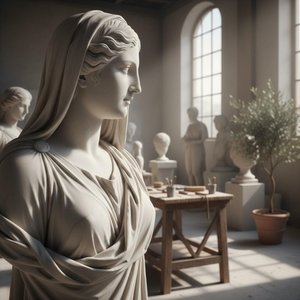
Explore the captivating history of marble sculpture from ancient Greece to modern art. Discover renowned artists like Canova & Michelangelo, carving techniques, and investment insights at OriginalUniqueArt.
Timeless Elegance: A Complete Guide to the Sublime Beauty and Artistry of Marble Sculpture
Discover the sublime beauty of marble art through an expert exploration of Renaissance and Neoclassical masterpieces. From the delicate textures of Carpeaux to the grandeur of Sansovino, immerse yourself in a guide to timeless elegance and sculptural perfection.

The Enduring Form: Exploring Themes & Techniques in Sculpture Across Historical Periods
Explore the rich history of sculpture from ancient masterpieces to contemporary innovations. Discover key techniques, influential artists & investment potential for discerning art collectors.

Blanco Sublime: Los 10 Cuadros Más Famosos Dominados por la Luz y el Color
Descubre los 10 cuadros blancos más emblemáticos de la historia del arte. Explora Monet, Van Gogh y Klimt, y su magistral uso de la luz y el color. Encuentra reproducciones de alta calidad e inspírate para tu decoración en .

Esculturas de Bronce Legendarias: 10 Obras Maestras que Transformaron el Arte | OriginalUniqueArt
Descubre las 10 esculturas de bronce más legendarias que revolucionaron el arte. Explora la historia de Rodin, Degas y otros maestros del bronce. Encuentra reproducciones de alta calidad e inspiración para tu hogar en OriginalUniqueArt.com.