- Inicio

- Imagen digital
- William Morris Hunt
- Untitled (D2WVSV)
 Comprar impresión Encargar reproducción
 Enviar
 Compartir
 Detalles
 Añadir a favoritos

 Descargar
 Similares
 Radiografía
 Presentación de diapositivas
Untitled (D2WVSV)
 Acrylic On Canvas
- WallArt
- Barbizon School
 1852
1852 117.0 x 90.0 cm
 Museo Metropolitano de Arte
 Ver más
Adquiera una imagen digital de alta resolución y optimizada, muy superior a la vista previa en línea.
Cada archivo es preparado meticulosamente por nuestros especialistas internos mediante el uso de herramientas avanzadas y un experto retoque manual. Nos aseguramos de que cada imagen posea una claridad excepcional, una precisión cromática impecable y un detalle minucioso.
El archivo final se entrega por correo electrónico en un plazo de 72 horas, optimizado para su uso inmediato en entornos profesionales, editoriales y de impresión. Esta es la misma calidad en la que confían los estudios de diseño, las editoriales y las galerías de primer nivel.
Imagen Digital
Descarga un archivo de alta resolución para exhibición personal, impresión y proyectos creativos.
Incluido en cada pedido de imagen digital
Entrega digital experta, garantizada.
Al elegir OriginalUniqueArt.com, no solo está adquiriendo una imagen; está recibiendo una obra de arte digital mejorada profesionalmente, elaborada con precisión y respaldada por una garantía de satisfacción. Esto es todo lo que incluye su pedido, automáticamente:

Entrega rápida por email
Recibirá su archivo de imagen digital en alta resolución por correo electrónico en un plazo de 72 horas tras realizar su pedido, listo para su uso inmediato.

Archivo digital optimizado con IA
Su obra de arte se optimiza profesionalmente mediante herramientas avanzadas de IA y edición manual, garantizando el máximo detalle, claridad y precisión cromática.

Reenvío gratuito de por vida
¿Has borrado o perdido tu archivo por error? No te preocupes: te lo volveremos a enviar en cualquier momento, sin coste adicional.

Sin cargos de importación - Siempre
Disfrute de su obra de arte al instante sin aduanas, aranceles ni gastos de envío; las descargas digitales siempre están libres de impuestos.

Garantía de fidelidad de color
Garantizamos que su imagen digital refleje los colores originales con la mayor fidelidad posible, mediante el uso de herramientas profesionales y gestión del color.

Garantía de satisfacción de 60 días
Si no está satisfecho con su imagen digital, la revisaremos o le reembolsaremos el 100% en un plazo de 60 días, sin preguntas.

100% Garantía de devolución de dinero
¿No está satisfecho? Obtenga un reembolso completo dentro de los 60 días posteriores a la recepción de su archivo digital, sin preguntas.

Descuentos por pedidos al por mayor
Compra 3 imágenes, ahorra 10% - Compra 5, ahorra 15% - Compra 10+, ahorra 20%. Ideal para proyectos creativos, galerías y agencias.
Descripción del coleccionable
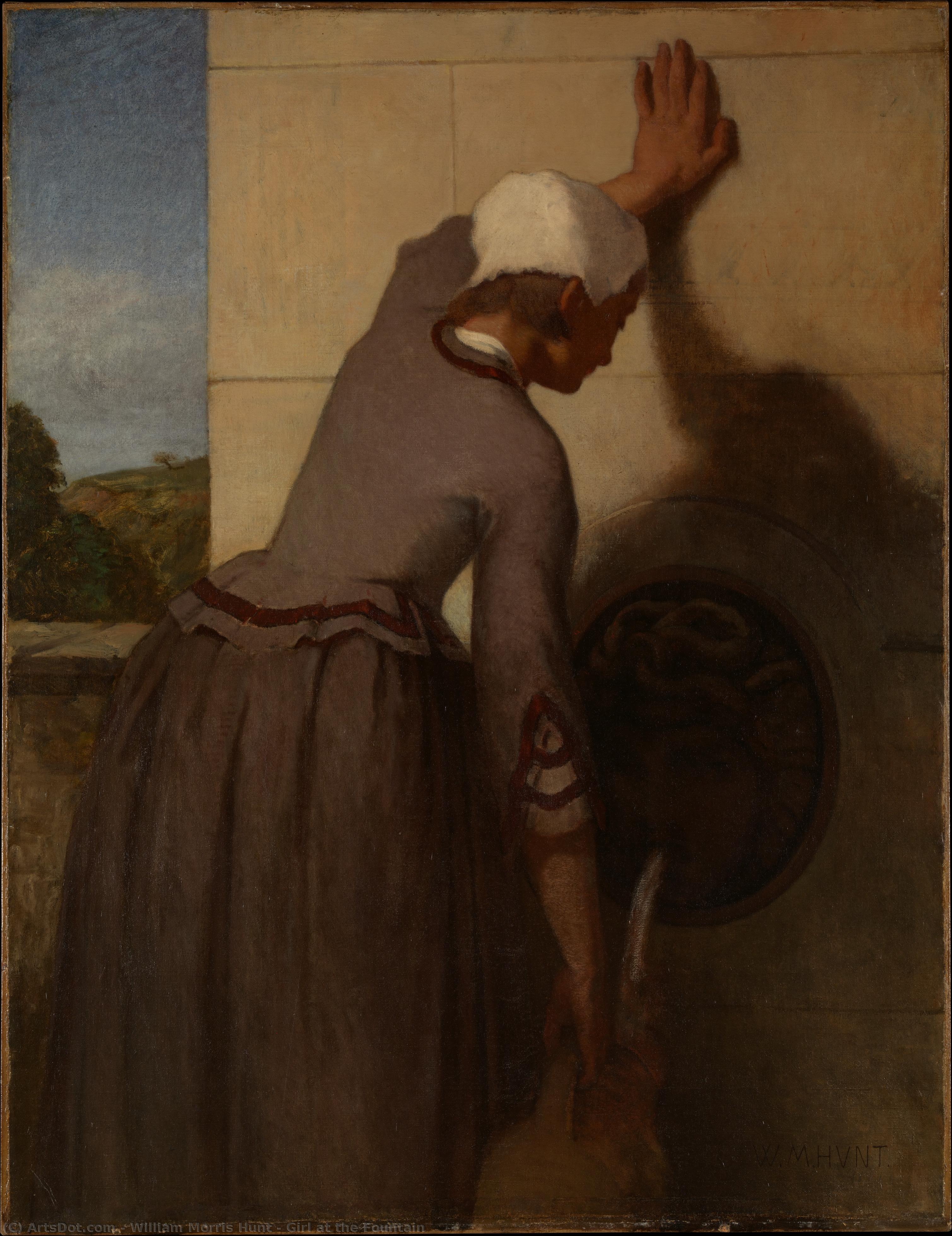
A Moment Frozen in Time: Unveiling William Morris Hunt's "Untitled (D2WVSV)"
William Morris Hunt’s 1852 painting, “Untitled (D2WVSV),” is more than a simple portrait; it’s a carefully constructed tableau of observation and subtle emotion. Measuring a modest 117 x 90 cm, the work immediately draws the viewer in with its restrained palette – primarily grays and muted earth tones – that evokes the atmosphere of an early autumn afternoon. The subject, a woman positioned outdoors against a backdrop of trees and a delicate fountain, appears lost in thought, her hand resting lightly on a wall as if seeking support or simply pausing to consider something unseen. Her gaze is directed off-camera, inviting us into her private world, creating an immediate sense of intimacy and intrigue.
Hunt’s choice of subject matter—a woman engaged in quiet contemplation—reflects the burgeoning interest in psychological realism that was gaining traction within American art during the mid-19th century. He wasn't interested in grand narratives or dramatic displays; instead, he sought to capture the nuances of human experience – the fleeting expressions, the unspoken thoughts, and the subtle gestures that reveal a person’s inner life. This approach aligns closely with the Barbizon School, which emphasized direct observation of nature and the depiction of everyday subjects with an emphasis on tonal values and atmospheric effects.
The Barbizon Influence: Light, Shadow, and the Essence of Nature
Born in Brattleboro, Vermont, William Morris Hunt’s artistic journey was profoundly shaped by his exposure to European art, particularly the Barbizon School. Inspired by Jean-François Millet, Hunt embraced the Barbizon's philosophy of painting *en plein air* – directly from nature – and its focus on capturing the effects of light and atmosphere. This is evident in “Untitled (D2WVSV)” through the masterful use of chiaroscuro; the interplay of light and shadow creates a sense of depth and volume, while subtly highlighting the woman’s face and hand. The loose brushwork and textured surfaces further contribute to the painting's naturalistic quality, mirroring Millet’s own approach.
The inclusion of the fountain and trees in the background isn’t merely decorative; they serve as anchors for the composition, grounding the figure within a believable landscape. Hunt skillfully renders the foliage with a delicate touch, suggesting movement and texture through subtle variations in tone and brushstroke. The clock visible in the scene adds an intriguing layer of symbolism – perhaps representing the passage of time or inviting contemplation on mortality, themes frequently explored by artists of the era.
Symbolism and Emotional Resonance
While the painting’s title is “Untitled,” it's clear that Hunt intended to convey a specific mood. The woman’s averted gaze suggests a moment of introspection or perhaps a longing for something beyond her immediate surroundings. Her posture—relaxed yet poised—evokes a sense of quiet dignity and resilience. The wall she touches could symbolize support, reflection, or even a barrier between herself and the unseen subject of her thoughts.
Considering Hunt’s own life – his struggles with artistic recognition, his travels across Europe, and his eventual return to America – it's possible that this painting represents a personal meditation on themes of identity, belonging, and the search for meaning. The subdued colors and contemplative atmosphere invite viewers to project their own emotions and experiences onto the scene, transforming “Untitled (D2WVSV)” into a deeply resonant portrait of human experience.
A Reproduction Worth Cherishing
OriginalUniqueArt offers meticulously hand-painted reproductions of William Morris Hunt’s “Untitled (D2WVSV),” capturing the essence of this remarkable work with unparalleled detail and fidelity. Each reproduction is created by skilled artists who understand the nuances of Hunt's technique, ensuring that you receive a piece that truly honors the original painting. Whether displayed in your home or office, this reproduction will serve as a beautiful reminder of the power of observation, contemplation, and the enduring legacy of American art.
Biografía del artista
William Morris Hunt: Una Figura Clave en la Pintura Barbizon Americana
- Nacido: Brattleboro, Estados Unidos de América (1824)
- Fallecido: 1879
Primeros Años y Formación Europea
William Morris Hunt nació en una familia prominente en Vermont. La ascendencia de su padre se remontaba a los fundadores de Vermont, mientras que su madre provenía de una rica familia de Connecticut. Inicialmente asistió al Harvard College, pero lo abandonó antes de completar su tercer año. Reconociendo las inclinaciones artísticas de sus hijos, su madre, Jane Leavitt Hunt, desafió las expectativas sociales y trasladó a la familia a Europa – Suiza, sur de Francia y Roma – para brindarles acceso a academias de arte de primer nivel.
La formación temprana de Hunt incluyó estudios bajo Thomas Couture en París, donde estuvo expuesto a técnicas clásicas. Sin embargo, un momento crucial llegó en el Salón de París de 1851 cuando se encontró con "El Segador" de Jean-François Millet. Este encuentro influyó profundamente a Hunt, llevándolo a pasar dos años estudiando directamente con Millet en Barbizon. Este período demostró ser formativo, moldeando su estilo artístico y carácter.
Estilo Artístico e Influencias
Hunt se convirtió en un importante defensor de la Escuela Barbizon en América, abogando por la observación directa de la naturaleza y el rechazo de convenciones académicas excesivas. Su obra reflejó esta influencia, caracterizada por pinceladas sueltas, representaciones realistas de la vida rural y un énfasis en capturar efectos atmosféricos.
- Influencias Clave: Jean-François Millet (realismo, representación de la vida campesina), Thomas Couture (formación clásica), Escuela Barbizon (pintura al aire libre, naturalismo).
El historiador David McCullough señaló que la formación de Hunt en Francia avanzó significativamente su desarrollo artístico. S.G.W. Benjamin reconoció el papel de Hunt en dirigir a los jóvenes artistas estadounidenses hacia París y Múnich, fomentando un cambio hacia técnicas más audaces y una mayor énfasis en el estilo.
Carrera y Obras Principales
Tras regresar a los Estados Unidos en 1855, Hunt se casó con Louise Dumaresq Perkins, estableciéndose como un popular retratista en Boston. Si bien produjo numerosos retratos de figuras prominentes como William M. Evarts, Charles Francis Adams y el senador Charles Sumner, sus paisajes siguieron siendo centrales para su identidad artística.
- Pinturas Notables:
- El Niño Retrasado
- Niña en la Fuente
- Muchacho del Zarabanda
- Vista del Río St. Johns (1874)
- Mujer con Vaca (1874)
- Cataratas del Niágara (1878)
Trágicamente, muchas de las pinturas de Hunt y una valiosa colección de arte francés, incluyendo "El Segador" de Millet, se perdieron en el Gran Incendio de Boston de 1872. Más adelante en su carrera, se centró cada vez más en los paisajes estadounidenses, culminando en una serie de vistas panorámicas de las Cataratas del Niágara en 1878.
Años Posteriores y Legado
Las obras posteriores de Hunt incluyeron murales para el Capitolio Estatal en Albany, Nueva York, representando escenas alegóricas. Sin embargo, estos murales se deterioraron rápidamente debido a una instalación defectuosa, lo que provocó la profunda decepción de Hunt y contribuyó a un período de depresión. Documentó su filosofía artística en su libro, "Charlas sobre el Arte" (1878), que recibió considerable reconocimiento.
El legado de Hunt se basa en su papel como campeón de la Escuela Barbizon en América, su influencia en los artistas más jóvenes y sus contribuciones a la pintura de retratos y paisajes estadounidense. Fomentó un cambio hacia el realismo y la pintura al aire libre, dejando un impacto duradero en el desarrollo del arte americano durante el siglo XIX.

William Morris Hunt
1824 - 1879 , Estados Unidos de América
Información clave
- Artistas Influenciados: ['Pintores americanos']
- Artistas Que Influyeron:
- Thomas Couture
- Jean-François Millet
- Fecha De Fallecimiento: 8 de septiembre de 1879
- Fecha De Nacimiento: 31 de marzo de 1824
- Lugar De Nacimiento: Brattleboro, EE. UU.
- Movimiento Artístico: Barbizon, Realismo
- Nacionalidad: Estadounidense
- Nombre Completo: William Morris Hunt
- Obras Notables:
- El niño tardío
- Niña en la fuente
- Chico con hurdy-gurdy
- Vista del río St. Johns
- Mujer con vaca
- Cataratas del Niágara

