 Vista previa
 Compartir
 Compartir
 Ver detalles
 Guía
Guía

 Descargar
 Ver artículos similares
 Radiografía
 Presentación de diapositivas
 Estadísticas
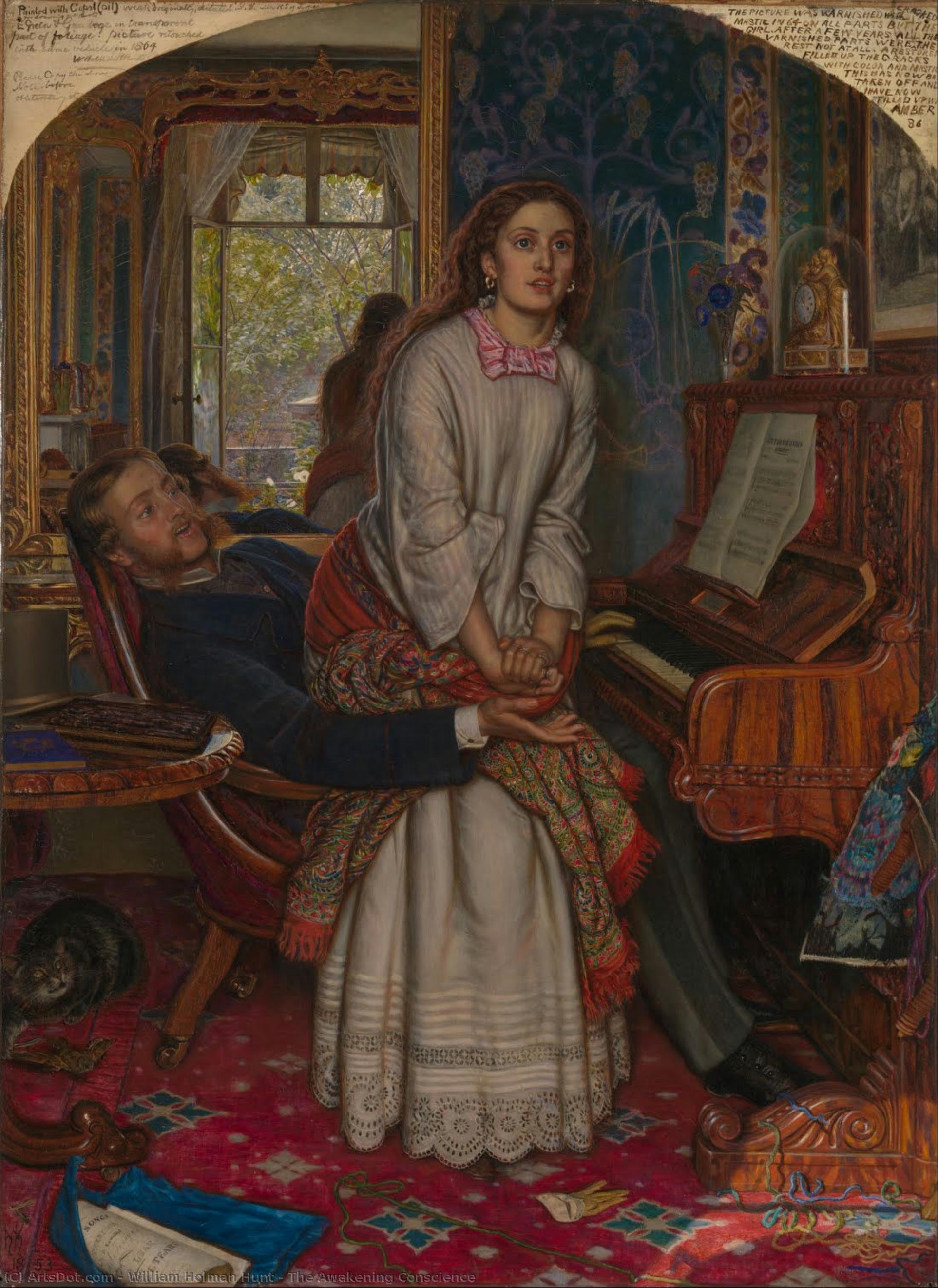
The Awakening Conscience
 Oil On Canvas
- WallArt
- Pre-Raphaelite Brotherhood
 1853
1853 55.0 x 76.0 cm
 Tate Britain
 Leer más
Giclée / Impresión de arte
Impresiones giclée o en lienzo de calidad de museo con producción rápida y opciones de acabado flexibles. ( Encargar reproducción pintada a mano Ver versión en imagen digital)




P118B €10

P118H €10

P118W €10

P438Z €10

P508JH €12

P508YH €12

P805H €10

P805Z €10

P919BZ €10

P919G €10

P919XJ €10

P959ZH €10

P968JZ €12

W106C €8

W218G €10

W218JH €8

W218Y €10

W307PJ €10

W316G €10

W316PJ €8

W316Y €10

W398PJ €8

W4111J €10

W500HY €15

W500JH €15

W692G €12

W849H €8

W940BG €15

W953PJ €8




Elija entre nuestros tamaños predefinidos que respetan las proporciones originales de la obra.

Introduzca el ancho y el alto que necesite para adaptarse a su marco o pared. Una impresión solo puede recortarse, nunca hacerse más grande que la imagen original, por lo que un tamaño con una forma distinta perderá parte de la obra. Le enviaremos una maqueta digital para su aprobación antes de realizar cualquier impresión. La imagen que se muestra en esta página no refleja el recorte real; solo la maqueta lo hace.
Envío a todo el mundo () en 2 semanas en lugar de las 4/5 semanas estándar. (22 octubre)

Envío exprés gratuito a todo el mundo

Lienzo de lino de alta calidad

Seguro de envío completo

Garantía de reembolso de impuestos aduaneros

Garantía de fidelidad cromática exacta

Política de devolución de 100 días (solo por defectos)

Garantía de devolución del 100% del dinero

Oferta por volumen
 La opción de vidrio solo está disponible en tamaños inferiores a 110 cm.

The Awakening Conscience
Giclée / Impresión de arte
Tamaño de la reproducción
-


Precio total
€ 70
The Awakening Conscience: A Victorian Portrait of Moral Reckoning
William Holman Hunt’s “The Awakening Conscience,” painted in 1853, isn't merely a depiction of a clandestine rendezvous; it’s a meticulously crafted tableau of moral crisis and spiritual awakening, a profound exploration of Victorian sensibilities. This oil-on-canvas masterpiece transcends the conventions of portraiture, offering a window into the anxieties and aspirations of a society grappling with rapid social change and burgeoning religious introspection. Hunt, a founding member of the Pre-Raphaelite Brotherhood, deliberately eschewed the polished idealism of academic art, instead embracing a radical commitment to realism, symbolism, and emotional truth – qualities powerfully evident in this arresting work.
A Scene of Disquiet: Narrative and Composition
At first glance, the painting presents a seemingly straightforward domestic scene: a woman, identified as a fallen woman, sits in the lap of her lover within a lavishly furnished room. However, Hunt’s genius lies in layering multiple narratives and symbolic elements that quickly unravel this initial impression. The setting itself—a recently decorated apartment filled with new furniture, an elaborate tapestry, and gleaming objects—immediately signals a disruption of established order and a transgression against Victorian ideals of domesticity. The woman's posture, initially relaxed, subtly shifts as she turns her head towards the window, drawing the viewer’s eye to the stark contrast between the interior world of temptation and the promise of redemption represented by the vibrant spring garden visible beyond.
- The Lover: Represents worldly indulgence and a source of moral corruption.
- The Woman: Embodies vulnerability, regret, and the potential for spiritual rebirth.
- The Room: Symbolizes the artificiality and superficiality of a life lived outside of genuine faith.
- The Window: Represents an escape from earthly constraints and a pathway to moral awakening.
Symbolism Woven into Reality: Details of Moral Weight
Hunt’s meticulous attention to detail is paramount, imbuing the painting with layers of symbolic meaning. The discarded items scattered around the room—a broken glove, a top hat, a partially finished tapestry—speak volumes about wasted opportunities and shattered dreams. The clock concealed beneath glass serves as a potent reminder of time slipping away, while the music on the piano – Thomas Moore’s “Oft in the Stilly Night” – echoes the woman's lost innocence and longing for a simpler past. The presence of various objects—bells, marigolds, and a star—further reinforces the painting’s moral weight, suggesting both warning and hope. Notably, the mirror reflects not just the room but also the garden outside, emphasizing the allure of a life beyond earthly constraints.
Pre-Raphaelite Vision: Light, Color, and Emotional Resonance
“The Awakening Conscience” is a quintessential example of Pre-Raphaelite aesthetics. Hunt employed rich, saturated colors—deep indigoes, vibrant reds, and luminous greens—to create an intensely atmospheric effect. The use of light is particularly significant; it streams dramatically through the window, illuminating the woman’s face and casting long shadows across the room, highlighting the contrast between darkness and enlightenment. The painting's meticulous detail, achieved through painstaking brushwork and a commitment to naturalistic representation, reflects the Pre-Raphaelites’ desire to capture the beauty and complexity of the world with unprecedented accuracy. The overall effect is one of heightened emotional intensity, inviting viewers to contemplate the profound questions of morality, redemption, and the human condition.
This painting continues to resonate today as a powerful meditation on personal responsibility, spiritual yearning, and the enduring struggle between earthly desires and moral conscience. Reproductions offer a remarkable opportunity to experience the depth and complexity of Hunt’s vision, bringing this poignant portrait into any space with an appreciation for art's ability to provoke thought and inspire reflection.
Preguntas y respuestas
¿A qué etapa de la evolución de William Holman Hunt pertenece "The Awakening Conscience"?
"The Awakening Conscience" pertenece al Mature Period de la trayectoria de William Holman Hunt. Esta clasificación vincula la obra con el desarrollo del artista.
¿Qué técnica se utilizó para "The Awakening Conscience" de William Holman Hunt?
La técnica de "The Awakening Conscience" de William Holman Hunt es Oil On Canvas. Las reproducciones pretenden recrear la apariencia de esta técnica.
¿Qué emoción transmite "The Awakening Conscience" de William Holman Hunt?
"The Awakening Conscience" de William Holman Hunt transmite un tono emocional Melancholic.
Biografía del artista
Primeros años y carrera
William Holman Hunt, un destacado pintor inglés, nació el 2 de abril de 1827 en Cheapside, Londres. Es más conocido por ser uno de los fundadores de la Hermandad Pre-Raphaelita, un grupo que buscaba revitalizar el arte enfatizando la observación detallada del mundo natural.Obras notables y estilo
Las pinturas de Holman Hunt se caracterizan por su atención al detalle, color vívido y simbolismo elaborado. Algunas de sus obras más destacadas incluyen:- La luz del mundo (1851-1853), ahora en la capilla del Colegio Keble, Oxford, Inglaterra
- El Pastor Engañado (1851), una escena de la vida rural moderna
- La Conciencia Despertada, que muestra su éxito inicial con escenas naturalistas intensamente realistas
- El chivo expiatorio, La búsqueda del Salvador en el templo y La sombra de la muerte, pintadas durante sus viajes a Tierra Santa en busca de material topográfico y etnológico preciso.
Vida personal y años posteriores
Holman Hunt se casó dos veces, primero con Fanny Waugh, que modeló para varias de sus obras, incluyendo Isabela y la maceta de albahaca. Después de su muerte, esculpió su tumba en Fiesole. Su segunda esposa fue Edith, hermana de Fanny, a quien se casó en el extranjero debido a las leyes británicas contra el matrimonio con la hermana de una esposa fallecida. Los últimos años de Holman Hunt estuvieron marcados por una vista fallida, lo que le obligó a renunciar a la pintura. Completó sus últimas obras importantes con la ayuda de su asistente, Edward Robert Hughes. Holman Hunt falleció el 7 de septiembre de 1910 y fue enterrado en la Catedral de San Pablo, Londres.Legado
Holman Hunt publicó una autobiografía en 1905 y fue nombrado miembro de la Orden del Mérito por el rey Eduardo VII ese mismo año. Su vida personal fue documentada posteriormente en el libro de Diana Holman-Hunt Mi abuelo, su vida y sus amores. Vea las obras de William Holman Hunt en OriginalUniqueArt Fechas clave:- 2 de abril de 1827: nació en Cheapside, Londres
- 1851-1853: pintó La luz del mundo
- 7 de septiembre de 1910: falleció y fue enterrado en la Catedral de San Pablo, Londres

William Holman Hunt
1827 - 1910 , Reino Unido
Datos clave
- Artistas Que Influyeron:
- John Ruskin
- Dante Gabriel Rossetti
- John Everett Millais
- Estilo Artístico: Pre-Rafaelita
- Fecha De Fallecimiento: 7 de septiembre de 1910
- Fecha De Nacimiento: 2 de abril de 1827
- Lugar De Nacimiento: Cheapside, Reino Unido
- Nacionalidad: Británico
- Nombre Completo: William Holman Hunt
- Obras Notables:
- La luz del mundo
- El pastor engañado
- La conciencia despertada
Artículos relacionados

Dante Gabriel Rossetti: Las 25 Obras Maestras del Prerrafaelismo | OriginalUniqueArt
Descubre las 25 obras maestras de Dante Gabriel Rossetti, el máximo exponente del Prerrafaelismo. Explora su simbolismo, retratos victorianos y la belleza femenina en lienzos inolvidables. Reproducciones de arte exclusivas en OriginalUniqueArt.com.

Sir John Everett Millais: Pre-Raphaelite Rebellion & Victorian Narrative Detail
Explore the revolutionary art of Sir John Everett Millais & the Pre-Raphaelite Brotherhood. Discover their radical realism, symbolic narratives, and lasting impact on Victorian aesthetics. A deep dive into 19th-century masterpieces.
La Hermandad Prerrafaelita: Rebelión Estética y Romance Medieval en el Arte Victoriano
Descubre la fascinante historia de la Hermandad Prerrafaelita y su rebelión estética contra el arte victoriano. Análisis profundo de sus obras, temas y legado con expertos en arte.
The Pre-Raphaelite Brotherhood: Reclaiming Beauty, Nature, and Truth in Victorian Art History
Explore the revolutionary Pre-Raphaelite Brotherhood. Discover how these visionary artists rejected academic tradition to reclaim beauty, nature, and truth through luminous detail and literary depth in Victorian art history.

Pre-Raphaelite Romanticism: A Guide to Vivid Detail and Medieval Beauty in Victorian Art
Explore the vivid detail and medieval beauty of Pre-Raphaelite Romanticism. Discover the history of masters like Rossetti and Millais through our expert guide to Victorian art, perfect for collectors and professionals seeking authentic, museum-quality reproductions.