Vista previa
 Compartir
 Compartir
 Ver detalles

 Descargar
 Ver similares
 Radiografía
 Presentación de diapositivas
Standing Male Nude
 Oil On Canvas
- WallArt
 1849
1849 63.0 x 53.0 cm
 Royal College of Art
 Leer más
Reproducción al óleo hecha a mano
Óleo sobre lienzo pintado a mano en el tamaño y marco de su elección, realizado por encargo por nuestros artistas. ( Pedir impresión Comprar descarga)




P118B $10

P118H $10

P118W $10

P438Z $10

P508JH $12

P508YH $12

P805H $10

P805Z $10

P919BZ $10

P919G $10

P919XJ $10

P959ZH $10

P968JZ $12

W106C $8

W218G $10

W218JH $8

W218Y $10

W307PJ $10

W316G $10

W316PJ $8

W316Y $10

W398PJ $8

W4111J $10

W500HY $15

W500JH $15

W692G $12

W849H $8

W940BG $15

W953PJ $8




Elija entre nuestros tamaños predefinidos que respetan las proporciones originales de la obra.

Puede ingresar sus propias dimensiones para adaptarse a un marco o espacio específico. Si el tamaño seleccionado no coincide con las proporciones de la imagen original, recortaremos la obra o extenderemos la pintura con elementos adicionales pintados a mano. Se le enviará una maqueta digital para su aprobación antes de comenzar la producción.
Tenga en cuenta que la vista previa en pantalla no refleja el recorte o la extensión reales. Solo la maqueta mostrará con precisión la composición final.
Si bien existen tamaños personalizados, recomendamos seleccionar una dimensión de la lista predefinida para preservar las proporciones originales.
Tras realizar el pedido, el equipo de OriginalUniqueArt.com enviará un correo electrónico al cliente para solicitar instrucciones y proporcionarle una vista previa del boceto.
Envío a todo el mundo () en 3-4 semanas en lugar de las 5 semanas estándar. (18 agosto). Sin comprometer la calidad.

Envío exprés gratuito a todo el mundo

Lienzo de lino de alta calidad

Seguro de envío completo

Garantía de reembolso de aranceles aduaneros

Garantía de fidelidad cromática exacta

Política de devolución de 60 días (solo por defectos)

Garantía de devolución del 100% del dinero

Oferta por volumen
 La opción de vidrio solo está disponible en tamaños inferiores a 110 cm.

Standing Male Nude
Técnica de reproducción
Tamaño de la reproducción
-


Precio total
$ 300
Descripción de la obra
Standing Male Nude: A Pioneer of British Art
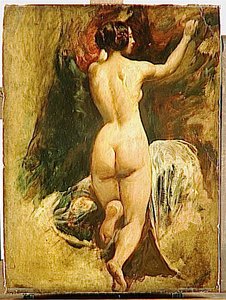
William Etty’s “Standing Male Nude” is not merely a depiction of the human form; it's a pivotal moment in the history of British art, a bold assertion of artistic freedom within a society grappling with Victorian sensibilities. Painted in 1849, this monumental canvas—measuring an impressive 63 x 53 centimeters—captures a figure poised on the precipice of action, his arms outstretched as if bracing for a challenge or perhaps simply embracing the expansive possibilities of existence. The painting’s immediate impact lies in its unapologetic celebration of the nude male body, a subject largely taboo within the established artistic conventions of the time. Etty, a Royal Academician and a man known for his intensely personal and often controversial work, defied societal expectations by presenting this powerfully rendered figure with an honesty and directness rarely seen in contemporary art.
Etty’s technical mastery is immediately evident. The artist meticulously renders every curve of the musculature, from the taut definition of the shoulders and chest to the subtle ripple beneath the skin. His use of light and shadow is particularly striking; a dramatic chiaroscuro effect emphasizes the contours of the body, lending it an almost sculptural quality. Note the way the light catches on the exposed flesh, creating highlights that seem to shimmer with life. The background—a dark, undefined space—further isolates the figure, intensifying its presence and drawing the viewer’s attention entirely to the subject. This deliberate simplicity underscores Etty's focus on his primary concern: capturing the essence of human form with unparalleled realism and emotional depth.
A Study in Form and Emotion
The painting’s historical context is crucial to understanding its significance. Following the abolition of slavery, Britain was undergoing a period of intense social and political change. The Victorian era, characterized by strict moral codes and a conservative outlook, sought to impose order and restraint on all aspects of life. Yet, within this framework, artists like Etty were pushing boundaries, exploring themes of sexuality, vulnerability, and the human condition with unprecedented frankness. “Standing Male Nude” can be interpreted as a defiant statement against these restrictive norms, a celebration of the body’s inherent beauty and power.
Furthermore, Etty's work reflects his deep engagement with classical art. He was heavily influenced by the works of Renaissance masters like Titian and Rubens, particularly their depictions of the human nude. However, unlike many of his contemporaries who simply copied these ancient models, Etty infused them with a distinctly British sensibility. His figures are not idealized or ethereal; they possess a palpable physicality, a sense of raw emotion that resonates deeply with the viewer. The pose itself—a dynamic and slightly awkward stance—suggests a moment of contemplation, a pause before action, inviting us to consider the complexities of human experience.
Symbolism and Interpretation
While the precise meaning of “Standing Male Nude” remains open to interpretation, several symbolic elements contribute to its richness. The figure’s outstretched arms could represent a yearning for connection, a desire for freedom, or perhaps simply an embrace of life's uncertainties. Some scholars have suggested that the pose alludes to classical Greek sculpture, specifically depictions of Apollo—the god of light, music, and poetry—imbuing the painting with connotations of strength, beauty, and artistic inspiration. The starkness of the composition also lends a sense of vulnerability; stripped bare, both physically and emotionally, the figure is exposed to the world, inviting us to confront our own perceptions of beauty and mortality.
Beyond its immediate visual impact, “Standing Male Nude” serves as a testament to Etty’s artistic vision and his courage in challenging conventional norms. It remains a powerful and evocative work of art, offering a glimpse into the complexities of Victorian society and the enduring fascination with the human form. Reproductions of this masterpiece continue to captivate audiences today, reminding us of the transformative power of art to provoke thought, inspire emotion, and challenge our understanding of the world around us.
Biografía del artista
Primeros años y formación
William Etty, un artista inglés destacado, nació el 10 de marzo de 1787 en York, Reino Unido. A los 12 años abandonó la escuela para convertirse en aprendiz de impresor en Hull, completando su aprendizaje siete años después. En 1807, se unió a las escuelas de la Royal Academy en Londres, donde estudió bajo Thomas Lawrence y se formó copiando obras de otros artistas.Carrera artística
El gran avance de Etty llegó con La llegada de Cleopatra a Cilicia, pintada en 1821, que presentaba numerosos desnudos y fue exhibida con gran aclamación. Este éxito impulsó nuevas representaciones de escenas históricas con desnudos, lo que le valió una reputación de indecencia. A pesar de esto, tuvo un éxito comercial y una aclamación crítica, convirtiéndose en académico real en 1828.Obras notables y controversia
- Desnudo femenino de pie, una pintura que muestra la maestría de Etty en los tonos realistas de la piel.
- Las sirenas y Ulises, una obra que demuestra su capacidad para equilibrar escenas históricas con desnudez.
- La inclusión de Etty en la exposición emblemática Exposición del desnudo victoriano en Tate Britain en 2001-02, que condujo a un renovado interés en su obra.
Legado y vida posterior
A pesar de ser un hombre tímido que rara vez socializaba y nunca se casó, Etty continuó pintando desnudos masculinos y femeninos, lo que provocó severas críticas. Murió el 13 de noviembre de 1849 en York, pero sus obras se convirtieron en muy coleccionables, vendiéndose por grandes sumas. Enlaces importantes: * Obras de arte de William Etty * William Etty en Wikipedia * Desnudo femenino de pie por William EttyConclusión
William Etty, un pionero de la desnudez británica, dejó una huella indeleble en el mundo del arte. Sus obras, aunque alguna vez fueron controvertidas, ahora sirven como testimonio de su habilidad y dedicación para capturar la forma humana. Explore más obras de arte de Etty en OriginalUniqueArt.com.
William Etty
1787 - 1849 , Reino Unido
Datos clave
- Artistas Que Influyeron: ['Thomas Lawrence']
- Estilo Artístico: Romanticismo
- Fecha De Fallecimiento: 13 de noviembre de 1849
- Fecha De Nacimiento: 10 de marzo de 1787
- Lugar De Nacimiento: York, Reino Unido
- Nacionalidad: Británico
- Nombre Completo: William Etty
- Obras Notables:
- Cleopatra's Arrival in Cilicia
- Standing Female Nude
- The Sirens and Ulysses
Artículos relacionados

William Etty: Rediscovering Victorian Sensibility & the Sublime in Historical Painting
Explore the captivating world of William Etty, a pioneering Victorian artist famed for his dramatic historical paintings and groundbreaking nude figures. Discover his life, controversial reception, and enduring legacy with our expert analysis.

The Enduring Allure of the Nude: A Historical & Artistic Exploration of the Human Form
Explore the captivating history of nude art! Discover iconic paintings & artists from classical to modern eras. Uncover symbolism, techniques & find museum-quality reproductions at OriginalUniqueArt.
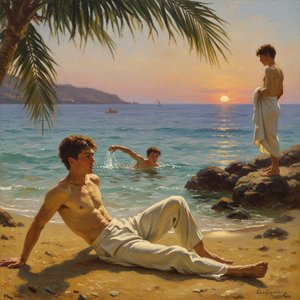
Henry Scott Tuke: Sunlit Masculinity & the Pastoral Ideal in Victorian Painting
Explore the captivating world of Henry Scott Tuke's paintings – a master of British Impressionism renowned for his intimate depictions of youth and sunlit maritime scenes. Discover his legacy & aesthetic influence.
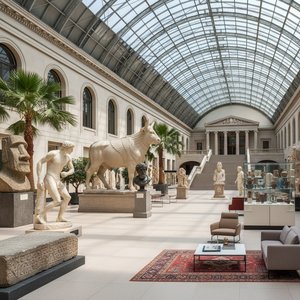
Los 25 Tesoros del Museo Británico: Arte, Historia y Decoración Excepcional
Descubre los 25 tesoros del Museo Británico: desde la Piedra Rosetta hasta obras de Rembrandt y Van Gogh. Explora su historia, técnica y significado. Reproducciones de arte exclusivas en OriginalUniqueArt.com para decorar tu hogar con elegancia.

The Eloquent Form: A Historical & Aesthetic Exploration of the Nude in Art
Explore the captivating history of the nude in art! From ancient Greece to modern masters, discover its evolving symbolism, techniques & enduring beauty. Expert insights for collectors and enthusiasts.