

 Vista previa
 Compartir
 Compartir
 Ver detalles

 Descargar
 Ver similares
 Radiografía
 Presentación de diapositivas
Italian Landscape


 Leer más
Reproducción al óleo hecha a mano
Óleo sobre lienzo pintado a mano en el tamaño y marco de su elección, realizado por encargo por nuestros artistas. ( Pedir impresión Comprar descarga)




P118B $10

P118H $10

P118W $10

P438Z $10

P508JH $12

P508YH $12

P805H $10

P805Z $10

P919BZ $10

P919G $10

P919XJ $10

P959ZH $10

P968JZ $12

W106C $8

W218G $10

W218JH $8

W218Y $10

W307PJ $10

W316G $10

W316PJ $8

W316Y $10

W398PJ $8

W4111J $10

W500HY $15

W500JH $15

W692G $12

W849H $8

W940BG $15

W953PJ $8




Elija entre nuestros tamaños predefinidos que respetan las proporciones originales de la obra.

Puede ingresar sus propias dimensiones para adaptarse a un marco o espacio específico. Si el tamaño seleccionado no coincide con las proporciones de la imagen original, recortaremos la obra o extenderemos la pintura con elementos adicionales pintados a mano. Se le enviará una maqueta digital para su aprobación antes de comenzar la producción.
Tenga en cuenta que la vista previa en pantalla no refleja el recorte o la extensión reales. Solo la maqueta mostrará con precisión la composición final.
Si bien existen tamaños personalizados, recomendamos seleccionar una dimensión de la lista predefinida para preservar las proporciones originales.
Tras realizar el pedido, el equipo de OriginalUniqueArt.com enviará un correo electrónico al cliente para solicitar instrucciones y proporcionarle una vista previa del boceto.
Envío a todo el mundo () en 3-4 semanas en lugar de las 5 semanas estándar. (14 agosto). Sin comprometer la calidad.

Envío exprés gratuito a todo el mundo

Lienzo de lino de alta calidad

Seguro de envío completo

Garantía de reembolso de aranceles aduaneros

Garantía de fidelidad cromática exacta

Política de devolución de 60 días (solo por defectos)

Garantía de devolución del 100% del dinero

Oferta por volumen
 La opción de vidrio solo está disponible en tamaños inferiores a 110 cm.

Italian Landscape
Técnica de reproducción
Tamaño de la reproducción
-


Precio total
$ 300
Descripción de la obra
Washington Allston’s “Italian Landscape”: A Vision of Romantic Transcendence
The painting "Italian Landscape" by Washington Allston stands as a cornerstone of American Romanticism, capturing not merely a picturesque vista but an ambitious exploration of the human spirit's yearning for sublime beauty and spiritual connection. Completed in 1828, this monumental canvas—measuring approximately six feet by eight feet—immediately draws the eye with its masterful depiction of a Tuscan hillside bathed in ethereal moonlight. Yet, to appreciate its true significance requires delving beyond surface impressions into Allston’s artistic philosophy and the broader cultural currents shaping his era.A Pioneer's Romantic Vision
Born in Georgetown, South Carolina, in 1779, Washington Allston emerged as a singular voice amidst the burgeoning American artistic landscape. His formative years instilled within him a profound appreciation for the grandeur of nature—a sentiment powerfully echoed throughout his oeuvre. Unlike many of his contemporaries who favored Neoclassical formalism, Allston championed a bold departure toward expressive color and dramatic composition, aligning himself firmly with the Romantic movement’s rejection of rational restraint. Influenced by German Idealism and deeply moved by Coleridge's poetic explorations of imagination and emotion, Allston sought to convey not just what he saw but what he *felt*, striving to capture the sublime—that paradoxical blend of terror and awe experienced when confronted with overwhelming natural forces.Technique and Atmosphere: Mastering Moonlight
Allston’s technique exemplifies this Romantic impulse. He employed a layered glazing process, meticulously building up translucent washes of color to achieve an unparalleled luminosity and atmospheric depth. The artist's keen observation of moonlight—a subject he revisited repeatedly throughout his career—is particularly evident here. Rather than simply reproducing the visual appearance of moonlight, Allston wrestled with its psychological impact, attempting to distill its essence into pigment. He skillfully utilized complementary colors—particularly blues and oranges—to create a palpable sense of warmth against the cool luminescence of the moonlit sky. The brushstrokes themselves are loose and expressive, conveying movement and suggesting an unseen wind rustling through the foliage. This deliberate disregard for photographic accuracy underscores Allston’s conviction that art should transcend mere representation to evoke profound emotional responses.Symbolism Within Beauty: Echoes of Transcendence
Beyond its technical prowess, “Italian Landscape” resonates with symbolic significance. The solitary figure seated beneath the tree—a motif recurrent in Allston's work—represents humanity grappling with existential questions amidst the immensity of nature. This contemplative posture suggests a desire for spiritual contemplation and an acknowledgement of our insignificance within the cosmos. The castle looming on the horizon serves as a reminder of human ambition and civilization’s limitations, juxtaposed against the enduring power of the natural world. Allston's deliberate inclusion of these elements invites viewers to contemplate themes of mortality, faith, and the pursuit of transcendent experience—core tenets of Romantic thought.Emotional Resonance: A Legacy of Sublime Impression
Ultimately, “Italian Landscape” succeeds in conveying a profound emotional resonance. The painting’s serene yet melancholic beauty captures the sublime—that elusive state of awe mingled with terror—with remarkable sensitivity. It speaks to our innate longing for connection with something greater than ourselves and reminds us that true understanding comes not from intellectual analysis but from visceral experience. Allston's masterpiece continues to inspire artists and collectors alike, cementing its place as a seminal work of American Romanticism and a testament to the transformative power of art to illuminate the human condition. Its enduring appeal lies in its ability to transport viewers into a realm where beauty and contemplation converge—a timeless invitation to embrace the sublime grandeur of the natural world.Biografía del artista
A Pioneer of American Romanticism
Washington Allston, a name perhaps less immediately recognizable than some of his contemporaries, occupies a pivotal position in the development of American art. Born November 5, 1779, on a South Carolina rice plantation – a landscape that would subtly inform his later artistic sensibilities – Allston’s life was one of intellectual pursuit and aesthetic experimentation. His early years were marked by both privilege and complexity; the shadow of familial loss hung over him following his father's death during the Revolutionary War, and the realities of plantation life undoubtedly shaped his worldview. A solid education at Harvard College provided a foundation for his burgeoning artistic ambitions, but it was a journey to Europe in 1801 that truly ignited his creative spirit.European Influences and Artistic Formation
London became Allston’s crucible, where he entered the Royal Academy Schools under the tutelage of Sir Benjamin West, a prominent figure in British art and a key link between European traditions and American aspirations. This period was transformative. He immersed himself in the Old Masters, particularly the Venetian Renaissance artists whose mastery of light, color, and atmospheric perspective would profoundly influence his own style. Travel throughout Europe – Paris and Italy especially – exposed him to a wealth of artistic heritage and fostered intellectual connections with luminaries like Washington Irving and Samuel Taylor Coleridge. These friendships were not merely social; they represented a confluence of Romantic thought that permeated Allston’s work, imbuing it with literary and philosophical depth. He wasn't simply replicating what he saw; he was absorbing the spirit of an era defined by emotion, imagination, and a fascination with the sublime. His stylistic kinship with Venetian masters like Titian cemented his reputation as “The American Rembrandt,” highlighting the profound impact of European artistic traditions on his creative process.A Distinctly American Voice
Upon his return to America in 1818, Allston settled in Cambridge, Massachusetts, and began to forge a distinctly American Romantic aesthetic. He rejected academic conventions, prioritizing expressive color palettes and dramatic compositions that captured the grandeur and terror of nature. His paintings moved beyond mere representation, aiming instead to evoke emotional and spiritual responses in the viewer. He was often lauded as “The American Titian,” a testament to his stylistic similarities with the Venetian master, but this comparison doesn’t fully capture the originality of his vision. Works like "Storm Rising at Sea" and "Moonlit Landscape," both housed at the Museum of Fine Arts, Boston, exemplify his masterful use of light and shadow, his ability to convey the power and mystery of nature, and his exploration of literary themes – particularly those drawn from biblical stories. He wasn’t simply painting landscapes; he was creating visual poems, imbued with a sense of awe and wonder. His unfinished masterpiece, “Belshazzar's Feast,” though never completed in his lifetime, stands as a testament to his ambition and his willingness to grapple with complex narratives and profound emotional states.Major Achievements and Legacy
Washington Allston’s contribution to American art is undeniable. He established himself as one of the foremost landscape painters of his time, securing commissions from prominent patrons and garnering critical acclaim for his evocative depictions of wilderness scenes. His paintings continue to inspire artists and scholars alike, demonstrating the enduring power of Romantic idealism and artistic innovation. Furthermore, he fostered intellectual dialogues with fellow writers and thinkers like Ralph Waldo Emerson, shaping the cultural landscape of Boston during the Transcendentalist movement. The establishment of the Allston Club by William Morris Hunt solidified his legacy, ensuring that his techniques and artistic vision were passed down to subsequent generations. He was more than just a painter; he was a visionary who helped define what it meant to be an American artist in the 19th century—a figure whose influence resonates even today.
Washington Allston
1779 - 1843 , Estados Unidos
Datos clave
- Artistic Movement Or Style: Romanticismo
- Artists Or Movements Influenced By This Artist:
- Samuel F.B. Morse
- Ralph Waldo Emerson
- Artists Who Influenced This Artist:
- Benjamin West
- Old Masters
- Date Of Birth: Nov 5, 1779
- Full Name: Washington Allston
- Nationality: American
- Notable Artworks:
- Storm Rising at Sea
- Moonlit Landscape
- Belshazzar's Feast
- Place Of Birth: Georgetown, USA
Artículos relacionados
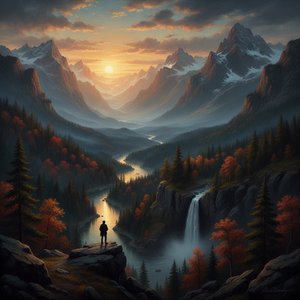
Capturing the Soul of Nature: A Journey Through the Sublime Majesty of American Romanticism
Explore the breathtaking beauty of American Romanticism. Discover how Hudson River School masters captured the sublime spirit of the wilderness through luminous oil landscapes and emotional depth. A journey into the soul of nature for the true art enthusiast.
Los 10 Paisajes Más Icónicos de la Historia del Arte | OriginalUniqueArt
Descubre los 10 paisajes más emblemáticos de la historia del arte, desde Monet a Van Gogh. Explora su significado, técnica y belleza atemporal. Encuentra reproducciones de alta calidad e inspira tu hogar con OriginalUniqueArt.com.

Luminism: Capturing the Ethereal Glow of Light in American Landscape Painting
Explore the ethereal beauty of Luminism. Discover how 19th-century American masters captured light and atmosphere through profound landscape painting. Learn about this iconic movement and find museum-quality, hand-painted oil reproductions to bring historical brilliance to your home.

Evocations of Place: A Historical Journey Through Landscape Art
Explore the rich history of landscape art with OriginalUniqueArt. Discover renowned artists, movements like Impressionism & Romanticism, and expert guidance for collecting timeless pieces. Find your perfect serene escape today!

Grant Wood & American Regionalism: Identity, Myth & the Rural Landscape
Explore the world of Grant Wood & American Regionalism with OriginalUniqueArt. Discover the symbolism behind 'American Gothic', recurring themes, and the movement's lasting impact on art history. High-quality reproductions available.



