

 Compartir
 Compartir
 Ver detalles
 Guía
Guía

 Descargar
 Ver artículos similares
 Presentación de diapositivas
 Estadísticas
Roadside Stand, vicinity Birmingham, Alabama
 Black and White Photography
- Photo
- Documentary Photography
 1971
1971- Modern
 24.0 x 19.0 cm
 George Eastman Museum
 Leer más
Giclée / Impresión de arte
Impresiones giclée o en lienzo de calidad de museo con producción rápida y opciones de acabado flexibles. ( Encargar reproducción pintada a mano Ver versión en imagen digital)




































Elija entre nuestros tamaños predefinidos que respetan las proporciones originales de la obra.

Puede introducir sus propias dimensiones para adaptarse a un marco o espacio específico. Si el tamaño seleccionado no coincide con las proporciones de la imagen original, recortaremos la obra de arte o extenderemos la imagen con un borde con efecto espejo o de color sólido. Se enviará una maqueta digital para su aprobación antes de que comience la producción.
Tenga en cuenta que la vista previa en pantalla no refleja el recorte o la extensión real. Solo la maqueta mostrará con precisión la composición final.
Aunque existen tamaños personalizados, recomendamos seleccionar una dimensión de la lista predefinida para preservar las proporciones originales.
Envío a todo el mundo () en 2 semanas en lugar de las 4/5 semanas estándar. (21 septiembre)

Envío exprés gratuito a todo el mundo

Lienzo de lino de alta calidad

Seguro de envío completo

Garantía de reembolso de impuestos aduaneros

Garantía de fidelidad cromática exacta

Política de devolución de 100 días (solo por defectos)

Garantía de devolución del 100% del dinero

Oferta por volumen
 La opción de vidrio solo está disponible en tamaños inferiores a 110 cm.

Roadside Stand, vicinity Birmingham, Alabama
Giclée / Impresión de arte
Tamaño de la reproducción
-


Precio total
$ 80
A Window into the American Soul
In the quiet, sun-drenched corners of rural Alabama, Walker Evans captured more than just a storefront; he froze a moment of profound human resilience. "Roadside Stand, vicinity Birmingham, Alabama," produced in 1971, serves as a hauntingly beautiful meditation on American identity. The photograph presents a deceptively simple tableau: a weathered structure, the home of ‘F.M. Pointer – The Old Reliable House Mover,’ where two men stand amidst their trade. There is an undeniable sense of nostalgia clinging to the frame, a slice of Americana that feels both intimately personal and universally significant. Through Evans's lens, the mundane act of commerce becomes a poetic ritual, inviting the viewer to pause and contemplate the dignity found in everyday labor.
The composition is a masterclass in documentary precision. Utilizing a large-format camera, Evans achieved an exceptional level of sharpness and tonal range that allows the textures of the Alabama landscape to breathe. The image relies on a structured geometry, where the straight lines of the building’s signage and architecture guide the eye across the frame, meeting the organic, softer forms of the produce and the figures themselves. This interplay between the rigid man-made structures and the fluid presence of life creates a balanced, rhythmic visual experience. For the discerning collector or interior designer, this piece offers a sophisticated anchor for a room, providing a focal point that is both intellectually stimulating and visually grounding.
The Art of Truthful Observation
Stylistically, Evans was a pioneer of documentary photography, a movement that prioritized raw authenticity over the polished, painterly abstractions popular in the art world of his era. He eschewed unnecessary embellishment, choosing instead to engage directly with his subject. This commitment to "truth-telling" is evident in the muted palette of the photograph; the subtle shades of gray and delicate highlights create an atmosphere of understated solemnity. There is no sentimental gloss here—only the stark, honest reality of a community navigating economic hardship. The lighting, suggesting a soft, overcast day, removes harsh shadows and allows the viewer to focus on the intricate details of the storefront and the weathered faces of its inhabitants.
Beyond its technical brilliance, the photograph is rich with symbolic resonance. The fish displayed at the stand represent more than mere sustenance; they are symbols of livelihood and the persistent pulse of local economy. Similarly, the sign for a house mover hints at the themes of transition and community service. To display a high-quality reproduction of this work is to bring a sense of historical weight and narrative depth into a space. It is an invitation to conversation, a piece that does not merely decorate a wall but tells a story of endurance, making it an exquisite choice for those who value art that possesses both a soul and a profound connection to the human condition.
Biografía del artista
A Witness to America: The Life and Legacy of Walker Evans
Walker Evans, born in St. Louis in 1903, emerged as a pivotal figure in American photography, his name inextricably linked with the visual record of the Great Depression – yet to define him solely by this period would be to diminish the breadth of his artistic vision and enduring influence. His journey was one of constant exploration, evolving from literary aspirations to a uniquely observant photographic style that captured not just *what* America was, but *how* it felt – its quiet dignity, its stark realities, and its often-overlooked beauty. Evans’s upbringing, marked by frequent moves between cities like Toledo, Chicago, and New York, instilled in him an early awareness of the diverse facets of American life. Though educated at prestigious institutions like Phillips Academy Andover and briefly at Williams College, his true education unfolded through self-directed study and immersion in the cultural currents of the time. A year spent in Paris in 1926 exposed him to European artistic trends, but it was upon his return to New York that he discovered his calling, initially as a writer before turning decisively towards photography around 1928.Early Influences & Literary Roots
Evans’s formative years were shaped by a profound engagement with literature—a fascination fueled by the intellectual ferment of the Jazz Age and nurtured by mentors like T.S. Eliot, D.H. Lawrence, James Joyce, and e.e. cummings – writers who valued precision of language and a keen observation of the human condition. These influences profoundly impacted his artistic sensibilities, informing his stylistic choices and shaping his conceptual framework. He admired the meticulous documentation of Eugène Atget, whose images of Parisian streets felt both timeless and immediate, and August Sander, whose portraits aimed for an objective cataloging of German society. These figures served as models for Evans’s own approach to visual representation—a commitment to clarity, directness, and an avoidance of sentimentality. His early artistic endeavors included painting, where he experimented with various styles and techniques, demonstrating a versatility that would later characterize his photographic practice. Notably, he pursued studies at Williams College after Phillips Academy Andover, honing his literary skills before dedicating himself fully to the pursuit of photography.The FSA Years: Documenting Depression America
Evans’s artistic breakthrough arrived in 1935 with his acceptance of a commission from the Farm Security Administration (FSA), tasked with documenting the effects of the Great Depression on rural communities in the Southern United States. Recognizing the potential for photographic representation to convey profound truths about human experience, Evans embraced the FSA project with unwavering dedication—a decision that would solidify his reputation as America’s preeminent documentarian and propel him to international acclaim. Equipped with a 15x20 view camera—a substantial investment at the time—Evans embarked on an extensive journey across Alabama, Georgia, Tennessee, and Oklahoma, capturing images that became iconic symbols of hardship and resilience during this pivotal moment in American history. His collaboration with writer James Agee on *Let Us Now Praise Famous Men* (1941)—a groundbreaking work combining stark photographs with lyrical prose depicting three tenant farming families—represents a landmark achievement in documentary literature and photography, demonstrating the transformative power of interdisciplinary artistic endeavors. The FSA’s mandate demanded an uncompromising commitment to objectivity—a challenge that Evans met head-on, producing images characterized by remarkable detail and formal clarity while eschewing any discernible ideological bias.Photographic Style & Technique
Evans’s distinctive photographic style emerged from a meticulous attention to visual elements—composition, lighting, tonal range—and a deliberate rejection of stylistic embellishments. He favored the use of a large format camera (6x12 and later 15x20), which allowed him to achieve unparalleled levels of sharpness and depth of field—capturing textures and nuances that would have been impossible with smaller cameras. His images often employed subtle cropping techniques, emphasizing key subjects and creating dynamic visual narratives. Evans’s aesthetic was informed by the principles of European modernism, particularly the formalism championed by August Sander and the emphasis on graphic structure evident in Atget’s photographs—influences that shaped his artistic vision and underpinned his unwavering commitment to visual truth. He meticulously considered every aspect of his photographic process, from selecting subjects to positioning the camera to adjusting exposure settings—a dedication to craftsmanship that reflected his belief in the transformative potential of art.Legacy & Influence
Walker Evans’s impact on photographic history is undeniable—his pioneering approach to documentary photography established a new standard for realism and objectivity, inspiring generations of artists who followed him. His work profoundly influenced figures like Helen Levitt, Robert Frank, Diane Arbus, Lee Friedlander, and Bernd and Hilla Becher—artists who embraced Evans’s stylistic principles while exploring diverse subjects and contexts. Evans demonstrated that photography could serve not only as a tool for social commentary but also as a medium for aesthetic exploration—revealing the beauty and complexity inherent in everyday life. His enduring legacy resides in his unwavering conviction that art should strive to capture the essence of human experience with honesty, precision, and empathy—a principle that continues to resonate powerfully today. Evans’s photographs remain treasured artifacts of American history—testaments to a time of profound social upheaval and artistic innovation.
Walker Evans
1903 - 1975 , Estados Unidos de América
Datos clave
- Artistic Movement Or Style: Documentary photography
- Artists Who Influenced This Artist:
- August Sander
- Eugène Atget
- Date Of Birth: 1903
- Full Name: Walker Evans
- Nationality: American
- Notable Artworks:
- Let Us Now Praise Famous Men
- Silverware
- Barn with Porch Addition
- Place Of Birth: St. Louis, USA
Artículos relacionados
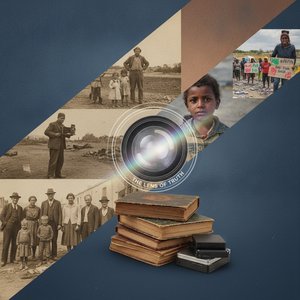
The Lens of Truth: A Comprehensive History and Legacy of Documentary Photography
Explore the profound history of documentary photography. From early daguerreotypes to social reform movements, discover how the lens captures truth, preserves vanishing cultures, and shapes our global visual narrative through an expert art-historical lens.
Los 10 Maestros de la Fotografía Documental: Obras que Cambiaron el Arte y la Decoración
Descubre los 10 iconos de la fotografía documental que cambiaron el arte. Explora las historias detrás de obras maestras de Dorothea Lange, Robert Capa y más. Reproducciones de alta calidad para decorar tu hogar con arte atemporal en .

Monochrome Visions: Exploring the Aesthetic & Historical Significance of Black & White Photography
Explore the rich history & artistic power of black and white photography. From early techniques to iconic masters like Ansel Adams, discover why monochrome continues to captivate art lovers today. Expert insights for collectors.

Beyond the Lens: Photography's Enduring Influence on Modern & Contemporary Art
Explore photography's pivotal role in shaping modern & contemporary art. Discover key movements, influential artists like Stieglitz, and expert collecting advice from OriginalUniqueArt.

Pictorialismo: La Búsqueda del Alma de la Fotografía Artística – Estética, Técnicas y Legado
Descubre el Pictorialismo, un movimiento clave en la historia de la fotografía artística. Explora sus técnicas, figuras emblemáticas y su legado perdurable. Guía experta para coleccionistas y amantes del arte.


