

 Vista previa
 Compartir
 Compartir
 Ver detalles
 Guía
Guía

 Descargar
 Ver artículos similares
 Radiografía
 Presentación de diapositivas
 Estadísticas
Let Us Now Praise Famous Men


 Leer más
La obra de arte que se muestra en esta página está protegida por las leyes de propiedad intelectual, lo que significa que no podemos crear ni vender legalmente una reproducción idéntica. Esta protección se hace cumplir en virtud de acuerdos internacionales como el Convenio de Berna y por las leyes nacionales, incluidas aquellas establecidas por el Ley de derechos de autor de los EE. UU. - Título 17.
Como una alternativa respetuosa y legal, ofrecemos obras de arte personalizadas y pintadas a mano inspiradas en la original. Nuestros expertos y profesionales del arte estudian cuidadosamente el estilo, el sentimiento y la esencia artística de la obra original para crear una pieza nueva y única que evoque la misma sensación, siendo al mismo tiempo una creación original por derecho propio.
Este método cumple plenamente con las normativas de derechos de autor, ya que no implica la copia ni la duplicación de la obra protegida. En su lugar, se trata de una reinterpretación creativa: una nueva pintura influenciada por la original, pero que no es idéntica a ella.
Reproducción al óleo hecha a mano
Óleo sobre lienzo pintado a mano en el tamaño y marco de su elección, realizado por encargo por nuestros artistas. ( Cambiar a formato impreso Ver versión en imagen digital)




P118B €10

P118H €10

P118W €10

P438Z €10

P508JH €12

P508YH €12

P805H €10

P805Z €10

P919BZ €10

P919G €10

P919XJ €10

P959ZH €10

P968JZ €12

W106C €8

W218G €10

W218JH €8

W218Y €10

W307PJ €10

W316G €10

W316PJ €8

W316Y €10

W398PJ €8

W4111J €10

W500HY €15

W500JH €15

W692G €12

W849H €8

W940BG €15

W953PJ €8




Elija entre nuestros tamaños predefinidos que respetan las proporciones originales de la obra.

Escriba el ancho y el alto que necesite para adaptarse a su marco o a su pared. Al ser una obra pintada a mano, para un tamaño con una forma distinta, el artista puede pintar un poco más alrededor de la imagen o recortar un poco; usted elige. Le enviaremos una maqueta digital para su aprobación antes de comenzar la pintura. La imagen que se muestra en esta página no refleja el resultado real; solo la maqueta lo hace.
Tras realizar el pedido, el equipo de OriginalUniqueArt.com enviará un correo electrónico al cliente para solicitar instrucciones y proporcionarle una vista previa del boceto.
Envío a todo el mundo () en 3-4 semanas en lugar de las 5 semanas estándar. (23 octubre). Sin comprometer la calidad.

Envío exprés gratuito a todo el mundo

Lienzo de lino de alta calidad

Seguro de envío completo

Garantía de reembolso de impuestos aduaneros

Garantía de fidelidad cromática exacta

Política de devolución de 100 días (solo por defectos)

Garantía de devolución del 100% del dinero

Oferta por volumen
 La opción de vidrio solo está disponible en tamaños inferiores a 110 cm.

Let Us Now Praise Famous Men
Técnica de reproducción
Tamaño de la reproducción
-


Precio total
€ 264
Let Us Now Praise Famous Men: A Portrait of Resilience Amidst Desolation
Walker Evans’s “Let Us Now Praise Famous Men,” published in 1941, stands as an unparalleled achievement in documentary photography and a cornerstone of American literature. More than just capturing the bleak realities of the Great Depression—specifically the plight of tenant farmers in Hale County, Alabama—Evans’s magnum opus delves into the profound dignity inherent within human experience even amidst crushing hardship.
- Historical Context: The book emerged from a collaborative effort between novelist James Agee and photographer Walker Evans, spurred by an assignment for *Fortune* magazine in 1936. This coincided with Franklin D. Roosevelt’s New Deal initiatives aimed at alleviating poverty during the economic collapse of the era.
- Stylistic Innovation: Evans eschewed conventional journalistic techniques, prioritizing a subtle yet powerful aesthetic rooted in modernist principles. His approach favored direct observation combined with meticulous framing and tonal manipulation—a deliberate rejection of sentimentalism that sought to convey truth without embellishment.
- Technique: Evans utilized the large format view camera, meticulously adjusting it for optimal exposure and capturing images with remarkable detail and nuance. He employed a technique known as “platinum printing,” which produced stunningly rich blacks and whites—a process favored by artists like Ansel Adams—that emphasized texture and tonal gradation.
- Symbolism: The photographs themselves serve as potent symbols of resilience, perseverance, and the enduring spirit of humanity. Evans’s portraits depict individuals facing adversity with quiet dignity, conveying a message of hope amidst despair.
- Emotional Impact: “Let Us Now Praise Famous Men” transcends mere documentation; it evokes profound empathy for those marginalized by circumstance. The book compels readers to confront uncomfortable truths about social inequality and celebrates the beauty found within ordinary lives—a testament to Evans’s artistic vision and Agee's masterful storytelling.
The FSA Collaboration: Shaping a Vision of American Reality
Evans’s partnership with Dorothea Lange and others at the Farm Security Administration (FSA) profoundly influenced his creative process. The FSA’s mandate to document rural poverty fueled Evans’s determination to portray the realities of Depression-era America without resorting to melodrama. This collaborative spirit fostered a shared commitment to capturing authentic human emotion—a crucial element in conveying the book's core message.
Evans' Photographic Approach: Precision and Sensitivity
Evans’s meticulous attention to detail—evident in his careful framing, tonal adjustments, and compositional choices—reflects his unwavering belief that photography could illuminate truth without sentimentality. He prioritized capturing the essence of human experience through understated imagery—a stylistic hallmark that distinguishes “Let Us Now Praise Famous Men” from more conventional documentary works.
Legacy and Influence: Inspiring Generations of Artists
"Let Us Now Praise Famous Men" continues to inspire artists today, demonstrating the transformative power of combining visual storytelling with literary prose. Its enduring relevance stems from Evans’s ability to convey profound empathy for marginalized communities—a timeless achievement that secures its place as a landmark in both photographic history and American literature.
Preguntas y respuestas
¿A qué corriente artística pertenece "Let Us Now Praise Famous Men" de Walker Evans?
"Let Us Now Praise Famous Men" es una obra de Contemporary Realism. El movimiento indica la tradición artística de la que forma parte la obra.
¿Los colores de "Let Us Now Praise Famous Men" de Walker Evans son intensos o tenues?
"Let Us Now Praise Famous Men" de Walker Evans está registrado con una saturación de Muted y una intensidad de Monochromatic.
¿Cuándo se creó "Let Us Now Praise Famous Men" y a qué movimiento pertenece?
"Let Us Now Praise Famous Men" fue creada en 1936 como una obra del movimiento Contemporary Realism. La fecha y el movimiento sitúan la obra en la historia del arte.
Biografía del artista
A Witness to America: The Life and Legacy of Walker Evans
Walker Evans, born in St. Louis in 1903, emerged as a pivotal figure in American photography, his name inextricably linked with the visual record of the Great Depression – yet to define him solely by this period would be to diminish the breadth of his artistic vision and enduring influence. His journey was one of constant exploration, evolving from literary aspirations to a uniquely observant photographic style that captured not just *what* America was, but *how* it felt – its quiet dignity, its stark realities, and its often-overlooked beauty. Evans’s upbringing, marked by frequent moves between cities like Toledo, Chicago, and New York, instilled in him an early awareness of the diverse facets of American life. Though educated at prestigious institutions like Phillips Academy Andover and briefly at Williams College, his true education unfolded through self-directed study and immersion in the cultural currents of the time. A year spent in Paris in 1926 exposed him to European artistic trends, but it was upon his return to New York that he discovered his calling, initially as a writer before turning decisively towards photography around 1928.Early Influences & Literary Roots
Evans’s formative years were shaped by a profound engagement with literature—a fascination fueled by the intellectual ferment of the Jazz Age and nurtured by mentors like T.S. Eliot, D.H. Lawrence, James Joyce, and e.e. cummings – writers who valued precision of language and a keen observation of the human condition. These influences profoundly impacted his artistic sensibilities, informing his stylistic choices and shaping his conceptual framework. He admired the meticulous documentation of Eugène Atget, whose images of Parisian streets felt both timeless and immediate, and August Sander, whose portraits aimed for an objective cataloging of German society. These figures served as models for Evans’s own approach to visual representation—a commitment to clarity, directness, and an avoidance of sentimentality. His early artistic endeavors included painting, where he experimented with various styles and techniques, demonstrating a versatility that would later characterize his photographic practice. Notably, he pursued studies at Williams College after Phillips Academy Andover, honing his literary skills before dedicating himself fully to the pursuit of photography.The FSA Years: Documenting Depression America
Evans’s artistic breakthrough arrived in 1935 with his acceptance of a commission from the Farm Security Administration (FSA), tasked with documenting the effects of the Great Depression on rural communities in the Southern United States. Recognizing the potential for photographic representation to convey profound truths about human experience, Evans embraced the FSA project with unwavering dedication—a decision that would solidify his reputation as America’s preeminent documentarian and propel him to international acclaim. Equipped with a 15x20 view camera—a substantial investment at the time—Evans embarked on an extensive journey across Alabama, Georgia, Tennessee, and Oklahoma, capturing images that became iconic symbols of hardship and resilience during this pivotal moment in American history. His collaboration with writer James Agee on *Let Us Now Praise Famous Men* (1941)—a groundbreaking work combining stark photographs with lyrical prose depicting three tenant farming families—represents a landmark achievement in documentary literature and photography, demonstrating the transformative power of interdisciplinary artistic endeavors. The FSA’s mandate demanded an uncompromising commitment to objectivity—a challenge that Evans met head-on, producing images characterized by remarkable detail and formal clarity while eschewing any discernible ideological bias.Photographic Style & Technique
Evans’s distinctive photographic style emerged from a meticulous attention to visual elements—composition, lighting, tonal range—and a deliberate rejection of stylistic embellishments. He favored the use of a large format camera (6x12 and later 15x20), which allowed him to achieve unparalleled levels of sharpness and depth of field—capturing textures and nuances that would have been impossible with smaller cameras. His images often employed subtle cropping techniques, emphasizing key subjects and creating dynamic visual narratives. Evans’s aesthetic was informed by the principles of European modernism, particularly the formalism championed by August Sander and the emphasis on graphic structure evident in Atget’s photographs—influences that shaped his artistic vision and underpinned his unwavering commitment to visual truth. He meticulously considered every aspect of his photographic process, from selecting subjects to positioning the camera to adjusting exposure settings—a dedication to craftsmanship that reflected his belief in the transformative potential of art.Legacy & Influence
Walker Evans’s impact on photographic history is undeniable—his pioneering approach to documentary photography established a new standard for realism and objectivity, inspiring generations of artists who followed him. His work profoundly influenced figures like Helen Levitt, Robert Frank, Diane Arbus, Lee Friedlander, and Bernd and Hilla Becher—artists who embraced Evans’s stylistic principles while exploring diverse subjects and contexts. Evans demonstrated that photography could serve not only as a tool for social commentary but also as a medium for aesthetic exploration—revealing the beauty and complexity inherent in everyday life. His enduring legacy resides in his unwavering conviction that art should strive to capture the essence of human experience with honesty, precision, and empathy—a principle that continues to resonate powerfully today. Evans’s photographs remain treasured artifacts of American history—testaments to a time of profound social upheaval and artistic innovation.
Walker Evans
1903 - 1975 , Estados Unidos de América
Datos clave
- Artistic Movement Or Style: Documentary photography
- Artists Who Influenced This Artist:
- August Sander
- Eugène Atget
- Date Of Birth: 1903
- Full Name: Walker Evans
- Nationality: American
- Notable Artworks:
- Let Us Now Praise Famous Men
- Silverware
- Barn with Porch Addition
- Place Of Birth: St. Louis, USA
Artículos relacionados
Witnessing History Through Lens & Light: Documentary Photography's Enduring Legacy
Explore the powerful history of documentary photography – from its origins to contemporary masters like Gordon Parks & W. Eugene Smith. Discover how this art form shapes our understanding of society and witness pivotal moments in time.
Testigos del Tiempo: La Fotografía Documental como Movimiento Artístico y Reflejo Histórico
Explora la historia y el impacto de la fotografía documental. Descubre a los fotógrafos pioneros que capturaron momentos clave y cambiaron nuestra percepción del mundo. Un análisis profundo y visualmente enriquecedor.
The Lens of Truth: A Comprehensive History and Legacy of Documentary Photography
Explore the profound history of documentary photography. From early daguerreotypes to social reform movements, discover how the lens captures truth, preserves vanishing cultures, and shapes our global visual narrative through an expert art-historical lens.
Gordon Parks: A Poetic Lens on American Life – Photography, Social Justice & Storytelling
Explore the profound work of Gordon Parks, a groundbreaking photographer who documented American life with unparalleled empathy and artistry. Discover his iconic images & lasting impact on social justice through Life magazine & beyond.
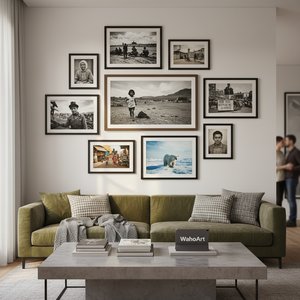
Los 10 Maestros de la Fotografía Documental: Obras que Cambiaron el Arte y la Decoración
Descubre los 10 iconos de la fotografía documental que cambiaron el arte. Explora las historias detrás de obras maestras de Dorothea Lange, Robert Capa y más. Reproducciones de alta calidad para decorar tu hogar con arte atemporal en .


