

 Ver en contexto
 Enviar
 Compartir
 Detalles
 Guía
Guía

 Descargar
 Similares
 Radiografía
 Presentación de diapositivas
 Estadísticas
The Dead Christ
 Óleo sobre lienzo
- Arte de pared
- Baroque Revival
 1520
1520 145.0 x 185.0 cm
 Staatliche Museen zu Berlin
 Ver más
Giclée / Impresión de arte
Impresiones giclée o en lienzo de calidad de museo con producción rápida y opciones de acabado flexibles. ( Comprar pintura hecha a mano Cambiar a imagen digital)




P118B €10

P118H €10

P118W €10

P438Z €10

P508JH €12

P508YH €12

P805H €10

P805Z €10

P919BZ €10

P919G €10

P919XJ €10

P959ZH €10

P968JZ €12

W106C €8

W218G €10

W218JH €8

W218Y €10

W307PJ €10

W316G €10

W316PJ €8

W316Y €10

W398PJ €8

W4111J €10

W500HY €15

W500JH €15

W692G €12

W849H €8

W940BG €15

W953PJ €8




Elija entre nuestros tamaños predefinidos que respetan las proporciones originales de la obra.

Introduzca el ancho y el alto que necesite para adaptarse a su marco o pared. Una impresión solo puede recortarse, nunca hacerse más grande que la imagen original, por lo que un tamaño con una forma distinta perderá parte de la obra. Le enviaremos una maqueta digital para su aprobación antes de realizar cualquier impresión. La imagen que se muestra en esta página no refleja el recorte real; solo la maqueta lo hace.
Envío a todo el mundo () en 2 semanas en lugar de las 4/5 semanas estándar. (26 octubre)

Envío exprés gratuito a todo el mundo

Lienzo de lino de alta calidad

Seguro de envío total

Garantía de reembolso de aranceles aduaneros

Garantía de fidelidad cromática exacta

Política de devolución de 100 días (solo por defectos)

Garantía de devolución del 100% del dinero

Descuento por cantidad
 La opción de vidrio solo está disponible en tamaños inferiores a 110 cm.

The Dead Christ
Giclée / Impresión de arte
Dimensiones de la reproducción
-


Precio total final
€ 70
A Somber Reflection on Mortality: Vittore Carpaccio’s “The Dead Christ”
Vittore Carpaccio's "The Dead Christ," painted circa 1520, stands as a poignant testament to the artistic sensibilities of Venice during the High Renaissance. More than just a depiction of religious iconography—the lifeless body of Jesus cradled by grieving figures—it embodies a profound meditation on death and mourning, reflecting the anxieties prevalent in a period grappling with theological upheaval and humanist inquiry. This monumental canvas (145 x 185 cm) resides within the Gallerie dell’Accademia, offering visitors an unparalleled opportunity to experience Carpaccio's masterful execution of narrative painting.Style and Influences: A Conservative Voice Amidst Change
Carpaccio distinguishes himself from his contemporaries through a remarkably restrained artistic style. Unlike the burgeoning humanist movement that championed classical ideals and vibrant color palettes—evident in works by Giovanni Bellini and Andrea Mantegna—Carpaccio adhered to a more conservative approach, prioritizing clarity of form and emotional resonance over stylistic innovation. His visual vocabulary draws heavily from Antonello da Messina’s influence, particularly his meticulous attention to detail and use of oil paint, alongside early Netherlandish art's emphasis on realism and psychological depth. This confluence resulted in an aesthetic that prioritizes solemn contemplation rather than dramatic spectacle.Technique: The Art of Layered Detail
Carpaccio employed a technique characterized by painstaking layering—a hallmark of Venetian painting at the time—to achieve remarkable textural richness and luminosity. He meticulously built up his composition using thin glazes of oil paint, allowing underlying pigments to subtly interact and create nuanced tonal variations. This method ensured that every surface was rendered with meticulous precision, capturing the contours of Christ’s body and the expressions of sorrowful onlookers alike. The artist skillfully utilized chiaroscuro—the dramatic interplay between light and shadow—to heighten the emotional impact of the scene, directing viewers' gaze towards the central figure and emphasizing the solemn atmosphere.Historical Context: Grief and Remembrance in Renaissance Venice
Painted during a time marked by religious fervor and intellectual debate, “The Dead Christ” speaks to the broader cultural concerns of Renaissance Venice. The depiction of mourning figures—a common motif in devotional art—reflects the pervasive preoccupation with mortality and the desire for spiritual solace amidst uncertainty. Carpaccio’s work aligns itself with the theological debates surrounding indulgences and papal authority, subtly conveying a sense of humility before divine judgment. Furthermore, it underscores the importance of remembrance and veneration within Christian tradition.Symbolism: The Body as Emblematic Representation
The central image—the crucified Christ—serves as an enduring symbol of sacrifice and redemption. Carpaccio’s portrayal emphasizes the physicality of Christ's suffering, grounding the theological narrative in tangible reality. The surrounding figures—primarily mourners—represent humanity grappling with grief and loss, mirroring the universal experience of mortality. Their gestures of compassion and sorrow underscore the importance of empathy and spiritual contemplation. The inclusion of a tree nearby – a traditional symbol of life and resurrection – subtly reinforces the overarching theme of hope amidst despair.Emotional Impact: A Profound Meditation on Suffering
“The Dead Christ” transcends mere visual representation; it evokes a powerful emotional response in viewers. Carpaccio’s masterful use of color—primarily muted browns and reds—creates an atmosphere of solemnity and melancholy, mirroring the profound sorrow experienced by those witnessing the crucifixion. The artist's meticulous attention to detail captures not only the physical appearance of Christ but also the psychological state of his mourners, fostering a sense of empathy and prompting reflection on themes of faith, grief, and human vulnerability. It remains an enduring masterpiece—a poignant reminder of humanity’s capacity for compassion and its unwavering belief in spiritual transcendence.Preguntas y respuestas
¿Dónde puedo comprar reproducciones pintadas a mano de "The Dead Christ" de Vittore Carpaccio?
Puede solicitar una reproducción pintada a mano de "The Dead Christ" de Vittore Carpaccio directamente en su página de Reproducción al óleo pintada a mano: una reproducción al óleo pintada a mano sobre lienzo de lino, realizada bajo pedido.
¿A qué etapa de la trayectoria de Vittore Carpaccio pertenece "The Dead Christ" (1520)?
La fecha de 1520 sitúa a "The Dead Christ" en el Mature Period del desarrollo de Vittore Carpaccio.
¿Cuáles son las dimensiones de la obra original "The Dead Christ" de Vittore Carpaccio?
"The Dead Christ" mide 145 x 185 cm en su formato original. Las dimensiones originales son una referencia útil al elegir el tamaño de una reproducción.
Biografía del artista
Vida y Formación Temprana
Vittore Carpaccio, un destacado pintor italiano, nació en Venecia alrededor de 1465. Estudió bajo la tutela de Gentile Bellini, un renombrado artista de la escuela veneciana. Este aprendizaje sentó las bases para el futuro éxito de Carpaccio.
Estilo Artístico e Influencias
El estilo de Carpaccio se caracterizó por su naturaleza conservadora, mostrando una influencia mínima de las tendencias humanistas que transformaron la pintura del Renacimiento italiano durante su vida. Su obra fue influenciada por el estilo de Antonello da Messina y el arte netherlandish temprano. Esta mezcla única de estilos resultó en un enfoque distintivo de la pintura veneciana.
Obras Destacadas
- La Leyenda de Santa Úrsula, un ciclo de nueve pinturas, es la obra más famosa de Carpaccio. Esta serie, ahora alojada en las Gallerie dell'Accademia, muestra su maestría en la pintura narrativa.
- El retablo Gloria de Santa Úrsula (1491) demuestra la habilidad de Carpaccio para capturar la luz y el color, reminiscente del estilo de Giovanni Bellini.
- Milagro de la Reliquia de la Cruz en el Ponte di Rialto (1494) destaca la capacidad de Carpaccio para equilibrar composición y narrativa.
Carrera e Importancia Histórica
Las principales obras de Carpaccio fueron ejecutadas entre 1490 y 1519, lo que le sitúa entre los primeros maestros del Renacimiento veneciano. Su estilo orientalista, como se ve en San Jorge bautizando a los Selenitas, refleja una nueva fascinación por el Levante. La obra de Carpaccio ha sido algo pasada por alto en comparación con sus contemporáneos, como Giovanni Bellini o Giorgione. A pesar de ello, su contribución al arte veneciano es innegable y su enfoque único lo distingue dentro del panorama artístico de la época.
Referencias Adicionales

Vittore Carpaccio
1465 - 1526 , Italia
Datos clave
- Artistas Que Influyeron:
- Gentile Bellini
- Antonello da Messina
- Fecha De Muerte: 1526
- Fecha De Nacimiento: c. 1465
- Lugar De Nacimiento: Venecia, Italia
- Movimiento Artístico: Renacimiento veneciano
- Nacionalidad: Italiana
- Nombre Completo: Vittore Carpaccio
- Notable Obras:
- Leyenda de Santa Úrsula
- Cristo con los Símbolos de la Pasión
- Retrato de una dama
Artículos relacionados
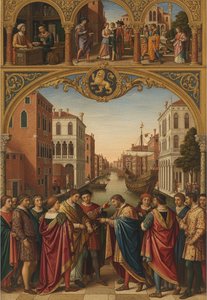
Vittore Carpaccio: Venetian Renaissance Narrative & the Poetics of Detail
Explore the captivating world of Vittore Carpaccio, a master storyteller of the Venetian Renaissance. Discover his intricate details, narrative cycles like 'The Legend of St. Ursula,' and unique artistic style.

The Enduring Power of Painting: A Historical & Contemporary Exploration of Form and Emotion
Explore the rich history & enduring techniques of oil painting with OriginalUniqueArt. Discover masterpieces, learn about art collecting, and find authentic handmade reproductions crafted by skilled artists.
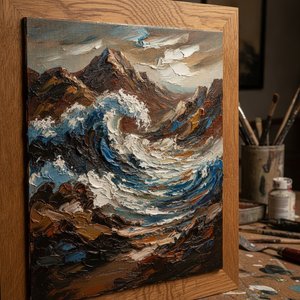
Oil on Panel: The Ultimate Guide to Bold, High-Impact Texture & Depth
Master the art of impact with our expert guide to oil on panel. Discover how impasto textures and heavy-body pigments create 3D depth and bold visual energy for modern interiors. Elevate your space with high-impact, hand-painted masterpieces designed for maximum aesthetic punch.

The Enduring Legacy of Oil on Canvas: Technique, History & Aesthetic Impact
Explore the rich history & techniques of oil painting – from Renaissance masters to Impressionism. Discover pigments, layering methods, and why this timeless medium endures. Expert insights for artists & art enthusiasts.

El Óleo sobre Lienzo: Historia, Técnica y la Persistencia de un Medio Artístico Atemporal
Descubre la historia y técnica del óleo sobre lienzo. Explora reproducciones fieles hechas a mano, personalización artística y consejos de expertos con OriginalUniqueArt. ¡Colecciona arte con confianza!


