
 Vista previa
 Compartir
 Compartir
 Ver detalles

 Descargar
 Ver similares
 Radiografía
 Presentación de diapositivas
Virgin and Child
 Acrylic
- WallArt
- Northern Renaissance
 1460
1460 57.0 x 41.0 cm
 Staatliche Museen zu Berlin
 Leer más
Reproducción al óleo hecha a mano
Óleo sobre lienzo pintado a mano en el tamaño y marco de su elección, realizado por encargo por nuestros artistas. ( Pedir impresión Comprar descarga)




P118B $10

P118H $10

P118W $10

P438Z $10

P508JH $12

P508YH $12

P805H $10

P805Z $10

P919BZ $10

P919G $10

P919XJ $10

P959ZH $10

P968JZ $12

W106C $8

W218G $10

W218JH $8

W218Y $10

W307PJ $10

W316G $10

W316PJ $8

W316Y $10

W398PJ $8

W4111J $10

W500HY $15

W500JH $15

W692G $12

W849H $8

W940BG $15

W953PJ $8




Elija entre nuestros tamaños predefinidos que respetan las proporciones originales de la obra.

Puede ingresar sus propias dimensiones para adaptarse a un marco o espacio específico. Si el tamaño seleccionado no coincide con las proporciones de la imagen original, recortaremos la obra o extenderemos la pintura con elementos adicionales pintados a mano. Se le enviará una maqueta digital para su aprobación antes de comenzar la producción.
Tenga en cuenta que la vista previa en pantalla no refleja el recorte o la extensión reales. Solo la maqueta mostrará con precisión la composición final.
Si bien existen tamaños personalizados, recomendamos seleccionar una dimensión de la lista predefinida para preservar las proporciones originales.
Tras realizar el pedido, el equipo de OriginalUniqueArt.com enviará un correo electrónico al cliente para solicitar instrucciones y proporcionarle una vista previa del boceto.
Envío a todo el mundo () en 3-4 semanas en lugar de las 5 semanas estándar. (18 agosto). Sin comprometer la calidad.

Envío exprés gratuito a todo el mundo

Lienzo de lino de alta calidad

Seguro de envío completo

Garantía de reembolso de aranceles aduaneros

Garantía de fidelidad cromática exacta

Política de devolución de 60 días (solo por defectos)

Garantía de devolución del 100% del dinero

Oferta por volumen
 La opción de vidrio solo está disponible en tamaños inferiores a 110 cm.

Virgin and Child
Técnica de reproducción
Tamaño de la reproducción
-


Precio total
$ 300
Descripción de la obra
A Serene Vision of Faith: Unveiling Vincenzo Foppa’s ‘Virgin and Child’
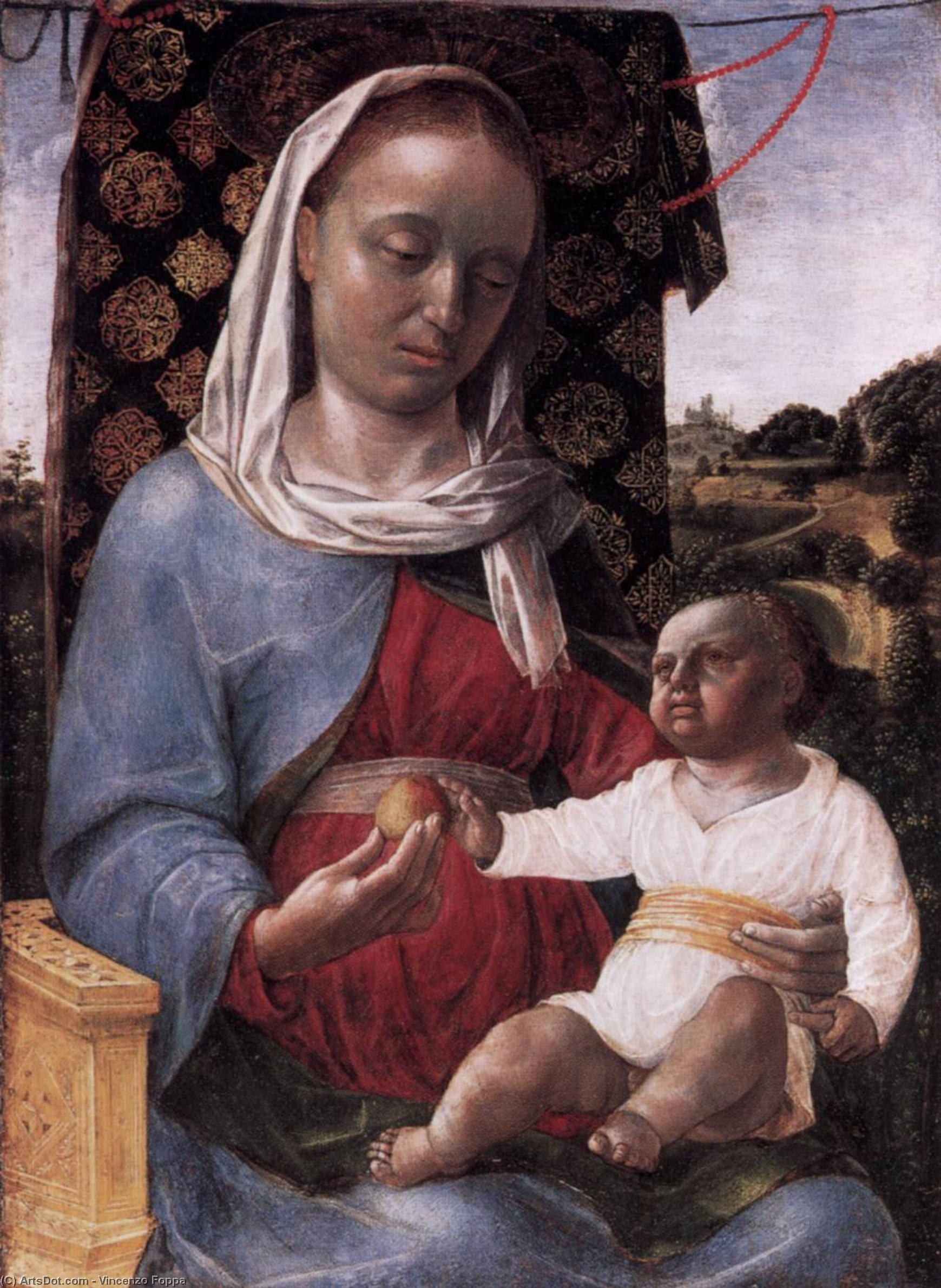
Vincenzo Foppa's “Virgin and Child,” painted around 1460, is more than just a depiction of the Madonna and Child; it’s a poignant window into the burgeoning artistic landscape of early Renaissance Lombardy. Born in Bagnolo Mella, Italy, in 1427, Foppa emerged as a pivotal figure, skillfully blending the lingering traditions of Gothic art with the nascent humanist ideals that were reshaping Europe. This particular painting, now housed at the Staatliche Museen in Berlin, offers a remarkably intimate and emotionally resonant portrayal of Mary cradling the infant Jesus – a testament to Foppa’s ability to capture both spiritual depth and human tenderness.
The work immediately draws the eye with its carefully orchestrated composition. The muted palette—dominated by earthy browns, soft greens, and subtle blues—creates an atmosphere of quiet contemplation. Foppa masterfully employs light, diffusing it gently across the scene to avoid harsh shadows, fostering a sense of serenity that permeates the entire canvas. Notice how the background landscape – a stylized depiction of trees and a distant fortress – isn’t merely decorative; it provides depth and context, suggesting a peaceful haven for this sacred family. The use of wood panel as the support material is typical of the period, lending an authentic feel to the artwork.
The Language of Symbolism: Decoding Foppa's Artistic Choices
Beyond its aesthetic beauty, “Virgin and Child” is rich in symbolic meaning. The apple held by Mary – a deliberate inclusion – has been widely interpreted as referencing the story of Adam and Eve, subtly introducing themes of temptation and salvation. However, it also carries a more immediate significance: the fruit represents the promise of life and immortality associated with the Tree of Life. The gesture of the infant Jesus reaching for the apple is not one of reckless desire but rather an innocent curiosity, hinting at his future role as the savior of humanity. The veil draped over Mary’s head isn't simply a garment; it symbolizes her purity and holiness, reinforcing her status as the Mother of God.
Furthermore, observe the details in Mary’s expression – a serene stillness that suggests prayer or deep contemplation. Her eyes are closed, inviting the viewer to share in her inner world. The way she holds Jesus, with a gentle yet firm embrace, speaks volumes about maternal love and protection. The artist's signature, “Vincenzo Foppa,” located discreetly in the lower right corner, anchors the work within its historical context and acknowledges the creator’s hand.
A Window into the Lombard Renaissance: Context and Legacy
Foppa’s “Virgin and Child” is a crucial piece of evidence illustrating the distinctive style of the early Lombard school of painting. This movement, flourishing primarily in Northern Italy during the 15th century, distinguished itself through its meticulous attention to detail, realistic portrayals of figures, and a subtle integration of Gothic and humanist elements. Unlike the more flamboyant styles prevalent in Florence or Rome at the time, the Lombard school favored a quieter, more introspective approach – qualities vividly evident in Foppa’s work.
The painting's date (1460) places it squarely within this period of transition, reflecting the growing influence of humanism while retaining elements of medieval tradition. Foppa’s patronage by the powerful Sforza family further underscores the importance of his art and its role in shaping the cultural landscape of Milanese society. His legacy extends beyond this single masterpiece; he served as a mentor to other artists, influencing the development of painting across Northern Italy for decades to come.
Bringing Foppa’s Vision Home: A High-Quality Reproduction
OriginalUniqueArt offers meticulously crafted hand-painted reproductions of Vincenzo Foppa's “Virgin and Child,” allowing you to experience the beauty and emotional depth of this iconic artwork in your own space. Our skilled artists faithfully recreate Foppa’s techniques, color palette, and compositional elements, ensuring that your reproduction captures the essence of the original while adhering to the highest standards of quality. Whether for a private collection or an interior design project, a OriginalUniqueArt reproduction provides a stunning tribute to this remarkable Renaissance master.
Biografía del artista
Vincenzo Foppa: Una Figura Clave de la Escuela Lombarda Temprana
- Nacido: Bagnolo Mella, Italia (1427)
- Fallecido: 1515
Vincenzo Foppa fue un pintor italiano del período del Renacimiento. Aunque pocas de sus obras sobreviven en la actualidad, fue un artista muy estimado e influyente durante su tiempo, considerado el líder preeminente de la escuela lombarda temprana. Su carrera se centró principalmente en trabajar para la familia Sforza, Duques de Milán, en Pavía, junto con varios otros mecenas en Lombardía y Liguria. Pasó sus últimos años viviendo y trabajando en su Brescia natal.
Vida Temprana y Formación
Se sabe muy poco sobre su vida temprana y formación artística. Nacido en Bagnolo Mella, cerca de Brescia, la región carecía de una escena artística fuerte en ese momento. Esto probablemente requirió que buscara capacitación en otro lugar. Las primeras influencias incluyeron frescos de Gentile da Fabriano en la Capilla del Broletto en Brescia y el *Anunciación* tejido de Jacopo Bellini. Bellini parece haber sido una influencia significativa, con algunos sugiriendo que Foppa fue aprendiz directo suyo. Posibles pasantías también incluyen Bonifacio Bembo. Algunos historiadores proponen una formación temprana en Padua con Francesco Squarcione, aunque sus primeras obras muestran similitudes estilísticas con Pisanello y Gentile da Fabriano. Es más probable que haya recibido una formación formal en Verona.
Desarrollo Artístico y Obras Clave
- Primeras Obras: La obra conocida más antigua atribuida a Foppa es la *Madonna y Niño con Ángeles*. Esta pintura exhibe una apariencia gótica reminiscente del estilo veronés, lo que apoya la teoría de su formación en Verona. También muestra un tono de piel único y grisáceo que se convertiría en característico de la escuela lombarda.
- Crucifixión (1456): Pintada en Bergamo, esta obra demuestra un crecimiento artístico significativo en comparación con su anterior *Madonna y Niño*. La composición se asemeja estrechamente a una versión de Jacopo Bellini del mismo tema, lo que refuerza aún más la posibilidad de un aprendizaje con Bellini. También están presentes elementos asociados con la escuela veronés, como el paisaje montañoso.
- Frescos para la Familia Sforza: En 1458, Foppa se había casado con Caylina y estaba trabajando de forma independiente en Pavía. Su trabajo impresionó al duque Francesco Sforza, lo que llevó a una carta de recomendación que aseguró encargos en Génova. Posteriormente regresó para completar frescos en la capilla de San Juan Bautista en la catedral de Génova (aunque estos se perdieron en el siglo XVI).
- Comisiones Milanesas: En 1463, Francesco Sforza convocó a Foppa a Milán. Proyectos notables incluyeron un fresco para el pórtico del nuevo Ospedale Maggiore y frescos que decoraban el Banco Medici de Milán. La última serie presentaba a ocho emperadores romanos (incluido un boceto de Trajano) y un retrato de Francesco Sforza y su familia.
- El Joven Cicerón Leyendo: La única obra secular superviviente de los frescos del Banco Medici, esta pintura se encuentra actualmente en la Colección Wallace en Londres. Su tema ha sido debatido entre los historiadores.
Influencias y Significado Histórico
El estilo artístico de Foppa fue influenciado por varias figuras clave, incluyendo Jacopo Bellini, Gentile da Fabriano y posiblemente Andrea Mantegna. Es considerado una figura fundamental en el desarrollo de la escuela lombarda de pintura, estableciendo un estilo regional distintivo caracterizado por sus tonos de piel grisáceos y una mezcla de influencias góticas y humanistas.
Su influencia se extendió a artistas posteriores como Vincenzo Civerchio y Girolamo Romanino. Giorgio Vasari reconoció a Foppa como uno de los mayores pintores de su época, lo que solidificó aún más su significado histórico dentro del panorama artístico del Renacimiento italiano.

Vincenzo Foppa
1427 - 1515 , Italia
Datos clave
- Artistas Influenciados:
- Vincenzo Civerchio
- Girolamo Romanino
- Artistas Que Influyeron:
- Jacopo Bellini
- Gentile da Fabriano
- Pisanello
- Fecha De Fallecimiento: 1515
- Fecha De Nacimiento: 1427
- Lugar De Nacimiento: Bagnolo Mella, Italia
- Movimiento Artístico: Escuela Lombarda Temprana
- Nacionalidad: Italiano
- Nombre Completo: Vincenzo Foppa
- Obras Notables:
- Madonna y Niño con Ángeles
- Crucifixión
- El Joven Cicerón Leyendo
Artículos relacionados
Divine Grace: A Journey Through the Most Iconic Depictions of the Virgin Mary in Art History
Embark on a profound journey through art history with our exploration of the most iconic depictions of the Virgin Mary. Discover the divine grace, symbolism, and masterful techniques found in Renaissance masterpieces and sacred iconography.

Divine Grace: An Art Historian's Journey Through Iconic Masterpieces of the Virgin Mary
Explore the profound beauty of Marian iconography through an art historian's lens. Discover iconic masterpieces by Raphael and Renaissance masters, celebrating the divine grace and timeless elegance of the Virgin Mary in classical fine art.
Jacob Henricus Maris: A Master of Dutch Atmospheric Realism & the Intimate Landscape
Explore the captivating world of Jacob Henricus Maris, a leading figure of the Dutch Hague School. Discover his atmospheric landscapes, signature brushstrokes & lasting influence on 19th-century art. Learn more at OriginalUniqueArt.
Fra Angelico: Las 25 Obras Maestras del Renacimiento para Decorar con Arte y Fe
Descubre las 25 obras maestras de Fra Angelico, el pintor renacentista que llenó el arte sacro de luz y fe. Explora su técnica, simbolismo y belleza en frescos e iconos. Encuentra reproducciones de alta calidad para decorar tu hogar con OriginalUniqueArt.com.

El Renacimiento Septentrional: Florecimiento del Realismo y la Innovación Artística
Descubre el Renacimiento Septentrional y la maestría de los Primitivos Flamencos. Explora sus técnicas innovadoras, simbolismo oculto y obras icónicas con OriginalUniqueArt.



