
 Ver en contexto
 Enviar
 Compartir
 Detalles
 Guía
Guía

 Descargar
 Similares
 Radiografía
 Presentación de diapositivas
 Preguntas y respuestas
 Estadísticas
Incorrigible One

- 87.0 x 113.0 cm


 Ver más
Giclée / Impresión de arte
Impresiones giclée o en lienzo de calidad de museo con producción rápida y opciones de acabado flexibles. ( Comprar pintura hecha a mano Cambiar a imagen digital)




P118B €10

P118H €10

P118W €10

P438Z €10

P508JH €12

P508YH €12

P805H €10

P805Z €10

P919BZ €10

P919G €10

P919XJ €10

P959ZH €10

P968JZ €12

W106C €8

W218G €10

W218JH €8

W218Y €10

W307PJ €10

W316G €10

W316PJ €8

W316Y €10

W398PJ €8

W4111J €10

W500HY €15

W500JH €15

W692G €12

W849H €8

W940BG €15

W953PJ €8




Elija entre nuestros tamaños predefinidos que respetan las proporciones originales de la obra.

Introduzca el ancho y el alto que necesite para adaptarse a su marco o pared. Una impresión solo puede recortarse, nunca hacerse más grande que la imagen original, por lo que un tamaño con una forma distinta perderá parte de la obra. Le enviaremos una maqueta digital para su aprobación antes de realizar cualquier impresión. La imagen que se muestra en esta página no refleja el recorte real; solo la maqueta lo hace.
Envío a todo el mundo () en 2 semanas en lugar de las 4/5 semanas estándar. (7 noviembre)

Envío exprés gratuito a todo el mundo

Lienzo de lino de alta calidad

Seguro de envío total

Garantía de reembolso de aranceles aduaneros

Garantía de fidelidad cromática exacta

Política de devolución de 100 días (solo por defectos)

Garantía de devolución del 100% del dinero

Descuento por cantidad
 La opción de vidrio solo está disponible en tamaños inferiores a 110 cm.

Incorrigible One
Giclée / Impresión de arte
Dimensiones de la reproducción
-


Precio total final
€ 72
A Moment of Unyielding Spirit
In the profound depths of Vasily Grigoryevich Perov’s 1873 masterpiece, Incorrigible One, we are thrust into a visceral scene of tension and social friction. The painting captures a raw, cinematic moment: a man in a striking red shirt is being forcibly restrained, his hands bound behind his back. This central figure, the eponymous "incorrigible" soul, stands as a defiant focal point amidst a landscape of looming authority. Surrounding him, two men engage in a grim dialogue of discipline; one holds a whip, a symbol of impending retribution, while another stands sentinel with a stick. The setting—an outdoor space characterized by rugged stone walls and the rustic presence of a horse—adds a layer of earthy realism that grounds the drama in the tangible, often harsh, reality of 19th-century Russian life.
Perov’s mastery of Critical Realism is on full display here. Rather than seeking to beautify the scene, he employs a meticulous technique to document the psychological weight of the encounter. The artist uses light and shadow to sculpt the figures, drawing our eyes to the vibrant crimson of the captive's shirt, which serves as both a visual anchor and a metaphor for his burning, unextinguished spirit. Every detail, from the texture of the brickwork to the curious, watchful gaze of the horse, is rendered with an observational precision that invites the viewer to step into the frame and feel the heavy atmosphere of the courtyard.
The Soul of the Peredvizhniki Movement
To understand this work, one must look toward the historical heartbeat of the Peredvizhniki (The Wanderers) movement, of which Perov was a founding pillar. This era of Russian art sought to move away from the polished, academic traditions of the past and instead bring art to the people, focusing on the poignant, often uncomfortable truths of social inequality and peasant life. In Incorrigible One, Perov does not merely paint a scene of punishment; he paints a commentary on the struggle between individual will and societal control. The presence of the fireplace in the background and the quiet benches suggest a domesticity that has been interrupted by this sudden act of coercion, creating a jarring contrast between peace and violence.
For the discerning collector or interior designer, this painting offers more than just aesthetic value; it provides a profound narrative depth. The composition’s balance of movement and stillness makes it an extraordinary centerpiece for a room that demands conversation and intellectual engagement. Whether placed in a sophisticated study or a grand gallery-style living space, the artwork’s rich textures and emotive power serve as a window into a bygone era of social awakening. It is a piece that resonates with anyone who appreciates art that dares to look closely at the human condition, making it an enduring choice for those seeking a high-quality reproduction that embodies both historical significance and timeless emotional impact.
Preguntas y respuestas
¿Para qué uso se recomienda una impresión de "Incorrigible One"?
El uso sugerido para "Incorrigible One" de Vasili Grigórievich Perov es Conversation. También puede utilizarse con otros fines.
¿Cómo puedo adquirir una copia digital de "Incorrigible One" de Vasili Grigórievich Perov?
"Incorrigible One" está disponible como descarga de una imagen digital en alta resolución, que puede adquirirse directamente en su página de Imagen digital de alta resolución.
¿Qué tan luminosa es "Incorrigible One" en su conjunto?
En cuanto a la luminosidad percibida, "Incorrigible One" de Vasili Grigórievich Perov es deep_shadow.
Biografía del artista
Vasily Grigórievich Perov: Una Vida Dedicada al Realismo Ruso
- Nacido: 2 de enero de 1834 (21 de diciembre de 1833, estilo antiguo) en Tobolsk, Rusia
- Fallecido: 29 de mayo de 1882 en San Petersburgo, Rusia
Vasily Grigórievich Perov fue una figura clave en la historia del arte ruso, reconocido como pintor y uno de los miembros fundadores de los Perevizhniki (Vagabundos), un colectivo de artistas realistas que desafiaron las tradiciones académicas y buscaron representar la vida rusa contemporánea con una honestidad implacable. Nacido en circunstancias complejas – hijo ilegítimo del Barón Grigory Karlovich Kridener y Akulina Ivanova – sus primeros años moldearon su perspectiva sobre las desigualdades sociales, que se convertirían en un tema recurrente en su obra.
Primeros Años y Formación Artística
El camino de Perov para convertirse en artista no fue directo. Inicialmente identificado como Vasiliev debido a su padrino, más tarde adoptó el apellido Perov, derivado de “Pero” (pluma), reflejando su temprana habilidad en la caligrafía.
- Su formación artística formal comenzó en la Escuela de Arte Alexander Stupin en Arzamas, donde demostró un agudo sentido del detalle y una aptitud para el dibujo.
- En 1853, se matriculó en la Escuela de Pintura, Escultura y Arquitectura de Moscú, estudiando bajo artistas destacados que perfeccionaron sus habilidades técnicas.
- Recibió una medalla de plata menor en 1856 por un boceto de la cabeza de un niño.
- Recibió una medalla de oro importante en 1861 por "Sermón en un Pueblo", que le valió la oportunidad de viajar al extranjero.
El Auge del Realismo Crítico y Obras Clave
La carrera artística de Perov se definió por su compromiso con el realismo crítico, un movimiento que buscaba retratar a la sociedad rusa con precisión y comentario social. Rechazó las representaciones idealizadas en favor de representar la vida cotidiana, a menudo destacando las dificultades enfrentadas por la gente común.
- "Sermón en un Pueblo" (1861): Esta obra, que le valió un reconocimiento significativo, retrató un servicio religioso rural con una congregación desinteresada, criticando sutilmente la hipocresía religiosa.
- "Los Recolectores de Chatarra de París" (1864): Una conmovedora representación de la pobreza y las dificultades experimentadas por los individuos marginados en París.
- "La Cola a la Fuente" (1865): Quizás su obra más famosa, esta pintura capturó una larga fila de campesinos esperando agua, exponiendo las duras realidades de la vida rural y la desigualdad social.
- "El Último Viaje" (1865): Una sombría representación de un funeral campesino, reflexionando sobre la mortalidad y las dificultades enfrentadas por las comunidades rurales.
- "Trío: Aprendices de Oficio Llevando Agua" (1866): Una dinámica representación de jóvenes luchando por llevar agua, simbolizando las cargas del trabajo y las expectativas sociales.
- "La Mujer Ahogada" (1867): Una escena poderosa e inquietante que representa a un policía descubriendo el cuerpo de una mujer ahogada, planteando preguntas sobre la vida, la muerte y la responsabilidad social.
Influencia y Legado
El trabajo de Perov tuvo un profundo impacto en el arte ruso, influyendo en generaciones posteriores de pintores realistas. Como miembro fundador de los Perevizhniki, defendió la libertad artística y la relevancia social.
- Movimiento Perevizhniki: El compromiso de Perov con el realismo se alineó perfectamente con los objetivos de los Perevizhniki, que buscaban exhibir sus obras en toda Rusia, llegando a audiencias más amplias más allá de los confines de San Petersburgo.
- Influencia en Artistas Posteriores: Su trabajo inspiró a artistas como Ilya Repin y Vasily Surikov, quienes desarrollaron aún más la tradición realista en el arte ruso.
- Relevancia Continua: Las pinturas de Perov siguen siendo relevantes hoy por su poderoso comentario social y su capacidad para evocar empatía y comprensión por las vidas de la gente común. Sus obras se encuentran en colecciones destacadas como el Museo Tropinin y Artistas Contemporáneos de Moscú, ofreciendo un testimonio duradero de su legado artístico.
Información Biográfica Detallada
Vasily Grigórievich Perov (nacido Vasily Grigorevich Kridener en Tobolsk) fue el hijo ilegítimo del abogado Barón G. K. Kridener. En 1846, ingresó a la Escuela de Arte Stupin en Arzamas. En 1853, Perov decidió seguir un camino artístico y se matriculó en la Escuela de Pintura, Escultura y Arquitectura de Moscú.
Perov recibió numerosas medallas en la Academia y sus pinturas fueron muy apreciadas por la Academia Imperial del Arte. En 1862, Perov fue recompensado con una beca para viajar a Europa Occidental. Durante este tiempo, creó pinturas que representaban escenas de la vida callejera europea.
De regreso a Moscú en 1865, Perov creó muchas pinturas a gran escala. Se unió a los Perevizhniki, un colectivo de pintores realistas rusos formado como una cooperativa artística en protesta contra las restricciones académicas.
Perov falleció el 29 de mayo de 1882 debido a la tuberculosis y fue enterrado en el Cementerio Donskoy.
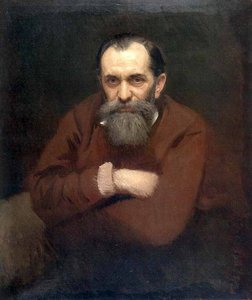
Vasili Grigórievich Perov
1833 - 1882 , Rusia
Datos clave
- Artistas Influenciados:
- Ilya Repin
- Vasily Surikov
- Fecha De Fallecimiento: 29 de mayo de 1882
- Fecha De Nacimiento: 2 de enero de 1834
- Lugar De Nacimiento: Tobolsk, Rusia
- Movimiento Artístico: Realismo crítico
- Nacionalidad: Ruso
- Nombre Completo: Vasily Grigorievich Perov
- Obras Notables:
- Sermón en un pueblo
- Los recolectores de chatarra
- La cola a la fuente
- El último viaje
- Troika
- La mujer ahogada
Artículos relacionados

Vasily Vereshchagin: Realism, War & Subversion in 19th-Century Russian Painting
Explore the powerful realism of Vasily Vereshchagin's war paintings & Central Asian scenes. Discover how this Russian master challenged artistic conventions and offered a brutal, honest depiction of 19th-century conflict. Learn about his legacy for discerning collectors.

Vasily Surikov: Historical Epic & Psychological Realism in 19th-Century Russian Painting
Explore the powerful historical paintings of Vasily Surikov, a leading figure of Russian Realism. Discover his dramatic compositions, psychological depth & lasting influence on 19th-century art. Learn about collecting Surikov's masterpieces.

Vladimir Makovsky: Realism, Social Commentary & Russian Life in Late 19th-Century Painting
Explore the captivating world of Vladimir Makovsky, a leading Russian realist painter. Discover his insightful depictions of 19th-century life, social commentary & legacy with OriginalUniqueArt.

Russian Realism: The Soulful Power of Truth and the Unyielding Spirit of the Peredvizhniki
Explore the profound depth of Russian Realism. From the social truths of the Peredvizhniki to epic folklore, discover the soulful power of masters like Perov and Yaroshenko through our expert art history insights and museum-quality reproductions.

Discover Russian Realism: Soulful Masterpieces and the Timeless Spirit of the Peredvizhniki for Your Modern Home
Elevate your home with the soulful beauty of Russian Realism. Discover exquisite hand-painted reproductions of Peredvizhniki masterpieces, from lyrical landscapes to profound portraits, curated to bring historical depth and timeless elegance to your modern interior design.

