

 Vista previa
 Compartir
 Compartir
 Ver detalles

 Descargar
 Ver artículos similares
 Radiografía
 Presentación de diapositivas
 Estadísticas
Huckleberry Finn


 Leer más
Giclée / Impresión de arte
Impresiones giclée o en lienzo de calidad de museo con producción rápida y opciones de acabado flexibles. ( Encargar reproducción pintada a mano Ver versión en imagen digital)




P118B $10

P118H $10

P118W $10

P438Z $10

P508JH $12

P508YH $12

P805H $10

P805Z $10

P919BZ $10

P919G $10

P919XJ $10

P959ZH $10

P968JZ $12

W106C $8

W218G $10

W218JH $8

W218Y $10

W307PJ $10

W316G $10

W316PJ $8

W316Y $10

W398PJ $8

W4111J $10

W500HY $15

W500JH $15

W692G $12

W849H $8

W940BG $15

W953PJ $8




Elija entre nuestros tamaños predefinidos que respetan las proporciones originales de la obra.

Puede introducir sus propias dimensiones para adaptarse a un marco o espacio específico. Si el tamaño seleccionado no coincide con las proporciones de la imagen original, recortaremos la obra de arte o extenderemos la imagen con un borde con efecto espejo o de color sólido. Se enviará una maqueta digital para su aprobación antes de que comience la producción.
Tenga en cuenta que la vista previa en pantalla no refleja el recorte o la extensión real. Solo la maqueta mostrará con precisión la composición final.
Aunque existen tamaños personalizados, recomendamos seleccionar una dimensión de la lista predefinida para preservar las proporciones originales.
Envío a todo el mundo () en 2 semanas en lugar de las 4/5 semanas estándar. (16 septiembre)

Envío exprés gratuito a todo el mundo

Lienzo de lino de alta calidad

Seguro de envío completo

Garantía de reembolso de impuestos aduaneros

Garantía de fidelidad cromática exacta

Política de devolución de 100 días (solo por defectos)

Garantía de devolución del 100% del dinero

Oferta por volumen
 La opción de vidrio solo está disponible en tamaños inferiores a 110 cm.

Huckleberry Finn
Giclée / Impresión de arte
Tamaño de la reproducción
-


Precio total
$ 80
Thomas Hart Benton’s “Huckleberry Finn”: A Dramatic Echo of American Struggle
Thomas Hart Benton's "Huckleberry Finn," painted circa the early 20th century, isn’t merely a depiction of a rescue at sea; it’s a visceral embodiment of America’s complex and often troubled past. This monochrome print, rendered with a striking blend of Gothic realism and expressive dynamism, immediately commands attention with its powerful composition and evocative narrative. The scene unfolds on a weathered wooden platform – likely a dock or riverbank – bathed in the dramatic chiaroscuro of a full moon, casting long shadows that amplify the sense of urgency and impending danger. At the heart of the image is a young boy, his outstretched arms reaching towards an older Black man who bravely pulls him from the churning waters of a runaway steamboat.
Benton’s artistic choices are deliberate and layered. The use of monochrome – a technique reminiscent of drypoint etching – lends the work a starkness that underscores the gravity of the situation. Lines are boldly employed, defining forms with sharp precision while simultaneously conveying movement through swirling steam and the boy's desperate gestures. Geometric shapes, particularly evident in the steamboat’s structure and the surrounding landscape, provide a grounding element to the otherwise chaotic scene. Yet, organic elements – the gnarled branches of trees and the flowing river – introduce a touch of naturalism that prevents the image from becoming overly rigid or schematic. The artist masterfully balances these contrasting elements, creating a visual experience that is both intellectually stimulating and emotionally resonant.
A Gothic Narrative Rooted in Historical Context
To fully appreciate “Huckleberry Finn,” it’s crucial to understand its historical context. Benton was deeply invested in portraying the realities of American life, particularly the struggles faced by marginalized communities during a period of immense social and economic upheaval. The image subtly references the Underground Railroad and the perilous journeys undertaken by enslaved people seeking freedom. The runaway steamboat itself can be interpreted as a symbol of oppression – a force relentlessly pursuing its victims. The rescue scene, therefore, becomes an allegory for resistance and resilience, highlighting the courage and determination of those fighting against injustice.
Furthermore, Benton’s artistic style aligns with the Regionalist movement, which sought to depict American subjects and landscapes in a distinctly regional manner. He rejected European modernism, choosing instead to focus on the stories and experiences of his native Midwest. This commitment to portraying authentic American life is evident in the work's raw emotionality and its unflinching portrayal of hardship and struggle.
Symbolism Under the Moonlight
The moon plays a pivotal role in “Huckleberry Finn,” acting as both a beacon of hope and a harbinger of danger. Its stark illumination casts an ethereal glow over the scene, emphasizing the boy’s vulnerability and the urgency of his plight. Simultaneously, the moon's light reveals the shadows lurking beneath the surface – hinting at the darker aspects of American history and the ongoing struggle for equality. The steamboat, with its billowing steam and relentless forward momentum, represents the forces of oppression that threaten to consume those who dare to resist. The older Black man, a figure of strength and compassion, embodies the spirit of liberation and the promise of salvation.
A Legacy of Powerful Imagery
“Huckleberry Finn” is more than just a painting; it’s a powerful statement about American identity, social justice, and the enduring human capacity for courage. Benton's masterful use of composition, technique, and symbolism creates an image that continues to resonate with viewers today. The work’s dramatic intensity, coupled with its historical significance, makes it a compelling subject for art lovers, collectors, and interior designers seeking pieces that tell a story – a story of struggle, resilience, and the enduring hope for a better future. Reproductions of this iconic artwork offer a tangible connection to a pivotal moment in American history and a testament to Benton’s lasting legacy.
Biografía del artista
**Primeros años y formación**
Thomas Hart Benton, pintor y muralista estadounidense, nació el 15 de abril de 1889 en Neosho, Misuri. Su familia, influyente en la política, le inculcó un sentido del deber cívico, pero fue su madre, Elizabeth Wise Benton, quien apoyó su temprano interés en el arte. Después de asistir a la Academia Militar del Oeste, Benton se matriculó en la Escuela del Instituto de Arte de Chicago en 1907 y luego se trasladó a París en 1909 para estudiar en la Académie Julian.**Carrera artística y regionalismo**
La obra de Benton se caracteriza por sus figuras fluidas y esculpidas que representan a personas comunes en escenas de la vida estadounidense. Aunque su arte está fuertemente asociado con el Medio Oeste de los Estados Unidos, pasó tiempo en Nueva York, París y Martha's Vineyard, lo que influyó en su estilo. Como figura destacada del movimiento regionalista, junto con Grant Wood y John Steuart Curry, la obra de Benton refleja un enfoque naturalista y representacional del arte.- Obras clave:
- El hijo pródigo 1 (regionalismo), una recontación de la parábola bíblica, que muestra la capacidad de Benton para contar historias a través del arte.
- Inundación (Nelson-Atkins Museum of Art, Kansas City), demostrando su dominio para capturar escenas americanas.
- Museos que exhiben su obra:
- Exposiciones notables:
- Los murales de America Today en la New School for Social Research (1930-31), ahora alojados en el Metropolitan Museum of Art.
**Desarrollo artístico y estilo**
Benton experimentó con varios estilos modernos antes de desarrollar su distintivo enfoque regionalista. Inicialmente influenciado por los maestros europeos, luego exploró el Synchromism y el Constructivismo. Su regreso a las raíces de Missouri en la década de 1930 marcó un punto de inflexión crucial en su carrera. Este período vio el surgimiento de su estilo característico: figuras dinámicas y estilizadas representadas en escenas vibrantes del Medio Oeste americano, capturando la esencia de la vida rural y urbana con una mezcla única de realismo y abstracción. Su uso audaz del color y sus composiciones rítmicas contribuyeron a su reputación como uno de los artistas más importantes del siglo XX.**Legado e influencia**
Benton se casó con Rita Piacenza en 1922, con quien tuvo dos hijos. Su compromiso activo con la política de izquierda y sus extensas obras regionalistas culminaron en sus murales "America Today". Falleció el 19 de enero de 1975, dejando atrás un legado de arte americano que continúa inspirando. Benton influyó significativamente en generaciones posteriores de artistas, incluyendo a Jackson Pollock, y su enfoque en la representación de la vida cotidiana americana ayudó a definir el movimiento regionalista. Su obra sigue siendo celebrada por su vitalidad, su energía y su profunda conexión con la cultura estadounidense. Explore más obras de Thomas Hart Benton y otros maestros en OriginalUniqueArt.com
Thomas Hart Benton
1889 - 1975 , Estados Unidos de América
Datos clave
- Artistas Que Influyeron:
- Diego Rivera
- Stanton Macdonald-Wright
- Fecha De Fallecimiento: 19 de enero de 1975
- Fecha De Nacimiento: 15 de abril de 1889
- Influenciado A Artistas: ['Jackson Pollock']
- Lugar De Nacimiento: Neosho, EE. UU.
- Movimiento Artístico: Regionalismo americano
- Nacionalidad: Estadounidense
- Nombre Completo: Thomas Hart Benton
- Obras Notables:
- Prodigal Son 1
- Flood
- America Today murals
Artículos relacionados

American Regionalism: The Soul of the Heartland and the Mastery of Grant Wood
Explore the profound history of American Regionalism. Discover how Grant Wood captured the heart of the Midwest through masterpieces like American Gothic. An expert guide to the movement, its cultural impact, and the enduring beauty of American Realism.

Grant Wood & American Regionalism: Identity, Myth & the Rural Landscape
Explore the world of Grant Wood & American Regionalism with OriginalUniqueArt. Discover the symbolism behind 'American Gothic', recurring themes, and the movement's lasting impact on art history. High-quality reproductions available.
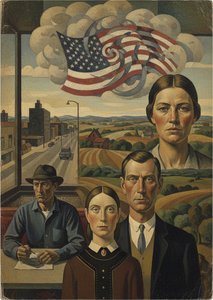
Ecos del Lugar: Regionalismo e Identidad Americana en el Arte Entre Guerras
Descubra el Regionalismo americano: un movimiento artístico que capturó la esencia de la identidad rural y la vida en Estados Unidos entre guerras. Análisis experto, obras clave y legado cultural.
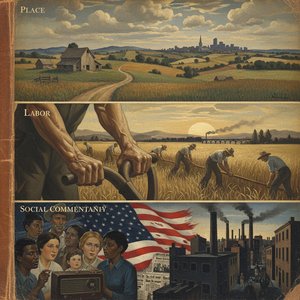
Regionalismo Americano: Un Crisol de Identidad en el Arte y la Sociedad
Explora el Regionalismo Americano: su historia, artistas clave como Benton y Wood, y su profundo compromiso con la sociedad de la Gran Depresión. Un análisis exhaustivo para amantes del arte.

Regionalism: Celebrating the Heart and Soul of Local Identity Through Art
Explore the profound impact of Regionalism in art history. Discover how iconic painters captured local identity, rural resilience, and the American heartland through evocative landscapes and social commentary in this expert-led journey through art's most soulful movement.


