

 Vista previa
 Compartir
 Compartir
 Ver detalles
 Guía
Guía

 Descargar
 Ver artículos similares
 Radiografía
 Presentación de diapositivas
 Estadísticas
Carmelita Requena
 Acrílico
- Arte de pared
- Baroque
 1869
1869 53.0 x 43.0 cm
 Museo Metropolitano de Arte
 Leer más
Reproducción al óleo hecha a mano
Óleo sobre lienzo pintado a mano en el tamaño y marco de su elección, realizado por encargo por nuestros artistas. ( Cambiar a formato impreso Ver versión en imagen digital)




P118B €10

P118H €10

P118W €10

P438Z €10

P508JH €12

P508YH €12

P805H €10

P805Z €10

P919BZ €10

P919G €10

P919XJ €10

P959ZH €10

P968JZ €12

W106C €8

W218G €10

W218JH €8

W218Y €10

W307PJ €10

W316G €10

W316PJ €8

W316Y €10

W398PJ €8

W4111J €10

W500HY €15

W500JH €15

W692G €12

W849H €8

W940BG €15

W953PJ €8




Elija entre nuestros tamaños predefinidos que respetan las proporciones originales de la obra.

Escriba el ancho y el alto que necesite para adaptarse a su marco o a su pared. Al ser una obra pintada a mano, para un tamaño con una forma distinta, el artista puede pintar un poco más alrededor de la imagen o recortar un poco; usted elige. Le enviaremos una maqueta digital para su aprobación antes de comenzar la pintura. La imagen que se muestra en esta página no refleja el resultado real; solo la maqueta lo hace.
Tras realizar el pedido, el equipo de OriginalUniqueArt.com enviará un correo electrónico al cliente para solicitar instrucciones y proporcionarle una vista previa del boceto.
Envío a todo el mundo () en 3-4 semanas en lugar de las 5 semanas estándar. (22 octubre). Sin comprometer la calidad.

Envío exprés gratuito a todo el mundo

Lienzo de lino de alta calidad

Seguro de envío completo

Garantía de reembolso de impuestos aduaneros

Garantía de fidelidad cromática exacta

Política de devolución de 100 días (solo por defectos)

Garantía de devolución del 100% del dinero

Oferta por volumen
 La opción de vidrio solo está disponible en tamaños inferiores a 110 cm.

Carmelita Requena
Técnica de reproducción
Tamaño de la reproducción
-


Precio total
€ 263
A Portrait of Quiet Observation: Thomas Eakins’s Carmelita Requena
Thomas Eakins, a titan amongst American realist painters, bequeathed to us not merely images but profound explorations of human character and circumstance. Born in Philadelphia in 1844, his artistic journey was marked by unwavering dedication to capturing the tangible world with uncompromising honesty—a pursuit that often challenged conventions and cemented his legacy as one of the most influential figures in late nineteenth-century art. His canvases weren’t populated by heroic narratives or idealized landscapes; instead, they presented scenes from everyday life—the meticulous study of doctors practicing medicine, the disciplined rhythm of rowing competitions, the focused gaze of hunters tracking their prey—subjects rendered with an astonishing level of detail and psychological insight.The Influence of Iberian Masters
Eakins’s artistic sensibilities were profoundly shaped by his formative years in Paris and subsequently by a pilgrimage to Spain in 1869. The Museo del Prado served as a crucible for inspiration, exposing him to the monumental canvases of Diego Velázquez and Jusepe de Ribera—masters who championed a style characterized by luminous chiaroscuro and an unflinching portrayal of human anatomy. This Iberian tradition permeated Eakins’s approach, particularly evident in his preparatory sketch for “The Champion Single Sculls,” where he meticulously dissected the musculature of David Wilson Jordan, mirroring the Baroque preoccupation with anatomical accuracy. The stylistic echoes of Ribera's dramatic compositions—particularly the use of stark contrasts and expressive brushstrokes—are palpable in Carmelita Requena itself.A Study in Detail: Technique and Composition
Carmelita Requena, completed in 1869, is a masterful demonstration of Eakins’s painterly technique. Executed on canvas measuring 53 x 43 cm and currently residing at The Metropolitan Museum of Art, the painting utilizes oil paints applied with deliberate brushstrokes—a hallmark of Bonnat's influence—to achieve remarkable textural richness and tonal gradation. Notice the subtle layering of colors, capturing the nuances of light and shadow that illuminate Carmelita’s face and torso. The composition is carefully balanced, drawing the viewer’s eye towards the central figure while anchoring it with a simple brick wall and bench – elements that contribute to the painting's sense of intimacy and contemplative stillness.Symbolism Beyond Appearance
Beyond its technical brilliance lies a deeper symbolic resonance. Carmelita Requena isn’t simply a portrait; it’s an encapsulation of innocence and quiet contemplation—qualities Eakins sought to convey through his subject’s downward gaze. The red dress, accented with blue hues, speaks to vibrancy and emotion, yet simultaneously underscores the solemnity of the moment. The painting serves as a poignant reminder that beauty can be found in the simplest gestures and expressions, mirroring Eakins's broader humanist vision.Emotional Impact: A Window into Human Experience
Ultimately, Carmelita Requena transcends mere visual representation; it invites viewers to engage with profound questions about perception and emotion. Like all of Eakins’s work, it compels us to confront the complexities of human experience—to consider not just what we see but also what lies beneath the surface. It is a testament to his ability to distill the essence of a single subject into an enduring image that continues to resonate with audiences today.Preguntas y respuestas
¿Qué origen nacional sustenta el Baroque de "Carmelita Requena"?
"Carmelita Requena" conecta el movimiento Baroque con Estados Unidos de América a través del lugar de nacimiento de su creador.
¿Qué tan saturada es la paleta de "Carmelita Requena"?
La paleta de "Carmelita Requena" tiene una saturación Suave equilibrado.
¿Se encuentra "Carmelita Requena" de Thomas Eakins entre las obras más codiciadas del Baroque?
Dentro del movimiento Baroque, "Carmelita Requena" posee un nivel de popularidad Reconocido.
Biografía del artista
Una vida dedicada a capturar la realidad
Thomas Cowperthwait Eakins, pintor realista estadounidense, fotógrafo, escultor y educador en bellas artes, dejó una huella imborrable en el lienzo de la historia del arte americano. Nacido el 25 de julio de 1844 en Filadelfia, Pensilvania, su vida fue un testimonio de su inquebrantable dedicación a capturar la esencia de la realidad.Primeros años y educación
Los primeros años de Eakins estuvieron marcados por su agudo interés en el dibujo y las ciencias. Asistió a la escuela secundaria central y luego estudió en la Academia de Bellas Artes de Pensilvania, donde perfeccionó sus habilidades en dibujo y anatomía. Su tiempo en Europa, particularmente bajo la tutela de Jean-Léon Gérôme en París, influyó significativamente en su enfoque artístico.Una carrera definida por el realismo
La obra de Eakins se caracteriza por su implacable realismo, una característica que lo distinguía de sus contemporáneos. Sus retratos, que suman varios cientos, ofrecen una visión conmovedora del tejido intelectual y social de finales del siglo XIX y principios del XX en Filadelfia. Obras notables incluyen Max Schmitt en una Cesta de Remo Individual, que no solo muestra la maestría de Eakins para capturar el movimiento, sino también su profundo interés en la forma humana.Enseñanza y controversia
El período de Eakins como instructor en la Academia de Bellas Artes de Pensilvania se caracterizó tanto por la influencia como por la controversia. Su enfoque docente, que enfatizaba la importancia de estudiar la forma humana desde la vida, a menudo provocaba fricciones con sus colegas. Esto, junto con escándalos personales, truncó su éxito y dañó su reputación durante su vida.Legado
A pesar de los desafíos que enfrentó, Eakins es ahora celebrado como "el realista más fuerte y profundo en el arte estadounidense del siglo XIX y principios del XX". Su obra se puede encontrar en varios museos, incluido el Museo Metropolitano de Arte, que alberga varias de sus obras notables.- El campeón en una cesta de remo individual (Max Schmitt en una cesta de remo individual) - Una obra fundamental que muestra la temprana maestría de Eakins para capturar el movimiento.
- Thomas Eakins - Explore la extensa colección de obras de Eakins en OriginalUniqueArt, ofreciendo una inmersión profunda en su evolución artística y estilo.
- Wikipedia: Thomas Eakins - Profundice en la completa entrada de Wikipedia sobre Eakins, que detalla su vida, influencias y el impacto de su obra en la historia del arte americano.

Thomas Eakins
1844 - 1916 , Estados Unidos de América
Datos clave
- Artistas Que Influyeron: ['Jean-Léon Gérôme']
- Fecha De Fallecimiento: 25 de junio de 1916
- Fecha De Nacimiento: 25 de julio de 1844
- Lugar De Nacimiento: Filadelfia, Estados Unidos
- Movimiento Artístico: Realismo estadounidense
- Nacionalidad: Estadounidense
- Nombre Completo: Thomas Cowperthwait Eakins
- Obras Notables:
- La Clínica Gross
- Max Schmitt en una cesta individual
- El Agnew Clinic
Artículos relacionados

Grant Wood & American Regionalism: Identity, Myth & the Rural Landscape
Explore the world of Grant Wood & American Regionalism with OriginalUniqueArt. Discover the symbolism behind 'American Gothic', recurring themes, and the movement's lasting impact on art history. High-quality reproductions available.

Crimson Threads of Narrative: Exploring Symbolism & Representation in Artworks Featuring the Red Dress
Explore the rich symbolism of the red dress in art history! From ancient power displays to iconic portraits like Cézanne’s 'Madame Cezanne', discover the cultural and artistic significance behind this captivating color. Expert analysis & insights.

Realismo Estadounidense: 10 Obras Maestras que Cambiaron el Arte y la Decoración
Descubre 10 obras maestras del Realismo Estadounidense: Winslow Homer, Edward Hopper y más. Explora la historia, técnica y emoción de estos icónicos cuadros. Encuentra reproducciones de arte de museo en OriginalUniqueArt.com.

Realismo Americano: Comentario Social y Representación Artística en la Pintura del Siglo XX
Explora el Realismo Americano del siglo XX: un análisis profundo de sus artistas clave (Vertis Hayes, William Aiken Walker), técnicas y su poderoso comentario social. Descubre cómo este movimiento plasmó la identidad estadounidense.
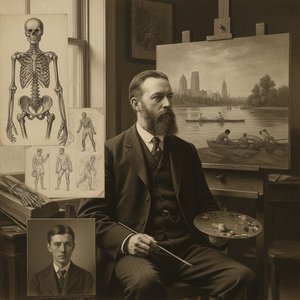
Thomas Eakins: Realism, Anatomy & the American Spirit – A Comprehensive Exploration of Life and Legacy
Explore the life & legacy of Thomas Eakins, a pivotal American Realist painter. Discover his groundbreaking techniques, anatomical precision, and iconic works like 'The Gross Clinic.' A comprehensive guide for art enthusiasts.


