

 Ver en contexto
 Enviar
 Compartir
 Detalles
 Guía
Guía

 Descargar
 Similares
 Radiografía
 Presentación de diapositivas
 Estadísticas
Carmelita Requena


 Ver más
Giclée / Impresión de arte
Impresiones giclée o en lienzo de calidad de museo con producción rápida y opciones de acabado flexibles. ( Comprar pintura hecha a mano Cambiar a imagen digital)




P118B €10

P118H €10

P118W €10

P438Z €10

P508JH €12

P508YH €12

P805H €10

P805Z €10

P919BZ €10

P919G €10

P919XJ €10

P959ZH €10

P968JZ €12

W106C €8

W218G €10

W218JH €8

W218Y €10

W307PJ €10

W316G €10

W316PJ €8

W316Y €10

W398PJ €8

W4111J €10

W500HY €15

W500JH €15

W692G €12

W849H €8

W940BG €15

W953PJ €8




Elija entre nuestros tamaños predefinidos que respetan las proporciones originales de la obra.

Introduzca el ancho y el alto que necesite para adaptarse a su marco o pared. Una impresión solo puede recortarse, nunca hacerse más grande que la imagen original, por lo que un tamaño con una forma distinta perderá parte de la obra. Le enviaremos una maqueta digital para su aprobación antes de realizar cualquier impresión. La imagen que se muestra en esta página no refleja el recorte real; solo la maqueta lo hace.
Envío a todo el mundo () en 2 semanas en lugar de las 4/5 semanas estándar. (27 octubre)

Envío exprés gratuito a todo el mundo

Lienzo de lino de alta calidad

Seguro de envío total

Garantía de reembolso de aranceles aduaneros

Garantía de fidelidad cromática exacta

Política de devolución de 100 días (solo por defectos)

Garantía de devolución del 100% del dinero

Descuento por cantidad
 La opción de vidrio solo está disponible en tamaños inferiores a 110 cm.

Carmelita Requena
Giclée / Impresión de arte
Dimensiones de la reproducción
-


Precio total final
€ 70
The Enigmatic Carmelita Requena: A Window into Thomas Eakins’ Soul
Thomas Eakins, a figure often shrouded in controversy yet undeniably one of America's most profound realist painters, gifted us with countless portraits that transcend mere likenesses. Among these, “Carmelita Requena,” painted in 1870, stands as a particularly compelling example – a study not just of a woman’s face but of the very essence of introspection and quiet contemplation. More than simply a portrait, it's a carefully constructed tableau designed to invite the viewer into a private world, a moment suspended in time.
The painting immediately draws the eye with its rich palette dominated by deep reds and browns, offset by the luminous cream of Carmelita Requena’s skin. Eakins masterfully employs chiaroscuro – the dramatic contrast between light and shadow – to sculpt her features, lending a tangible sense of volume and depth. Notice how the light catches the delicate curve of her cheekbone, highlighting the subtle play of muscle beneath the surface, while the shadows deepen around her eyes, suggesting a profound thoughtfulness. This isn’t a fleeting glance; it's an expression born from deep consideration.
A Philadelphia Portrait: Context and Technique
To fully appreciate “Carmelita Requena,” we must understand Eakins’ artistic milieu. He was deeply rooted in the vibrant, rapidly evolving city of Philadelphia – a hub of industry, medicine, and intellectual ferment. Unlike the romanticized landscapes favored by many of his contemporaries, Eakins chose to depict the everyday lives of Philadelphians: doctors, rowers, hunters, and women like Carmelita Requena. His approach was relentlessly observational; he dissected reality with scientific precision, meticulously studying anatomy, perspective, and light.
Eakins’ technique is remarkably detailed. He employed a method of layering thin glazes of oil paint, building up the image gradually to achieve incredible luminosity and depth. This painstaking process allowed him to capture the subtle textures of fabric – the intricate folds of her shawl, the sheen of her hair – with astonishing accuracy. The composition itself is carefully balanced, drawing the eye towards her face while subtly anchoring it within a richly textured background. The use of a slightly off-center placement adds an element of dynamism and prevents the portrait from feeling static.
Symbolism and Emotional Resonance
Beyond its technical brilliance, “Carmelita Requena” is laden with symbolic meaning. The closed eyes suggest a state of deep contemplation, perhaps even melancholy. Her posture – slightly slumped, her hands resting gently in her lap – conveys a sense of vulnerability and introspection. Some art historians have speculated that the shawl might represent a connection to her heritage or social standing, while its vibrant color adds a touch of warmth and resilience to the overall mood.
Eakins’ portraits were not merely representations; they were attempts to capture the *inner life* of his subjects. He sought to reveal their personalities, their thoughts, their emotions – all through the careful observation of their physical appearance. “Carmelita Requena” is a testament to this ambition, offering us a glimpse into a woman lost in her own world, inviting us to share in her quiet contemplation.
A Legacy of Realism: Reproductions and Beyond
Today, “Carmelita Requena” resides at the Brooklyn Museum, a cornerstone of American art. Reproductions, such as those offered by OriginalUniqueArt.com, allow us to appreciate Eakins’ genius in our own homes. When selecting a reproduction, consider the quality of materials and the attention to detail – ensuring it faithfully captures the nuances of color and texture that define this remarkable painting. It's more than just a print; it's an opportunity to bring a piece of American art history into your space, a reminder of Eakins’ profound ability to capture the complexities of human experience.
Preguntas y respuestas
¿Los colores de "Carmelita Requena" de Thomas Eakins son intensos o tenues?
Los colores de "Carmelita Requena" de Thomas Eakins presentan una saturación Clear Color Presence con una intensidad Balanced.
¿Dónde puedo ver la obra original "Carmelita Requena" de Thomas Eakins?
La obra original "Carmelita Requena" de Thomas Eakins se encuentra en Museo Brooklyn, Nueva York, Estados Unidos. Una reproducción permite que la obra se exhiba en su hogar.
¿Qué nivel de contraste presenta "Carmelita Requena" de Thomas Eakins?
"Carmelita Requena" de Thomas Eakins presenta un contraste Gentle entre sus zonas de luz y sombra.
Biografía del artista
Una vida dedicada a capturar la realidad
Thomas Cowperthwait Eakins, pintor realista estadounidense, fotógrafo, escultor y educador en bellas artes, dejó una huella imborrable en el lienzo de la historia del arte americano. Nacido el 25 de julio de 1844 en Filadelfia, Pensilvania, su vida fue un testimonio de su inquebrantable dedicación a capturar la esencia de la realidad.Primeros años y educación
Los primeros años de Eakins estuvieron marcados por su agudo interés en el dibujo y las ciencias. Asistió a la escuela secundaria central y luego estudió en la Academia de Bellas Artes de Pensilvania, donde perfeccionó sus habilidades en dibujo y anatomía. Su tiempo en Europa, particularmente bajo la tutela de Jean-Léon Gérôme en París, influyó significativamente en su enfoque artístico.Una carrera definida por el realismo
La obra de Eakins se caracteriza por su implacable realismo, una característica que lo distinguía de sus contemporáneos. Sus retratos, que suman varios cientos, ofrecen una visión conmovedora del tejido intelectual y social de finales del siglo XIX y principios del XX en Filadelfia. Obras notables incluyen Max Schmitt en una Cesta de Remo Individual, que no solo muestra la maestría de Eakins para capturar el movimiento, sino también su profundo interés en la forma humana.Enseñanza y controversia
El período de Eakins como instructor en la Academia de Bellas Artes de Pensilvania se caracterizó tanto por la influencia como por la controversia. Su enfoque docente, que enfatizaba la importancia de estudiar la forma humana desde la vida, a menudo provocaba fricciones con sus colegas. Esto, junto con escándalos personales, truncó su éxito y dañó su reputación durante su vida.Legado
A pesar de los desafíos que enfrentó, Eakins es ahora celebrado como "el realista más fuerte y profundo en el arte estadounidense del siglo XIX y principios del XX". Su obra se puede encontrar en varios museos, incluido el Museo Metropolitano de Arte, que alberga varias de sus obras notables.- El campeón en una cesta de remo individual (Max Schmitt en una cesta de remo individual) - Una obra fundamental que muestra la temprana maestría de Eakins para capturar el movimiento.
- Thomas Eakins - Explore la extensa colección de obras de Eakins en OriginalUniqueArt, ofreciendo una inmersión profunda en su evolución artística y estilo.
- Wikipedia: Thomas Eakins - Profundice en la completa entrada de Wikipedia sobre Eakins, que detalla su vida, influencias y el impacto de su obra en la historia del arte americano.

Thomas Eakins
1844 - 1916 , Estados Unidos de América
Datos clave
- Artistas Que Influyeron: ['Jean-Léon Gérôme']
- Fecha De Fallecimiento: 25 de junio de 1916
- Fecha De Nacimiento: 25 de julio de 1844
- Lugar De Nacimiento: Filadelfia, Estados Unidos
- Movimiento Artístico: Realismo estadounidense
- Nacionalidad: Estadounidense
- Nombre Completo: Thomas Cowperthwait Eakins
- Obras Notables:
- La Clínica Gross
- Max Schmitt en una cesta individual
- El Agnew Clinic
Artículos relacionados

10 Obras Maestras del Realismo Romántico que Debes Conocer
Explora la emoción y el detalle del Realismo Romántico. Un viaje por 10 obras maestras que capturan la esencia humana con técnica y alma. Encuentra inspiración y reproducciones de calidad museo para tu hogar en OriginalUniqueArt.com. ¡Descubre toda la colección online!

The Enduring Legacy of Oil on Canvas: Technique, History & Aesthetic Impact
Explore the rich history & techniques of oil painting – from Renaissance masters to Impressionism. Discover pigments, layering methods, and why this timeless medium endures. Expert insights for artists & art enthusiasts.

Realismo Estadounidense: 10 Obras Maestras que Cambiaron el Arte y la Decoración
Descubre 10 obras maestras del Realismo Estadounidense: Winslow Homer, Edward Hopper y más. Explora la historia, técnica y emoción de estos icónicos cuadros. Encuentra reproducciones de arte de museo en OriginalUniqueArt.com.

El Óleo sobre Lienzo: Historia, Técnica y la Persistencia de un Medio Artístico Atemporal
Descubre la historia y técnica del óleo sobre lienzo. Explora reproducciones fieles hechas a mano, personalización artística y consejos de expertos con OriginalUniqueArt. ¡Colecciona arte con confianza!
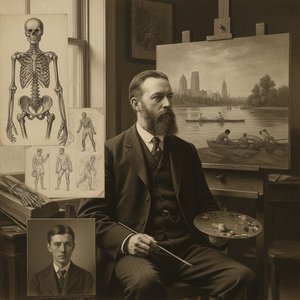
Thomas Eakins: Realism, Anatomy & the American Spirit – A Comprehensive Exploration of Life and Legacy
Explore the life & legacy of Thomas Eakins, a pivotal American Realist painter. Discover his groundbreaking techniques, anatomical precision, and iconic works like 'The Gross Clinic.' A comprehensive guide for art enthusiasts.


