Ver en contexto
 Enviar
 Compartir
 Detalles
 Guía
Guía

 Descargar
 Similares
 Radiografía
 Presentación de diapositivas
 Estadísticas
La copa del Titán
 Óleo
Óleo- Arte de pared
- Hudson River School
 1833
1833 49.0 x 41.0 cm
 Museo Metropolitano de Arte
 Ver más
Reproducción al óleo hecha a mano
Óleo sobre lienzo pintado a mano en el tamaño y marco de su elección, realizado por encargo por nuestros artistas. ( Cambiar a impresiones Cambiar a imagen digital)




P118B €10

P118H €10

P118W €10

P438Z €10

P508JH €12

P508YH €12

P805H €10

P805Z €10

P919BZ €10

P919G €10

P919XJ €10

P959ZH €10

P968JZ €12

W106C €8

W218G €10

W218JH €8

W218Y €10

W307PJ €10

W316G €10

W316PJ €8

W316Y €10

W398PJ €8

W4111J €10

W500HY €15

W500JH €15

W692G €12

W849H €8

W940BG €15

W953PJ €8




Elija entre nuestros tamaños predefinidos que respetan las proporciones originales de la obra.

Indique el ancho y el alto que necesite para adaptarse a su marco o pared. Al tratarse de una obra pintada a mano, si requiere un tamaño con una proporción distinta, el artista puede pintar un poco más alrededor de la imagen o recortarla ligeramente; usted elige. Le enviaremos una maqueta digital para su aprobación antes de comenzar la pintura. La imagen que se muestra en esta página no refleja el resultado real; solo la maqueta lo hace.
Tras realizar el pedido, el equipo de OriginalUniqueArt.com enviará un correo electrónico al cliente para solicitar instrucciones y proporcionarle una vista previa del boceto.
Envío a todo el mundo () en 3-4 semanas en lugar de las 5 semanas estándar. (25 octubre). Sin comprometer la calidad.

Envío exprés gratuito a todo el mundo

Lienzo de lino de alta calidad

Seguro de envío total

Garantía de reembolso de aranceles aduaneros

Garantía de fidelidad cromática exacta

Política de devolución de 100 días (solo por defectos)

Garantía de devolución del 100% del dinero

Descuento por cantidad
 La opción de vidrio solo está disponible en tamaños inferiores a 110 cm.

La copa del Titán
Técnica de reproducción
Dimensiones de la reproducción
-


Precio total final
€ 263
The Titan’s Goblet: A Landscape of Myth and Time
Thomas Cole's "The Titan’s Goblet," painted in 1833, is not merely a landscape; it’s an immersive allegory, a visual poem steeped in the Romantic tradition yet profoundly rooted in American identity. This monumental oil painting, now housed at the Metropolitan Museum of Art, immediately captivates with its sheer scale and dramatic composition – a vast bowl or vase dominating a rugged mountainscape. Yet, beyond the immediate spectacle lies a complex layering of meaning, inviting viewers to contemplate themes of creation, time, civilization, and the relationship between humanity and nature.
Cole’s artistic journey is crucial to understanding this enigmatic work. Born in England but deeply influenced by European Romanticism, he arrived in America with a desire to forge a distinctly American art—one that moved beyond the historical narratives favored in Europe and instead focused on the sublime beauty of the American wilderness. “The Titan’s Goblet” exemplifies this shift; it's not a depiction of a specific place but rather an imagined realm, a constructed landscape brimming with symbolic weight. The painting’s genesis is intertwined with Cole’s own artistic struggles and his relationship with his patron, Luman Reed, who initially requested a series of paintings depicting the course of empire. The difficulties he encountered in completing this ambitious project—and his subsequent decision to paint a single, self-contained landscape—contributed significantly to the painting's open-ended interpretation.
A World Within a World
The immediate visual impact is striking: a colossal golden bowl, seemingly carved from stone, rests precariously on a mountain’s edge. Water cascades dramatically over its rim, feeding a lush, verdant landscape below – a miniature world teeming with tiny buildings reminiscent of Greek temples and Italian palaces. Scattered throughout this idyllic scene are figures engaged in leisurely activities—boating, strolling, and seemingly oblivious to the grandeur surrounding them. This internal world is juxtaposed against the stark, rocky terrain of the mountain itself, creating a powerful visual dichotomy.
However, Cole doesn’t simply present a picturesque vista. The water flowing from the goblet acts as a transformative agent. It nourishes the land below, fostering a civilization that appears both idyllic and somewhat fragile. The contrast between the cultivated world within the bowl and the desolate mountainside suggests a commentary on the impact of human activity upon nature—a subtle critique of unchecked expansion and the potential for environmental degradation. The placement of the two small buildings is particularly significant; they represent the ambition of civilization, attempting to impose order onto the untamed wilderness.
Symbolism and Interpretation
The painting’s enduring mystery stems from Cole's deliberate refusal to offer a definitive explanation. He famously refrained from providing any accompanying text, leaving the interpretation entirely open to the viewer. Over time, various theories have emerged, ranging from interpretations rooted in Norse mythology—linking the goblet to Yggdrasil, the world tree—to comparisons with Bosch’s *Garden of Earthly Delights*, suggesting a parallel creation narrative. Cole himself alluded to the idea of a “picture within a picture,” and some scholars believe he drew inspiration from J.M.W. Turner's *Ulysses Deriding Polyphemus*, reflecting his own complex relationship with the British painter’s dynamic style.
Interestingly, Cole’s initial sketches for the painting reveal a deeper engagement with the concept of time and its passage. The presence of a setting sun evokes a sense of twilight and the inevitable decline of empires—a theme that resonates throughout his “Course of Empire” series. The small figure in the foreground, often interpreted as Cole himself, gazing out over the scene, adds another layer of introspection, inviting us to contemplate our own place within this vast and timeless landscape.
A Reproduction for Your Space
OriginalUniqueArt offers meticulously crafted hand-painted reproductions of Thomas Cole’s “The Titan’s Goblet,” capturing the painting's rich detail, atmospheric depth, and evocative symbolism. Each reproduction is created by skilled artists using traditional oil painting techniques, ensuring a faithful representation of Cole’s original vision. Whether you seek to add a touch of Romantic grandeur to your living room, study, or gallery space, our reproductions provide an authentic and captivating way to experience this iconic American masterpiece. The scale of the original is faithfully replicated, allowing you to fully appreciate the painting's monumental scope and immersive quality. Bring the mystery and beauty of “The Titan’s Goblet” into your home – a timeless testament to Cole’s artistic genius.
Preguntas y respuestas
¿Qué paleta y qué color predominante definen a "La copa del Titán"?
"La copa del Titán" de Thomas Cole utiliza una paleta de Tonos tierra, con el Gris medio (#95847c) como color dominante.
¿Con qué otros nombres o alias se conoce a Thomas Cole?
Thomas Cole también es conocido por los nombres Tomás Cole.
¿Puedo pedir una reproducción al óleo de "La copa del Titán"?
Las reproducciones pintadas a mano de "La copa del Titán" de Thomas Cole están disponibles en este sitio web: una reproducción al óleo pintada a mano sobre lienzo de lino, y pueden solicitarse a través de su página de Reproducción al óleo pintada a mano.
Biografía del artista
Primeros años y carrera
Thomas Cole, un artista de origen británico-estadounidense, nació el 1 de febrero de 1801 en Bolton le Moors, Lancashire. En 1818, emigró con su familia a los Estados Unidos, estableciéndose en Steubenville, Ohio. A la edad de 22 años, Cole se mudó a Filadelfia y posteriormente, en 1825, a Catskill, Nueva York, donde vivió con su esposa e hijos hasta 1847.Estilo artístico e influencias
El trabajo de Cole se caracteriza por su representación romántica del paisaje salvaje americano. Fue en gran medida autodidacta como pintor, basándose en libros y estudiando la obra de otros artistas. En 1822, comenzó a trabajar como retratista y luego cambió su enfoque hacia el paisaje. Sus pinturas a menudo presentaban la Catskill Mountain House, las famosas Kaaterskill Falls y dos vistas de Cold Spring.Obras destacadas
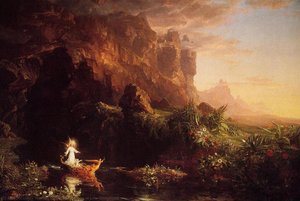
- El curso del imperio, una serie de cinco pinturas creadas por Cole entre 1833 y 1836, es notable por reflejar los sentimientos populares americanos de la época.
- Una vista desde el monte Etna desde Taormina (78x120 pulgadas de óleo sobre lienzo) muestra la fascinación de Cole por el volcán activo más alto de Europa.
- El Oxbow (1836), que presenta un paisaje sereno, es otro ejemplo de la maestría de Cole en la pintura de paisajes.
Legado e influencia
La influencia de Cole en el arte americano es profunda. Es considerado como el fundador de la Escuela del Río Hudson, un movimiento artístico estadounidense a mediados del siglo XIX que surgió en el valle del río Hudson de Nueva York. Su trabajo ha inspirado a generaciones de artistas, incluyendo a Asher B. Durand y Frederic Edwin Church. Lecturas recomendadas: * La Escuela del Río Hudson * Thomas Cole en Wikipedia Vea más obras de Thomas Cole: Frederic Edwin Church’s Schoodic Peninsula from Mount Desert at Sunrise (para comparar con el estilo de Cole) Winslow Homer's Canoes in Rapids, Saguenay River (ejemplo de otro pintor paisajista americano)
Thomas Cole
1801 - 1848 , Reino Unido
Datos clave
- Artistas Que Influyeron: ['Otros artistas (auto-didacta)']
- Estilo Artístico: Romanticismo, Hudson River School
- Fecha De Fallecimiento: 1848
- Fecha De Nacimiento: 1 de febrero de 1801
- Influenciado A:
- Asher B. Durand
- Frederic Edwin Church
- Lugar De Nacimiento: Bolton, Reino Unido
- Nacionalidad: Británico-estadounidense
- Nombre Completo: Thomas Cole
- Obras Notables:
- El Curso del Imperio
- Una Vista desde el Etna
- El Oxbow
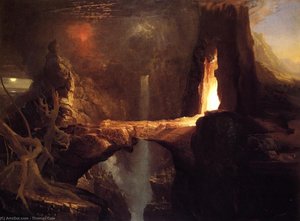
- Expulsión. Luna y Fogata
Artículos relacionados

El Sublime Paisaje Americano: Explorando el Movimiento de la Escuela del Río Hudson
Descubre la Escuela del Río Hudson: un movimiento artístico clave en la historia de la pintura estadounidense. Explora su estética romántica, sus artistas más destacados y el concepto del sublime paisaje americano.

Epic Landscapes & Wild Nature: The Power of the Hudson River School's Sublime Artistry
Explore the breathtaking power of the Hudson River School. Journey through epic American landscapes, from Thomas Cole's sublime vistas to Luminist light, and discover how these timeless masterpieces continue to inspire modern collectors and art lovers worldwide.

Echoes of Arcadia: Nostalgia & Transformation in Vintage Landscape Art
Explore the evocative world of vintage landscape art! Discover the history, artists & emotional power behind masterpieces from the Hudson River School & beyond. Expert insights for collectors & enthusiasts.
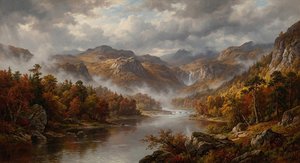
Los 10 Maestros del Río Hudson: Obras que Definieron un Movimiento Artístico
Descubre los 10 lienzos más emblemáticos de la Escuela del Río Hudson. Explora las obras maestras de Thomas Cole, Church y Bierstadt que capturan la belleza del paisaje americano. Encuentra reproducciones de arte exclusivas en OriginalUniqueArt.com.

Robert Spencer: Luminism, Narrative & the American Landscape Tradition
Explore the captivating world of Luminism & the Hudson River School with our expert analysis. Discover the history, artists, and enduring beauty of 19th-century American landscape painting. Find museum-quality reproductions at OriginalUniqueArt.