
 Enviar
 Compartir
 Detalles
 Guía
Guía

 Descargar
 Similares
 Presentación de diapositivas
 Preguntas y respuestas
 Estadísticas
Installation View


 Ver más
Obtenga un archivo listo para imprimir que supera con creces la vista previa web. Cada imagen digital que vendemos proviene de un maestro de alta resolución de nuestro archivo —generalmente de entre 5.000 y 15.000 píxeles de ancho— para que pueda realizar impresiones de gran formato, recortar con precisión o reproducir detalles minuciosos con total confianza.
Ningún archivo sale de nuestro estudio sin ser intervenido. Un experto digital coteja los colores con la pintura original y los corrige si es necesario, para luego mejorar la claridad y el detalle mediante herramientas de retoque profesional —siempre manteniendo la fidelidad a la pincelada y al estilo del artista. El resultado es una imagen que evoca la esencia de la pintura, no un escaneo con filtros.
Aprobación previa al finalizar: nuestro experto le enviará la imagen por correo electrónico en un plazo de 72 horas para su revisión. ¿No está satisfecho? Puede solicitar mejoras o correcciones, o pedir un reembolso si la calidad no cumple con sus expectativas.
Esta es la calidad en la que confían editoriales, estudios de diseño, galerías e imprentas.
Imagen Digital
Descarga un archivo de alta resolución para exhibición personal, impresión y proyectos creativos. ( Cambiar a impresiones Comprar pintura hecha a mano)
Incluido en cada pedido de imágenes digitales
Entrega digital experta, garantizada.
Al elegir OriginalUniqueArt.com, no solo está adquiriendo una imagen; está recibiendo una obra de arte digital mejorada profesionalmente, elaborada con precisión y respaldada por una garantía de satisfacción. Esto es todo lo que incluye su pedido, automáticamente:

Entrega rápida por email
Recibirá su archivo de imagen digital en alta resolución por correo electrónico en un plazo de 72 horas tras realizar su pedido, listo para su uso inmediato.

Archivo digital optimizado por IA
Su obra de arte se optimiza profesionalmente mediante herramientas avanzadas de IA y edición manual, garantizando el máximo detalle, claridad y precisión cromática.

Reenvío gratuito de por vida
¿Has borrado o perdido tu archivo por error? No te preocupes: te lo volveremos a enviar en cualquier momento, sin coste adicional.

Sin gastos de importación, siempre
Disfrute de su obra de arte al instante sin aduanas, aranceles ni gastos de envío; las descargas digitales siempre están libres de impuestos.

Garantía de fidelidad de color
Garantizamos que su imagen digital refleje los colores originales con la mayor fidelidad posible, mediante el uso de herramientas profesionales y gestión del color.

Garantía de satisfacción de 100 días
Si no está satisfecho con su imagen digital, la revisaremos o le reembolsaremos el 100% en un plazo de 100 días, sin preguntas.

100% Garantía de devolución de dinero
¿No está satisfecho? Obtenga un reembolso completo dentro de los 100 días posteriores a la recepción de su archivo digital, sin necesidad de explicaciones.

Descuentos por pedidos grandes
Compra 3 imágenes, ahorra 10% - Compra 5, ahorra 15% - Compra 10+, ahorra 20%. Ideal para proyectos creativos, galerías y agencias.
Installation View: Exploring Silence and Texture in Terry Adkins’s Black Beethoven Series
The photograph captures an arresting stillness—a deliberate void punctuated by the sculptural presence of Terry Roger Adkins's *Black Beethoven* series, presented within a minimalist architectural setting. The monochrome palette amplifies the textures and forms of the artworks themselves, inviting contemplation on themes of memory, identity, and the reverberations of history. The stark white walls serve as a canvas for these objects, emphasizing their materiality and fostering an atmosphere of quiet reflection. The centerpiece is comprised of three sculptures: *Solemnis*, *Plinth*, and a single bound lampshade-like structure adorned with dark feathers. Each piece speaks to Adkins’s fascination with juxtaposing seemingly disparate elements—the weighty solidity of metal rods contrasted against the delicate drape of fabric, mirroring the complex interplay between intellect and emotion that characterizes Beethoven's musical legacy. The sculptures are meticulously crafted from polished steel and draped linen, techniques chosen to convey both precision and vulnerability. These materials underscore Adkins’s desire to honor Beethoven’s artistic achievements while simultaneously acknowledging the pervasive influence of racial prejudice during his lifetime. Adkins’s conceptual approach extends beyond mere replication; he seeks to evoke a feeling—a palpable silence that embodies the profound contemplation prompted by confronting forgotten narratives. The *Solemnis* and *Plinth* sculptures, particularly, are designed to resonate with the viewer on an emotional level, prompting reflection on themes of resilience and remembrance. The feathers cascading from the lampshade-like structure symbolize both beauty and fragility—a visual metaphor for the ephemeral nature of artistic expression and the importance of preserving cultural heritage. The series’ genesis lies in Adkins's exploration of Ludwig van Beethoven’s biographical details, specifically his rumored Moorish ancestry – a fact largely obscured by historical accounts. This deliberate obfuscation fueled Adkins’s ambition to illuminate overlooked aspects of Beethoven’s life and artistic vision, arguing that acknowledging these marginalized perspectives enriches our understanding of musical genius itself. The resulting sculptures are not merely representations; they are embodiments of this conceptual framework—silent witnesses to a dialogue between art and history. The installation's deliberate simplicity underscores Adkins’s commitment to conveying profound ideas through understated visual language. It encourages viewers to engage actively with the artwork, prompting them to consider its textures, forms, and symbolic resonances as conduits for emotional experience. Ultimately, *Black Beethoven* serves as a powerful reminder that artistic brilliance can emerge from unexpected intersections of culture and circumstance—a testament to Terry Roger Adkins’s singular ability to transform historical inquiry into evocative sculptural form.Preguntas y respuestas
¿A qué artista se le atribuye "Installation View"?
"Installation View" se atribuye a Terry Roger Adkins.
¿De qué técnica y estilo se compone "Installation View"?
En "Installation View", la técnica de Installation Art se funde con el movimiento Contemporary Minimalism.
¿Cómo puedo descargar la imagen de "Installation View" de Terry Roger Adkins?
Puede descargar la imagen de "Installation View" de Terry Roger Adkins en la página de Descargar imagen digital de la obra: descarga de una imagen digital en alta resolución.
Biografía del artista
A Synthesis of Senses: The Life and Art of Terry Roger Adkins
Terry Roger Adkins, who passed away in 2014, was an artist whose work defied easy categorization. He wasn’t simply a sculptor, nor merely a performance artist; he was a conjurer of experiences, seamlessly weaving together visual art, music, and historical narrative into profoundly moving statements about identity, memory, and the often-overlooked contributions of African Americans. Born in Washington D.C. in 1953, Adkins’s artistic journey began not in the realm of paint or clay, but within a home filled with music. His father, Robert H. Adkins, a Korean War veteran and chemistry teacher, instilled in him a deep appreciation for musical expression through organ playing and singing. This early immersion would become a foundational element of his later work, informing both its aesthetic sensibilities and conceptual underpinnings. While initially drawn to pursue music himself, Adkins’s path shifted during his college years toward visual art, though the echoes of melody and rhythm never faded. He received formal training at Fisk University, earning a B.S. in printmaking, followed by advanced degrees from Illinois State University and the University of Kentucky. Crucially, mentorship from luminaries like Aaron Douglas and Martin Puryear proved instrumental in shaping his artistic vision, guiding him toward an interdisciplinary approach that would become his signature.Early Influences and Artistic Formation
Adkins’s formative years were marked by a profound engagement with musical traditions—particularly gospel music—which profoundly shaped his artistic sensibilities. His father's unwavering dedication to organ playing served as a constant reminder of the expressive potential inherent in sound, influencing Adkins’s decision to pursue visual art while simultaneously retaining an abiding fascination for musical performance. This dual passion fueled his exploration of diverse mediums and techniques, culminating in his distinctive style—characterized by sculptural forms imbued with sonic resonance. The influence of Aaron Douglas, a pioneer of African American modernist painting who championed the use of geometric abstraction to convey cultural identity, and Martin Puryear, whose monumental sculptures explore themes of spirituality and social justice, solidified Adkins’s commitment to confronting complex issues through artistic inquiry. These mentors instilled in him a belief that art could serve as a vehicle for dialogue and transformation—a conviction that would permeate his entire oeuvre.Forging a Unique Artistic Language
Adkins’s art wasn't about choosing between disciplines; it was about dissolving the boundaries between them. He embraced sculpture, performance, video installation, and music not as separate entities but as interconnected facets of a single expressive whole. This fusion is perhaps most evident in his “recitals”—performances that weren’t simply exhibitions *of* art, but immersive experiences *as* art. These events often featured musicians playing instruments crafted by Adkins himself, blurring the line between object and sound, creator and performer. His work frequently centered on reclaiming narratives lost to mainstream history, particularly those of African American pioneers whose achievements had been marginalized or ignored. Figures like Matthew Henson, the Black arctic explorer who played a vital role in Robert Peary’s expeditions but received scant recognition for his contributions, and W.E.B. Du Bois, the towering intellectual and civil rights activist, became recurring subjects in his art. Adkins didn't simply depict these figures; he sought to *activate* their stories, giving them voice through a complex interplay of visual and sonic elements. He founded and led the Lone Wolf Recital Corps, a collaborative performance group that brought his ambitious visions to life on stages around the world, from ICA London to P.S.1 MoMA.Notable Works and Conceptual Concerns
Several works stand out as particularly emblematic of Adkins’s artistic concerns and innovative approach. Nutjuitok (Polar Star), a powerful sculpture dedicated to Matthew Henson, is a testament to his commitment to historical recovery. The work doesn't merely represent Henson; it embodies the spirit of exploration and resilience that defined his life. Darkwater Record, an homage to W.E.B. Du Bois, delves into themes of identity, social justice, and the enduring legacy of racial inequality. Perhaps one of his most ambitious creations was Last Trumpet, a monumental ensemble consisting of four 18-foot-long horns—both sculptures and functional musical instruments—that evoke a sense of apocalyptic grandeur and spiritual awakening. These “Akrhaphones,” as he called them, were not merely visual statements; they were designed to be played, their resonant tones filling the space with a haunting and evocative soundscape. In 2012, Adkins received significant recognition with a major retrospective at the Frances Young Tang Teaching Museum and Art Gallery at Skidmore College, solidifying his place as a leading figure in contemporary art.Legacy and Influence
Terry Adkins’s influence extends far beyond the confines of museums and galleries. His work is now held in prominent collections worldwide, including the Whitney Museum of American Art, the Hirshhorn Museum and Sculpture Garden, The Studio Museum in Harlem, and the Tate Modern—a testament to its enduring artistic merit and cultural significance. But perhaps his most profound legacy lies in his ability to inspire future generations of artists and art enthusiasts. As a dedicated educator at the University of Pennsylvania’s School of Design, he nurtured countless students, encouraging them to embrace experimentation, challenge conventions, and explore the power of interdisciplinary collaboration. Adkins demonstrated that art could be more than just an object to be observed; it could be an experience to be lived, a story to be told, and a catalyst for social change. He left behind a body of work that continues to resonate with audiences today, reminding us of the importance of remembering the past, celebrating diversity, and embracing the transformative power of art.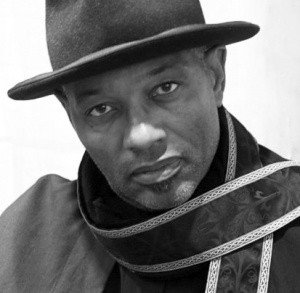
Terry Roger Adkins
1953 - 2014 , Estados Unidos
Breves datos
- Artistic Movement Or Style: Interdisciplinary art
- Artists Who Influenced This Artist:
- Aaron Douglas
- Martin Puryear
- Date Of Birth: May 9, 1953
- Date Of Death: February 8, 2014
- Full Name: Terry Roger Adkins
- Nationality: American
- Notable Artworks:
- Nutjuitok (Polar Star)
- Darkwater Record
- Last Trumpet
- Place Of Birth: Washington, USA