
 Ver en contexto
 Enviar
 Compartir
 Detalles
 Guía
Guía

 Descargar
 Similares
 Radiografía
 Presentación de diapositivas
 Preguntas y respuestas
 Estadísticas
Vaso

- 13.0 x 14.0 cm


 Ver más
La obra de arte que se muestra en esta página está protegida por las leyes de propiedad intelectual, lo que significa que no podemos crear ni vender legalmente una reproducción idéntica. Esta protección se hace cumplir en virtud de acuerdos internacionales como el Convenio de Berna y por las leyes nacionales, incluidas aquellas establecidas por el Ley de derechos de autor de los EE. UU. - Título 17.
Este método cumple plenamente con las normativas de derechos de autor, ya que no implica la copia ni la duplicación de la obra protegida. En su lugar, se trata de una reinterpretación creativa: una nueva pintura influenciada por la original, pero que no es idéntica a ella.
Giclée / Impresión de arte
Impresiones giclée o en lienzo de calidad de museo con producción rápida y opciones de acabado flexibles. ( Comprar pintura hecha a mano Cambiar a imagen digital)




P118B €10

P118H €10

P118W €10

P438Z €10

P508JH €12

P508YH €12

P805H €10

P805Z €10

P919BZ €10

P919G €10

P919XJ €10

P959ZH €10

P968JZ €12

W106C €8

W218G €10

W218JH €8

W218Y €10

W307PJ €10

W316G €10

W316PJ €8

W316Y €10

W398PJ €8

W4111J €10

W500HY €15

W500JH €15

W692G €12

W849H €8

W940BG €15

W953PJ €8




Elija entre nuestros tamaños predefinidos que respetan las proporciones originales de la obra.

Introduzca el ancho y el alto que necesite para adaptarse a su marco o pared. Una impresión solo puede recortarse, nunca hacerse más grande que la imagen original, por lo que un tamaño con una forma distinta perderá parte de la obra. Le enviaremos una maqueta digital para su aprobación antes de realizar cualquier impresión. La imagen que se muestra en esta página no refleja el recorte real; solo la maqueta lo hace.
Envío a todo el mundo () en 2 semanas en lugar de las 4/5 semanas estándar. (6 noviembre)

Envío exprés gratuito a todo el mundo

Lienzo de lino de alta calidad

Seguro de envío total

Garantía de reembolso de aranceles aduaneros

Garantía de fidelidad cromática exacta

Política de devolución de 100 días (solo por defectos)

Garantía de devolución del 100% del dinero

Descuento por cantidad
 La opción de vidrio solo está disponible en tamaños inferiores a 110 cm.

Vaso
Giclée / Impresión de arte
Dimensiones de la reproducción
-


Precio total final
€ 72
Biografía del artista
Introducción: Ecos de la Antigua Colombia
La cultura Tairona, que floreció aproximadamente entre el año 200 a.C. y el 1600 d.C., representa un capítulo extraordinario en la historia colombiana; un testimonio de sofisticación artística y una compleja organización social enclavada en las montañas de la Sierra Nevada de Santa Marta. Más que simples alfareros, el pueblo Tairona fue un grupo de hábiles artesanos que produjeron cerámicas imbuidas de un profundo significado simbólico, reflejando su cosmovisión. Su legado continúa inspirando a los artistas de hoy, recordándonos el poder perdurable de la tradición y la belleza que se encuentra al abrazar las técnicas ancestrales. Este artículo se adentra en el fascinante mundo del arte Tairona, explorando sus orígenes, evolución, características distintivas y su impacto duradero en la cultura colombiana.Arte Cerámico: Precisión Geométrica y Expresión Espiritual
La cerámica Tairona destaca por sus meticulosos diseños geométricos, patrones que dominan tanto vasijas como cántaros. Estos intrincados tallados no son meramente decorativos; transmiten creencias cosmológicas y representan una conexión profunda con el mundo natural. Investigadores como Luisa Fernanda Herrera han reconstruido con esmero el entorno del pueblo Tairona, revelando evidencias de deforestación y el cultivo de productos como la yuca y el maíz que datan de alrededor del 1200 a.C. Esto sugiere un dominio temprano de las prácticas agrícolas junto con la innovación artística. La influencia de culturas vecinas, particularmente la Muisca, es evidente en sus elementos estilísticos, demostrando un intercambio dinámico de ideas a través de los paisajes andinos.Obras Notables: Ejemplares de la Maestría Tairona
Diversas piezas excepcionales ejemplifican el apogeo del arte cerámico Tairona. Consideremos el “Péndulo de figura”, meticulosamente elaborado por artistas Tairona alrededor del año 1500 d.C., un ejemplo impresionante de volumen y forma tridimensional que refleja la fascinación por capturar formas naturales en miniatura. El Metropolitan Museum of Art alberga este notable artefacto, exhibiendo la destreza y dedicación requeridas para producir cerámicas tan exquisitas. Del mismo modo, el “Cántaro”, producido durante el mismo periodo, ejemplifica un realismo oscuro y texturizado, un logro impresionante considerando las herramientas disponibles en aquella época. Estas vasijas no son simples recipientes; son encarnaciones de la visión artística Tairona.Técnica y Materiales: El Dominio de la Terracota
Los artesanos Tairona emplearon una técnica distintiva —la cocción de arcilla de terracota en pozos abiertos— lo que resultó en cerámicas duraderas que han sobrevivido durante siglos. El tono rojizo de estas vasijas proviene del suelo rico en hierro de la región de la Sierra Nevada, contribuyendo a su característica textura erosionada. Un modelado y pulido cuidadosos aseguraban que las superficies fueran suaves y receptivas a los intrincados tallados. Además, pigmentos derivados de minerales como el óxido de manganeso proporcionaban colores vibrantes —principalmente rojos y amarillos— realzando el impacto visual de los patrones geométricos. La preservación de estas cerámicas ofrece una visión invaluable de la artesanía colombiana antigua.Legado e Influencia: Ecos en el Arte Contemporáneo
Los descendientes del pueblo Tairona —las comunidades Kogi, Wiwa, Arhuacos (Ijka, Ifca) y Kankuamo— continúan practicando técnicas de alfarería tradicional en la actualidad, preservando una herencia que se remonta a milenios. Su arte refleja el espíritu perdurable de la cultura andina y sirve como un recordatorio del rico pasado artístico de Colombia. Los artistas inspirados por la cerámica Tairona exploran motivos geométricos y superficies texturales similares, demostrando la influencia duradera de esta antigua civilización en la expresión creativa moderna. La belleza y el simbolismo inherentes al arte Tairona continúan resonando a través de las generaciones, consolidando su lugar como uno de los tesoros culturales más preciados de Colombia.
Tayrona
Colombia
Datos clave
- Artistic Movement Or Style: Arte cerámico
- Full Name: Tairona
- Nationality: Colombiana
- Notable Artworks:
- Colgante de figura
- Cántaro
- Vaso
- Place Of Birth: Colombia
Artículos relacionados

Golden Hour on the Nile: Symbolism & Artistic Legacy of Egyptian Sunsets
Explore the rich symbolism of Egyptian sunset paintings & their artistic legacy. Discover how color, ritual, and landscape shaped ancient beliefs – a guide for discerning collectors.
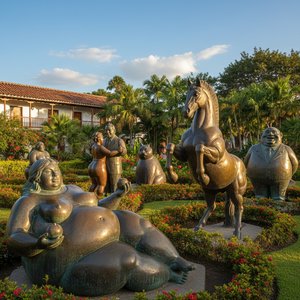
Fernando Botero: Celebrating Volume, Form & Colombian Identity
Explore the captivating world of Fernando Botero! Discover his iconic 'Boterismo' style, Colombian influences, investment potential & lasting legacy. Expert insights for art collectors.

Timeless Echoes: Capturing the Majesty of Ancient Ruins through the Lens of Fine Art History
Explore the profound beauty of ancient ruins through fine art history. Discover how masters like Pannini captured Roman grandeur, and learn how to bring this timeless architectural majesty into your home with museum-quality, hand-painted oil reproductions.

Alquimia de Barro: Guía para Coleccionistas sobre la Magitud y Textura de la Cerámica
Descubre la ciencia y técnica detrás de la cerámica de colección. Explora el arte del barro y el fuego con nuestra guía experta.

The Art of Ceramics: A Guide to Mastery, Texture, and Timeless Form for the Discerning Collector
Explore the profound elegance of ceramic art. From master glazes to sculptural forms, our expert guide offers discerning collectors deep insights into the mastery, texture, and timeless value of fine ceramics for sophisticated collections and luxury interiors.