
 Ver en contexto
 Enviar
 Compartir
 Detalles
 Guía
Guía

 Descargar
 Similares
 Radiografía
 Presentación de diapositivas
 Preguntas y respuestas
 Estadísticas
L'Enfant du Regiment

- 45.0 x 61.0 cm


 Ver más
Giclée / Impresión de arte
Impresiones giclée o en lienzo de calidad de museo con producción rápida y opciones de acabado flexibles. ( Comprar pintura hecha a mano Cambiar a imagen digital)




P118B €10

P118H €10

P118W €10

P438Z €10

P508JH €12

P508YH €12

P805H €10

P805Z €10

P919BZ €10

P919G €10

P919XJ €10

P959ZH €10

P968JZ €12

W106C €8

W218G €10

W218JH €8

W218Y €10

W307PJ €10

W316G €10

W316PJ €8

W316Y €10

W398PJ €8

W4111J €10

W500HY €15

W500JH €15

W692G €12

W849H €8

W940BG €15

W953PJ €8




Elija entre nuestros tamaños predefinidos que respetan las proporciones originales de la obra.

Introduzca el ancho y el alto que necesite para adaptarse a su marco o pared. Una impresión solo puede recortarse, nunca hacerse más grande que la imagen original, por lo que un tamaño con una forma distinta perderá parte de la obra. Le enviaremos una maqueta digital para su aprobación antes de realizar cualquier impresión. La imagen que se muestra en esta página no refleja el recorte real; solo la maqueta lo hace.
Envío a todo el mundo () en 2 semanas en lugar de las 4/5 semanas estándar. (4 noviembre)

Envío exprés gratuito a todo el mundo

Lienzo de lino de alta calidad

Seguro de envío total

Garantía de reembolso de aranceles aduaneros

Garantía de fidelidad cromática exacta

Política de devolución de 100 días (solo por defectos)

Garantía de devolución del 100% del dinero

Descuento por cantidad
 La opción de vidrio solo está disponible en tamaños inferiores a 110 cm.

L'Enfant du Regiment
Giclée / Impresión de arte
Dimensiones de la reproducción
-


Precio total final
€ 72
A Vision of Medieval Grief and Romantic Idealism: Exploring Millais’s L'Enfant du Régiment
Sir John Everett Millais’s “L’Enfant du Régiment,” completed in 1855, stands as a cornerstone of the Pre-Raphaelite Brotherhood’s artistic vision—a movement that irrevocably altered the landscape of Victorian art. More than just a portrait; it's an immersive tableau capturing not merely appearance but profound emotion and symbolic resonance, cementing Millais’s place among Britain’s most celebrated painters. The painting depicts Marie Spartacus Beton, wife of a French officer serving in Algeria, asleep on an ancient Roman monument—a deliberate juxtaposition designed to evoke contemplation on mortality and the enduring power of memory.The Pre-Raphaelite Aesthetic: Rejecting Academic Convention
The Pre-Raphaelites vehemently opposed the prevailing artistic trends of their time, rejecting the idealized forms and theatrical compositions favored by the Royal Academy. Influenced by Dante Gabriel Rossetti and William Holman Hunt, Millais championed a return to the stylistic principles of Renaissance artists before Raphael—a commitment to meticulous observation, vibrant color palettes derived from nature, and narratives rooted in literature and mythology. This rejection wasn’t merely aesthetic; it represented a broader intellectual rebellion against materialism and dogma, prioritizing spiritual contemplation alongside artistic excellence.Detailed Observation and Artistic Technique: Recreating Reality
Millais's mastery of technique is evident in the painting's astonishing realism. He painstakingly recreated the monument—a crumbling Roman tomb—using photographic studies to ensure accuracy. The artist employed a layering method known as *grisaille*, applying thin washes of monochrome paint beneath the final color layers, establishing tonal values and creating depth with remarkable precision. Brushwork is delicate yet purposeful, capturing the textures of stone, fabric, and skin with breathtaking subtlety. The muted earth tones—browns, ochres, creams—are punctuated by splashes of crimson and azure—colors chosen to convey both passion and solemnity.Symbolism Embedded in Composition: Grief, Remembrance, and Medieval Romance
The painting’s symbolism is multilayered and profoundly evocative. Marie Beton's pose—sleeping peacefully on the monument—represents death or profound slumber, mirroring the biblical image of Jesus sleeping in his mother’s arms. The Roman monument symbolizes antiquity and timelessness, contrasting with the immediacy of Marie’s grief—represented by her bandaged arm and the draped soldier’s jacket. This juxtaposition speaks to the enduring themes of loss, remembrance, and the idealized beauty of medieval romance—themes central to Rossetti's poem “The Soul Awakened,” which inspired Millais’s artistic endeavor. The monument itself serves as a reminder of past glories and the inevitable passage of time.Emotional Impact: A Masterpiece of Romantic Sentiment
“L’Enfant du Régiment” transcends mere visual representation; it achieves an unparalleled emotional impact. Millais skillfully captures the melancholic beauty of grief—the quiet dignity of sorrow—transforming a simple scene into a profound meditation on human experience. The painting compels viewers to confront mortality, yet simultaneously celebrates the enduring power of love and memory. Its luminous colors and meticulous detail convey not just what is seen but what is felt—a testament to Millais’s artistic genius and his unwavering commitment to conveying the deepest recesses of the human soul. It remains a powerfully moving artwork that continues to inspire admiration and contemplation centuries after its creation.Preguntas y respuestas
¿Cómo convergen el movimiento y la época en "L'Enfant du Regiment" de Sir John Everett Millais?
"L'Enfant du Regiment" pertenece al movimiento Pre-Raphaelite, y su creador trabajó en la época Siglo XIX.
¿Puedo examinar "L'Enfant du Regiment" con más detalle?
"L'Enfant du Regiment" puede examinarse capa por capa en la página Radiografía de la obra, un visor inspirado en una mesa de luz de restauración que ofrece once lecturas ópticas de la imagen.
¿Dónde puedo encontrar obras de arte similares a "L'Enfant du Regiment" de Sir John Everett Millais?
Puedes encontrar obras similares a "L'Enfant du Regiment" de Sir John Everett Millais en la página de Obras similares de esta obra.
Biografía del artista
Primeros años y educación
Sir John Everett Millais, un renombrado pintor e ilustrador inglés, nació el 8 de junio de 1829 en Southampton, Inglaterra. Como niño prodigio, se convirtió en el estudiante más joven en ingresar a las escuelas de la Royal Academy a los once años.Fundación de la Hermandad Prerrafaelita
En septiembre de 1848, Sir John Everett Millais, junto con William Holman Hunt y Dante Gabriel Rossetti, fundó la Hermandad Prerrafaelita en su casa familiar en Gower Street, Londres. Este movimiento buscaba revivir el estilo del primer Renacimiento italiano.Obras destacadas
Algunas de las obras más notables de Sir John Everett Millais incluyen:- Cristo en la casa de sus padres (1849-1850), una obra altamente controvertida que mostraba su retrato realista de una familia santa de clase trabajadora.
- Un hugonote (1851-1852), que representaba a una joven pareja a punto de ser separada debido a conflictos religiosos.
- Ofelia (1851-1852), una pintura que mostraba sus densas y elaboradas superficies pictóricas, a menudo concentrándose en la belleza y complejidad del mundo natural.
- Mariana (1850-1851), basada en la obra de teatro "Medida por medida" de William Shakespeare y el poema del mismo nombre de Alfred, Lord Tennyson.
Evolución artística e influencias
Las obras posteriores de Sir John Everett Millais fueron influenciadas por su esposa, Effie, que anteriormente había estado casada con el crítico John Ruskin. Su estilo evolucionó hacia una forma más amplia de realismo, que inicialmente fue condenado por Ruskin pero posteriormente reconocido como una contribución significativa al mundo del arte. Millais se destacó por su meticuloso estudio de la naturaleza y su habilidad para representar detalles con gran precisión. Su enfoque en los detalles botánicos en obras como "Ofelia" es un testimonio de su dedicación a la observación directa.Legado e importancia histórica
Sir John Everett Millais' legado se extiende más allá de su arte. Fue un pionero en el movimiento prerrafaelita y una figura significativa en el desarrollo del arte británico. Su influencia se puede ver en generaciones posteriores de artistas que buscaron combinar realismo con simbolismo y una profunda conexión con la naturaleza. Sus obras son apreciadas por su belleza, detalle y exploración de temas morales y sociales.- Aprenda más sobre Sir John Everett Millais en OriginalUniqueArt.com.
- Explore la Hermandad Prerrafaelita y su influencia en el arte británico en Wikipedia.

Sir John Everett Millais
1829 - 1896 , Reino Unido
Datos clave
- Artistas Que Influyeron:
- William Holman Hunt
- Dante Gabriel Rossetti
- Fecha De Nacimiento: 8 de junio de 1829
- Influencia En Artistas: Movimiento Estético, Simbolista
- Lugar De Nacimiento: Southampton, Reino Unido
- Movimiento Artístico: Pre-Rafaelita
- Nacionalidad: Británico
- Nombre Completo: Sir John Everett Millais
- Obras Notables:
- Cristo en casa de sus padres
- Un hugonote
- Ofelia
- Mariana
Artículos relacionados

Sir John Everett Millais: Pre-Raphaelite Rebellion & Victorian Narrative Detail
Explore the revolutionary art of Sir John Everett Millais & the Pre-Raphaelite Brotherhood. Discover their radical realism, symbolic narratives, and lasting impact on Victorian aesthetics. A deep dive into 19th-century masterpieces.

Las 25 obras maestras de Dante Gabriel Rossetti: El alma del arte prerrafaelita
Explora las 25 obras maestras de Dante Gabriel Rossetti y el arte prerrafaelita. ¡Descubre toda la colección en OriginalUniqueArt.com!

The Pre-Raphaelite Brotherhood: Rediscovering Beauty, Romance, and Medieval Magic in Victorian Art
Embark on a journey through the Pre-Raphaelite Brotherhood. Discover the romantic symbolism, medieval magic, and radical beauty of Rossetti and Burne-Jones in this expert exploration of Victorian art history.
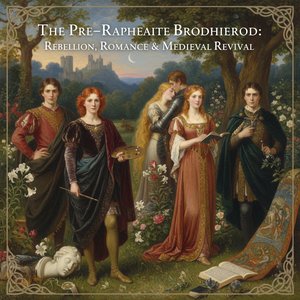
La Hermandad Prerrafaelita: Rebelión Estética y Romance Medieval en el Arte Victoriano
Descubre la fascinante historia de la Hermandad Prerrafaelita y su rebelión estética contra el arte victoriano. Análisis profundo de sus obras, temas y legado con expertos en arte.

The Pre-Raphaelite Brotherhood: Rediscovering Romanticism, Mythological Depth, and Vivid Detail in Victorian Art
Explore the breathtaking world of the Pre-Raphaelite Brotherhood. Discover how this movement redefined Victorian art through vivid detail, mythological depth, and romanticism. An expert guide for classic art enthusiasts seeking to rediscover these timeless masterpieces.


