

 Vista previa
 Compartir
 Compartir
 Ver detalles
 Guía
Guía

 Descargar
 Ver artículos similares
 Radiografía
 Presentación de diapositivas
 Estadísticas
Landscape with Water Mill
 Acrylic On Canvas
- WallArt
- Romantic Landscape
 1803
1803 71.0 x 91.0 cm
 Manchester Art Gallery
 Leer más
Giclée / Impresión de arte
Impresiones giclée o en lienzo de calidad de museo con producción rápida y opciones de acabado flexibles. ( Encargar reproducción pintada a mano Ver versión en imagen digital)




P118B $10

P118H $10

P118W $10

P438Z $10

P508JH $12

P508YH $12

P805H $10

P805Z $10

P919BZ $10

P919G $10

P919XJ $10

P959ZH $10

P968JZ $12

W106C $8

W218G $10

W218JH $8

W218Y $10

W307PJ $10

W316G $10

W316PJ $8

W316Y $10

W398PJ $8

W4111J $10

W500HY $15

W500JH $15

W692G $12

W849H $8

W940BG $15

W953PJ $8




Elija entre nuestros tamaños predefinidos que respetan las proporciones originales de la obra.

Puede introducir sus propias dimensiones para adaptarse a un marco o espacio específico. Si el tamaño seleccionado no coincide con las proporciones de la imagen original, recortaremos la obra de arte o extenderemos la imagen con un borde con efecto espejo o de color sólido. Se enviará una maqueta digital para su aprobación antes de que comience la producción.
Tenga en cuenta que la vista previa en pantalla no refleja el recorte o la extensión real. Solo la maqueta mostrará con precisión la composición final.
Aunque existen tamaños personalizados, recomendamos seleccionar una dimensión de la lista predefinida para preservar las proporciones originales.
Envío a todo el mundo () en 2 semanas en lugar de las 4/5 semanas estándar. (26 septiembre)

Envío exprés gratuito a todo el mundo

Lienzo de lino de alta calidad

Seguro de envío completo

Garantía de reembolso de impuestos aduaneros

Garantía de fidelidad cromática exacta

Política de devolución de 100 días (solo por defectos)

Garantía de devolución del 100% del dinero

Oferta por volumen
 La opción de vidrio solo está disponible en tamaños inferiores a 110 cm.

Landscape with Water Mill
Giclée / Impresión de arte
Tamaño de la reproducción
-


Precio total
$ 80
A Serene Vision of Rural England: Augustus Wall Callcott’s ‘Landscape with Water Mill’
Augustus Wall Callcott's “Landscape with Water Mill,” painted in 1803, is more than just a picturesque depiction of the English countryside; it’s a carefully constructed evocation of Romantic ideals and a subtle meditation on humanity’s relationship to nature. Housed within the esteemed Manchester Art Gallery, this work offers a glimpse into a world where tranquility reigns supreme, yet hints at an underlying drama – a quiet storm brewing in the sky mirroring perhaps the complexities of human experience.
The scene unfolds with remarkable clarity and detail. A modest water mill, constructed from weathered stone and topped with a charming thatched roof, dominates the foreground. Its wooden wheel, perpetually turning, represents not just mechanical industry but also the relentless passage of time. The river flowing alongside is rendered with a delicate touch, reflecting the overcast sky above – a subtle indication of an impending change. The artist’s brushwork is loose and expressive, capturing the movement of water and foliage with a captivating sense of dynamism. Notice how Callcott utilizes varying shades of green to create depth and texture within the surrounding trees, suggesting a dense, vibrant woodland.
Romanticism and the Sublime
“Landscape with Water Mill” firmly resides within the Romantic tradition, a movement that prioritized emotion, imagination, and the beauty of nature over strict academic rules. Callcott’s work embodies this shift by emphasizing atmosphere and feeling rather than precise representation. The dramatic clouds in the sky are not merely decorative; they contribute to the painting's overall sense of drama and the sublime – that awe-inspiring experience when confronted with something vast and powerful, like a storm or a grand landscape.
The inclusion of figures—a solitary man standing by the riverbank and another seated in contemplation—adds an element of human scale to the scene. These individuals are not imposing rulers but rather humble observers, inviting us to share their moment of quiet reflection amidst the grandeur of nature. They serve as a reminder of our own smallness within the vastness of the world.
Technical Details and Artistic Influence
Callcott’s technique is characterized by his masterful use of light and shadow. He skillfully employs atmospheric perspective, creating a sense of distance by subtly diminishing the colors and details of objects in the background. The muted palette—dominated by earthy tones—contributes to the painting's overall mood of serenity and contemplation. It’s evident that Callcott was influenced by artists like Thomas Gainsborough and John Constable, both masters of capturing the beauty of the English countryside with a sensitive eye for detail and an appreciation for light.
The signature “A.W. Callcott” in the lower right corner confirms the artist's identity and adds to the painting’s historical significance. The image itself, likely reproduced from an original source, further emphasizes its status as a treasured work of art.
Symbolism and Emotional Resonance
Beyond its aesthetic qualities, “Landscape with Water Mill” carries symbolic weight. The water mill represents both progress and tradition – the harnessing of natural power for human benefit. The river symbolizes life’s flow, while the solitary figures suggest themes of introspection and connection to nature. The impending storm hints at uncertainty and change, reminding us that even in moments of tranquility, disruption is always possible.
Ultimately, this painting invites viewers to pause, reflect, and appreciate the simple beauty of the natural world. It’s a testament to Callcott's skill as an artist and his ability to capture not just a landscape but also the emotions it evokes – a serene vision of rural England that continues to resonate with audiences today.
Biografía del artista
Primeros años y formación
Sir Augustus Wall Callcott, un renombrado pintor paisajista inglés, nació el 20 de febrero de 1779 en Kensington Gravel Pits, un pueblo al borde occidental de Londres. Su temprana vida estuvo marcada por una pasión por la música, lo que le llevó a cantar en el coro de Westminster Abbey durante varios años. Más tarde, se convirtió en estudiante de la Royal Academy, donde comenzó su carrera artística como retratista bajo la tutela de John Hoppner.Ascenso a la prominencia
La preferencia de Callcott por la pintura paisajística pronto se hizo evidente y, después de 1804, expuso exclusivamente paisajes. Su habilidad, diseño elegante y tono encantador llevaron a un ascenso constante en su reputación. En 1806, fue elegido asociado de la Royal Academy y, en 1810, se convirtió en académico titular.Obras notables y exposiciones
Algunas de las obras más destacadas de Callcott incluyen:- La entrada al Pool of London (1816)
- La boca del Tyne (1818)
- Una calma mortal en el Medway (1820)
- Rochester (1824)
- Rafael y la Fornarina (1837) - un raro ejemplo de sus pinturas de figuras, que se pueden encontrar en el Museo de Kensington Sur (colección Sheepshanks), ahora parte del V&A.
Legado y vida posterior
Callcott recibió un título de caballero en 1837 tras la ascensión al trono de la reina Victoria. Sucedió a William Seguier como supervisor de las pinturas de la Reina en 1843. Callcott falleció el 25 de noviembre de 1844 y fue enterrado en el cementerio de Kensal Green. Vea más obras de Sir Augustus Wall Callcott en OriginalUniqueArt.com: Explore más en Wikipedia:
Sir Augustus Wall Callcott
1779 - 1844 , Reino Unido
Datos clave
- Estilo Artístico: Paisajismo inglés
- Fecha De Fallecimiento: 25 de noviembre de 1844
- Fecha De Nacimiento: 20 de febrero de 1779
- Lugar De Nacimiento: Kensington, Reino Unido
- Nacionalidad: Británico
- Nombre Completo: Sir Augustus Wall Callcott
- Obras Notables:
- La entrada al Pool of London
- La boca del Tyne
- Calma mortal en el Medway
- Rochester
- Rafael y la fornarina
Artículos relacionados

Evocations of Place: A Historical Journey Through Landscape Art
Explore the rich history of landscape art with OriginalUniqueArt. Discover renowned artists, movements like Impressionism & Romanticism, and expert guidance for collecting timeless pieces. Find your perfect serene escape today!
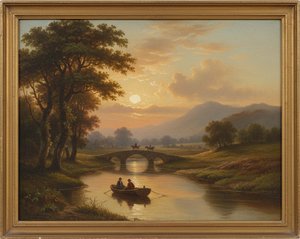
Sir Augustus Wall Callcott: A Life Painted with Light & Atmosphere
Explore the life & art of Sir Augustus Wall Callcott, a celebrated British landscape painter known for his serene scenes and elegant compositions. Discover his Romantic influences & lasting legacy at OriginalUniqueArt.
John Varley I: Intimate Observation & the British Romantic Landscape
Explore the serene landscapes of John Varley I, a key figure in British Romanticism. Discover his unique watercolour style, collaboration with William Blake & lasting artistic legacy. Learn about collecting Varley's work.

Paisajes Románticos: 10 Obras Maestras que Definieron un Movimiento Artístico
Descubre los 10 paisajes románticos más influyentes de artistas como Caspar David Friedrich y Turner. Explora la belleza, el simbolismo y las técnicas del movimiento romántico. Reproducciones de arte exclusivas en OriginalUniqueArt.com.

John Constable: Las 25 Obras Maestras del Paisaje Inglés | OriginalUniqueArt
Descubre las 25 obras maestras de John Constable, el pintor romántico inglés que capturó la belleza del paisaje. Explora su técnica, historia y significado en OriginalUniqueArt.com. Reproducciones de arte de alta calidad para tu hogar.

