Ver en contexto

 Enviar
 Compartir
 Detalles
 Guía


 Descargar
 Similares
 Radiografía
 Presentación de diapositivas
 Preguntas y respuestas
 Estadísticas
Cabeza


 Ver más
Giclée / Impresión de arte
Impresiones giclée o en lienzo de calidad de museo con producción rápida y opciones de acabado flexibles. ( Comprar pintura hecha a mano Cambiar a imagen digital)




P118B €10

P118H €10

P118W €10

P438Z €10

P508JH €12

P508YH €12

P805H €10

P805Z €10

P919BZ €10

P919G €10

P919XJ €10

P959ZH €10

P968JZ €12

W106C €8

W218G €10

W218JH €8

W218Y €10

W307PJ €10

W316G €10

W316PJ €8

W316Y €10

W398PJ €8

W4111J €10

W500HY €15

W500JH €15

W692G €12

W849H €8

W940BG €15

W953PJ €8




Elija entre nuestros tamaños predefinidos que respetan las proporciones originales de la obra.

Introduzca el ancho y el alto que necesite para adaptarse a su marco o pared. Una impresión solo puede recortarse, nunca hacerse más grande que la imagen original, por lo que un tamaño con una forma distinta perderá parte de la obra. Le enviaremos una maqueta digital para su aprobación antes de realizar cualquier impresión. La imagen que se muestra en esta página no refleja el recorte real; solo la maqueta lo hace.
Envío a todo el mundo () en 2 semanas en lugar de las 4/5 semanas estándar. (20 noviembre)

Envío exprés gratuito a todo el mundo

Lienzo de lino de alta calidad

Seguro de envío total

Garantía de reembolso de aranceles aduaneros

Garantía de fidelidad cromática exacta

Política de devolución de 100 días (solo por defectos)

Garantía de devolución del 100% del dinero

Descuento por cantidad
 La opción de vidrio solo está disponible en tamaños inferiores a 110 cm.

Cabeza
Giclée / Impresión de arte
Dimensiones de la reproducción
-


Precio total final
€ 72
Una Visión de Melancolía Etérea
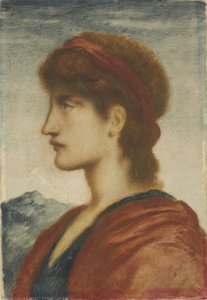
En las delicadas pinceladas de acuarela de la obra "Cabeza" de Simeon Solomon, nos encontramos con un momento de profunda introspección que trasciende las fronteras del tiempo. La pintura presenta un retrato cautivador de una mujer, cuyo vibrante cabello rojo cae como una llama de seda a través del encuadre, parcialmente velado por un rico pañuelo rojo que se ciñe a su cuello. Su mirada, dirigida hacia un horizonte invisible, está cargada de un anhelo pensativo y casi inquietante. Este no es simplemente el retrato de una persona, sino una ventana a un paisaje psicológico, donde los límites entre el yo físico y la mente soñadora comienzan a desdibujarse. Las capas suaves y translúcidas de la acuarela otorgan a la pieza una cualidad vintage y onírica, permitiendo que la luz parezca emanar del interior de la propia protagonista.
La composición es magistralmente íntima, con la cabeza de la mujer dominando el campo visual, creando una conexión inmediata e ineludible entre el espectador y su mundo interno. Detrás de ella, la sutil sugerencia de montañas y nubes errantes proporciona una sensación de vastedad, contrastando la cercanía del retrato con la escala infinita de la naturaleza. Esta yuxtaposición sirve para intensificar el peso emocional de su soledad; es una figura atrapada en una quietud silenciosa y monumental, enmarcada por la grandeza de una naturaleza atmosférica.
El Espíritu Estético y la Profundidad Simbólica
Para comprender "Cabeza", es necesario mirar hacia las corrientes artísticas que fluían por el Londres de Solomon durante finales del siglo XIX. Como una figura profundamente conectada con el Movimiento Estético, Solomon se nutrió de la inmensa inspiración de los mundos exuberantes y simbólicos de Dante Gabriel Rossetti y la imaginería cargada de sueños de Gustave Moreau. En esta obra, vemos los sellos distintivos de esa era: una devoción a la belleza por la belleza misma y un uso profundo del color para evocar estados de ánimo en lugar de la mera realidad. Los rojos ardientes de su cabello y su pañuelo actúan como un poderoso ancla emocional, simbolizando la pasión, la vitalidad y, quizás, una intensidad oculta y ardiente bajo su exterior sereno.
El simbolismo dentro de la pieza invita a una contemplación profunda. Las montañas en el fondo pueden representar los obstáculos formidables de la vida o las elevadas cumbres de la aspiración espiritual, mientras que las nubes sugieren la naturaleza efímera y fugaz del pensamiento humano. Para el coleccionista exigente o el diseñador de interiores, esta pintura ofrece más que un simple atractivo visual; proporciona un punto focal de profundidad intelectual y emocional. Es una pieza que exige un espacio de reflexión: un rincón tranquilo de una biblioteca o una sofisticada pared de galería donde sus matices sutiles puedan redescubrirse con cada mirada.
Una Adición Atemporal al Interior Moderno
Para aquellos que buscan curar un ambiente de elegancia y alma, una reproducción de alta calidad de "Cabeza" de Solomon sirve como un puente entre el romanticismo de la era victoriana y las sensibilidades estéticas contemporáneas. La paleta suave de la pintura y su temática evocadora la convierten en una opción increíblemente versátil para diversos estilos de interior, desde mansiones europeas clásicas hasta lofts modernos y minimalistas que anhelan un toque de calidez histórica. Su capacidad para evocar una sensación de nostalgia y drama silencioso le permite anclar una habitación, proporcionando un tema de conversación que es a la vez accesible en su belleza y complejo en su significado.
Invertir en una obra de este tipo es una invitación a rodearse del poder perdurable del espíritu prerrafaelita. Ya sea que se utilice para añadir una capa de textura a una colección curada o como una declaración singular de gracia, "Cabeza" sigue siendo un testimonio de la capacidad única de Solomon para capturar la belleza fugaz del alma humana a través del delicado medio de la acuarela.
Preguntas y respuestas
¿Qué nivel de luminosidad transmite "Cabeza" de Simeón Solomon?
La luminosidad percibida de "Cabeza" de Simeón Solomon es brillante. Puede armonizarse con la luz del espacio destinado.
¿Quién es el artista detrás de "Cabeza"?
El artista detrás de "Cabeza" es Simeón Solomon. La obra está catalogada bajo el nombre de Simeón Solomon.
¿Puedo ver una radiografía de "Cabeza" de Simeón Solomon?
La vista de rayos X de "Cabeza" de Simeón Solomon se encuentra en la página Radiografía de la obra: un examen interactivo de la imagen a través de once capas ópticas.
Biografía del artista
A Life Shrouded in Beauty and Scandal: The World of Simeon Solomon
Simeon Solomon, a name whispered with both reverence and regret within the annals of Victorian art, occupies a unique and often tragic position amongst the Pre-Raphaelites. Born in London in 1840 into a prominent Jewish family – the eighth and final child of merchant Michael (Meyer) Solomon and artist Catherine (née Levy), an amateur miniature painter – his life was one of remarkable artistic promise tragically curtailed by societal prejudice and personal demons. He wasn’t merely a painter; he was a cultural mirror reflecting the complexities of Victorian England, grappling with faith, desire, and identity in a rapidly changing world.Early Influences and Artistic Development
Solomon’s artistic education began within his own family circle. His mother possessed an amateur talent for miniature painting, while his elder siblings, Abraham and Rebecca Solomon, were both established artists exhibiting at the Royal Academy. It was from them, particularly his brother Abraham, that Simeon received his initial training, learning the fundamentals of draftsmanship and composition. He formally studied at Carey’s Art Academy in 1852 before entering the prestigious Royal Academy Schools in 1856. This period proved pivotal, as it introduced him to the burgeoning Pre-Raphaelite Brotherhood through Dante Gabriel Rossetti. The encounter with Rossetti, along with friendships forged with Edward Burne-Jones and Algernon Charles Swinburne, profoundly shaped Solomon’s artistic sensibilities. He embraced their commitment to detailed realism, vibrant color palettes, and a fascination with literature, mythology, and religious narratives. Early works like *Isaac Offered* (1858) demonstrate this initial influence, showcasing a meticulous attention to detail and a dramatic narrative style characteristic of the Pre-Raphaelites. However, Solomon quickly began to forge his own path, infusing his paintings with a distinctly personal vision.Themes of Faith, Desire, and Identity
Solomon’s artistic output was remarkably diverse, encompassing biblical scenes, classical mythology, and genre paintings depicting Jewish life and rituals. He found particular inspiration in the Hebrew Bible, creating works such as *Moses* (1860) and *Shadrach, Meshach, and Abednego* (1863), which resonated with his own cultural heritage. Yet, it was his exploration of classical themes that truly set him apart. Paintings like *In the Temple of Venus* (1863) and *Bacchus* (1867) reveal a fascination with sensuality and beauty, often imbued with an undercurrent of melancholy and longing. These works also hint at Solomon’s growing interest in same-sex desire, a theme he would explore more explicitly – and dangerously – throughout his career. His association with Algernon Charles Swinburne, whose poetry celebrated unconventional love and challenged Victorian morality, undoubtedly fueled this exploration. Solomon's art became a subtle yet powerful commentary on the constraints of Victorian society, hinting at hidden passions and unspoken desires. He was one of the first artists to openly depict homoerotic themes, albeit often veiled in classical allegory or biblical narrative.Scandal, Decline, and Lasting Legacy
The year 1873 marked a devastating turning point in Solomon’s life. His arrest in a public lavatory for attempting to commit sodomy brought swift and brutal consequences. Though he received a relatively light fine, the scandal shattered his reputation and effectively ended his career as a publicly exhibited artist. A subsequent arrest in Paris in 1874 led to a three-month prison sentence. Shunned by much of the art establishment, Solomon descended into alcoholism and poverty. However, despite his ostracization, he continued to create art, albeit often under difficult circumstances. He found support from a small circle of admirers – including Oscar Wilde, John Addington Symonds, and Walter Pater – who recognized his talent and collected his works in private. He spent time in the St Giles Workhouse, Holborn, in London, where he died of a heart attack on 14 August 1905. Two memorial exhibitions were held in 1906 and in 2005-6 Birmingham Museum & Art Gallery curated the exhibition 'Love Revealed: Simeon Solomon and the Pre-Raphaelites', the first full-scale survey of his work, which toured to Ben Uri Gallery in London and to Museum Villa Stuck, Munich.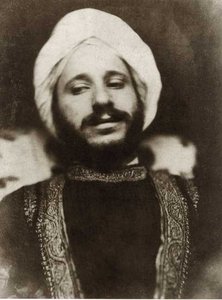
Simeón Solomon
1840 - 1905 , Reino Unido
Datos clave
- Artistic Movement Or Style: Pre-rafaelitismo
- Artists Who Influenced This Artist:
- Gabriel Rossetti
- Edward Burne-Jones
- Date Of Birth: 1840
- Date Of Death: 1905
- Full Name: Simeon Solomon
- Nationality: Británico
- Notable Artworks:
- Babilonia ha sido...
- Shadrach, Meshach...
- El templo de Venus
- Place Of Birth: Londres, Reino Unido
Artículos relacionados

Las 25 mejores obras de Dante Gabriel Rossetti: El alma del arte prerrafaelita
Explora las 25 obras maestras de Dante Gabriel Rossetti y el arte prerrafaelita. ¡Descubre toda la colección en OriginalUniqueArt.com!

Heavenly Visions: A Curated Journey Through the Divine Masterpieces of Art History
Explore the profound beauty of religious art history. From Renaissance grace to Baroque drama, discover the stories behind iconic divine masterpieces and learn how to bring museum-quality, hand-painted oil reproductions into your home with OriginalUniqueArt.com.

Las 25 obras maestras de Toulouse-Lautrec: El alma de Montmartre
Explora las 25 obras maestras de Toulouse-Lautrec y el alma de Montmartre. ¡Descubre toda la colección en OriginalUniqueArt.com!
Capturing the Soul: An Exploration of Modigliani's Iconic Portraits and the Melancholy of Modernism
Delve into the haunting beauty of Amedeo Modigliani's portraits. Explore the intersection of Expressionism and Modernism through an expert analysis of his iconic elongated forms, melancholic gazes, and profound influence on art history.

Los 25 maestros del sueño: Las obras más icónicas de Gustave Moreau
Explora las 25 obras maestras del simbolismo de Gustave Moreau. Encuentra reproducciones de museo en OriginalUniqueArt.com.