Vista previa
 Compartir
 Compartir
 Ver detalles

 Descargar
 Ver similares
 Radiografía
 Presentación de diapositivas
Venere dormiente


 Leer más
Reproducción al óleo hecha a mano
Óleo sobre lienzo pintado a mano en el tamaño y marco de su elección, realizado por encargo por nuestros artistas. ( Pedir impresión Comprar descarga)




P118B $10

P118H $10

P118W $10

P438Z $10

P508JH $12

P508YH $12

P805H $10

P805Z $10

P919BZ $10

P919G $10

P919XJ $10

P959ZH $10

P968JZ $12

W106C $8

W218G $10

W218JH $8

W218Y $10

W307PJ $10

W316G $10

W316PJ $8

W316Y $10

W398PJ $8

W4111J $10

W500HY $15

W500JH $15

W692G $12

W849H $8

W940BG $15

W953PJ $8




Elija entre nuestros tamaños predefinidos que respetan las proporciones originales de la obra.

Puede ingresar sus propias dimensiones para adaptarse a un marco o espacio específico. Si el tamaño seleccionado no coincide con las proporciones de la imagen original, recortaremos la obra o extenderemos la pintura con elementos adicionales pintados a mano. Se le enviará una maqueta digital para su aprobación antes de comenzar la producción.
Tenga en cuenta que la vista previa en pantalla no refleja el recorte o la extensión reales. Solo la maqueta mostrará con precisión la composición final.
Si bien existen tamaños personalizados, recomendamos seleccionar una dimensión de la lista predefinida para preservar las proporciones originales.
Tras realizar el pedido, el equipo de OriginalUniqueArt.com enviará un correo electrónico al cliente para solicitar instrucciones y proporcionarle una vista previa del boceto.
Envío a todo el mundo () en 3-4 semanas en lugar de las 5 semanas estándar. (14 agosto). Sin comprometer la calidad.

Envío exprés gratuito a todo el mundo

Lienzo de lino de alta calidad

Seguro de envío completo

Garantía de reembolso de aranceles aduaneros

Garantía de fidelidad cromática exacta

Política de devolución de 60 días (solo por defectos)

Garantía de devolución del 100% del dinero

Oferta por volumen
 La opción de vidrio solo está disponible en tamaños inferiores a 110 cm.

Venere dormiente
Técnica de reproducción
Tamaño de la reproducción
-


Precio total
$ 300
Descripción de la obra
Self-Portrait As David
The enigmatic Giorgione’s *Self-Portrait As David*, housed in the Herzog Anton Ulrich Museum of Braunschweig, stands as one of the most perplexing and celebrated images of the Venetian Renaissance. Painted circa 1509–1510, its attribution to the artist remains debated amongst scholars, yet its profound influence on subsequent artistic endeavors is undeniable. More than just a likeness of Giorgione himself—a young man radiating confidence and intellectual curiosity—the portrait embodies a complex tapestry of symbolism and stylistic innovation that continues to fascinate viewers today.Composition and Technique
The artwork adheres to the classical bust-length format prevalent during its era, positioning Giorgione slightly off-center. This deliberate asymmetry lends dynamism to the scene, mirroring the subtle diagonal line formed by his shoulder and head angle. The artist skillfully employs oil paint on canvas—likely a panel—applying visible brushstrokes that contribute to a textured surface—a hallmark of Venetian painting at the time. Light plays a crucial role in shaping the composition; a single light source illuminates Giorgione’s face from the upper left, casting deep shadows across his right side and creating an illusion of depth. The artist's meticulous attention to anatomical detail is evident in the rendering of the musculature beneath the skin, reflecting Leonardo da Vinci’s groundbreaking approach to human representation. Furthermore, hatching and cross-hatching techniques are skillfully utilized to depict the beard and drapery, enhancing textural richness and conveying a sense of volume.Historical Context and Symbolism
Giorgione's oeuvre is inextricably linked to the burgeoning humanist spirit of Venice in the early 16th century—a period marked by intellectual ferment and artistic experimentation. Influenced by Leonardo da Vinci’s sfumato technique, Giorgione pushed boundaries, prioritizing mood and atmosphere over precise delineation. The inclusion of Goliath’s severed head—held aloft by Giorgione—references the biblical tale of David slaying Goliath, symbolizing courage, triumph, and divine favor. This gesture speaks to the artist's ambition to elevate his portrait beyond mere self-representation, transforming it into a meditation on heroism and virtue. The dark background serves as an isolating element, intensifying the luminosity of the figure and emphasizing its psychological depth.Emotional Resonance
The gaze directed at the viewer—characterized by solemn seriousness—conveys not only confidence but also hints of melancholy—a characteristic often attributed to Giorgione’s artistic vision. This contemplative expression invites viewers to contemplate themes of introspection, mortality, and the pursuit of beauty. The pose itself embodies dignity and timelessness, aligning with the ideals of Renaissance humanism. Ultimately, *Self-Portrait As David* transcends its formal constraints, becoming a poignant emblem of artistic genius—a testament to Giorgione’s ability to capture not just physical likeness but also the essence of human experience.Concluding Remarks
Giorgione's *Self-Portrait As David* remains an enduring masterpiece—a cornerstone of Venetian Renaissance art and a source of ongoing scholarly debate. Its subtle complexities, combined with its masterful technique and evocative symbolism, continue to inspire admiration and provoke contemplation centuries after its creation. Reproductions offer a remarkable opportunity to appreciate the artistry of this elusive figure and immerse oneself in the luminous atmosphere of his time.Biografía del artista
una breve pero brillante carrera en la alta renacimiento
giorgione (1477/78 o 1473/74 – 1510), un ilustre pintor de la alta renacimiento perteneciente a la escuela veneciana, dejó una marca indeleble en el mundo del arte a pesar de su breve carrera y sus trabajos confirmados limitados. Sus pinturas son alabadas por sus cualidades líricas y enigmáticas, con solo unos pocos que se atribuyen definitivamente a él.contribución al estilo pictórico veneciano
La contribución de Giorgione, junto con el legendario Tiziano, sentó las bases del estilo pictórico veneciano, caracterizado por su énfasis en el color y la atmósfera en lugar del enfoque basado en líneas del arte florentino. Este enfoque innovador allanó el camino para futuras generaciones de artistas.obras notables y su significado
- retrato de un caballero veneciano (76 x 64 cm, alta renacimiento, óleo sobre lienzo): una obra maestra que muestra la habilidad de Giorgione para capturar la esencia de sus sujetos.
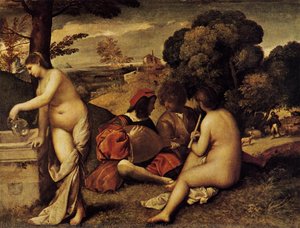
- Concierto pastoril (fête champêtre) (110 x 138 cm, musée du louvre, París, Francia, alta renacimiento, óleo sobre lienzo): demuestra la capacidad de Giorgione para evocar emociones a través de su trabajo.
- Judit (1504) (óleo sobre lienzo, transferido de panel, 144 x 68 cm, el Hermitage, San Petersburgo): una pintura temprana del artista, inicialmente atribuida a Rafael, que muestra el crecimiento y la experimentación de Giorgione.
legado e influencia
Giorgione sigue siendo una figura enigmática en la historia del arte, con su vida y obras envueltas en misterio, lo que aumenta el atractivo y la profundidad de su legado artístico. Su influencia se puede ver en las obras de artistas posteriores, quienes construyeron sobre los cimientos que él sentó en la escuela veneciana. explore more of giorgione's works on OriginalUniqueArt: * giorgione (giorgio barbarelli da castelfranco) * retrato de un caballero veneciano * Concierto pastoril (fête champêtre) discover the venetian painting art movement on OriginalUniqueArt: * el movimiento artístico de la pintura veneciana
Giorgione
1477 - 1510 , Italia
Datos clave
- Artistas Influenciados: ['Tiziano']
- Artistas Que Influyeron:
- Giovanni Bellini
- Antonello da Messina
- Leonardo da Vinci
- Estilo Artístico: Alto Renacimiento Veneciano
- Fecha De Nacimiento: c. 1477/1478
- Lugar De Nacimiento: Castel Franco Veneto, Italia
- Nacionalidad: Italiana
- Nombre Completo: Giorgione (Giorgio Barbarelli)
- Obras Notables:
- La Tempestad
- Concierto Pastoral
- Venus Durmiente
- Judit
- Retrato de un caballero
Artículos relacionados
Los 10 Paisajes Más Icónicos de la Historia del Arte | OriginalUniqueArt
Descubre los 10 paisajes más emblemáticos de la historia del arte, desde Monet a Van Gogh. Explora su significado, técnica y belleza atemporal. Encuentra reproducciones de alta calidad e inspira tu hogar con OriginalUniqueArt.com.

Paisajes Románticos: 10 Obras Maestras que Definieron un Movimiento Artístico
Descubre los 10 paisajes románticos más influyentes de artistas como Caspar David Friedrich y Turner. Explora la belleza, el simbolismo y las técnicas del movimiento romántico. Reproducciones de arte exclusivas en OriginalUniqueArt.com.

Evocations of Place: A Historical Journey Through Landscape Art
Explore the rich history of landscape art with OriginalUniqueArt. Discover renowned artists, movements like Impressionism & Romanticism, and expert guidance for collecting timeless pieces. Find your perfect serene escape today!

Venetian Renaissance: The Mastery of Color, Light, and the Art of Colorito
Explore the luminous mastery of the Venetian Renaissance. Discover how masters like Titian and Giorgione revolutionized art through colorito, light, and atmosphere. An expert guide to the golden age of Italian painting for collectors and enthusiasts.

The Enduring Allure of the Nude: A Historical & Artistic Exploration of the Human Form
Explore the captivating history of nude art! Discover iconic paintings & artists from classical to modern eras. Uncover symbolism, techniques & find museum-quality reproductions at OriginalUniqueArt.