- Inicio

- Imagen digital
- Sébastien Bourdon
- Abraham et les anges
 Comprar impresión Encargar reproducción
 Enviar
 Compartir
 Detalles
 Añadir a favoritos

 Descargar
 Similares
 Radiografía
 Presentación de diapositivas
Abraham et les anges


 Ver más
Adquiera una imagen digital de alta resolución y optimizada, muy superior a la vista previa en línea.
Cada archivo es preparado meticulosamente por nuestros especialistas internos mediante el uso de herramientas avanzadas y un experto retoque manual. Nos aseguramos de que cada imagen posea una claridad excepcional, una precisión cromática impecable y un detalle minucioso.
El archivo final se entrega por correo electrónico en un plazo de 72 horas, optimizado para su uso inmediato en entornos profesionales, editoriales y de impresión. Esta es la misma calidad en la que confían los estudios de diseño, las editoriales y las galerías de primer nivel.
Imagen Digital
Descarga un archivo de alta resolución para exhibición personal, impresión y proyectos creativos.
Incluido en cada pedido de imagen digital
Entrega digital experta, garantizada.
Al elegir OriginalUniqueArt.com, no solo está adquiriendo una imagen; está recibiendo una obra de arte digital mejorada profesionalmente, elaborada con precisión y respaldada por una garantía de satisfacción. Esto es todo lo que incluye su pedido, automáticamente:

Entrega rápida por email
Recibirá su archivo de imagen digital en alta resolución por correo electrónico en un plazo de 72 horas tras realizar su pedido, listo para su uso inmediato.

Archivo digital optimizado con IA
Su obra de arte se optimiza profesionalmente mediante herramientas avanzadas de IA y edición manual, garantizando el máximo detalle, claridad y precisión cromática.

Reenvío gratuito de por vida
¿Has borrado o perdido tu archivo por error? No te preocupes: te lo volveremos a enviar en cualquier momento, sin coste adicional.

Sin cargos de importación - Siempre
Disfrute de su obra de arte al instante sin aduanas, aranceles ni gastos de envío; las descargas digitales siempre están libres de impuestos.

Garantía de fidelidad de color
Garantizamos que su imagen digital refleje los colores originales con la mayor fidelidad posible, mediante el uso de herramientas profesionales y gestión del color.

Garantía de satisfacción de 60 días
Si no está satisfecho con su imagen digital, la revisaremos o le reembolsaremos el 100% en un plazo de 60 días, sin preguntas.

100% Garantía de devolución de dinero
¿No está satisfecho? Obtenga un reembolso completo dentro de los 60 días posteriores a la recepción de su archivo digital, sin preguntas.

Descuentos por pedidos al por mayor
Compra 3 imágenes, ahorra 10% - Compra 5, ahorra 15% - Compra 10+, ahorra 20%. Ideal para proyectos creativos, galerías y agencias.
Descripción del coleccionable
Abraham et les anges: A Baroque Tapestry of Faith and Hospitality
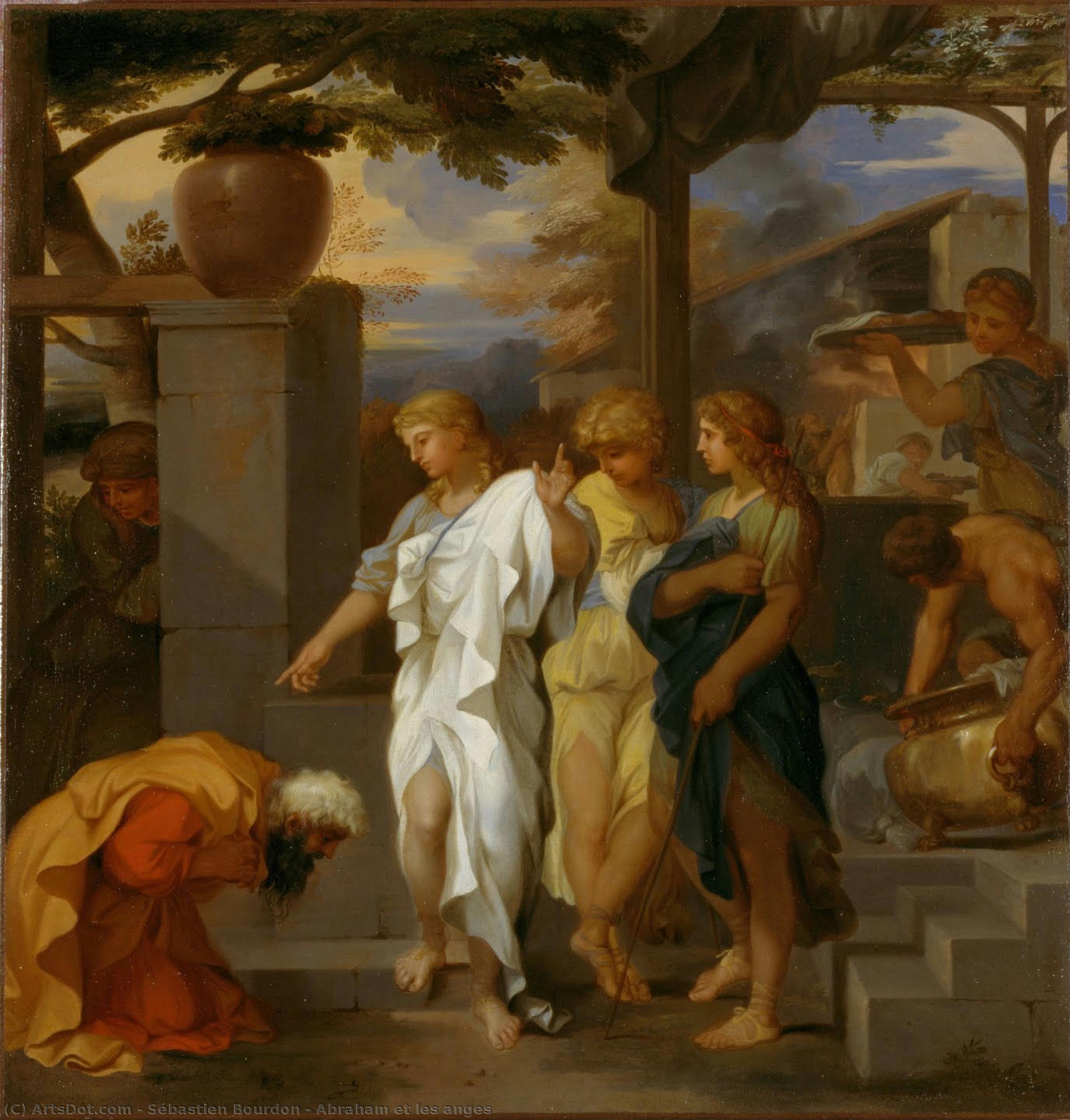
Sébastien Bourdon’s “Abraham et les anges” (Abraham and the Angels) is not merely a biblical depiction; it's a profound meditation on faith, generosity, and divine intervention rendered with the dramatic intensity characteristic of the late 17th-century Baroque. Painted between 1653 and 1657 during Bourdon’s Parisian period – a time when he was working for the influential Duke de Chevreuse – this small-scale oil painting offers a glimpse into a world where religious narrative intertwined seamlessly with aristocratic patronage. The scene, drawn from Genesis chapter 18, captures a pivotal moment: Abraham's extraordinary hospitality to three angelic visitors who announce the imminent birth of his son Isaac. It’s a tableau brimming with layered symbolism and executed with a masterful command of light, shadow, and human form.
Bourdon’s artistic lineage is immediately apparent. He was deeply influenced by the Roman Baroque masters – particularly Caravaggio – and this influence manifests in the painting's stark contrasts and dramatic use of chiaroscuro. The composition is carefully constructed to draw the viewer’s eye towards Abraham, a figure kneeling in humble deference before the radiant angels. Their forms are sculpted with meticulous detail, each fold of drapery rendered with an almost sculptural quality. Notice how Bourdon uses light not just to illuminate figures but also to create a sense of depth and atmosphere – the warm glow emanating from the angels contrasts sharply with the darker recesses of the courtyard setting, emphasizing the sacredness of the encounter.
The Courtyard of Mambré: Setting and Symbolism
The painting’s setting—a courtyard or porch, likely inspired by classical Roman architecture—is crucial to its meaning. The reference to “Mambré” (a biblical figure associated with a sacred oak) immediately anchors the scene in the Old Testament narrative. This architectural detail subtly elevates the earthly realm of Abraham's home into something imbued with divine significance. The arrangement of figures within this space is deliberate; Abraham, at the center, represents humanity’s capacity for faith and obedience. The angels, messengers of God, embody divine grace and intervention. And Sarah, though unseen, is the silent recipient of this miraculous promise – a symbol of hope and future fertility.
Beyond the immediate narrative, the scene resonates with broader themes of hospitality and welcoming the stranger. Abraham’s willingness to offer food and shelter to uninvited guests reflects a core tenet of Jewish faith: treating all people with kindness and compassion, regardless of their background or status. This act of generosity is not simply an earthly gesture; it's presented as a demonstration of Abraham’s unwavering loyalty to God.
Bourdon’s Technique and the Parisian Baroque
Bourdon’s skill lies in his ability to synthesize diverse influences into a distinctly personal style. While he clearly admired Caravaggio’s dramatic lighting, he also incorporated elements of the French courtly tradition – evident in the refined drapery and the elegant poses of the figures. His brushwork is remarkably controlled, creating a surface that is both luminous and textured. The use of rich pigments—particularly golds and reds—contributes to the painting's overall sense of opulence and grandeur.
Furthermore, “Abraham et les anges” provides valuable insight into the artistic climate of Paris during Bourdon’s time. It exemplifies the flourishing Baroque movement that was transforming the city’s art scene. Bourdon’s work reflects a shift away from the more restrained Mannerism of earlier periods and towards a greater emphasis on emotional expression, dramatic composition, and dynamic movement – characteristics that would define the French Baroque for decades to come.
A Timeless Reflection: The Emotional Resonance
Despite its historical context, “Abraham et les anges” continues to resonate with viewers today. The painting’s depiction of faith, generosity, and divine grace transcends time and culture. It invites us to contemplate the meaning of hospitality, the importance of compassion, and the enduring power of belief. The subtle expressions on Abraham's face—a mixture of humility, wonder, and anticipation—capture a profound human experience: the recognition of something greater than oneself. It’s a work that speaks not only to the eye but also to the heart, offering a timeless meditation on the mysteries of faith and the enduring values of humanity.
Biografía del artista
Sébastien Bourdon: Un Maestro Barroco de Luz Dramática y Emoción
Sébastien Bourdon (1616 – 1671) ocupa un lugar fundamental en el paisaje artístico francés del siglo XVII, encarnando la grandeza y la intensidad emocional características del período barroco. Nacido en Montpellier, Francia, descendía de una familia arraigada en tradiciones artísticas —su padre era pintor de vidrio— y recibió una educación temprana que inculcó en él una profunda apreciación por el relato visual. Sus años formativos estuvieron marcados por aprendizaje bajo Jean Baptiste Tourneyn, pintor parisino quien le exponía a las convenciones estilísticas de su tiempo. Crucialmente, esta formación fomentó una conexión con las corrientes artísticas que emanaban de Roma, donde emprendió un viaje transformador en 1636. Inspirado por luminarias como Nicolas Poussin, Claude Lorrain y Caravaggio —artistas cuyo dominio cautivaba la imaginación de Bourdon— perfeccionó sus habilidades entre el fervor intelectual de la corte papal. Bourdon’s estilo artístico se caracteriza por su notable versatilidad y adaptabilidad. Aunque destacó en retrato, capturando sujetos con sensibilidad y sutileza – frecuentemente empleando un enfoque rubensem o favoreciendo retratos de tamaño busto contra fondos apagados –, igualmente demostró habilidad en lienzos monumentales impregnados de dramatismo barroco. Su logro más celebrado sigue siendo “La Crucifixión de San Pedro”, encargada para la catedral de Notre Dame, una obra maestra que ejemplifica el dominio magistral de Bourdon del claroscuro y su capacidad para transmitir emoción espiritual profunda. Otros trabajos notables incluyen “La Deposición”, que muestra la meticulosa atención al detalle de Bourdon y su capacidad para representar escenas rebosantes de pathos palpable. Su producción artística trascendió las encargas religiosas; produjo paisajes cautivadores que reflejaban la grandeza del paisaje italiano, demostrando un compromiso más amplio con ideales humanistas. Bourdon fue fundador de la Academia Real de Pintura y Escultura de París junto con otros artistas destacados como Laurent de La Hyre, consolidando así su papel en el desarrollo artístico francés de la época. Su obra maestra sigue siendo “La Crucifixión de San Pedro”, una pieza clave del arte barroco que continúa inspirando admiración por su belleza estética y profundidad emocional. Además, sus paisajes ofrecen un testimonio de la influencia del Renacimiento italiano en el pensamiento artístico de Bourdon y en la sensibilidad artística de su tiempo.
Sébastien Bourdon
1616 - 1671 , Francia
Información clave
- Artistic Movement Or Style: Barroco
- Artists Who Influenced This Artist:
- Nicolas Poussin
- Claude Lorrain
- Caravaggio
- Date Of Birth: 2 febrero 1616
- Date Of Death: 8 mayo 1671
- Full Name: Sébastien Bourdon
- Nationality: Francés
- Notable Artworks:
- El Martirio de San Pedro
- La Caída de Simón el Mago
- Place Of Birth: Montpellier, Francia

