
 Ver en contexto
 Enviar
 Compartir
 Detalles
 Guía
Guía

 Descargar
 Similares
 Radiografía
 Presentación de diapositivas
 Q&A
Q&A Estadísticas
Desfiladero de Delaware

- 91.0 x 128.0 cm


 Ver más
La obra de arte que se muestra en esta página está protegida por las leyes de propiedad intelectual, lo que significa que no podemos crear ni vender legalmente una reproducción idéntica. Esta protección se hace cumplir en virtud de acuerdos internacionales como el Convenio de Berna y por las leyes nacionales, incluidas aquellas establecidas por el Ley de derechos de autor de los EE. UU. - Título 17.
Este método cumple plenamente con las normativas de derechos de autor, ya que no implica la copia ni la duplicación de la obra protegida. En su lugar, se trata de una reinterpretación creativa: una nueva pintura influenciada por la original, pero que no es idéntica a ella.
Giclée / Impresión de arte
Impresiones giclée o en lienzo de calidad de museo con producción rápida y opciones de acabado flexibles. ( Comprar pintura hecha a mano Cambiar a imagen digital)




P118B €10

P118H €10

P118W €10

P438Z €10

P508JH €12

P508YH €12

P805H €10

P805Z €10

P919BZ €10

P919G €10

P919XJ €10

P959ZH €10

P968JZ €12

W106C €8

W218G €10

W218JH €8

W218Y €10

W307PJ €10

W316G €10

W316PJ €8

W316Y €10

W398PJ €8

W4111J €10

W500HY €15

W500JH €15

W692G €12

W849H €8

W940BG €15

W953PJ €8




Elija entre nuestros tamaños predefinidos que respetan las proporciones originales de la obra.

Introduzca el ancho y el alto que necesite para adaptarse a su marco o pared. Una impresión solo puede recortarse, nunca hacerse más grande que la imagen original, por lo que un tamaño con una forma distinta perderá parte de la obra. Le enviaremos una maqueta digital para su aprobación antes de realizar cualquier impresión. La imagen que se muestra en esta página no refleja el recorte real; solo la maqueta lo hace.
Envío a todo el mundo () en 2 semanas en lugar de las 4/5 semanas estándar. (1 noviembre)

Envío exprés gratuito a todo el mundo

Lienzo de lino de alta calidad

Seguro de envío total

Garantía de reembolso de aranceles aduaneros

Garantía de fidelidad cromática exacta

Política de devolución de 100 días (solo por defectos)

Garantía de devolución del 100% del dinero

Descuento por cantidad
 La opción de vidrio solo está disponible en tamaños inferiores a 110 cm.

Desfiladero de Delaware
Giclée / Impresión de arte
Dimensiones de la reproducción
-


Precio total final
€ 71
Una visión de majestuosidad industrial encontrándose con la gracia natural
Contemplar esta representación de Delaware Water Gap es transportarse a un momento suspendido entre épocas: un tiempo en el que la fuerza bruta de la naturaleza americana estaba siendo irrevocablemente moldeada por la marcha implacable de la industria. George Inness, maestro cronista del paisaje estadounidense, captura no solo una ubicación geográfica, sino una profunda colisión cultural. La escena se despliega con un alcance asombroso, presentando el majestuoso recorrido del valle del río enmarcado por montañas distantes e imponentes. Es un panorama que habla simultáneamente de la grandeza sublime de la creación y de la energía floreciente del emprendimiento humano.
La armonía de las contradicciones: simbolismo en la escena
Lo que hace que esta obra sea tan perdurablemente cautivadora es su magistral yuxtaposición de elementos. Por un lado, somos testigos del vigor mecánico del progreso; una locomototora de vapor se desplaza con determinación a lo largo de la orilla del agua, acompañada por barcazas pesadamente cargadas que hablan de comercio y conexión. Sin embargo, estos símbolos de la industria se suavizan, casi acunados, por la tranquilidad pastoral del primer plano. Aquí, vacas que pastan salpican la tierra verdeante, encarnando un ritmo eterno que permanece intacto ante el silbido de la locomotora. En lo alto, la naturaleza ofrece su bendición más impresionante: un arcoíris vibrante se curva sobre el agua, un símbolo clásico de promesa y pacto divino tras el paso de la tormenta. Esta cuidadosa disposición —la ambición del hombre encontrándose con el arte de Dios— es el corazón mismo de la indagación espiritual de Inness.
Técnica y el eco de la Hudson River School
Pintada en 1861, esta pieza se sitúa firmemente dentro del linaje de la Hudson River School, aunque portando la firma contemplativa única de George Inness. Mientras que sus contemporáneos a menudo se centraban en el asombro puro ante la naturaleza salvaje, Inness infundió sus paisajes con un sentido palpable de narrativa espiritual. Su técnica permite al espectador sentir el aire húmedo tras una tormenta y escuchar el distante soplido del vapor. El manejo de la luz es particularmente notable; los dramáticos efectos climáticos —la tempestad que pasa dando paso a un color brillante— están representados con una cualidad casi luminosa, sugiriendo que la belleza capturada no es meramente óptica, sino profundamente sentida.
Llevando lo sublime americano al hogar
Para el coleccionista o diseñador que busca una pieza que ancle una habitación con profundidad narrativa, esta reproducción ofrece más que mera decoración; ofrece contemplación. La escala de 91 x 128 cm permite al espectador retroceder y absorber la composición completa: la intimidad del primer plano con la inmensidad del fondo. Invita a una reflexión silenciosa sobre el lugar de la humanidad dentro de la vastedad del mundo natural. Poseer esta visión es poseer una pieza tangible de la historia americana, un diálogo entre el espíritu salvaje y la civilización en avance, plasmado en una pintura exquisita y perdurable.
Preguntas y respuestas
¿Cuándo y con qué técnica se realizó "Desfiladero de Delaware"?
La técnica de "Desfiladero de Delaware" de Scotlan George Inness es Óleo sobre lienzo y la obra data de 1861.
¿Para qué uso se recomienda "Desfiladero de Delaware" de Scotlan George Inness?
El uso sugerido para "Desfiladero de Delaware" de Scotlan George Inness es Pieza focal. También puede utilizarse con otros fines.
¿A qué movimiento artístico pertenece "Desfiladero de Delaware" de Scotlan George Inness?
"Desfiladero de Delaware" es una obra de Escuela del Río Hudson. El movimiento indica la tradición artística a la que pertenece la obra.
Biografía del artista
The Ethereal Vision of George Inness
George Inness stands as one of the most profound and influential landscape painters of the nineteenth century, a master who sought to capture not merely the physical topography of the American wilderness, but the very soul of the natural world. While his contemporaries in the Hudson River School often focused on the grand, panoramic documentation of a burgeoning nation, Inness carved out a singular artistic path that blended Romantic idealism with deep scientific observation. His work serves as a bridge between the tangible reality of the earth and the intangible realms of spiritual contemplation, exploring the profound relationship between nature and the human spirit.
Born in Newburgh, New York, on May 1, 1825, Inness’s early life was steeped in a connection to both the rugged American landscape and his ancestral roots. His father, an emigrant from Ayrshire, Scotland, instilled within him a deep appreciation for the contemplative power of the wild. This duality of heritage—the American frontier and the Scottish tradition—would later manifest in his ability to find both epic scale and intimate, evocative beauty in his subjects. His early training was diverse, ranging from instruction under John Jesse Barker to a formative apprenticeship with the map engraver N. Curcept, which provided him with a foundational precision in visual representation that would later support his more expressive, atmospheric endeavors.
Spiritualism and the Barbizon Influence
The true metamorphosis of Inness’s style can be traced to his encounter with the theological writings of Emanuel Swedenborg. This profound spiritual influence became the cornerstone of his artistic worldview; Inness believed that the material world was permeated by unseen spiritual forces, and he viewed the canvas as a conduit for accessing these hidden realms. This conviction moved him away from the literalism of topographical painting toward a more subjective, emotional approach to landscape.
As his career progressed, Inness looked toward Europe, specifically absorbing the influences of the French Barbizon school. This movement, which emphasized the intimate, moody, and atmospheric qualities of nature, resonated deeply with his Swedenborgian beliefs. By integrating the tonalist sensibilities of the Barbizon masters with the grander traditions of American landscape painting, he developed a technique that prioritized light, shadow, and color to evoke mood rather than mere detail. His brushwork became more expressive, utilizing textures such as impasto to create depth and dimensionality, drawing the viewer into a world where the boundaries between the earth and the sky seem to dissolve.
A Legacy of Light and Atmosphere
The breadth of Inness’s oeuvre is reflected in works that range from the dramatic to the serene. In masterpieces such as Sundown, he demonstrates an unparalleled ability to capture the fleeting magic of a sunset, using a sky filled with clouds to create a dramatic backdrop for a peaceful pastoral scene. Similarly, his work September Afternoon showcases his mastery of tranquility, employing warm colors and a careful balance of light and shadow to evoke a sense of harmony within the natural landscape. Even in his more rugged depictions, such as the romanticized Scottish woodlands of Elf Ground, the artist’s focus remains on the evocative power of the atmosphere.
Throughout his life, Inness’s achievements redefined the boundaries of American art. He moved the genre of landscape painting from a medium of documentation to one of profound psychological and spiritual expression. His historical significance lies in this very transition—the movement toward Tonalism and the idea that art should capture the elusive essence of experience itself. Today, his legacy continues to resonate with artists and admirers alike, serving as a timeless reminder that the most beautiful landscapes are those that reflect the inner landscape of the human heart.

Datos clave
- Artistic Movement Or Style: Hudson River School; Luminist
- Artists Or Movements Influenced By This Artist: ['Régis François Gignoux']
- Artists Who Influenced This Artist:
- Thomas Cole
- Asher Durand
- Date Of Birth: May 1, 1825
- Date Of Death: August 3, 1894
- Full Name: George Inness
- Nationality: American
- Notable Artworks:
- View of the Tiber near Perugia
- Clearing Up
- Place Of Birth: Newburgh, New York
Artículos relacionados
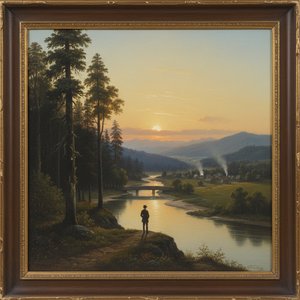
Robert Spencer: Luminism, Narrative & the American Landscape Tradition
Explore the captivating world of Luminism & the Hudson River School with our expert analysis. Discover the history, artists, and enduring beauty of 19th-century American landscape painting. Find museum-quality reproductions at OriginalUniqueArt.

Los 10 Maestros del Río Hudson: Obras que Definieron un Movimiento Artístico
Descubre los 10 lienzos más emblemáticos de la Escuela del Río Hudson. Explora las obras maestras de Thomas Cole, Church y Bierstadt que capturan la belleza del paisaje americano. Encuentra reproducciones de arte exclusivas en OriginalUniqueArt.com.
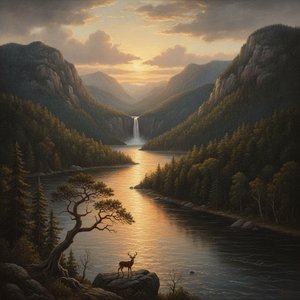
Epic Landscapes & Wild Nature: The Power of the Hudson River School's Sublime Artistry
Explore the breathtaking power of the Hudson River School. Journey through epic American landscapes, from Thomas Cole's sublime vistas to Luminist light, and discover how these timeless masterpieces continue to inspire modern collectors and art lovers worldwide.
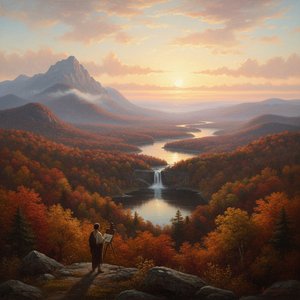
El Sublime Paisaje Americano: Explorando el Movimiento de la Escuela del Río Hudson
Descubre la Escuela del Río Hudson: un movimiento artístico clave en la historia de la pintura estadounidense. Explora su estética romántica, sus artistas más destacados y el concepto del sublime paisaje americano.
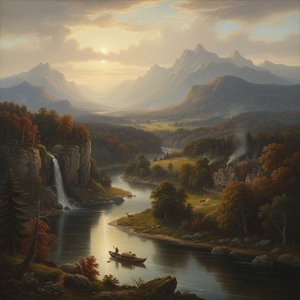
Capturing the American Spirit: A Journey Through Iconic Landscapes and the Legacy of the Hudson River School
Explore the profound beauty of American art history. From the Hudson River School to iconic landscapes, discover a curated journey through the masterpieces that defined a nation's spirit and the enduring legacy of American Romanticism.