Ver en contexto
 Enviar
 Compartir
 Detalles
 Guía
Guía

 Descargar
 Similares
 Radiografía
 Presentación de diapositivas
 Preguntas y respuestas
 Estadísticas
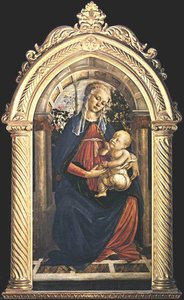
La Madonna y el Niño


 Ver más
Giclée / Impresión de arte
Impresiones giclée o en lienzo de calidad de museo con producción rápida y opciones de acabado flexibles. ( Comprar pintura hecha a mano Cambiar a imagen digital)




P118B €10

P118H €10

P118W €10

P438Z €10

P508JH €12

P508YH €12

P805H €10

P805Z €10

P919BZ €10

P919G €10

P919XJ €10

P959ZH €10

P968JZ €12

W106C €8

W218G €10

W218JH €8

W218Y €10

W307PJ €10

W316G €10

W316PJ €8

W316Y €10

W398PJ €8

W4111J €10

W500HY €15

W500JH €15

W692G €12

W849H €8

W940BG €15

W953PJ €8




Elija entre nuestros tamaños predefinidos que respetan las proporciones originales de la obra.

Introduzca el ancho y el alto que necesite para adaptarse a su marco o pared. Una impresión solo puede recortarse, nunca hacerse más grande que la imagen original, por lo que un tamaño con una forma distinta perderá parte de la obra. Le enviaremos una maqueta digital para su aprobación antes de realizar cualquier impresión. La imagen que se muestra en esta página no refleja el recorte real; solo la maqueta lo hace.
Envío a todo el mundo () en 2 semanas en lugar de las 4/5 semanas estándar. (3 noviembre)

Envío exprés gratuito a todo el mundo

Lienzo de lino de alta calidad

Seguro de envío total

Garantía de reembolso de aranceles aduaneros

Garantía de fidelidad cromática exacta

Política de devolución de 100 días (solo por defectos)

Garantía de devolución del 100% del dinero

Descuento por cantidad
 La opción de vidrio solo está disponible en tamaños inferiores a 110 cm.

La Madonna y el Niño
Giclée / Impresión de arte
Dimensiones de la reproducción
-


Precio total final
€ 72
A Renaissance Vision of Maternal Guidance: Sandro Botticelli’s Untitled Madonna and Child
Sandro Botticelli (1445-1510), born Alessandro di Mariano di Vanni Filipepi in Florence, Italy, stands as a cornerstone of the Early Renaissance—a period characterized by an unprecedented revival of classical ideals and artistic innovation. His life unfolded within the vibrant intellectual landscape of Florence, where he honed his craft under the tutelage of Fra Filippo Lippi, establishing connections with influential patrons like the Medici family that would propel him to international acclaim.
Botticelli’s artistic journey began modestly; initially apprenticed as a goldsmith, he swiftly transitioned to painting, embracing the stylistic currents shaping Florentine art. His formative years were steeped in humanist scholarship and observation—influences evident in his meticulous attention to detail and his profound understanding of human anatomy. Notably, Botticelli resided throughout his life in the Ognissanti neighborhood, a testament to familial ties and the flourishing artistic environment that nurtured his talent.
Subject & Composition
“Untitled (5768),” a circular oil painting executed around 1480-82, embodies Botticelli’s signature aesthetic—a harmonious blend of elegance and devotional fervor. At its core lies the Virgin Mary, depicted with serene dignity as she cradles the infant Jesus. This central figure is not merely held; he actively engages in an activity that speaks volumes about Botticelli's artistic vision: *writing* in an open book. This gesture—a deliberate allusion to Christ’s role as the ultimate teacher and source of divine wisdom—is flanked by six angels, their poses dynamic and expressive. Some gaze downwards with reverence, conveying a palpable sense of humility; others extend their arms in gestures of adoration and support, reinforcing the painting's overarching theme of spiritual devotion.
Style & Technique
Botticelli’s style transcends mere imitation—it represents a pivotal moment in artistic evolution. He deftly bridges the gap between the late Gothic period and the burgeoning Early Renaissance, demonstrating mastery over linear perspective while prioritizing clarity of form and symbolic representation. His brushwork is characterized by remarkable smoothness and delicacy, achieving luminous surfaces through meticulous layering of pigment—a technique that anticipates the innovations championed by Leonardo da Vinci. Botticelli’s use of oil paint allows for nuanced gradations of light and shadow, enhancing the painting's visual depth and imbuing it with an ethereal quality.
Historical Context & Influences
Botticelli flourished during Florence’s golden age—a time when humanist thinkers championed reason and observation alongside artistic creativity. He moved within a circle of intellectuals deeply engaged in rediscovering classical texts and ideals, mirroring the broader cultural transformation sweeping across Europe. His formative years were marked by exposure to influential figures like Fra Filippo Lippi, whose teachings instilled in him a reverence for naturalism and refined craftsmanship.
Symbolism & Meaning
"Untitled (5768)" overflows with symbolic resonance. Mary’s crown signifies her divine majesty—a visual declaration of her exalted status within Christian theology. The open book symbolizes knowledge, wisdom, and the scriptures—echoing Christ’s prophetic mission as the bearer of God’s word. The angels embody heavenly messengers, establishing a connection between the earthly realm and the divine sphere. Furthermore, the hazy landscape in the background contributes to an atmosphere of contemplative serenity—reflecting the Renaissance preoccupation with idealized beauty and spiritual contemplation.
Emotional Impact & Aesthetic Appeal
This captivating artwork evokes profound feelings of peace, reverence, and maternal love. The tender interaction between Mary and Jesus—captured with breathtaking sensitivity—resonates deeply within the viewer’s soul. Botticelli's masterful composition draws the eye towards the central figures, creating a harmonious balance that underscores their significance as emblems of faith and grace. Its vibrant palette—rich blues, reds, and golds—enhances its visual splendor, transporting viewers to a realm of ethereal beauty. For interior designers seeking inspiration or planning to adorn spaces with timeless elegance, “Untitled (5768)” presents an unparalleled opportunity to infuse any room with the spirit of Renaissance artistry.
Photo Description: --Overall Impression-- The artwork is a circular oil painting depicting the Madonna and Child with angels. It’s a Renaissance-style composition characterized by a dynamic grouping of figures arranged within a shallow space. The central focus is on Mary holding the infant Jesus, who is presented as writing in an open book while being guided by an angel. Surrounding them are several other angels, some gazing down upon the scene and others reaching out with gestures of reverence. The background features a hazy landscape with distant hills and buildings, creating a sense of depth. The style leans towards Early Renaissance, evident in the detailed rendering of figures, classical drapery, and balanced composition. The technique is meticulous, showcasing smooth brushstrokes and careful attention to detail. The materials used are oil paints on what appears to be a circular wooden panel. Lighting is dramatic, with a strong light source illuminating the central figures and creating highlights on their faces and clothing. Perspective is somewhat flattened, typical of Renaissance art, prioritizing clarity and symbolic representation over strict realism. The composition employs diagonal lines created by the angels’ outstretched arms, drawing the viewer's eye towards the Madonna and Child. The colors are rich and vibrant, contributing to a sense of opulence and divine grace. There’s an emotional element conveyed through expressions of adoration, guidance, and protection.
Preguntas y respuestas
¿Qué tipo de pieza es "La Madonna y el Niño"?
"La Madonna y el Niño" es una obra de Arte de pared.
¿Dónde puedo encontrar una guía sobre "La Madonna y el Niño"?
La página Ficha informativa de "La Madonna y el Niño" de Sandro Botticelli ofrece una ficha informativa imprimible de dos páginas: la obra con su ficha técnica, una línea de tiempo por décadas que la sitúa en la vida del artista, otras obras del mismo autor, la paleta de colores extraída de la pieza y citas listas para copiar en cuatro estilos diferentes.
¿Qué técnica se utilizó para "La Madonna y el Niño" de Sandro Botticelli?
La técnica de "La Madonna y el Niño" de Sandro Botticelli es Óleo sobre tabla. Las reproducciones pretenden recrear la apariencia de esta técnica.
Biografía del artista
vida temprana y formación
Sandro Botticelli, nacido Alessandro di Mariano di Vanni Filipepi alrededor de 1445, fue una figura clave en el Renacimiento temprano de la pintura italiana. Inicialmente eclipsado post mortem, la obra de Botticelli fue revitalizada a finales del siglo XIX por los pre-rafaelitas, lo que llevó a una reevaluación de sus contribuciones artísticas. Botticelli nació en Florencia, Italia, y vivió toda su vida en el mismo barrio. Su familia, incluyendo a su padre Mariano di Vanni d'Amadeo Filipepi, estuvo involucrada en diversas profesiones, lo que les permitió entrar en contacto con artistas. Giorgio Vasari informó que Botticelli fue inicialmente entrenado como joyero.Estilo artístico y obras notables
La obra de Botticelli se caracteriza por una elegante linealidad, que conecta el gótico tardío italiano con el Renacimiento temprano. Sus obras más famosas, El nacimiento de Venus y Primavera, se exhiben en la Galería Uffizi en Florencia, que alberga una importante colección de su arte. * El nacimiento de Venus (ver en OriginalUniqueArt) * Primavera (explorar el arte de Sandro Botticelli en OriginalUniqueArt) * La natividad mística (Galería Nacional, Londres), fechada en 1501, es la única obra de Botticelli con una fecha clara.Legado e influencia
El estilo de Botticelli evolucionó hacia un enfoque más personal en la década de 1490, divergente de sus contemporáneos como Leonardo da Vinci y el estilo del Alto Renacimiento emergente. Su obra ha sido reconocida como una contribución significativa al movimiento artístico del Renacimiento italiano. * El movimiento artístico del Renacimiento italiano * Sandro Botticelli en Wikipedia- Artistas notables del Renacimiento italiano incluyen a Sandro Botticelli, Leonardo da Vinci, Miguel Ángel y Tiziano.
- La Galería Uffizi de Florencia alberga una importante colección de arte de Botticelli.
- La obra de Botticelli ha sido reconocida como una figura clave en el Renacimiento temprano de la pintura italiana.
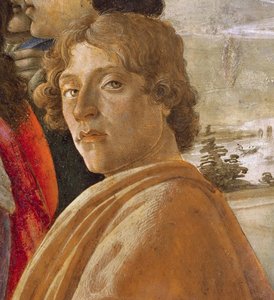
Sandro Botticelli
1445 - 1510 , Italia
Datos clave
- Artistas Que Influyeron:
- Fra Angelico
- Paolo Uccello
- Estilo Artístico: Renacimiento Temprano
- Fecha De Muerte: 1510
- Fecha De Nacimiento: c. 1445
- Influenciado A Artistas: ['Pre-Rafaelitas']
- Lugar De Nacimiento: Florencia, Italia
- Nacionalidad: Italiana
- Nombre Completo: Sandro Botticelli
- Obras Notables:
- El Nacimiento de Venus
- Primavera
- Natividad Mística
Artículos relacionados
Los 10 Maestros del Renacimiento Temprano: Arte que Transformó el Mundo |
Descubre los 10 maestros del Renacimiento Temprano: Botticelli, Leonardo da Vinci y más. Explora la historia, técnica y belleza de obras icónicas italianas. Reproducciones de arte exclusivas en .
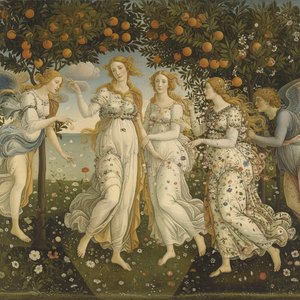
The Ethereal Beauty of Botticelli: A Journey Through the Grace and Symbolism of Italian Renaissance Masterpieces
Explore the ethereal beauty of Sandro Botticelli's masterpieces. Delve into the profound symbolism, mythological grace, and technical mastery that define the Italian Renaissance through an expert art-historical lens.

Las 25 obras maestras imprescindibles de la Galería Uffizi en Florencia
Explora 25 joyas del Renacimiento en la Galería Uffizi, de Botticelli a Da Vinci. ¡Descubre estas obras maestras en OriginalUniqueArt.com!

Dominando la Armonía: Las 25 Mejores Obras Maestras de Rafael
Explora las 25 obras maestras de Rafael y la armonía del Renacimiento. ¡Descubre toda la colección en OriginalUniqueArt.com!

Las 25 mejores obras de Sandro Botticelli: Guía definitiva del maestro del Renacimiento
Explora las 25 obras maestras de Sandro Botticelli y el Renacimiento. ¡Descubre toda la colección en OriginalUniqueArt.com!