- Inicio

- Impresión en lienzo
- Roy Lichtenstein
- Large Interior with Three Reflections
 Encargar reproducción Comprar imagen en alta resolución
 Enviar
 Compartir
 Detalles
 Añadir a favoritos

 Descargar
 Similares
 Radiografía
 Presentación de diapositivas
Large Interior with Three Reflections


 Ver más
Giclée / Impresión de arte
Impresión giclée o en lienzo de calidad de museo con producción rápida y opciones de acabado flexibles.




P118B $10

P118H $10

P118W $10

P438Z $10

P508JH $12

P508YH $12

P805H $10

P805Z $10

P919BZ $10

P919G $10

P919XJ $10

P959ZH $10

P968JZ $12

W106C $8

W218G $10

W218JH $8

W218Y $10

W307PJ $10

W316G $10

W316PJ $8

W316Y $10

W398PJ $8

W4111J $10

W500HY $15

W500JH $15

W692G $12

W849H $8

W940BG $15

W953PJ $8




Elija entre nuestros tamaños predefinidos que respetan las proporciones originales de la obra.

Puede introducir sus propias dimensiones para adaptarse a un marco o espacio específico. Si el tamaño seleccionado no coincide con las proporciones de la imagen original, recortaremos la obra de arte o extenderemos la imagen con un borde con efecto espejo o de color sólido. Se enviará una maqueta digital para su aprobación antes de que comience la producción.
Tenga en cuenta que la vista previa en pantalla no refleja el recorte o la extensión real. Solo la maqueta mostrará con precisión la composición final.
Aunque existen tamaños personalizados, recomendamos seleccionar una dimensión de la lista predefinida para preservar las proporciones originales.
Entrega mundial () en 2 semanas en lugar de las 4/5 semanas estándar. (18 julio)

Envío exprés gratuito a todo el mundo

Lienzo de lino de alta calidad

Seguro de envío total

Garantía de reembolso de impuestos aduaneros

Garantía de fidelidad de color

Política de devolución de 60 días (solo por defectos)

Garantía de devolución del 100% del dinero

Descuento por pedido múltiple
 La opción de vidrio solo está disponible en tamaños inferiores a 110 cm.

Large Interior with Three Reflections
Giclée / Impresión de arte
Tamaño de la reproducción
-


Precio total final
-
Descripción de la obra
Large Interior with Three Reflections – A Bold Statement of Pop Art
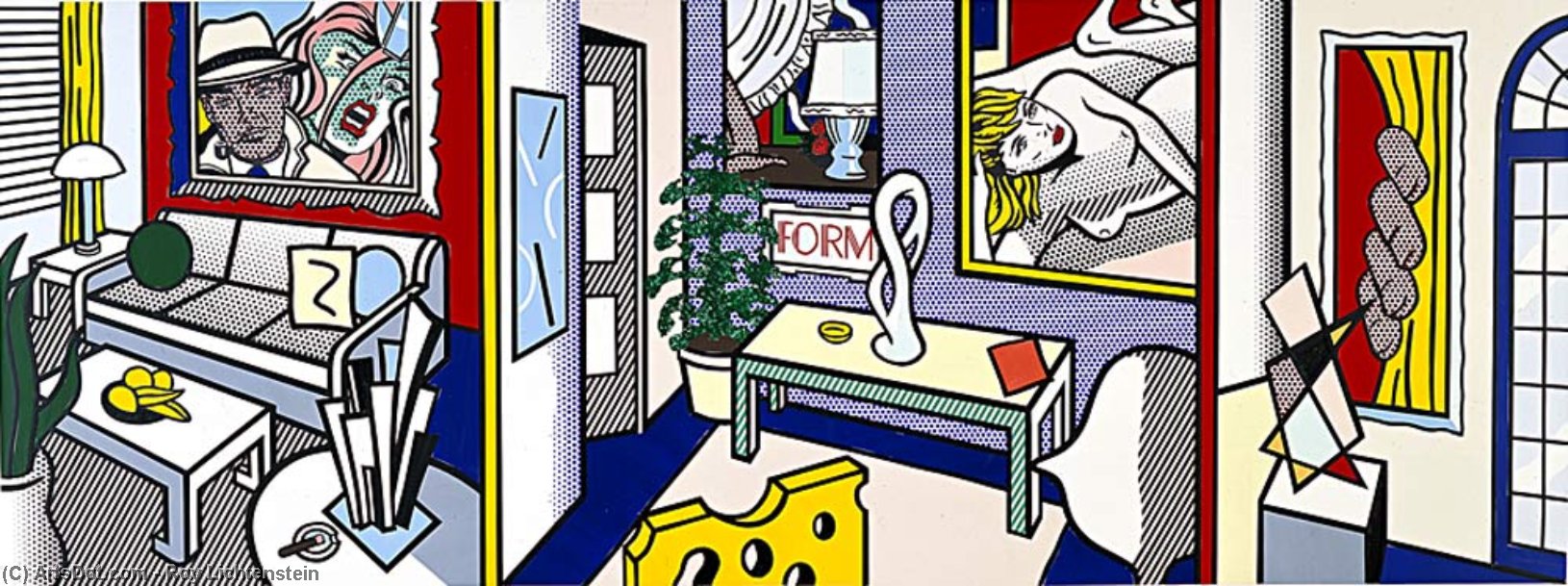
Roy Lichtenstein’s “Large Interior with Three Reflections,” completed in 1993, stands as a quintessential example of the artist's signature style and his masterful manipulation of visual language. More than just a depiction of a domestic scene—a dining room bathed in light—the painting embodies Lichtenstein’s deliberate rejection of traditional artistic conventions and his embrace of the aesthetics of popular culture. It’s a piece that invites contemplation on perception, repetition, and the subtle complexities hidden beneath seemingly simple imagery.The Style: Bold Comic Influence
At first glance, “Large Interior with Three Reflections” appears remarkably straightforward. However, this apparent simplicity belies Lichtenstein's profound engagement with comic strip aesthetics. He famously adopted Ben-Day dots—a printing technique popularized in the 1930s—to create a textured surface that mimics the halftone shading found in comics. This method lends an illusion of movement and vibrancy to what would otherwise be a static composition, mirroring the dynamism inherent in sequential art. The flattened perspective and stylized depiction of figures contribute further to this stylistic echo, firmly anchoring the artwork within the Pop Art movement’s fascination with mass media.Technique: Precision and Controlled Color Palette
Lichtenstein's meticulous approach to painting is evident in every detail. He employed a technique characterized by precise lines and carefully calibrated color palettes—often utilizing vibrant reds, yellows, and blues—to achieve striking visual impact. Unlike Impressionists or Expressionists who sought to capture fleeting sensations of light and emotion, Lichtenstein prioritized clarity and accuracy. The artist meticulously rendered the reflections on the surfaces of objects within the room, demonstrating a remarkable command of perspective and shading. This meticulousness wasn’t merely about technical proficiency; it was a conscious decision to distill visual experience into its most essential components.Historical Context: Challenging Artistic Tradition
“Large Interior with Three Reflections” emerged during a period of significant artistic upheaval—the latter half of the twentieth century—when artists were actively questioning established norms and exploring new avenues for creative expression. The Pop Art movement arose in response to Abstract Expressionism’s dominance, rejecting its emotional intensity and advocating instead for engagement with everyday life and consumer culture. Lichtenstein deliberately distanced himself from the seriousness of his predecessors, using humor and irony to critique societal values. By appropriating imagery from comic books—a medium previously considered lowbrow—he elevated it to the level of fine art, sparking debate about what constituted “serious” artistic endeavor.Symbolism: Reflections on Perception and Repetition
Beyond its stylistic and technical merits, "Large Interior with Three Reflections" carries symbolic weight. The multiple reflections within the room serve as a visual metaphor for perception—how our senses interpret reality and how individual viewpoints can differ. Furthermore, the repetition of objects—the potted plants, the vase, the bowl—emphasizes the idea that appearances can be deceiving and that underlying patterns often dominate surface impressions. Lichtenstein’s deliberate use of these motifs invites viewers to consider questions about representation and the nature of visual experience.Emotional Impact: A Quiet Intensity
Despite its seemingly detached aesthetic, “Large Interior with Three Reflections” possesses a subtle emotional resonance. The carefully orchestrated color palette evokes feelings of warmth and tranquility, while the stylized figures convey a sense of understated drama. Ultimately, Lichtenstein’s artwork encourages contemplation on beauty, simplicity, and the power of visual imagery to communicate complex ideas—a testament to his enduring legacy as one of Pop Art's most influential voices.Biografía del artista
vida temprana y educación
Roy Fox Lichtenstein, un destacado artista pop estadounidense, nació el 27 de octubre de 1923 en la ciudad de Nueva York. Creció en una familia judía de clase media alta, con su padre como corredor de bienes raíces y su madre como ama de casa. El interés de Lichtenstein por el arte y el diseño comenzó como un pasatiempo durante sus años escolares.Carrera artística
Después de completar su educación secundaria en la Dwight School en 1940, Lichtenstein asistió a la Art Students League of New York bajo la tutela de Reginald Marsh. Luego continuó con una licenciatura en artes visuales de la Universidad de Ohio, que fue interrumpida por un servicio militar de tres años durante la Segunda Guerra Mundial.- Look Mickey (1961, Galería Nacional de Arte, Washington D.C.), una de las primeras obras pop art de Lichtenstein, marcó el comienzo de su influyente carrera.
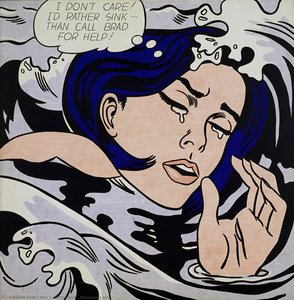
- Su trabajo estuvo fuertemente influenciado por los estilos de publicidad y cómics populares, con obras notables como Wham!, Drowning Girl y Oh, Jeff... I love you too... but...
- La obra más cara de Lichtenstein, Masterpiece, se vendió por 165 millones de dólares en enero de 2017.
Enseñanza e influencias
Lichtenstein enseñó en varias instituciones, incluyendo la Universidad Estatal de Nueva York en Oswego y la Universidad Rutgers. Su trabajo fue influenciado por Allan Kaprow, un colega profesor en Rutgers, lo que reavivó su interés en las imágenes proto-pop. Exposiciones notables:- The Museum Chambre de Commerce (Tolosa, Francia), que presentaba varias obras de arte, incluyendo aquellas del movimiento pop art.
- El trabajo de Lichtenstein fue exhibido en la Leo Castelli Gallery en la ciudad de Nueva York, con su primera exposición individual en 1962 siendo comprada por completo por coleccionistas influyentes antes de que abriera.
Legado e impacto
Roy Lichtenstein falleció el 29 de septiembre de 1997, dejando atrás un legado como figura destacada del movimiento pop art. Su obra continúa siendo celebrada por su innovadora mezcla de arte alto y bajo, haciendo que sea accesible a una audiencia más amplia.- Explore más obras de Lichtenstein en OriginalUniqueArt.com
- Descubra el mundo del pop art y sus influyentes artistas en Pop Art y más allá: navegando los estilos contemporáneos con OriginalUniqueArt.com
- Wikipedia: Roy Lichtenstein
- The Museum Chambre de Commerce (Tolosa, Francia) en OriginalUniqueArt.com

Roy Lichtenstein
1923 - 1997 , Estados Unidos de América
Datos clave
- Artistas Que Influyeron:
- Reginald Marsh
- Allan Kaprow
- Fecha De Muerte: 29 de septiembre de 1997
- Fecha De Nacimiento: 27 de octubre de 1923
- Lugar De Nacimiento: Manhattan, EE. UU.
- Movimiento Artístico: Pop Art
- Nacionalidad: Estadounidense
- Nombre Completo: Roy Lichtenstein
- Obras Notables:
- Look Mickey
- Whaam!
- Drowning Girl
- Masterpiece
Artículos relacionados
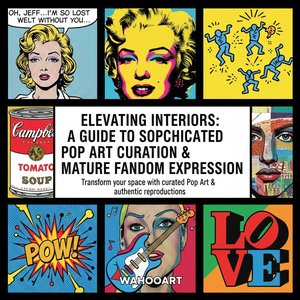
Elevando los Interiores: Guía para una Curación Sofisticada del Arte Pop y la Expresión Madura de la Afición
Guía experta para integrar el vibrante Arte Pop en tu hogar con sofisticación. Descubre artistas clave, consejos de decoración y cómo invertir inteligentemente en arte. ¡Transforma tus espacios!
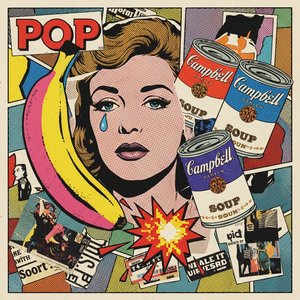
Desafiando las Convenciones: Orígenes, Evolución y Legado Duradero del Pop Art
Descubra la fascinante historia del Pop Art: orígenes, artistas clave como Warhol y Lichtenstein, técnicas innovadoras y su impacto duradero en el arte y la cultura. Guía experta para coleccionistas.
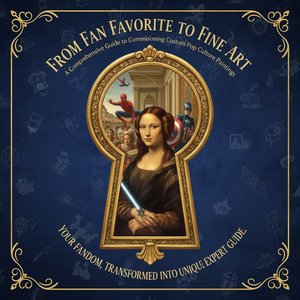
De la Pasión del Fandom a la Obra de Arte Única: Una Guía Completa para Encargar Pinturas Personalizadas de Cultura Popular
¿Sueñas con ver tus personajes favoritos plasmados en arte único? Guía completa para encargar pinturas personalizadas de alta calidad a artistas profesionales. ¡Convierte tu pasión en una obra maestra!
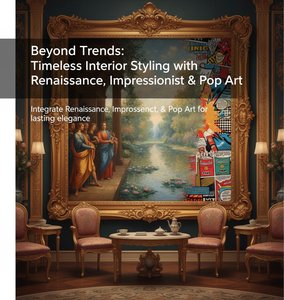
Más Allá de las Tendencias Efímeras: Cultivando Estéticas Interiores Duraderas a Través del Renacimiento, la Luz Impresionista y el Vibrante Pop Art
Descubre cómo crear un hogar con carácter atemporal combinando Renacimiento, Impresionismo y Pop Art. Reproducciones de alta calidad y asesoramiento experto en OriginalUniqueArt.com.
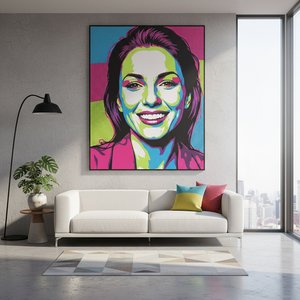
De la Instantánea al Ícono: Revaloriza tus Recuerdos con Arte Contemporáneo en Óleo
Transforma tus fotos en obras de arte originales con OriginalUniqueArt.com. Pinturas al óleo personalizadas por expertos, calidad museo y entrega segura. ¡Crea un legado visual único!