Ver en contexto
 Enviar
 Compartir
 Detalles

 Descargar
 Similares
 Radiografía
 Presentación de diapositivas
Face green nose


 Ver más
Reproducción al óleo hecha a mano
Óleo sobre lienzo pintado a mano en el tamaño y marco de su elección, realizado por encargo por nuestros artistas. ( Comprar impresión Comprar imagen)




P118B $10

P118H $10

P118W $10

P438Z $10

P508JH $12

P508YH $12

P805H $10

P805Z $10

P919BZ $10

P919G $10

P919XJ $10

P959ZH $10

P968JZ $12

W106C $8

W218G $10

W218JH $8

W218Y $10

W307PJ $10

W316G $10

W316PJ $8

W316Y $10

W398PJ $8

W4111J $10

W500HY $15

W500JH $15

W692G $12

W849H $8

W940BG $15

W953PJ $8




Elija entre nuestros tamaños predefinidos que respetan las proporciones originales de la obra.

Puede ingresar sus propias dimensiones para adaptarse a un marco o espacio específico. Si el tamaño seleccionado no coincide con las proporciones de la imagen original, recortaremos la obra o extenderemos la pintura con elementos adicionales pintados a mano. Se le enviará una maqueta digital para su aprobación antes de comenzar la producción.
Tenga en cuenta que la vista previa en pantalla no refleja el recorte o la extensión reales. Solo la maqueta mostrará con precisión la composición final.
Si bien existen tamaños personalizados, recomendamos seleccionar una dimensión de la lista predefinida para preservar las proporciones originales.
Tras realizar el pedido, el equipo de OriginalUniqueArt.com enviará un correo electrónico al cliente para solicitar instrucciones y proporcionarle una vista previa del boceto.
Envío a todo el mundo () en 3-4 semanas en lugar de las 5 semanas estándar. (30 agosto). Sin comprometer la calidad.

Envío exprés gratuito a todo el mundo

Lienzo de lino de alta calidad

Seguro de envío total

Garantía de reembolso de impuestos aduaneros

Garantía de fidelidad cromática exacta

Política de devolución de 60 días (solo por defectos)

Garantía de devolución del 100% del dinero

Descuento por cantidad
 La opción de vidrio solo está disponible en tamaños inferiores a 110 cm.

Face green nose
Técnica de reproducción
Dimensiones de la reproducción
-


Precio total final
$ 300
A Bold Encounter with Familiar Forms
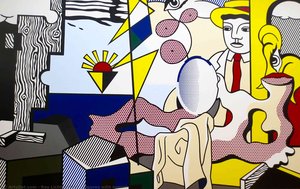
In the vibrant, pulsating dialogue between high culture and the everyday pulse of the street, Roy Lichtenstein’s "Face Green Nose" stands as a striking testament to the artist's masterful manipulation of Pop Art conventions. To gaze upon this work is to enter a world where the boundaries between a museum masterpiece and a Sunday morning comic strip dissolve entirely. The painting presents a captivating deconstruction of representation, featuring a face adorned with a vibrant green nose, set against a dramatic scarlet backdrop that commands immediate attention. This striking juxtaposition does more than merely please the eye; it embodies Lichten Lichtenstein’s deliberate challenge to artistic tradition—a challenge that simultaneously celebrates and critiques the visual language of mass culture.
The composition possesses a rhythmic, almost mechanical beauty that captures the heartbeat of mid-century Americana. Beyond the central figure, the presence of secondary faces and unexpected elements, such as the whimsical object resembling a banana, suggests a larger, interconnected narrative. This unique arrangement invites viewers to question conventional notions of beauty and identity, making it an ideal centerpiece for those looking to inject a sense of playful intellectualism into a modern interior. For collectors and designers alike, the piece offers a dynamic energy that can transform a space, turning a wall into a window onto the bold, colorful era of Post-Pop Art.
The Alchemy of Ben-Day Dots and Precision
At the core of this artwork's visual power lies Lichtenstein’s revolutionary technique—the use of Ben-Day dots. Borrowed from the world of commercial printing and mass-produced advertisements, this method involves applying tiny, meticulously placed colored dots to create an illusion of shading, texture, and depth. Unlike the heavy, emotional brushstrokes found in Abstract Expressionism, Lichtenstein employs a crisp, calculated precision. This technique produces a distinctive halftone pattern that mimics the look of a printed comic book, yet when executed on canvas, it achieves a monumental scale and a sophisticated graphic impact.
This mastery of serial reproduction allows the artist to bridge the gap between the disposable imagery of consumerism and the permanence of fine art. The flat planes of color and bold, black outlines create a high-contrast aesthetic that is both iconic and timeless. For an interior designer, this technique provides a structured yet visually stimulating texture that complements contemporary minimalist or eclectic decor. The interplay of these mechanical dots with the organic subject matter creates a tension that keeps the eye moving across the canvas, discovering new layers of detail with every glance.
A Legacy of Cultural Interrogation
To understand the emotional resonance of "Face Green Nose," one must look back to the genesis of Lichtenstein’s vision. Born in Manhattan in 1923, his artistic trajectory was shaped by a deep appreciation for both realism and the burgeoning fascination with popular culture in the postwar era. His formal training at the Art Students League provided him with foundational skills, but it was his ability to interrogate the imagery of the masses that propelled him to international fame. He did not simply reflect his era; he actively transformed commonplace fragments of our visual landscape into profound artistic statements.
The painting serves as a window into a period of significant cultural upheaval, where the heavy emotionality of previous generations was being replaced by a fascination with the industrial and the mass-produced. By elevating "low" culture to the status of "high" art, Lichtenstein invites us to reconsider how we consume images, emotions, and stories in a modern age. Owning a reproduction of such a piece is more than an aesthetic choice; it is an embrace of a pivotal moment in art history, offering a sophisticated way to celebrate the enduring power of the Pop Art movement.
Biografía del artista
vida temprana y educación
Roy Fox Lichtenstein, un destacado artista pop estadounidense, nació el 27 de octubre de 1923 en la ciudad de Nueva York. Creció en una familia judía de clase media alta, con su padre como corredor de bienes raíces y su madre como ama de casa. El interés de Lichtenstein por el arte y el diseño comenzó como un pasatiempo durante sus años escolares.Carrera artística
Después de completar su educación secundaria en la Dwight School en 1940, Lichtenstein asistió a la Art Students League of New York bajo la tutela de Reginald Marsh. Luego continuó con una licenciatura en artes visuales de la Universidad de Ohio, que fue interrumpida por un servicio militar de tres años durante la Segunda Guerra Mundial.- Look Mickey (1961, Galería Nacional de Arte, Washington D.C.), una de las primeras obras pop art de Lichtenstein, marcó el comienzo de su influyente carrera.
- Su trabajo estuvo fuertemente influenciado por los estilos de publicidad y cómics populares, con obras notables como Wham!, Drowning Girl y Oh, Jeff... I love you too... but...
- La obra más cara de Lichtenstein, Masterpiece, se vendió por 165 millones de dólares en enero de 2017.
Enseñanza e influencias
Lichtenstein enseñó en varias instituciones, incluyendo la Universidad Estatal de Nueva York en Oswego y la Universidad Rutgers. Su trabajo fue influenciado por Allan Kaprow, un colega profesor en Rutgers, lo que reavivó su interés en las imágenes proto-pop. Exposiciones notables:- The Museum Chambre de Commerce (Tolosa, Francia), que presentaba varias obras de arte, incluyendo aquellas del movimiento pop art.
- El trabajo de Lichtenstein fue exhibido en la Leo Castelli Gallery en la ciudad de Nueva York, con su primera exposición individual en 1962 siendo comprada por completo por coleccionistas influyentes antes de que abriera.
Legado e impacto
Roy Lichtenstein falleció el 29 de septiembre de 1997, dejando atrás un legado como figura destacada del movimiento pop art. Su obra continúa siendo celebrada por su innovadora mezcla de arte alto y bajo, haciendo que sea accesible a una audiencia más amplia.- Explore más obras de Lichtenstein en OriginalUniqueArt.com
- Descubra el mundo del pop art y sus influyentes artistas en Pop Art y más allá: navegando los estilos contemporáneos con OriginalUniqueArt.com
- Wikipedia: Roy Lichtenstein
- The Museum Chambre de Commerce (Tolosa, Francia) en OriginalUniqueArt.com

Roy Lichtenstein
1923 - 1997 , Estados Unidos de América
Datos clave
- Artistas Que Influyeron:
- Reginald Marsh
- Allan Kaprow
- Fecha De Muerte: 29 de septiembre de 1997
- Fecha De Nacimiento: 27 de octubre de 1923
- Lugar De Nacimiento: Manhattan, EE. UU.
- Movimiento Artístico: Pop Art
- Nacionalidad: Estadounidense
- Nombre Completo: Roy Lichtenstein
- Obras Notables:
- Look Mickey
- Whaam!
- Drowning Girl
- Masterpiece
Artículos relacionados
Roy Lichtenstein: Las 25 Obras Maestras del Pop Art que Transformaron el Arte y la Decoración
Descubre las 25 obras maestras de Roy Lichtenstein, ícono del Pop Art. Explora su innovadora técnica, colores vibrantes y el impacto cultural de sus cuadros más famosos. Reproducciones de arte exclusivas en OriginalUniqueArt.com.
Verdant Visions: Exploring the Symbolism & Aesthetic Impact of Green in Art History
Explore the rich history & symbolism of green in art! Discover iconic paintings, techniques, and how to bring verdant harmony into your home with OriginalUniqueArt's expert guide.

Pop Power: The High-Impact Color Theory of Roy Lichtenstein | A Visual Journey into Pop Art Mastery
Dive into the high-impact world of Roy Lichtenstein. Explore how his bold color theory, Ben-Day dots, and comic book aesthetics revolutionized modern art and continue to define contemporary visual culture.
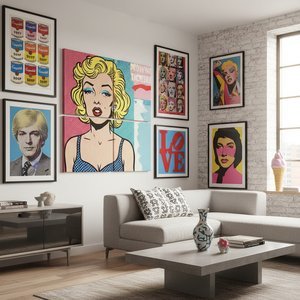
Los 10 Maestros del Pop Art: Obras Icónicas para Decorar con Estilo
Descubre los 10 iconos del Pop Art: Warhol, Lichtenstein y más. Explora la historia, técnica y significado de estas obras maestras que revolucionaron el arte moderno. Encuentra reproducciones exclusivas en .

The Psychology of the Palette: Decoding Roy Lichtenstein's Bold Color Theory
Explore the psychological depth of Roy Lichtenstein's color theory. An expert analysis for art students and collectors on Ben-Day dots, primary palettes, and the intersection of Pop Art with mass media history.