 Vista previa
 Compartir
 Compartir
 Ver detalles
 Guía
Guía

 Descargar
 Ver artículos similares
 Radiografía
 Presentación de diapositivas
 Estadísticas
En el coche
 Acrílico sobre lienzo
- Arte de pared
- Pop Art
 1963
1963- Moderno
 172.0 x 203.0 cm
 Leer más
La obra de arte que se muestra en esta página está protegida por las leyes de propiedad intelectual, lo que significa que no podemos crear ni vender legalmente una reproducción idéntica. Esta protección se hace cumplir en virtud de acuerdos internacionales como el Convenio de Berna y por las leyes nacionales, incluidas aquellas establecidas por el Ley de derechos de autor de los EE. UU. - Título 17.
Este método cumple plenamente con las normativas de derechos de autor, ya que no implica la copia ni la duplicación de la obra protegida. En su lugar, se trata de una reinterpretación creativa: una nueva pintura influenciada por la original, pero que no es idéntica a ella.
Giclée / Impresión de arte
Impresiones giclée o en lienzo de calidad de museo con producción rápida y opciones de acabado flexibles. ( Encargar reproducción pintada a mano Ver versión en imagen digital)




P118B €10

P118H €10

P118W €10

P438Z €10

P508JH €12

P508YH €12

P805H €10

P805Z €10

P919BZ €10

P919G €10

P919XJ €10

P959ZH €10

P968JZ €12

W106C €8

W218G €10

W218JH €8

W218Y €10

W307PJ €10

W316G €10

W316PJ €8

W316Y €10

W398PJ €8

W4111J €10

W500HY €15

W500JH €15

W692G €12

W849H €8

W940BG €15

W953PJ €8




Elija entre nuestros tamaños predefinidos que respetan las proporciones originales de la obra.

Introduzca el ancho y el alto que necesite para adaptarse a su marco o pared. Una impresión solo puede recortarse, nunca hacerse más grande que la imagen original, por lo que un tamaño con una forma distinta perderá parte de la obra. Le enviaremos una maqueta digital para su aprobación antes de realizar cualquier impresión. La imagen que se muestra en esta página no refleja el recorte real; solo la maqueta lo hace.
Envío a todo el mundo () en 2 semanas en lugar de las 4/5 semanas estándar. (23 octubre)

Envío exprés gratuito a todo el mundo

Lienzo de lino de alta calidad

Seguro de envío completo

Garantía de reembolso de impuestos aduaneros

Garantía de fidelidad cromática exacta

Política de devolución de 100 días (solo por defectos)

Garantía de devolución del 100% del dinero

Oferta por volumen
 La opción de vidrio solo está disponible en tamaños inferiores a 110 cm.

En el coche
Giclée / Impresión de arte
Tamaño de la reproducción
-


Precio total
€ 70
Un momento congelado: Decodificando “En el coche” de Roy Lichtenstein
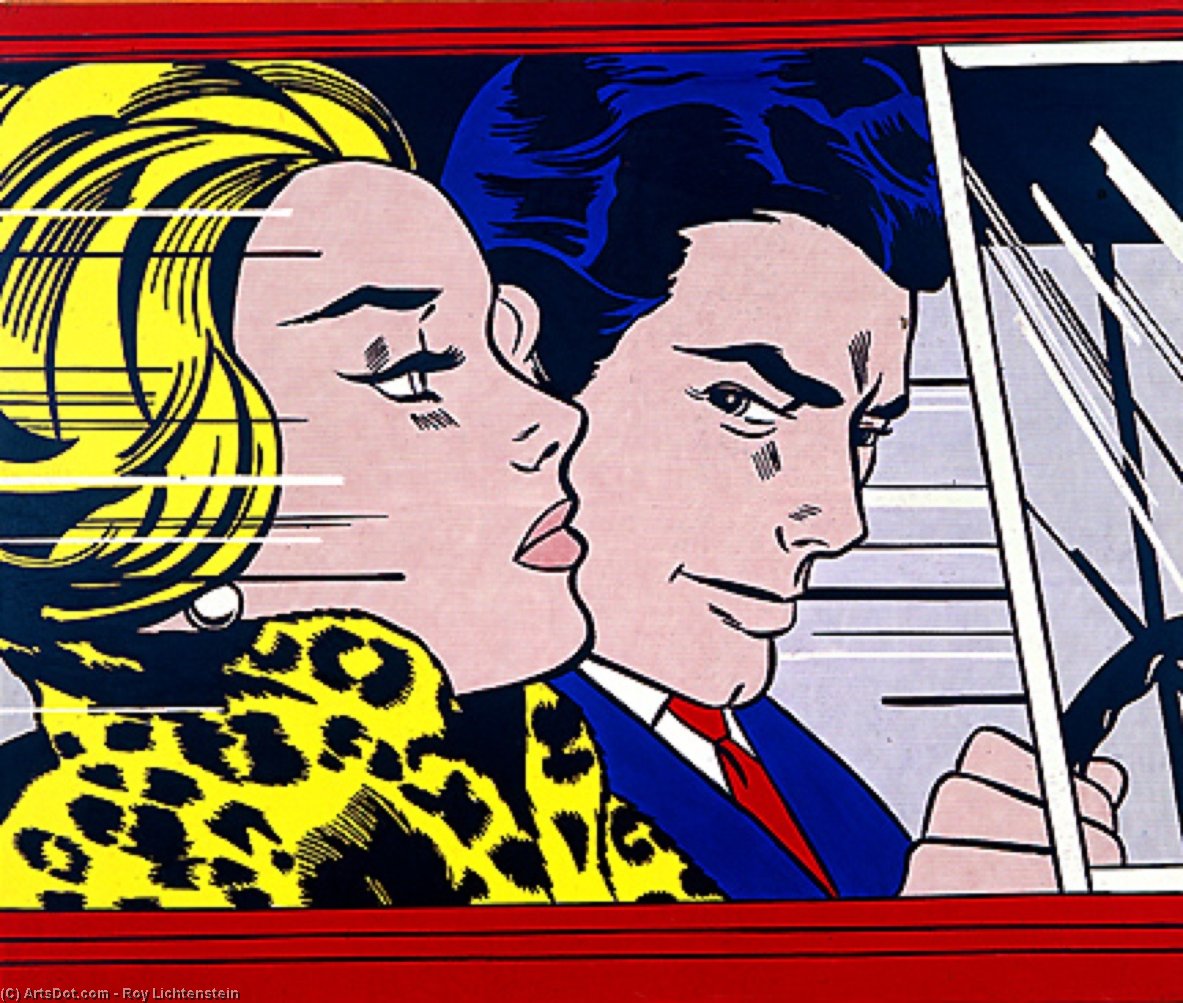
La pintura de 1963 de Roy Lichtenstein, En el coche, es un ejemplo quintesencial del impacto revolucionario del Pop Art en el mundo del arte. Más que una simple representación de una pareja dentro de un automóvil, se trata de un comentario cuidadosamente construido sobre el romance, el drama y la influencia omnipresente de los medios de comunicación de masas. Esta obra encapsula el estilo distintivo de Lichtenstein, elevando lo cotidiano a la categoría de bellas artes mediante un lenguaje visual impactante.La narrativa dentro del encuadre
La pintura presenta una vista recortada de un hombre y una mujer dentro de un coche, atrapados en lo que parece ser un intercambio tenso. La mujer, con el rostro parcialmente oculto, mira hacia afuera con una expresión que sugiere resignación o angustia. Su vibrante abrigo de estampado de leopardo amarillo y su brillante cabello rubio contrastan fuertemente con la figura masculina de cabello azul que la acompaña. No se trata de una instantánea espontánea; es un encuadre cuidadosamente seleccionado del cómic Girl’s Romances #78 de Tony Abruzzo, meticulosamente trasladado al lienzo. La escena está cargada de una emoción tácita, invitando a los espectadores a construir su propia narrativa alrededor de este momento ambiguo.Pop Art y la estética del cómic
Lichtenstein desdibujó deliberadamente las líneas entre la cultura "alta" y la "baja" al apropiarse de imágenes directamente de los cómics, un medio que en aquel entonces se consideraba puramente comercial. En el coche ejemplifica su técnica de aislar viñetas, magnificarlas y representarlas con colores audaces y gruesos contornos negros. Los icónicos puntos Benday, que imitan el proceso de impresión mecánica utilizado en los cómics, son parte integral de la estética de la obra. Estos puntos no son meramente decorativos; crean una sensación de movimiento, textura y energía visual, haciendo referencia simultáneamente a la producción en masa y a la intención artística.Técnica y decisiones artísticas
La pintura está ejecutada con una precisión notable. Lichtenstein no se limitó a copiar la viñeta del cómic; la recreó utilizando óleo sobre lienzo, aplicando minuciosamente cada punto a mano (o con la ayuda de asistentes). Este proceso laborioso subraya el compromiso deliberado del artista con las técnicas industriales y su deseo de elevarlas al reino de las bellas artes. Los colores primarios —rojos, amarillos, azules— se utilizan estratégicamente para intensificar el impacto emocional y crear una composición visualmente cautivadora. El recorte de la imagen, de modo que el cabello se extiende más allá de los bordes del lienzo, añade una cualidad dinámica y atrae al espectador hacia el interior de la escena.Contexto histórico y simbolismo
Creada durante un período de floreciente cultura de consumo en Estados Unidos, En el coche refleja la fascinación de la época por la imaginería popular y sus ansiedades en torno a las relaciones y los roles sociales. Lichtenstein se centró frecuentemente en narrativas que presentaban a mujeres lidiando con turbulencias emocionales dentro de contextos románticos. La pintura puede interpretarse como un comentario sobre las representaciones del amor, a menudo idealizadas y melodramáticas, que se encontraban en los cómics de mediados de siglo, cuestionando su autenticidad e impacto. El coche mismo simboliza la libertad y la movilidad, pero aquí se siente como un espacio confinante para emociones no resueltas.Resonancia emocional e impacto duradero
En el coche no es simplemente un espectáculo visual; evoca una compleja gama de emociones: tensión, vulnerabilidad y, quizás, incluso una sensación de melancolía. Irónicamente, el estilo impersonal de la pintura permite que los espectadores proyecten sus propias experiencias en la escena, haciéndola universalmente identificable. La obra de Lichtenstein continúa resonando en el público actual, influyendo tanto en artistas contemporáneos como en diseñadores. Su estética audaz y sus temas provocadores la convierten en una adición fascinante para cualquier colección de arte o espacio interior. La composición, tan característica del estilo de Lichtenstein, sigue siendo instantáneamente reconocible y eternamente cautivadora. Es un poderoso recordatorio de la influencia perdurable del Pop Art y su capacidad para transformar la imaginería cotidiana en obras de arte atemporales.Preguntas y respuestas
¿Qué tamaño y orientación se recomiendan para una impresión de "En el coche" de Roy Lichtenstein?
Se recomienda imprimir "En el coche" de Roy Lichtenstein en un tamaño de Grande con una orientación Formato horizontal.
¿Quién creó "En el coche" y en qué año?
"En el coche" fue creada por Roy Lichtenstein en 1963.
¿Qué color predomina en la composición de "En el coche" de Roy Lichtenstein?
El color que más destaca en "En el coche" es el Gris masilla (#dec8cd). El color dominante es muy útil a la hora de combinar una obra de arte con un interior.
Biografía del artista
vida temprana y educación
Roy Fox Lichtenstein, un destacado artista pop estadounidense, nació el 27 de octubre de 1923 en la ciudad de Nueva York. Creció en una familia judía de clase media alta, con su padre como corredor de bienes raíces y su madre como ama de casa. El interés de Lichtenstein por el arte y el diseño comenzó como un pasatiempo durante sus años escolares.Carrera artística
Después de completar su educación secundaria en la Dwight School en 1940, Lichtenstein asistió a la Art Students League of New York bajo la tutela de Reginald Marsh. Luego continuó con una licenciatura en artes visuales de la Universidad de Ohio, que fue interrumpida por un servicio militar de tres años durante la Segunda Guerra Mundial.- Look Mickey (1961, Galería Nacional de Arte, Washington D.C.), una de las primeras obras pop art de Lichtenstein, marcó el comienzo de su influyente carrera.
- Su trabajo estuvo fuertemente influenciado por los estilos de publicidad y cómics populares, con obras notables como Wham!, Drowning Girl y Oh, Jeff... I love you too... but...
- La obra más cara de Lichtenstein, Masterpiece, se vendió por 165 millones de dólares en enero de 2017.
Enseñanza e influencias
Lichtenstein enseñó en varias instituciones, incluyendo la Universidad Estatal de Nueva York en Oswego y la Universidad Rutgers. Su trabajo fue influenciado por Allan Kaprow, un colega profesor en Rutgers, lo que reavivó su interés en las imágenes proto-pop. Exposiciones notables:- The Museum Chambre de Commerce (Tolosa, Francia), que presentaba varias obras de arte, incluyendo aquellas del movimiento pop art.
- El trabajo de Lichtenstein fue exhibido en la Leo Castelli Gallery en la ciudad de Nueva York, con su primera exposición individual en 1962 siendo comprada por completo por coleccionistas influyentes antes de que abriera.
Legado e impacto
Roy Lichtenstein falleció el 29 de septiembre de 1997, dejando atrás un legado como figura destacada del movimiento pop art. Su obra continúa siendo celebrada por su innovadora mezcla de arte alto y bajo, haciendo que sea accesible a una audiencia más amplia.- Explore más obras de Lichtenstein en OriginalUniqueArt.com
- Descubra el mundo del pop art y sus influyentes artistas en Pop Art y más allá: navegando los estilos contemporáneos con OriginalUniqueArt.com
- Wikipedia: Roy Lichtenstein
- The Museum Chambre de Commerce (Tolosa, Francia) en OriginalUniqueArt.com

Roy Lichtenstein
1923 - 1997 , Estados Unidos de América
Datos clave
- Artistas Que Influyeron:
- Reginald Marsh
- Allan Kaprow
- Fecha De Muerte: 29 de septiembre de 1997
- Fecha De Nacimiento: 27 de octubre de 1923
- Lugar De Nacimiento: Manhattan, EE. UU.
- Movimiento Artístico: Pop Art
- Nacionalidad: Estadounidense
- Nombre Completo: Roy Lichtenstein
- Obras Notables:
- Look Mickey
- Whaam!
- Drowning Girl
- Masterpiece
Artículos relacionados
Beyond the Ben-Day Dots: Roy Lichtenstein's Pop Art Revolution & Enduring Legacy
Explore Roy Lichtenstein's revolutionary Pop Art! Discover the story behind Ben-Day dots, iconic works like 'Whaam!', and investment insights for collectors. Expert analysis & high-quality reproductions at OriginalUniqueArt.
Puntos y Serigrafía: El secreto industrial que definió la estética del Pop Art en los años 60
Descubre el secreto técnico de los puntos Ben-Day y la serigrafía en el Pop Art. Explora la historia del arte con nosotros.

El Poder del Color en Roy Lichtenstein: Psicología y Contraste en el Pop Art
Descubre el uso del color y los puntos Ben-Day en la obra de Lichtenstein. Explora la maestría del Pop Art ahora.
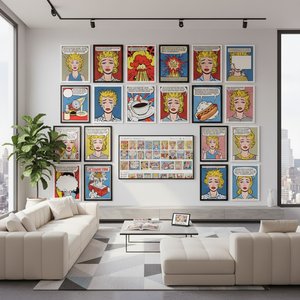
Roy Lichtenstein: Las 25 Obras Maestras del Pop Art que Transformaron el Arte y la Decoración
Descubre las 25 obras maestras de Roy Lichtenstein, ícono del Pop Art. Explora su innovadora técnica, colores vibrantes y el impacto cultural de sus cuadros más famosos. Reproducciones de arte exclusivas en OriginalUniqueArt.com.

Beyond the Dot: Exploring the Bold Impact of Ben-Day Dots in Modern Art
Dive into the vibrant world of Ben-Day dots. Explore how Roy Lichtenstein transformed mass media imagery into high art, redefining modern aesthetics through the iconic textures of Pop Art and its enduring impact on contemporary visual culture.