Cambiar a impresiones
 Ver más







































 Para obras de arte o reproducciones que midan más de 105 cm (aproximadamente 41 pulgadas) en cualquiera de sus lados, el marco se enviará como un kit desmontado. Este método garantiza una entrega segura y evita daños durante el transporte.


Seven Sacraments Altarpiece (detail) (10): A Masterpiece of Flemish Devotion
Rogier van der Weyden’s *Seven Sacraments Altarpiece* stands as a monumental achievement in Early Netherlandish painting, embodying the spiritual fervor and artistic sophistication of its time. Completed around 1445-1450 for the Church of Saint John Baptist in Poligny, Belgium, this triptych transcends mere depiction; it strives to convey profound theological concepts through meticulous observation and masterful execution.
Subject Matter: The altarpiece meticulously portrays seven sacraments – Baptism, Confirmation, Eucharist, Penance, Holy Orders, Marriage, and Anointing of the Sick – central tenets of Catholic faith. Each panel showcases a distinct scene illustrating these rituals, populated by figures rendered with remarkable realism and imbued with palpable emotion. Notably, the central panel depicts Christ crucified alongside the Eucharist, symbolizing redemption and divine grace.
Artistic Context: Van der Weyden’s work flourished during the Burgundian Renaissance, a period marked by opulent patronage and an intense preoccupation with religious iconography. Influenced by Giotto di Bondone and Simone Martini, he championed naturalism alongside stylized elegance—a hallmark of his distinctive style.
Technique: Van der Weyden employed oil paint on panel, allowing for unparalleled luminosity and textural detail. His meticulous layering of glazes created a rich surface finish that captures the subtle nuances of light and shadow, enhancing the emotional impact of each scene. Geometric shapes—particularly those forming the lines of clothing and architectural elements—contribute to the altarpiece’s balanced composition.
Symbolism: The altarpiece is replete with symbolic gestures and visual cues reflecting medieval Christian beliefs. The positioning of figures, the drapery folds, and even the color palette communicate theological ideas about humility, piety, and divine compassion. The inclusion of dogs symbolizes fidelity and loyalty—a common motif in religious art.
Emotional Impact: Viewing *Seven Sacraments Altarpiece* evokes a sense of solemn contemplation and spiritual reverence. Van der Weyden’s expressive pathos captures the vulnerability and devotion of those involved in sacred rituals, inviting viewers to engage with profound themes of faith and redemption. Its enduring beauty testifies to the artist's genius and his ability to transform religious dogma into emotionally resonant visual art.
Relevance Today: This masterpiece continues to inspire artists and scholars alike, serving as a testament to the power of art to communicate spiritual truths across centuries. For those seeking to appreciate the artistic legacy of the Renaissance, Painting by 'Rogier Van Der Weyden' | Rogier Van Der Weyden: Seven Sacraments Altarpiece (detail) (10) and Painting by 'Rogier Van Der Weyden' | Rogier Van Der Weyden: Seven Sacraments Altarpiece (detail) (10) are available on OriginalUniqueArt.com. Explore the profound beauty and artistic innovation of this iconic work!
Additional Resources: List of works by Rogier van der Weyden offers comprehensive information on Van der Weyden’s oeuvre.
Preguntas y respuestas
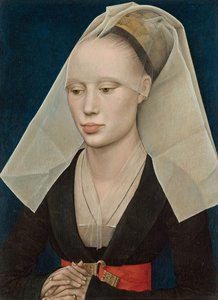
¿En qué técnica está ejecutada "El Retrato de una Mujer" de Rogier van der Weyden?
"El Retrato de una Mujer" está realizada en Óleo sobre lienzo.
¿Qué uso y espacio se recomiendan para "El Retrato de una Mujer" de Rogier van der Weyden?
Se recomienda el uso de (Acento cromático) y su ubicación en (Salón principal) para "El Retrato de una Mujer" de Rogier van der Weyden.
¿Cómo se integra "El Retrato de una Mujer" en los temas y el estilo de Rogier van der Weyden?
"El Retrato de una Mujer" comparte con otras obras de Rogier van der Weyden su estilo Early Netherlandish Renaissance y sus temas recurrentes: scholastic theology influence, medieval piety expression, humanist naturalism focus, religious ritual representation, artist legacy significance.
 Ver en contexto
 Enviar
 Compartir
 Detalles
 Guía
Guía

 Descargar
 Similares
 Radiografía
 Presentación de diapositivas
 Q&A
Q&A Estadísticas