Ver en contexto
 Enviar
 Compartir
 Detalles
 Guía
Guía

 Descargar
 Similares
 Radiografía
 Presentación de diapositivas
 Q&A
Q&A Estadísticas
Under the Hammer

- 637.0 x 637.0 cm


 Ver más
Giclée / Impresión de arte
Impresiones giclée o en lienzo de calidad de museo con producción rápida y opciones de acabado flexibles. ( Comprar pintura hecha a mano Cambiar a imagen digital)




P118B €10

P118H €10

P118W €10

P438Z €10

P508JH €12

P508YH €12

P805H €10

P805Z €10

P919BZ €10

P919G €10

P919XJ €10

P959ZH €10

P968JZ €12

W106C €8

W218G €10

W218JH €8

W218Y €10

W307PJ €10

W316G €10

W316PJ €8

W316Y €10

W398PJ €8

W4111J €10

W500HY €15

W500JH €15

W692G €12

W849H €8

W940BG €15

W953PJ €8




Elija entre nuestros tamaños predefinidos que respetan las proporciones originales de la obra.

Introduzca el ancho y el alto que necesite para adaptarse a su marco o pared. Una impresión solo puede recortarse, nunca hacerse más grande que la imagen original, por lo que un tamaño con una forma distinta perderá parte de la obra. Le enviaremos una maqueta digital para su aprobación antes de realizar cualquier impresión. La imagen que se muestra en esta página no refleja el recorte real; solo la maqueta lo hace.
Envío a todo el mundo () en 2 semanas en lugar de las 4/5 semanas estándar. (1 noviembre)

Envío exprés gratuito a todo el mundo

Lienzo de lino de alta calidad

Seguro de envío total

Garantía de reembolso de aranceles aduaneros

Garantía de fidelidad cromática exacta

Política de devolución de 100 días (solo por defectos)

Garantía de devolución del 100% del dinero

Descuento por cantidad
 La opción de vidrio solo está disponible en tamaños inferiores a 110 cm.

Under the Hammer
Giclée / Impresión de arte
Dimensiones de la reproducción
-


Precio total final
€ 71
Robert Polhill Bevan’s ‘Under the Hammer’: A Window into Early Modern British Art
Under the Hammer, painted in 1914 by Robert Polhill Bevan, is more than just a depiction of a crowded room; it's a meticulously observed snapshot of a pivotal moment in British art history. Measuring an impressive 637 x 637 cm, this black and white composition captures a scene brimming with quiet intensity – a gathering seemingly centered around a horse, likely within the context of an auction or appraisal. Bevan’s work stands as a crucial bridge between the Impressionistic tendencies prevalent at the turn of the century and the burgeoning radicalism that would define British Modernism.
- Subject Matter: The central focus is undeniably the horse, positioned with deliberate prominence within the room's architecture. However, it’s the surrounding figures – a diverse group of men, many in formal attire suggesting an upper-class setting – that truly imbue the painting with its narrative weight.
- Style & Technique: Bevan employs a restrained yet remarkably detailed technique, characteristic of his time. The tonal range is carefully controlled, utilizing subtle gradations of gray to create depth and volume. His brushwork is precise, particularly evident in the rendering of clothing textures and the horse’s musculature, reflecting a commitment to observational accuracy rather than purely expressive color.
A Quaker Banker's Artistic Rebellion
Robert Polhill Bevan’s biography itself is fascinating. Born into a banking family – his parents were Richard Alexander Bevan and Laura Maria Polhill – he initially seemed destined for a life of finance, influenced by his Quaker upbringing. Yet, defying expectations, Bevan embraced an artistic path, fueled by a restless intellectual curiosity and a desire to push the boundaries of representation. His formative years in Paris at the Académie Julian proved transformative, exposing him to the innovative ideas circulating amongst artists like P.
This influence is palpable in ‘Under the Hammer’. The composition’s slightly awkward perspective, the deliberate lack of idealized beauty, and the focus on capturing a specific moment in time – rather than presenting an allegorical or romanticized scene – are hallmarks of Bevan's engagement with European modernism. He wasn't simply copying trends; he was actively participating in a dialogue about how art could represent the world around him.
Symbolic Layers and Emotional Resonance
While seemingly straightforward, ‘Under the Hammer’ is rich in symbolic potential. The horse itself can be interpreted as representing wealth, status, and perhaps even judgment – fitting for an auction setting. The figures surrounding it are equally significant; their expressions, postures, and interactions suggest a complex interplay of observation, speculation, and negotiation. The inclusion of details like books and cups adds layers of domesticity and intellectual engagement to the scene.
Bevan’s ability to evoke a sense of quiet contemplation is remarkable. Despite the bustling activity implied by the gathering, there's an underlying stillness that draws the viewer in. This emotional resonance, combined with the artist’s masterful technical skill, elevates ‘Under the Hammer’ beyond a mere depiction of a scene; it becomes a poignant meditation on observation, value, and the human condition.
A Legacy for Collectors & Interior Design
This hand-painted reproduction captures not only the visual elements of Bevan's original work but also its historical significance and artistic merit. Its size (637 x 637 cm) makes it a commanding presence, suitable for grand spaces or as a focal point within a sophisticated interior design scheme. The monochrome palette lends itself beautifully to a variety of styles – from classic British interiors to contemporary minimalist settings. ‘Under the Hammer’ is an investment in art history and a testament to Bevan's pioneering role in shaping modern British art.
Preguntas y respuestas
¿En qué etapa de la trayectoria de Robert Polhill Bevan se sitúa "Under the Hammer", dada su fecha?
Dada su fecha de 1914, "Under the Hammer" se sitúa en el Early Modernism de Robert Polhill Bevan.
¿Qué representa "Under the Hammer" de Robert Polhill Bevan?
Los temas de "Under the Hammer" son auction scene, horse gathering, british art, early 20th century, robert bevan, black and white, social portrait.
¿Qué uso y espacio se recomiendan para "Under the Hammer" de Robert Polhill Bevan?
Se recomienda el uso de (Reflective) y su ubicación en (Reception) para "Under the Hammer" de Robert Polhill Bevan.
Biografía del artista
Primeros Años y Formación Artística
- Nacimiento: Hove, Reino Unido (1865)
- Fallecimiento: 1925
- Antecedentes Familiares: Robert Polhill Bevan nació en una familia cuáquera con conexiones bancarias. Sus padres fueron Richard Alexander Bevan y Laura Maria Polhill.
- Educación Temprana: Estudió en la Escuela de Arte Westminster bajo la tutela de Fred Brown. Posteriormente, asistió a la Academia Julian en París donde conoció a artistas influyentes como Paul Sérusier, Pierre Bonnard, Édouard Vuillard y Maurice Denis.
- Influencia de Bretaña: Los viajes tempranos a Bretaña (1890 y 1891) impactaron significativamente su desarrollo artístico, especialmente a través de la exposición al estilo Pont-Aven.
Desarrollo Artístico e Influencias
- Estilo Temprano: El trabajo temprano de Bevan mostró influencias del sintetismo, evidente en sus dibujos y grabados de su tiempo en Bretaña.
- Fauvismo: Alrededor de 1904, Bevan experimentó con el color puro, demostrando un enfoque proto-fauvista que estaba por delante de muchos artistas británicos de la época. Su pintura "Patio" se considera un ejemplo temprano de este estilo.
- Divisionismo/Puntillismo: Más tarde, adoptó una técnica divisionista o puntillista, como se ve en obras como "Arando en las Colinas" y "El Arado de Maíz".
- Influencias Clave: Influencias significativas incluyeron a Paul Gauguin (evidente en su uso del color) y maestros anteriores como Velázquez y Goya. También reconoció la guía de Renoir al dibujar caballos.
Afiliaciones y Círculos Artísticos
- Grupo Camden Town: Bevan fue un miembro fundador del Grupo Camden Town, un colectivo de artistas que buscaban representar la vida urbana moderna.
- London Group: También perteneció al London Group, otra organización artística progresista.
- Grupo Cumberland Market: Demostrando aún más su compromiso con los movimientos artísticos contemporáneos, Bevan formó parte del Grupo Cumberland Market.
- Asociación con Walter Sickert: En 1908, se unió al grupo de Fitzroy Street de Walter Sickert, donde recibió ánimo para centrarse en temas cotidianos.
- Asociación de Artistas Aliados: Participó en la primera exposición de la Asociación de Artistas Aliados en 1908, que proporcionó una plataforma para artistas progresistas y lo introdujo a Wassily Kandinsky.
Obras Principales y Temas
- Paisajes: Bevan es conocido principalmente por sus paisajes de Sussex y Bretaña, a menudo representando escenas rurales con colores vibrantes y pinceladas expresivas. Ejemplos incluyen "En las Colinas cerca de Lewes", "El Castaño" y "Paisaje en las Colinas Negras, Devon".
- Retratos: Creó retratos, incluyendo una notable representación de su esposa, Stanislawa Bevan (née de Karłowska).
- Escenas Urbanas: Su trabajo también incluyó representaciones de la vida urbana, como pinturas que documentan el declive del comercio de carruajes tirados por caballos ("El Caballo de Carreta").
- Pinturas Notables: Otras obras significativas incluyen "Queen's Grove, St John's Wood", "La Granja" y “Rosemary la vallée”.
Legado y Significado Histórico
- Pionero del Arte Británico Moderno: Robert Polhill Bevan es reconocido como un pionero del arte británico moderno, particularmente por su temprana adopción de principios fauvistas.
- Influencia en el Uso del Color: Fue uno de los primeros artistas británicos en utilizar el color puro de manera significativa, influyendo en generaciones posteriores de pintores.
- Contribución al Grupo Camden Town: Su participación en el Grupo Camden Town ayudó a dar forma al desarrollo del arte moderno en Gran Bretaña.
- Exposición Retrospectiva: Una exposición retrospectiva en Colnaghi's en 1961 destacó sus contribuciones y solidificó su lugar en la historia del arte.

Robert Polhill Bevan
1865 - 1925 , Reino Unido
Datos clave
- Artistas Que Influyeron:
- Paul Gauguin
- Renoir
- Velázquez
- Goya
- Fecha De Fallecimiento: 1925
- Fecha De Nacimiento: 1865
- Lugar De Nacimiento: Hove, Reino Unido
- Movimiento Artístico:
- Camden Town Group
- Fauvismo
- Puntillismo
- Nacionalidad: Británico
- Nombre Completo: Robert Polhill Bevan
- Obras Notables:
- Rosemary la vallée
- Paisaje en las Blackdown Hills
- Stanislawa Bevan, née de Karlowska
- En los Downs cerca de Lewes
- El Castaño
- Queen's Grove, St John's Wood
- La Casa Rural
- El Caballo de Carga
Artículos relacionados
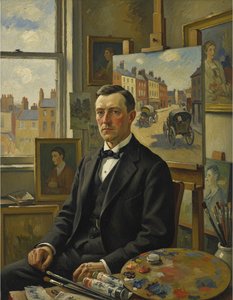
Robert Bevan: Pioneering British Post-Impressionism & the Camden Town Group's Intimate Vision
Explore the life & work of Robert Bevan, a pioneer of British Post-Impressionism and founding member of the Camden Town Group. Discover his vibrant landscapes and lasting impact on early 20th-century art.

Monochrome Visions: Exploring the Aesthetic & Historical Significance of Black & White Photography
Explore the rich history & artistic power of black and white photography. From early techniques to iconic masters like Ansel Adams, discover why monochrome continues to captivate art lovers today. Expert insights for collectors.

Las 10 Pinturas Más Famosas Dominadas por el Negro | Arte y Decoración
Descubre las 10 pinturas más impactantes dominadas por el negro. Explora obras maestras de Rembrandt, Goya y Rothko, su historia y significado. Encuentra reproducciones de arte exclusivas para transformar tu hogar en .

Blanco Sublime: Los 10 Cuadros Más Famosos Dominados por la Luz y el Color
Descubre los 10 cuadros blancos más emblemáticos de la historia del arte. Explora Monet, Van Gogh y Klimt, y su magistral uso de la luz y el color. Encuentra reproducciones de alta calidad e inspírate para tu decoración en .

Impresiones Giclée: Guía Técnica sobre Pigmentos de Archivo y Calidad de Soporte para Coleccionistas
Domina la técnica Giclée y el uso de pigmentos de archivo para coleccionismo. Descubre cómo evaluar la calidad de tus reproducciones hoy.