Ver en contexto
 Enviar
 Compartir
 Detalles
 Guía
Guía

 Descargar
 Similares
 Radiografía
 Presentación de diapositivas
 Estadísticas
Subastado
 Óleo sobre lienzo
- Arte de pared
- Early Modernism
 1913
1913 64.0 x 92.0 cm
 Galería de Arte Walker
 Ver más
Giclée / Impresión de arte
Impresiones giclée o en lienzo de calidad de museo con producción rápida y opciones de acabado flexibles. ( Comprar pintura hecha a mano Cambiar a imagen digital)




P118B €10

P118H €10

P118W €10

P438Z €10

P508JH €12

P508YH €12

P805H €10

P805Z €10

P919BZ €10

P919G €10

P919XJ €10

P959ZH €10

P968JZ €12

W106C €8

W218G €10

W218JH €8

W218Y €10

W307PJ €10

W316G €10

W316PJ €8

W316Y €10

W398PJ €8

W4111J €10

W500HY €15

W500JH €15

W692G €12

W849H €8

W940BG €15

W953PJ €8




Elija entre nuestros tamaños predefinidos que respetan las proporciones originales de la obra.

Introduzca el ancho y el alto que necesite para adaptarse a su marco o pared. Una impresión solo puede recortarse, nunca hacerse más grande que la imagen original, por lo que un tamaño con una forma distinta perderá parte de la obra. Le enviaremos una maqueta digital para su aprobación antes de realizar cualquier impresión. La imagen que se muestra en esta página no refleja el recorte real; solo la maqueta lo hace.
Envío a todo el mundo () en 2 semanas en lugar de las 4/5 semanas estándar. (28 octubre)

Envío exprés gratuito a todo el mundo

Lienzo de lino de alta calidad

Seguro de envío total

Garantía de reembolso de aranceles aduaneros

Garantía de fidelidad cromática exacta

Política de devolución de 100 días (solo por defectos)

Garantía de devolución del 100% del dinero

Descuento por cantidad
 La opción de vidrio solo está disponible en tamaños inferiores a 110 cm.

Subastado
Giclée / Impresión de arte
Dimensiones de la reproducción
-


Precio total final
€ 71
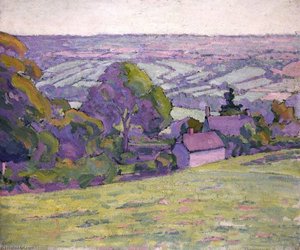
Under the Hammer: A Snapshot of British Modernism
Robert Bevan’s “Under the Hammer,” completed in 1913, transcends mere depiction; it embodies the spirit of British Modernism—a movement grappling with shifting artistic sensibilities and reflecting the anxieties of a rapidly changing world. Held within the Walker Art Gallery in Liverpool, this oil on canvas offers more than just an image; it presents a meticulously crafted tableau capturing a pivotal moment: the auction of a horse.
- Artist & Style: Bevan’s artistic approach aligns perfectly with the burgeoning Fauvist movement, prioritizing expressive color over strict realism. His distinctive style is characterized by earthy tones—ochres, browns, and muted greens—creating an atmosphere of quiet contemplation amidst the bustle of a rural marketplace.
- Painting Description: The scene unfolds in a stable or similar setting, populated by figures engaged in anticipation. Bevan’s masterful brushwork captures the textures of weathered wood and horsehair, drawing the viewer's eye to the intricate details—the furrowed brow of the auctioneer, the gaze of potential buyers, and the palpable tension surrounding the impending sale.
- Technique: Bevan skillfully employs oil paint on canvas, layering pigments to achieve remarkable depth and luminosity. The subtle gradations of color contribute to a sense of realism while simultaneously conveying an emotional resonance—a feeling of vulnerability and uncertainty within this commonplace setting.
Historical Context & Significance
“Under the Hammer” emerged during a period of significant artistic experimentation in Britain, marking a decisive break from Impressionism’s focus on fleeting impressions. Bevan's work reflects the broader cultural preoccupation with documenting everyday life—a reaction against the idealized narratives prevalent in earlier art forms. The painting serves as a testament to the Camden Town Group’s commitment to portraying scenes of urban existence with honesty and sensitivity.
- The Walker Art Gallery: Its prestigious collection underscores Liverpool's role as a center for artistic innovation and cultural preservation. Visiting this gallery allows one to appreciate Bevan’s contribution within the larger context of British art history.
- Cultural Heritage: Reproductions of “Under the Hammer,” available at OriginalUniqueArt.com, ensure that Bevan’s vision continues to inspire future generations. Supporting these reproductions champions the preservation of artistic legacies.
Reproductions & Conservation – Bringing Bevan's Vision Home
A handmade oil painting reproduction faithfully recreates Bevan’s masterful technique and vibrant palette. Utilizing archival-quality materials guarantees that the original’s essence remains undisturbed, allowing collectors to experience the artwork's beauty firsthand.
- OriginalUniqueArt.com: Explore high-quality reproductions at https://OriginalUniqueArt.com – a crucial step in safeguarding artistic heritage and sharing Bevan’s evocative depiction with enthusiasts worldwide.
Further Exploration
For deeper insights into Robert Bevan and his oeuvre, consult /art/list/?Filter=8YE6BG-Robert-Bevan-Under-the-Hammer. Discover more about the Camden Town Group and its influence on British art through /art/list/?Filter=A@D3C883-The-Walker-Art-Gallery:-A-Premier-Destination-for-Art-Enthusiasts-in-Liverp..

Preguntas y respuestas
¿Es "Subastado" representativo de la temática habitual de Robert Polhill Bevan?
Los temas recurrentes de Robert Polhill Bevan incluyen bevan’s fauvist impressionism, camden town group vision, domestic scene observation, british artistic heritage, realistic everyday life; "Subastado" se centra en auction, horse, stable, landscape, figures, painting, britishart.
¿Cuál es la fecha y el estilo de "Subastado" de Robert Polhill Bevan?
"Subastado" fue realizada en 1913, dentro del movimiento Early Modernism.
¿Qué edad tenía Robert Polhill Bevan cuando se creó "Subastado"?
Robert Polhill Bevan creó "Subastado" a la edad de 48. El artista nació en 1865 y la obra data de 1913.
Biografía del artista
Primeros Años y Formación Artística
- Nacimiento: Hove, Reino Unido (1865)
- Fallecimiento: 1925
- Antecedentes Familiares: Robert Polhill Bevan nació en una familia cuáquera con conexiones bancarias. Sus padres fueron Richard Alexander Bevan y Laura Maria Polhill.
- Educación Temprana: Estudió en la Escuela de Arte Westminster bajo la tutela de Fred Brown. Posteriormente, asistió a la Academia Julian en París donde conoció a artistas influyentes como Paul Sérusier, Pierre Bonnard, Édouard Vuillard y Maurice Denis.
- Influencia de Bretaña: Los viajes tempranos a Bretaña (1890 y 1891) impactaron significativamente su desarrollo artístico, especialmente a través de la exposición al estilo Pont-Aven.
Desarrollo Artístico e Influencias
- Estilo Temprano: El trabajo temprano de Bevan mostró influencias del sintetismo, evidente en sus dibujos y grabados de su tiempo en Bretaña.
- Fauvismo: Alrededor de 1904, Bevan experimentó con el color puro, demostrando un enfoque proto-fauvista que estaba por delante de muchos artistas británicos de la época. Su pintura "Patio" se considera un ejemplo temprano de este estilo.
- Divisionismo/Puntillismo: Más tarde, adoptó una técnica divisionista o puntillista, como se ve en obras como "Arando en las Colinas" y "El Arado de Maíz".
- Influencias Clave: Influencias significativas incluyeron a Paul Gauguin (evidente en su uso del color) y maestros anteriores como Velázquez y Goya. También reconoció la guía de Renoir al dibujar caballos.
Afiliaciones y Círculos Artísticos
- Grupo Camden Town: Bevan fue un miembro fundador del Grupo Camden Town, un colectivo de artistas que buscaban representar la vida urbana moderna.
- London Group: También perteneció al London Group, otra organización artística progresista.
- Grupo Cumberland Market: Demostrando aún más su compromiso con los movimientos artísticos contemporáneos, Bevan formó parte del Grupo Cumberland Market.
- Asociación con Walter Sickert: En 1908, se unió al grupo de Fitzroy Street de Walter Sickert, donde recibió ánimo para centrarse en temas cotidianos.
- Asociación de Artistas Aliados: Participó en la primera exposición de la Asociación de Artistas Aliados en 1908, que proporcionó una plataforma para artistas progresistas y lo introdujo a Wassily Kandinsky.
Obras Principales y Temas
- Paisajes: Bevan es conocido principalmente por sus paisajes de Sussex y Bretaña, a menudo representando escenas rurales con colores vibrantes y pinceladas expresivas. Ejemplos incluyen "En las Colinas cerca de Lewes", "El Castaño" y "Paisaje en las Colinas Negras, Devon".
- Retratos: Creó retratos, incluyendo una notable representación de su esposa, Stanislawa Bevan (née de Karłowska).
- Escenas Urbanas: Su trabajo también incluyó representaciones de la vida urbana, como pinturas que documentan el declive del comercio de carruajes tirados por caballos ("El Caballo de Carreta").
- Pinturas Notables: Otras obras significativas incluyen "Queen's Grove, St John's Wood", "La Granja" y “Rosemary la vallée”.
Legado y Significado Histórico
- Pionero del Arte Británico Moderno: Robert Polhill Bevan es reconocido como un pionero del arte británico moderno, particularmente por su temprana adopción de principios fauvistas.
- Influencia en el Uso del Color: Fue uno de los primeros artistas británicos en utilizar el color puro de manera significativa, influyendo en generaciones posteriores de pintores.
- Contribución al Grupo Camden Town: Su participación en el Grupo Camden Town ayudó a dar forma al desarrollo del arte moderno en Gran Bretaña.
- Exposición Retrospectiva: Una exposición retrospectiva en Colnaghi's en 1961 destacó sus contribuciones y solidificó su lugar en la historia del arte.

Robert Polhill Bevan
1865 - 1925 , Reino Unido
Datos clave
- Artistas Que Influyeron:
- Paul Gauguin
- Renoir
- Velázquez
- Goya
- Fecha De Fallecimiento: 1925
- Fecha De Nacimiento: 1865
- Lugar De Nacimiento: Hove, Reino Unido
- Movimiento Artístico:
- Camden Town Group
- Fauvismo
- Puntillismo
- Nacionalidad: Británico
- Nombre Completo: Robert Polhill Bevan
- Obras Notables:
- Rosemary la vallée
- Paisaje en las Blackdown Hills
- Stanislawa Bevan, née de Karlowska
- En los Downs cerca de Lewes
- El Castaño
- Queen's Grove, St John's Wood
- La Casa Rural
- El Caballo de Carga
Artículos relacionados

Hubert Robert: Picturing Ruins, Preserving Memory – A Study of Romantic Antiquarianism & Artistic Innovation
Explore the captivating world of Hubert Robert, master of Romantic landscape painting & 'capriccio' ruins. Discover his historical context, artistic innovations, and collecting insights with OriginalUniqueArt.
Fauvismo Expresionista: 10 Obras Maestras que Transformaron el Arte | OriginalUniqueArt
Descubre las 10 obras maestras del fauvismo que revolucionaron el arte. Explora la pasión, el color y la expresión de Matisse, Derain y más. Reproducciones de alta calidad en OriginalUniqueArt.com.

David Roberts: A Scottish Pioneer of Topographical Art & Orientalist Vision
Explore the captivating world of David Roberts, a pioneering Scottish painter renowned for his detailed Orientalist scenes & stunning Egyptian landscapes. Discover his legacy and find museum-quality reproductions at OriginalUniqueArt.
Fauvismo: 10 Obras Maestras que Revolucionaron la Pintura |
Descubre las 10 obras maestras del Fauvismo con Matisse, Derain y Vlaminck. Explora la historia, el color y la audacia de este movimiento artístico revolucionario. Reproducciones de arte exclusivas en .
Robert Bevan: Pioneering British Post-Impressionism & the Camden Town Group's Intimate Vision
Explore the life & work of Robert Bevan, a pioneer of British Post-Impressionism and founding member of the Camden Town Group. Discover his vibrant landscapes and lasting impact on early 20th-century art.